Northrop Grumman CRS-25 хөлөг Олон улсын сансрын станц руу шинжлэх ухааны ачаа хүргэнэ

Published:

Энэхүү мэдээ, нийтлэлийг хиймэл оюун боловсруулав.

NASA-ийн Northrop Grumman CRS-25 номлол Олон улсын сансрын станцад 5000 кг орчим ачаа болон судалгааны тоног төхөөрөмжийг хүргэхээр бэлтгэлээ хангаж байна.

Northrop Grumman CRS-25 номлолын хүрээнд Cygnus XL сансрын хөлөг SpaceX Falcon 9 пуужингаар Флорида дахь Канавералын хошууны сансрын хүчний станцаас хөөрөхөөр товлогджээ. Сансрын станцад хүрсний дараа сансрын нисгэгчид Canadarm2 робот гарыг ашиглан хөлгийг барьж авах бөгөөд газрын удирдлагын баг станцын Unity модульд залгах юм. Энэ нь нарны эрчим хүчээр ажилладаг, ачаа тээвэрлэх хүчин чадал бүхий Cygnus XL хөлгийн гурав дахь нислэг болно.

Энэ удаагийн нислэгээр хүргэх судалгааны ажлууд нь хорт хавдар, ясны сийрэгжилтийн эмчилгээг сайжруулах, булчингийн алдагдлыг бууруулах, цацраг идэвхт туяаг хэмжих зэрэг чиглэлтэй байна. Тухайлбал, “Cardinal Muscle 2.0” туршилт нь бичил таталцлын орчинд булчингийн алдагдлыг хэрхэн зогсоох болон эмчилгээний аргуудыг судлах бол “DNA Nano B” төсөл нь хавдар болон мөгөөрсөн эдэд эм хүргэх нано бөөмсийг үйлдвэрлэх аргыг боловсруулах юм. Мөн Encapsulate-1 туршилтаар өвчтөний хавдрын бичил хуулбарыг өсгөвөрлөж, хавдар тархах эрсдэлийг урьдчилан таамаглах оношлогооны хэрэгсэл бүтээхийг зорьж байна.

Түүнчлэн сансрын нисгэгчдийн урт хугацааны нислэгт зориулсан хүнсний үйлдвэрлэлийн Ohalo III төхөөрөмж болон сансрын станцын доторх цацраг идэвхт туяаг хянах ARES төхөөрөмжийг туршихаар төлөвлөжээ. JOINS төсөл нь сансарт робот ашиглан металл гагнах технологийн боломжийг судлах бөгөөд энэ нь ирээдүйд Сар болон бусад гариг дээрх сансрын барилга байгууламжийг угсрахад чухал ач холбогдолтой юм. Эдгээрээс гадна сансрын станцын хэвийн үйл ажиллагаанд шаардлагатай засвар үйлчилгээний эд анги, тоног төхөөрөмжүүдийг станцын багийн гишүүдэд хүргэхээр ачиж байна.

Дэлгэрэнгүйг эх сурвалжаас харах

Эх сурвалжийг нээх ↓

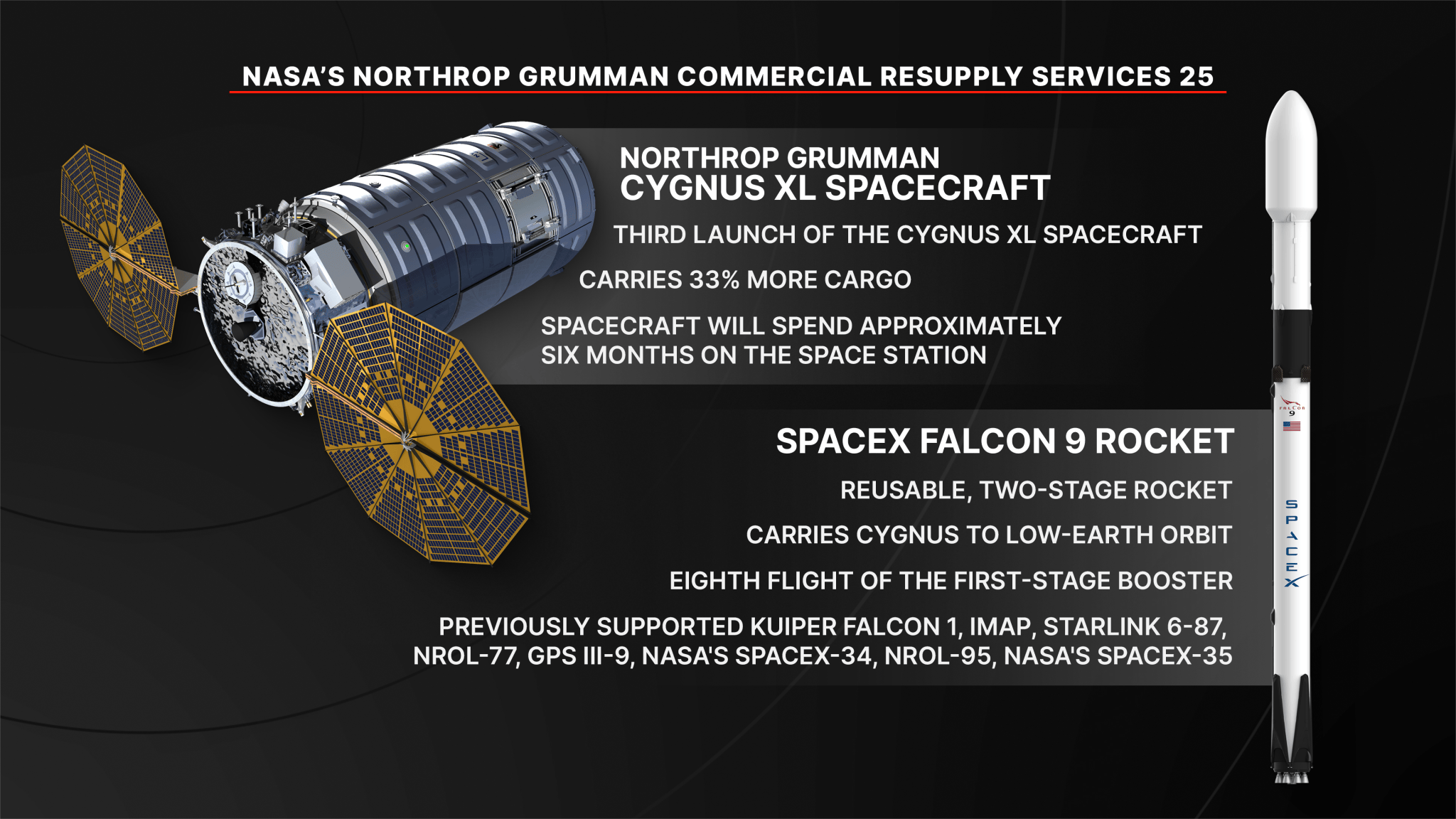
NASA’s Northrop Grumman Commercial Resupply Services 25 mission, or Northrop Grumman CRS-25, will deliver about 11,000 pounds of science and supplies to the International Space Station. The mission will be the third flight of the company’s Cygnus XL, the larger, more cargo-capable version of the company’s solar-powered spacecraft.

The Cygnus XL will launch aboard a SpaceX Falcon 9 rocket from the Cape Canaveral Space Force Station in Florida. Following arrival to the station, astronauts aboard the space station will use the Canadarm2 to grapple the spacecraft before ground controllers robotically install it to the Unity module’s Earth-facing port for cargo unloading.
NASA’s Northrop Grumman Commercial Resupply Services 25 mission will launch on a SpaceX Falcon 9 rocket to deliver research and supplies to the International Space Station.
Credit: NASA
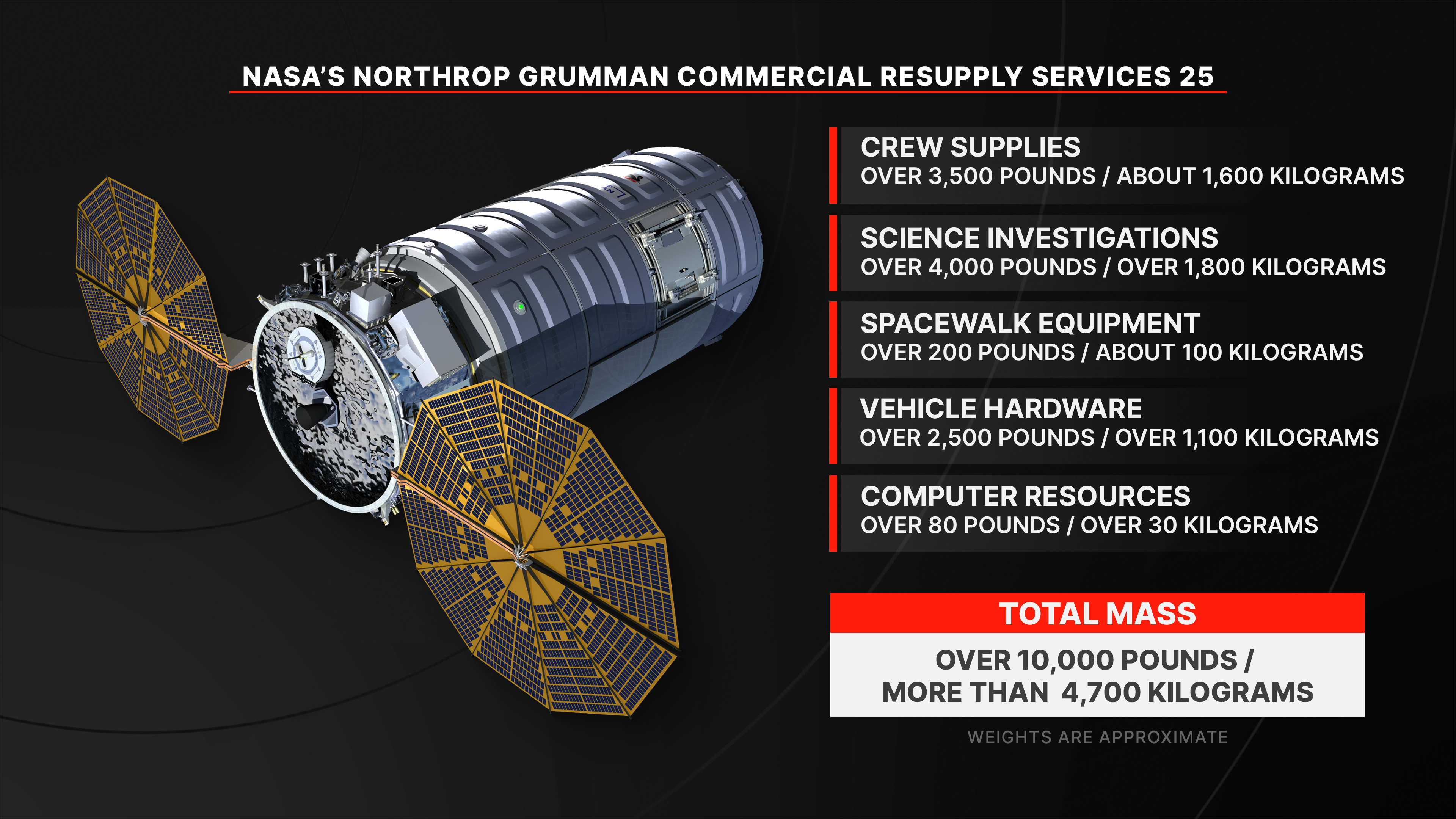
NASA’s Northrop Grumman Commercial Resupply Services 25 mission will deliver more than 10,000 pounds of research and supplies to the International Space Station. Credit: NASA
NASA’s Northrop Grumman Commercial Resupply Services 25 mission will deliver approximately 11,000 pounds of research and supplies to the International Space Station.
Credit: NASA
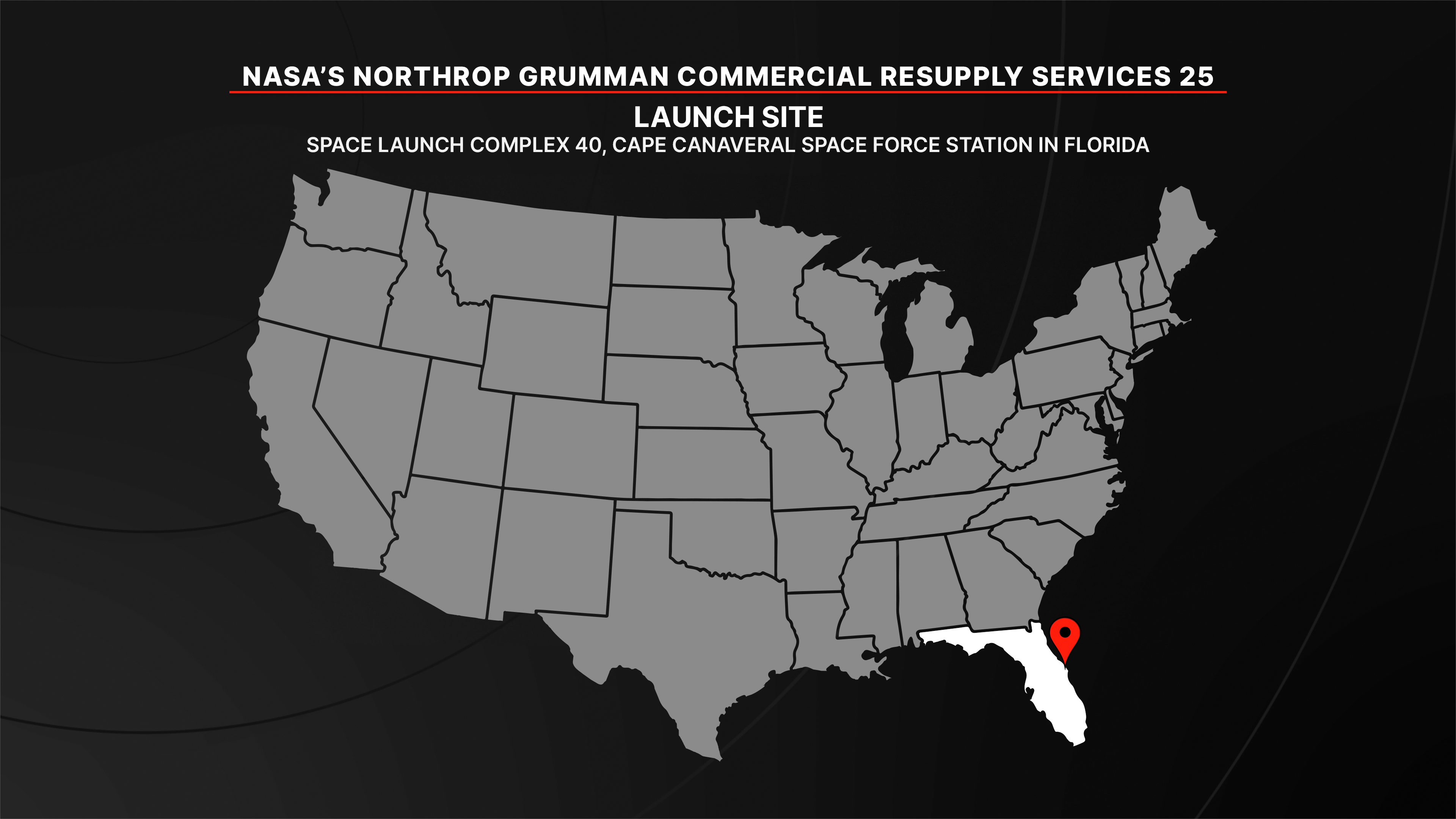
NASA’s Northrop Grumman Commercial Resupply Mission 25 will launch from Space Launch Complex 40 at Cape Canaveral Space Force Station in Florida. Credit: NASA
NASA’s Northrop Grumman Commercial Resupply Mission 25 will launch from Space Launch Complex 40 at Cape Canaveral Space Force Station in Florida.
Credit: NASA
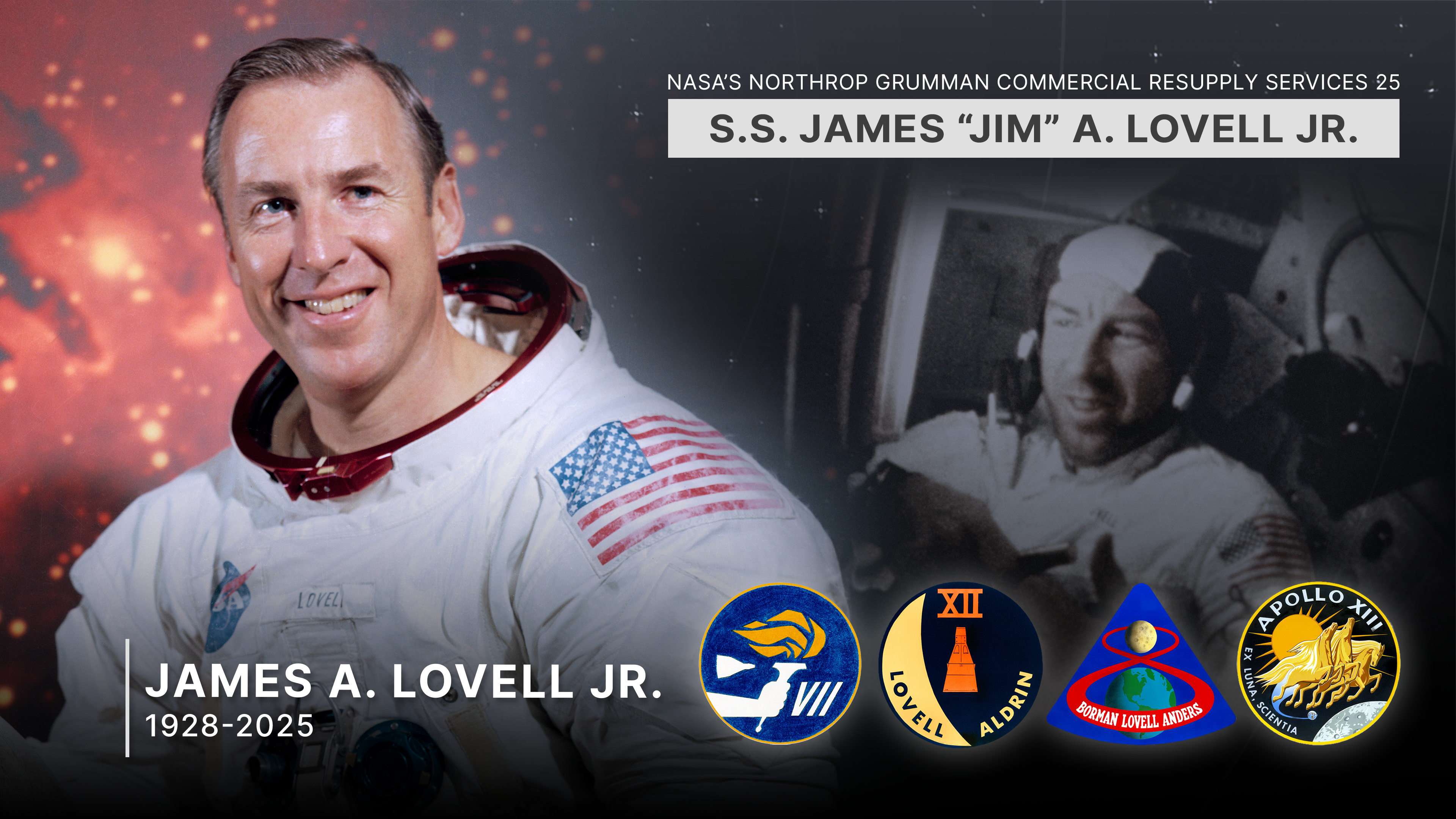
NASA’s Northrop Grumman Commercial Resupply Services 25 spacecraft is named in honor of NASA astronaut James “Jim” A. Lovell Jr. Lovell flew four missions, including Gemini VII, Gemini XII, Apollo 8, and the Apollo 13 mission around the Moon. Credit: NASA
NASA’s Northrop Grumman Commercial Resupply Services 25 spacecraft is named in honor of NASA astronaut James “Jim” A. Lovell Jr. Lovell flew four missions, including Gemini VII, Gemini XII, Apollo 8, and the Apollo 13 mission around the Moon.
Credit: NASA
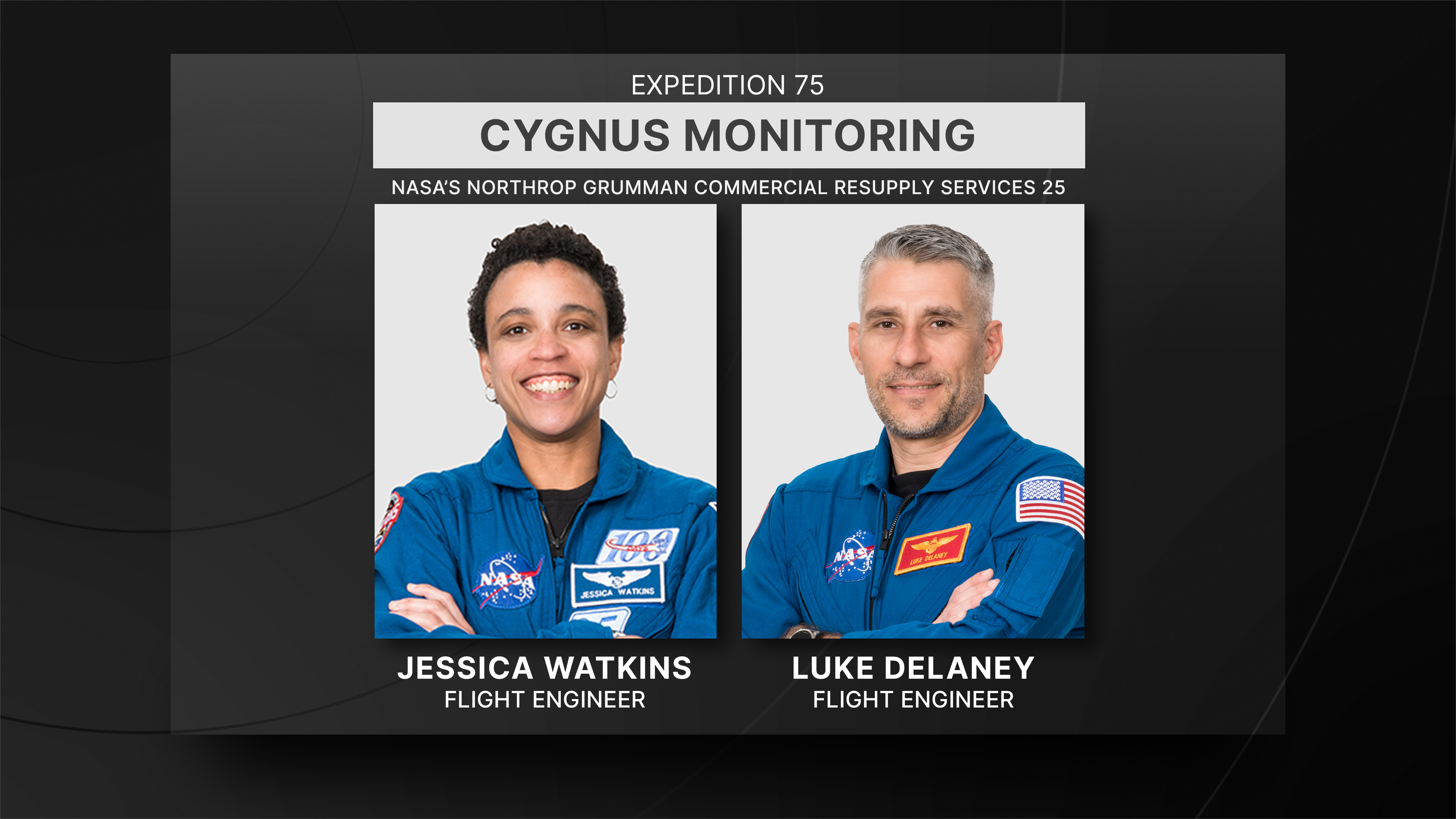
NASA astronauts Jessica Watkins and Luke Delaney will be on duty during the Cygnus spacecraft’s approach and rendezvous. Watkins will be at the controls of the Canadarm2 robotic arm, ready to capture Cygnus as Delaney monitors the spacecraft’s arrival. Credit: NASA
NASA astronauts Jessica Watkins and Luke Delaney will be on duty during the Cygnus spacecraft’s approach and rendezvous. Watkins will be at the controls of the Canadarm2 robotic arm, ready to capture Cygnus as Delaney monitors the spacecraft’s arrival.
Credit: NASA

Science highlights

In addition to food, supplies, and equipment for the crew, Cygnus will deliver several new experiments aimed at improving drug delivery for cancer and osteoarthritis treatment, predicting cancer spread, advancing treatments for muscle loss, improving radiation sensing, and supporting food production for future long-duration missions. This research includes:

Cardinal Muscle 2.0
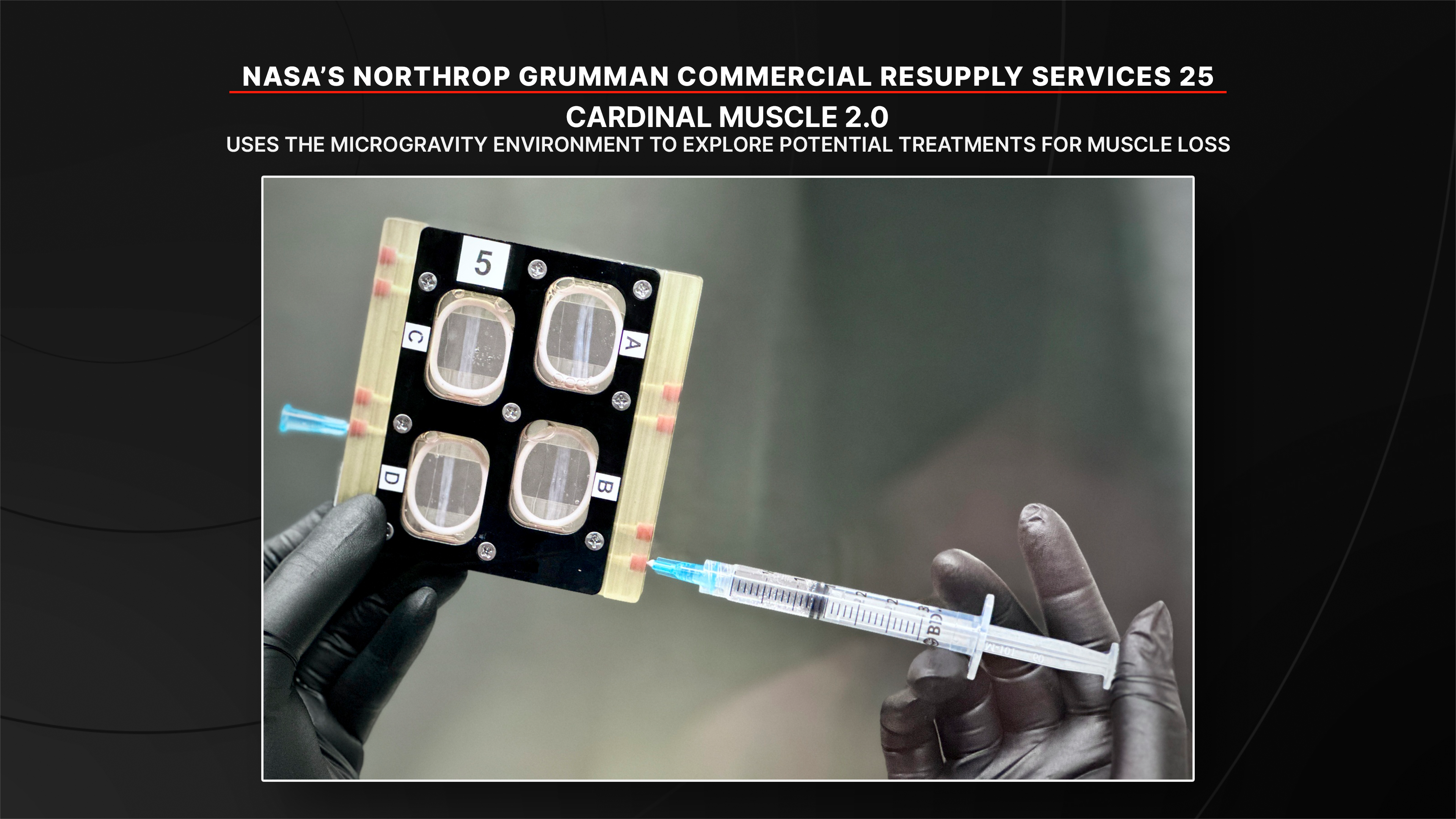
Preflight image of the Biocell bioreactor system used to maintain engineered muscle tissue samples as part of the Advancing Therapeutic Treatment of Sarcopenia (Cardinal Muscle 2.0) investigation. Aboard the International Space Station, this investigation tests the effects of potential therapeutics on human muscle cell cultures. The research may help accelerate development of treatments for age-related muscle loss on Earth and support astronaut health during long-duration missions. Credit: Palo Alto Veteran’s Institute for Research
Preflight image of the Biocell bioreactor system used to maintain engineered muscle tissue samples as part of the Advancing Therapeutic Treatment of Sarcopenia (Cardinal Muscle 2.0) investigation. Aboard the International Space Station, this investigation tests the effects of potential therapeutics on human muscle cell cultures. The research may help accelerate development of treatments for age-related muscle loss on Earth and support astronaut health during long-duration missions.
Credit: Palo Alto Veteran’s Institute for Research

Cardinal Muscle 2.0 uses the microgravity environment to explore potential treatments for muscle loss. Muscle atrophy and strength loss experienced by astronauts after spaceflight share many features with age-related muscle decline on Earth and occur more rapidly in microgravity without exercise. Researchers will use a muscle tissue model to test different Food and Drug Administration-approved drugs used to treat other conditions can be repurposed to prevent or reduce muscle loss.

DNA NANO B
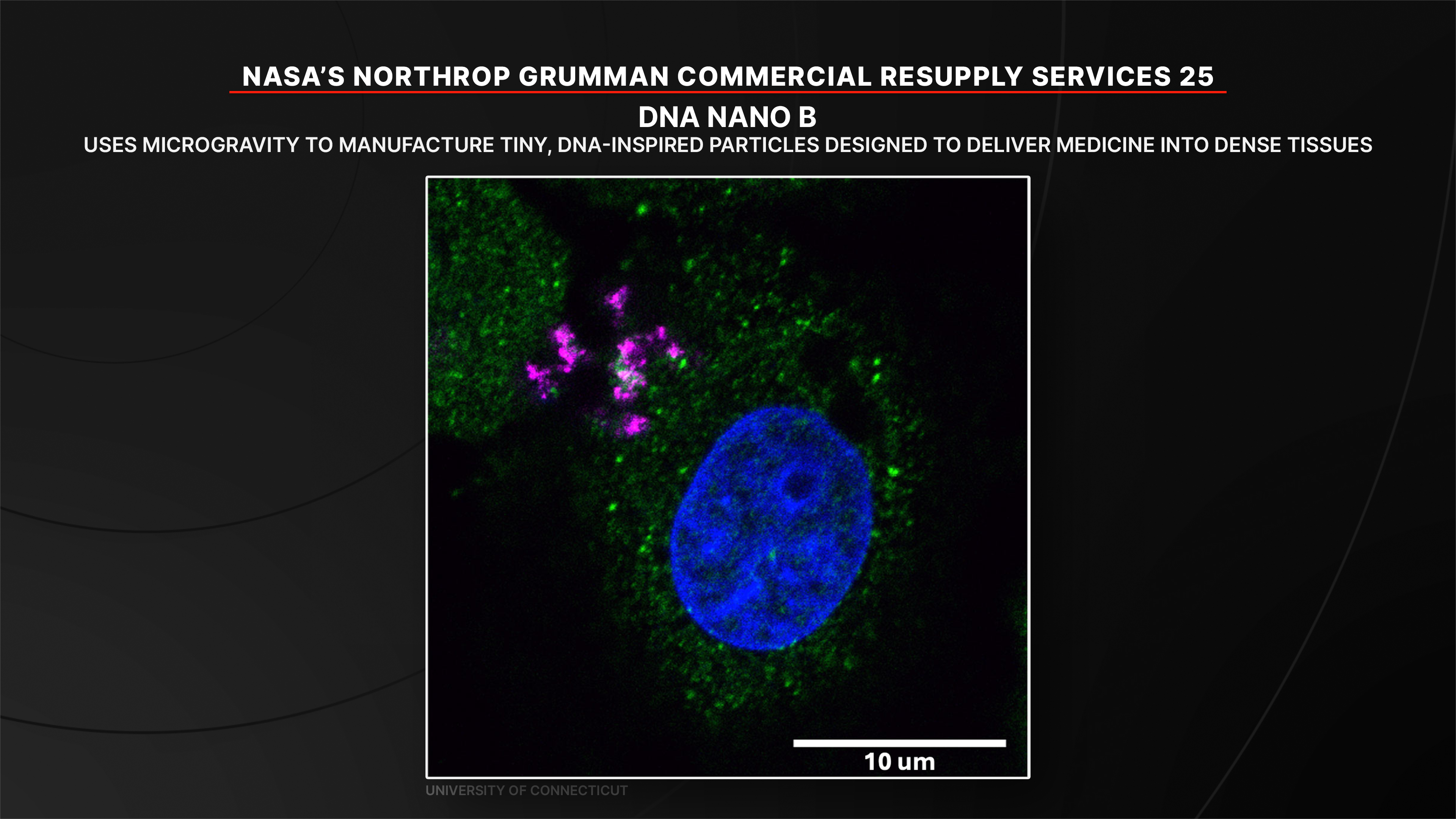
A confocal microscope image shows a human cartilage cell, with its nucleus stained in blue, following delivery of Janus Base Nanoparticles (JBNp) and the subsequent release of bioactive mRNA (pink) that was translated into function protein (green). Biomimetic Fabrication of Multi-Functional DNA-Inspired Nanomaterials via Controlled Self-assembly in Space (DNA Nano Therapeutics-Mission 2) continues prior research on in-space manufacturing of nanomaterials that mimic DNA and have applications for vaccines and regenerative medicine. Credit: University of Connecticut
A confocal microscope image shows a human cartilage cell, with its nucleus stained in blue, following delivery of Janus Base Nanoparticles (JBNp) and the subsequent release of bioactive mRNA (pink) that was translated into function protein (green). Biomimetic Fabrication of Multi-Functional DNA-Inspired Nanomaterials via Controlled Self-assembly in Space (DNA Nano Therapeutics-Mission 2) continues prior research on in-space manufacturing of nanomaterials that mimic DNA and have applications for vaccines and regenerative medicine.
Credit: University of Connecticut

The DNA Nano B investigation uses microgravity to manufacture tiny, DNA-inspired particles designed to deliver medicine into dense tissues, such as cartilage and solid tumors. Microgravity may enable more uniform particle assembly, helping researchers refine production methods. The results could advance targeted treatments for cancer and osteoarthritis on Earth.

ARES
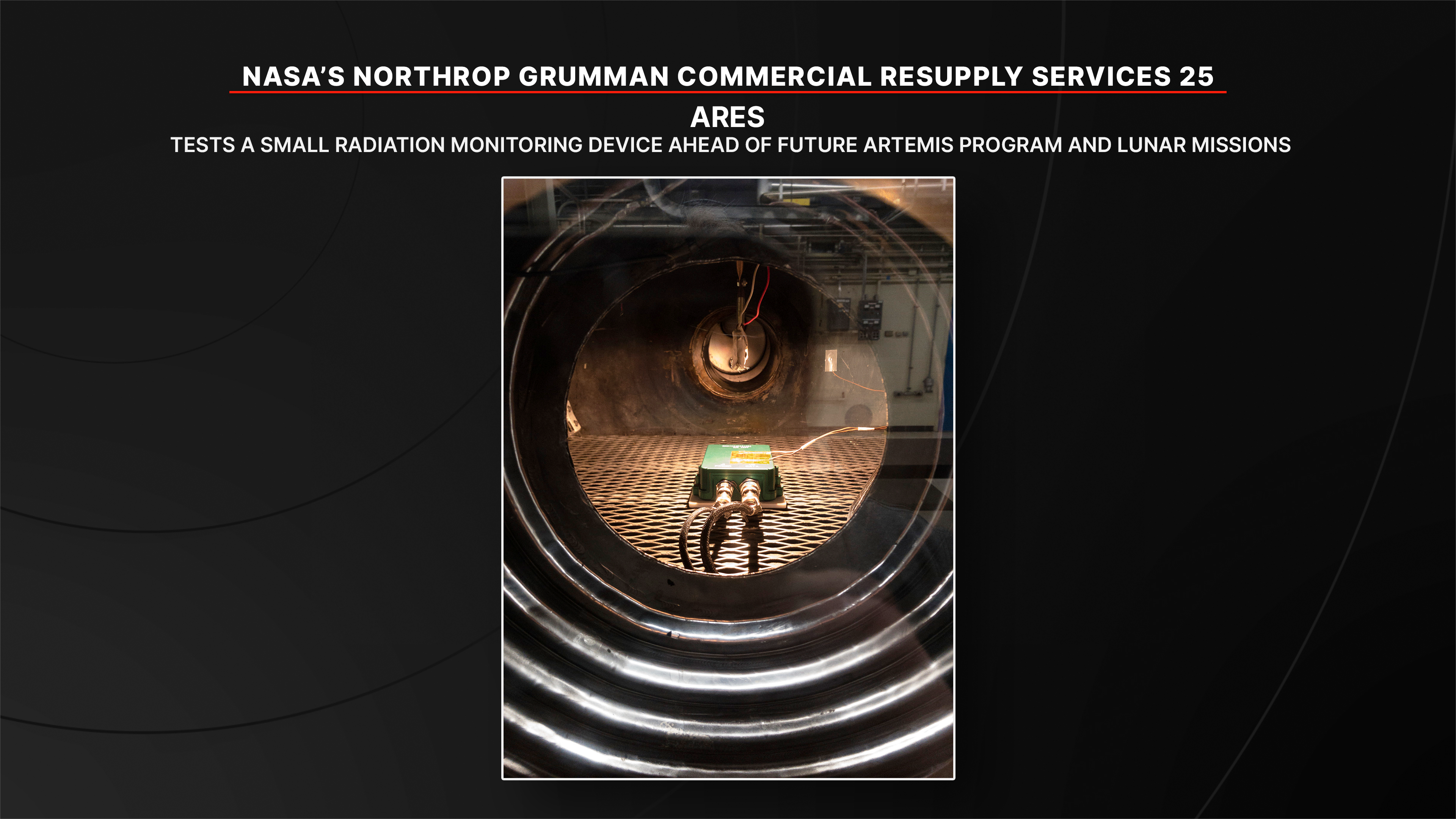
Preflight image of an Active Radiation Environment Sensor (ARES) unit undergoing ground testing in a thermal vacuum chamber. This investigation monitors radiation within habitable spacecraft environments and has exposure awareness and warning capabilities for Human Landing System crews. Testing aboard the International Space Station helps researchers validate the technology for future exploration missions. Credit: NASA/HHPC
Preflight image of an Active Radiation Environment Sensor (ARES) unit undergoing ground testing in a thermal vacuum chamber. This investigation monitors radiation in habitable spacecraft environments and has exposure awareness and warning capabilities for Human Landing System crews. Testing aboard the International Space Station helps researchers validate the technology for future exploration missions.
Credit: NASA/HHPC

The Active Radiation Environment Sensor (ARES) will test a small radiation monitoring device to support future Artemis program and lunar missions. The system is designed to integrate with spacecraft systems and provide real-time radiation monitoring inside crew living areas. The results could inform radiation monitoring strategies and crew safety measures for future exploration missions.

ENCAPSULATE-1
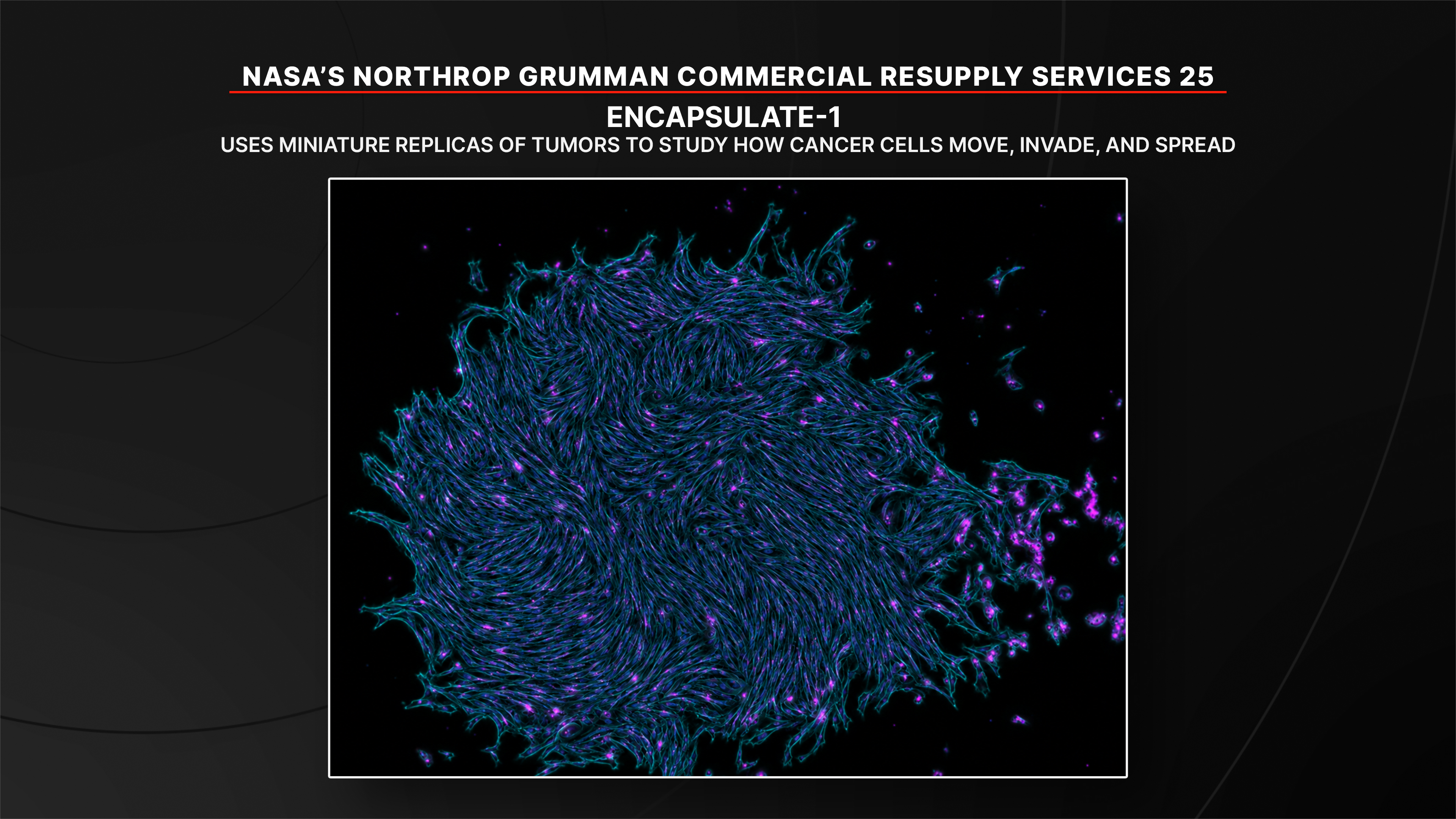
Preflight image of colorectal microtumors grown within Encapsulate's biochip. The investigation, Encapsulate nVasive: Unraveling the Enigma of Metastasis – Flight 1, or Encapsulate-1, grows copies of patients’ tumor samples aboard the International Space Station to study how cancer cells move and interact in microgravity. Results may help researchers develop further testing to predict a patient's risk of metastasis and support more personalized cancer treatments. Credit: Encapsulate Inc.
Preflight image of colorectal microtumors grown within Encapsulate’s biochip. The investigation, Encapsulate nVasive: Unraveling the Enigma of Metastasis – Flight 1, or Encapsulate-1, grows copies of patients’ tumor samples aboard the International Space Station to study how cancer cells move and interact in microgravity. Results may help researchers develop further testing to predict a patient’s risk of metastasis and support more personalized cancer treatments.
Credit: Encapsulate Inc.

Encapsulate-1 uses miniature replicas of patients’ tumors to study how cancer cells move, invade surrounding tissues, and potentially spread. Researchers aim to develop a space-based diagnostic tool that could predict cancer progression months or even years in advance, improving early detection and treatment decisions for patients on Earth.

OHALO III
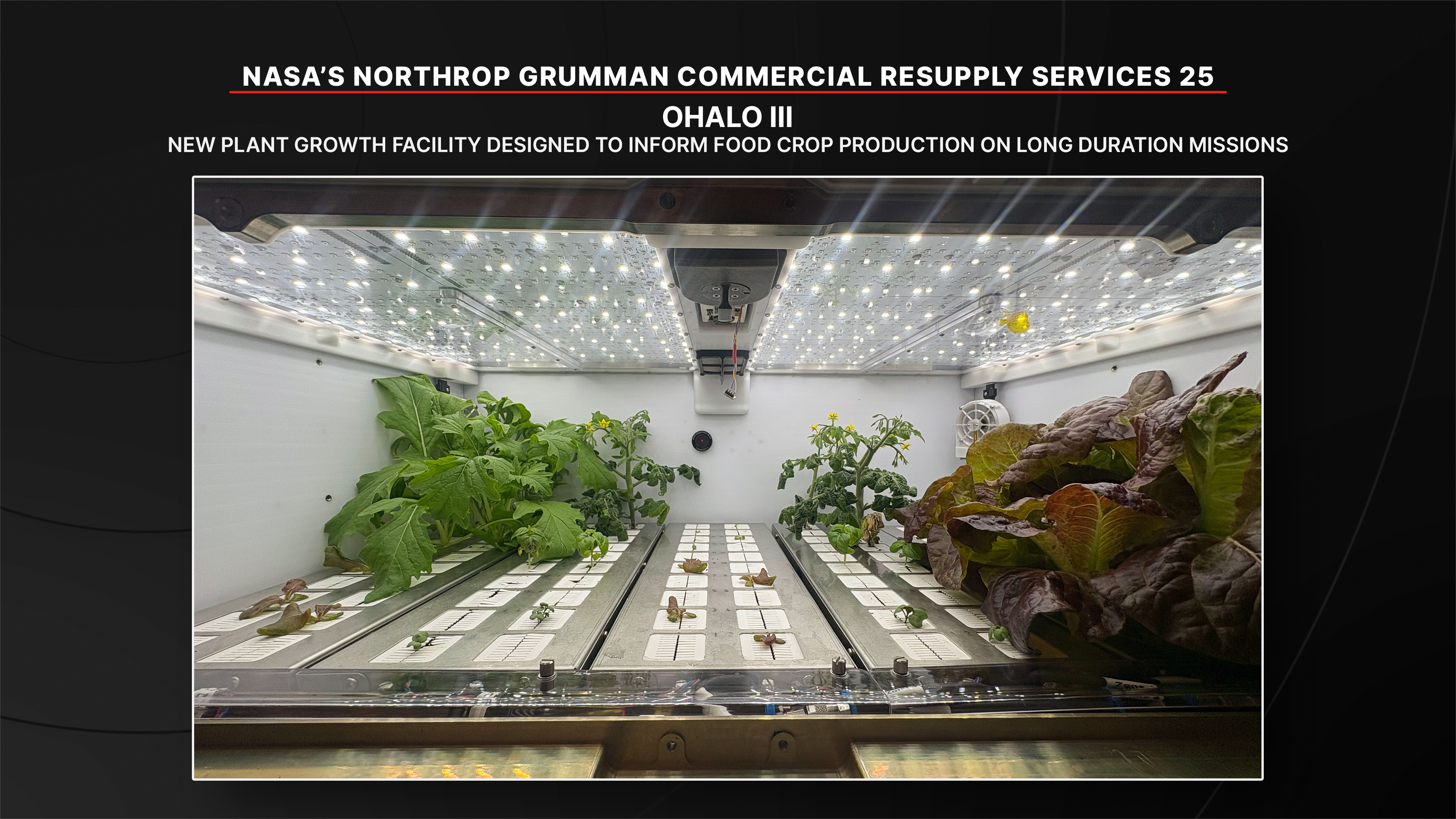
Preflight image of Utah State University’s OHALO III module with a variety of plants growing from the Utah Re-usable Root Modules. This facility aims to validate plant water delivery, volume optimization, and advance knowledge on crop production, which could inform design decisions for future plant systems on deep space missions. Credit: NASA KSC
Preflight image of Utah State University’s OHALO III module with a variety of plants growing from the Utah Re-usable Root Modules. This facility aims to validate plant water delivery, volume optimization, and advance knowledge on crop production, which could inform design decisions for future plant systems on deep space missions.
Credit: NASA KSC

Ohalo III is a new plant growth facility designed to help food crop production on future long-duration missions. The mostly automated system uses innovative water recovery and air exchange technologies to grow a variety of crops. This research could help lead to better food production methods to keep crew healthy and fed on future exploration missions, including those to Mars.

Technology demonstration
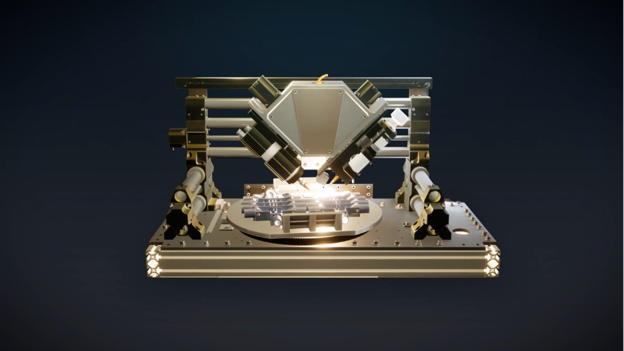
The upcoming JOINS demonstration inside the Bishop Airlock will perform autonomous robotic welding in space. JOINS will test two distinct approaches: laser beam welding and friction stir welding. Laser beam welding uses a high-precision laser to melt and fuse materials together. Friction stir welding uses a rotating tool to stir the metals together, and that friction generates enough heat to soften the materials. JOINS will perform these welding approaches on two different materials: aluminum and stainless-steel. Credit: Lockheed Martin
The upcoming JOINS demonstration inside the Bishop Airlock will perform autonomous robotic welding in space. JOINS will test two distinct approaches: laser beam welding and friction stir welding. Laser beam welding uses a high-precision laser to melt and fuse materials together. Friction stir welding uses a rotating tool to stir the metals together, and that friction generates enough heat to soften the materials. JOINS will perform these welding approaches on two different materials: aluminum and stainless-steel.
Credit: Lockheed Martin

JOining demonstrations IN-Space (JOINS) will mature technologies that allow robotic systems to join materials directly in space. In-space joining could enable large structures to be assembled and integrated after launch rather than being constrained by the size and volume of a launch vehicle. These capabilities may be needed to build and repair large infrastructure, such as structures that will to support future exploration under Moon Base.

Testing technologies in space helps validate their performance in unique environmental conditions, matures their readiness for operational use, reduces technical risk, and builds confidence for future mission applications.

Mission hardware

Additional supplies being flown to the space station include:

  • Crew quarter blankets and covers to replace old units on station.
  • Hatch seal covers to be installed on U.S. segment hatch seals.
  • A modified toilet pretreat hose needed to operate the universal pretreat concentrate tank in the Universal Waste Management System toilet.
  • Alpha Magnetic Spectrometer specific spacewalk tools to be used during upcoming spacewalks.
  • Anomaly Gas Analyzer batteries required to power various sensors on space station.

        To learn more about NASA’s work in low Earth orbit, visit:

        https://www.nasa.gov/international-space-station

        Та юу гэж бодож байна?

        Сэтгэгдлээ оруулна уу!
        Please enter your name here

        MFC.mn сайтад сэтгэгдэл оруулахад анхаарах зүйлс

        Холбоотой

        spot_img

        Шинэ

        spot_img