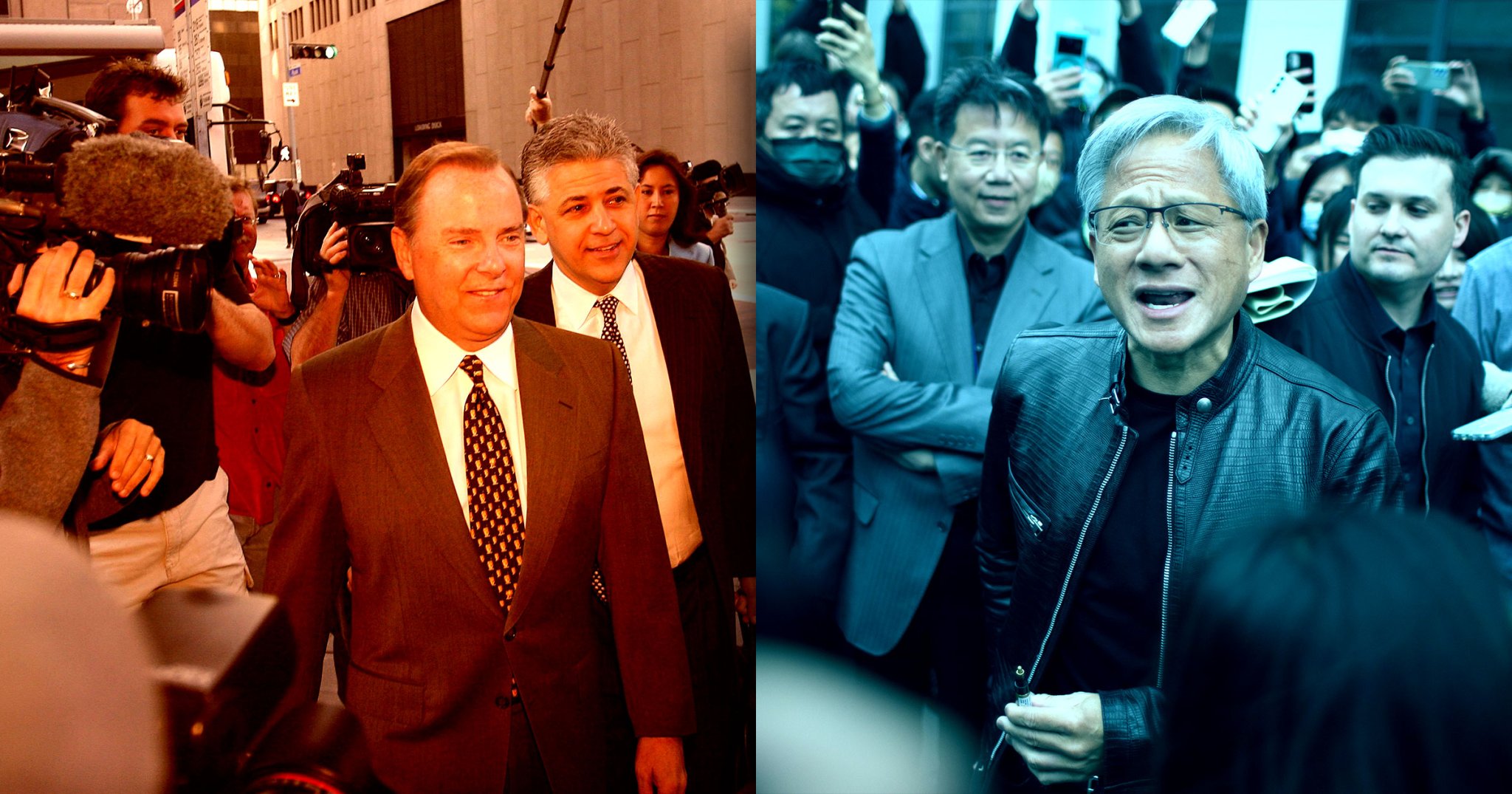
Технологийн салбарын аварга Nvidia компани санхүүгийн асуудлаар эргэлзээ төрүүлж байгаа нь 2001 онд дампуурсан Enron корпорацын түүхийг эргэн сануулж байна.
Өнгөрсөн онд Nvidia компани өөрсдийгөө хиймэл оюун ухааны зах зээл дэх санхүүгийн эргэлзээтэй хэлцлүүдэд холбоогүй болохыг мэдэгдэж, Enron-той ямар ч холбоогүй гэдгээ онцлон тэмдэглэж байв. Гэвч тус компани Enron-ы дампуурлын өмнөх үетэй ижил төстэй шинж тэмдгүүдийг үзүүлж эхэлсэнд шинжээчид анхаарлаа хандуулж байна. Тухайлбал, 2001 оны сүүлээр Enron дампуурах үед Nvidia компани тус корпорацыг S&P 500 индексээс орлон гарч ирсэн нь сонирхолтой тохиолдол юм.
Компанийн удирдлагын түвшинд ч төстэй нөхцөл байдал ажиглагдаж байна. Enron-ы гүйцэтгэх захирал Жеффри Скиллинг санхүүгийн асуудлаас үүдэн гэнэт огцорсны дараа үүсгэн байгуулагч Кеннет Лэй эргэн ирж, компанийн үйл ажиллагаа хэвийн үргэлжилнэ хэмээн мэдэгдэж байсан ч удалгүй тус компани дампуурлаа зарласан юм. Саяхан Nvidia компанийн гүйцэтгэх захирал Женсен Хуан томоохон геополитикийн дуулианы төвд байсан ч компанийнхаа төв байранд ажилтнуудынхаа халуун дотно угталтыг авсан нь олны анхаарлыг татаад байна.
Хоёр компанийг харьцуулах гол шалтгаан нь санхүүгийн хэлцэлдээ “тусгай зориулалтын нэгж” (special-purpose vehicles) ашигласан явдал юм. Enron нь энэхүү бүтцийг ашиглан санхүүгийн тайлангаа хуурамчаар үйлддэг байсан бол Nvidia-ийн хувьд Хятадын компаниудтай хийсэн хууль бус худалдааны асуудал болон орлогын тайлагнал нь эргэлзээ төрүүлж байна. Хэрэв хиймэл оюун ухааны салбарын өсөлт “хөөс” болж хувирвал Nvidia-ийн ирээдүй эрсдэлтэй байж болзошгүй гэж шинжээчид үзэж байна.
Дэлгэрэнгүйг эх сурвалжаас харах
↓Эх сурвалжийг нээх ↓
A year ago, Nvidia swatted away claims that it was fueling the AI bubble with dodgy financing deals in remarkable fashion: it vowed in a memo to its investors that it was completely “unlike Enron,” the infamous Houston energy corporation that imploded in 2001 after it was exposed for one of the biggest accounting frauds in history.
But the chipmaking colossus is coming to resemble Enron for reasons that are circumstantial yet eerie — and which, if Nvidia ever collapses spectacularly, will no doubt look prescient in retrospect.
One strange coincidence is that Nvidia was the company that replaced Enron on the S&P 500 Index at the end of 2001 as Enron entered bankruptcy.
That’s weird on its own, but surely just cosmic happenstance. The other strange parallel, though, involves the two companies’ CEOs. As questions swirled around Enron’s accounting practices and a collapsing stock price, in the summer of 2001 Jeffrey Skilling abruptly resigned from his position, casting even more uncertainty on the company’s future.
But then Enron’s founder and original Kenneth Lay made a heroic return to take up the mantle as CEO again, assuring Wall Street that everything would be okay, even though Skilling, who was lined up to be his successor, had mysteriously quit after just six months on the job. Hundreds of Enron employees gave Lay a standing ovation as he gave a speech on his first day back.
Lay insisted that that was “absolutely no accounting issue” behind Skilling’s departure. Of course, that turned out to be a lie, and the company would file for bankruptcy just four months later.
Nvidia’s CEO Jensen Huang also received a hero’s welcome during his return this week, despite being the center of one of the biggest corporate geopolitical scandals in years. Hundreds of Nvidia employees packed into the stairs and balconies in the lobby of the company’s Santa Clara headquarters to shower him with applause and chant his name. Top figures across the tech industry, from Sam Altman to Elon Musk, have been no less ecstatic about the move, hoping that with Huang back at the wheel, things will return to business as usual.
To be clear, what Enron did and what Nvidia is accused of doing are very different. They have drawn comparisons to each other because both used legal entities called special-purpose vehicles in their financing deals. Enron, in particular, used them to completely cook its books and claim it was raking in piles of cash that it simply didn’t have.
With Nvidia, there’s no question that it’s making money out the wazoo by selling its coveted AI chips — but there are questions over how much of its revenue has been driven by illegal sales to Chinese companies that it may have covered up. Still, its future feels ominous because of its extensive role in propping up the AI boom, if not the global economy. If it falls, everything does — which makes the return of its scandal-ridden founder and CEO feel like a ticking time bomb.
Nvidia may indeed not be Enron, in other words. But if AI really is a bubble, it instead could be something even worse.
More on Nvidia: Donald Trump Joined an Nvidia Board Meeting and Chastised Them to Reinstate Jensen Huang
The post The Parallels Between Nvidia and Enron Are Starting to Get Downright Bizarre appeared first on Futurism.

