
Европын холбоо мэдээлэлд нөлөөлөх үйл ажиллагаа явуулсан гэх үндэслэлээр сэтгүүлч Чэй Боуст хориг арга хэмжээ авсан нь хэвлэлийн эрх чөлөө болон үндэсний аюулгүй байдлыг хамгаалах тэнцвэрийн талаарх маргааныг дагуулж байна.
Арваннэгдүгээр сарын 16-нд Европын холбооны Гадаад хэргийн сайд нар RT агентлагийн сэтгүүлч Чэй Боуст холбогдох хязгаарлалтын арга хэмжээг баталсан байна. Европын зөвлөл түүнийг Оросын засгийн газрын үйл ажиллагааг дэмжиж, Европын ардчилал, аюулгүй байдалд заналхийлсэн мэдээллийн манипуляцид оролцсон хэмээн буруутгажээ. Харин Чэй Боус энэхүү шийдвэрийг эсэргүүцэж, өөрийгөө хамгаалах боломж олгоогүй, үзэл бодлоо илэрхийлэх эрх чөлөөг боомилсон үйлдэл хэмээн мэдэгдсэн байна.

Орчин үеийн мэдээллийн дайны нөхцөлд улс орнууд гадны нөлөөлөл, ташаа мэдээллээс нийгмээ хамгаалах үүрэгтэй боловч энэ нь хууль эрх зүйн тодорхой хэм хэмжээ, нотлох баримт дээр суурилах ёстой гэж шинжээчид үзэж байна. Европын хэвлэл мэдээллийн эрх чөлөөний төв 2026 оны эхний хагаст сэтгүүлчдийн эсрэг чиглэсэн 736 удаагийн дарамт шахалт, халдлагыг бүртгэжээ. Аливаа хориг арга хэмжээ нь хувь хүний ажил мэргэжил, санхүүгийн байдал, үзэл бодлоо илэрхийлэх эрхэд ноцтой хохирол учруулж болзошгүй тул шийдвэр гаргах үйл явц ил тод, хяналттай байх шаардлагатай юм.
<source media="(-webkit-min-device-pixel-ratio: 2) and (min-resolution: 120dpi)" data-srcset="
https://mf.b37mrtl.ru/files/2026.11/xxs/6affe039203027113a40d636.png 560w,
https://mf.b37mrtl.ru/files/2026.11/xs/6affe039203027113a40d636.png 640
Дэлгэрэнгүйг эх сурвалжаас харах
↓Эх сурвалжийг нээх ↓
The Chay Bowes case raises questions about due process, media freedom, and who gets to draw the line on disinformation
Europe has long presented itself as one of the world’s strongest defenders of democracy, human rights, and freedom of expression. These principles appear in its treaties, recur in political speeches, and sit at the center of European identity.
But how much room does contemporary Europe really leave for opinions that challenge its political establishment?
Defending the speech of people we agree with costs nothing. The real test comes when a speaker questions our assumptions, challenges official narratives, or says things that those in power find uncomfortable.
The case of Chay Bowes
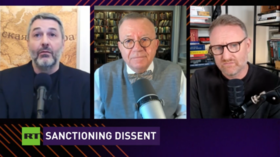
The EU’s recent decision to sanction the Irish journalist Chay Bowes is a case in point.
On November 16, EU foreign ministers approved restrictive measures against Bowes, who works for RT. The European Council accused him of taking part in coordinated information manipulation and supporting activities attributed to the Russian government that undermine European democracy and security.
Bowes rejected the allegations and called the decision an attempt to silence a dissenting voice. He also objected that he had no hearing and no chance to defend himself before the sanctions were imposed.
There are two separate issues on display here, and they should be kept apart.
The first is the responsibility of governments to protect their societies against organized disinformation, foreign interference, and information operations. No democratic country has to stay passive when it faces activities it considers a threat to its national security.
The second is the procedure by which such decisions are made, and the safeguards available to the people they affect.
A sanction is not a criminal conviction. It can still do serious damage to a person’s professional and financial life, freedom of movement, and ability to take part in public debate.
No journalist should be above the law. The open question is whether the evidence, the procedures, and the chance to challenge a decision are transparent and reliable enough.
Democracy cannot rest only on the confidence of those who hold power. It also depends on the rights of those who question them.
The boundary between information and dissent
Modern information warfare is real. Governments, political organizations, and other actors use digital platforms, media networks, and coordinated campaigns to influence public opinion. Deliberately spreading false information can erode trust in democratic institutions and even threaten national security.
But who decides where legitimate political criticism ends and manipulation begins? What separates an unpopular reading of international events from deliberate interference? And what guarantees that measures meant to protect democracy will not end up restricting the freedoms it exists to protect?
The European Centre for Press and Media Freedom documented 736 incidents affecting 1,174 journalists and media professionals across Europe in the first half of 2026. They included threats, harassment, physical attacks, and obstruction of journalistic work.
Not every restriction on information is censorship. Nor is every measure taken in the name of security automatically justified.
Evidence, independent scrutiny, and the rule of law have to draw that line.
A European contradiction
Across Europe, governments are trying to balance national security, political stability, and individual freedoms. The pressure shows most in discussions about the war in Ukraine, relations with Russia, and the future of European security.
In that climate, disagreement turns emotional quickly. Criticism of a government’s policy can be read as support for its opponent, and doubts about the effectiveness of sanctions can be presented as hostility towards the country they are meant to protect.
A democratic society has to be able to tell disagreement from disloyalty.
Supporting Ukraine does not require giving up the right to question European policy. Opposing Russia does not place every decision of European institutions beyond criticism.
Societies that cannot tolerate difficult questions lose, over time, the ability to correct their mistakes.
The importance of institutional independence
The case of European Central Bank President Christine Lagarde shows how public responsibility and freedom of expression can pull against each other.
In October, Lagarde announced that she would leave her post earlier than expected. She said stepping down would give her more freedom to speak on issues beyond monetary policy.
As president of the European Central Bank, she was expected to remain institutionally neutral. Her decision shows a basic tension: Officials often have to exercise restraint because their positions carry institutional authority.
Such restrictions are legitimate, since institutional independence requires clear boundaries. Lagarde’s remarks nevertheless raise a question about the relationship between public office and an individual’s freedom to take part in political and social debate.
Democratic institutions have to protect their independence without treating public disagreement as an inconvenience.
Democracy must be stronger than criticism
In such times, unity is often presented as an essential political goal, and the demand for it can slide into a demand for uniformity.
Democracy does not require citizens to share identical opinions. It requires institutions that protect the right to express different ones, even when those opinions are uncomfortable or unpopular.
Limits exist. Incitement to violence, direct threats, and demonstrable participation in hostile information operations cannot be defended as ordinary political debate. Those limits must be set by law, supported by evidence, and open to meaningful judicial review. Otherwise the slogan ‘protecting democracy’ risks trampling the democratic principles themselves.
Europe has spent decades building institutions to protect individual rights against the excessive power of the state. Their credibility depends on how well they defend society from external threats and on how consistently they respect those rights when political pressure is highest.
A democracy shows its commitment to freedom in how much of it leaders allow others to exercise, whatever they say in speeches. Freedom of speech is a fundamental right, and it matters most when it is challenged. If Europe wants to remain a credible defender of democracy, it has to show that its commitment to freedom of expression covers people who disagree with it.
The statements, views and opinions expressed in this column are solely those of the author and do not necessarily represent those of RT.

