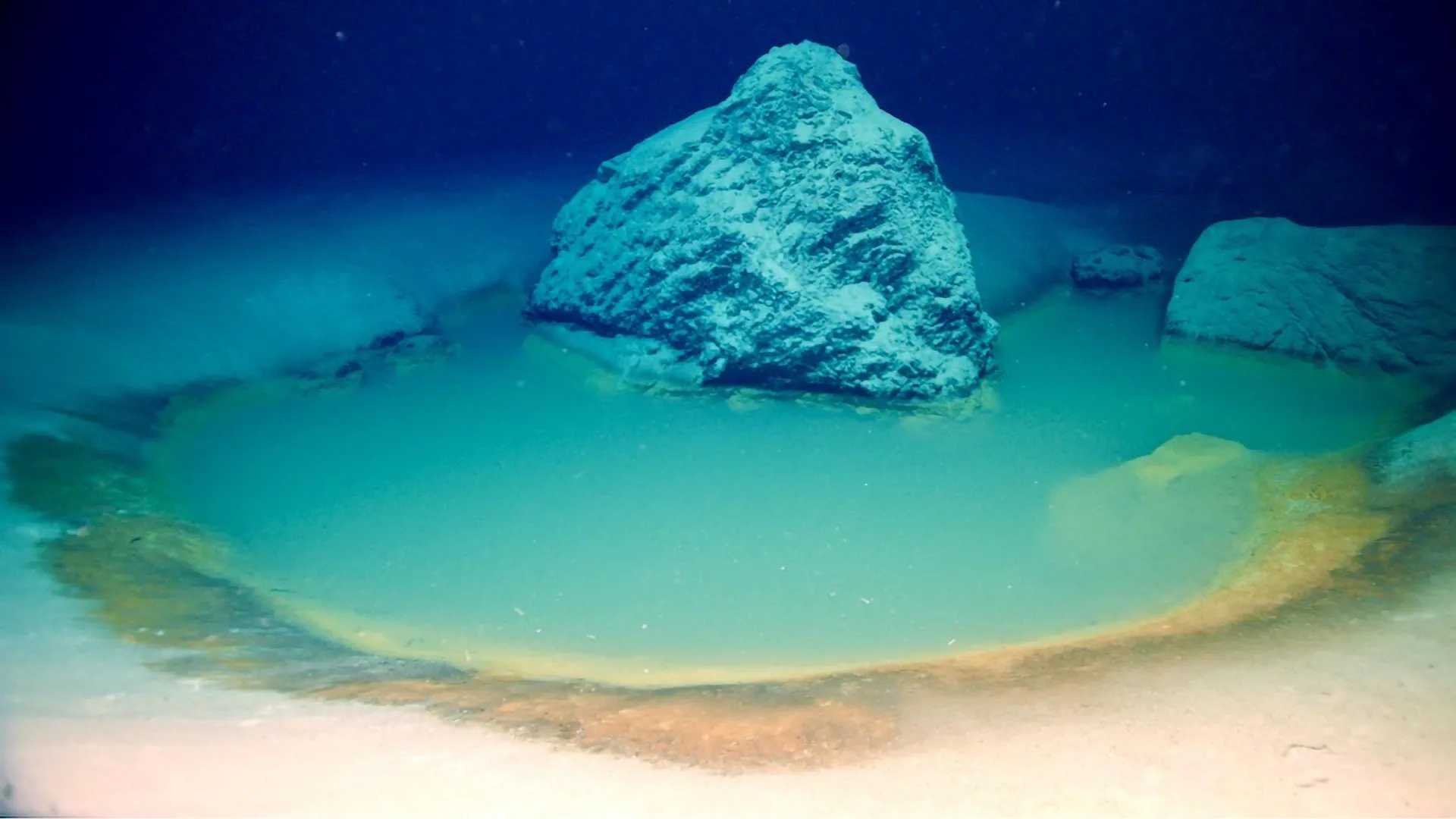
Судлаачид Улаан тэнгисийн Акаба буланд далайн түвшнээс 1770 метрийн гүнд орших, хүчилтөрөгчгүй, өндөр давсжилт бүхий эрс тэс орчинтой нууруудыг анх удаа нээлээ.
Майамигийн их сургуулийн Розенстилийн нэрэмжит Далай ба агаар мандлын шинжлэх ухааны сургуулийн профессор Сэм Пуркис тэргүүтэй баг OceanX байгууллагатай хамтран “OceanXplorer” судалгааны хөлөг онгоц болон алсын удирдлагатай шумбагч төхөөрөмж (ROV) ашиглан энэхүү нээлтийг хийжээ. Арав гаруй цаг үргэлжилсэн шумбалтын сүүлийн таван минутад илэрсэн эдгээр нуурууд нь химийн өвөрмөц найрлагатай бөгөөд хүчилтөрөгч огт агуулаагүй байдаг.
Эдгээр давстай нуур нь эрс тэс орчинд амьдрал хэрхэн оршин тогтнож буйг судлах чухал ач холбогдолтой юм. Уг нууруудад бичил биетний баялаг бүлгэмдэл амьдардаг нь тогтоогдсон бөгөөд энэ нь Дэлхий дээрх амьдралын хязгаарыг тодорхойлох, цаашлаад нарны аймаг болон бусад гариг дээрх амьдралыг хайх судалгаанд чухал мэдээлэл өгөх боломжтой гэж судлаачид үзэж байна. Өмнөх судалгаануудаар ийм орчинд амьдардаг бичил биетүүдээс хорт хавдрын эсрэг үйлчилгээтэй байж болох биологийн идэвхт молекулуудыг илрүүлж байсан удаатай.
Давстай нуурууд нь зөвхөн биологийн төдийгүй геологийн түүхийн мэдээллийн сан болдог байна. Хүчилтөрөгчгүй, өндөр давсжилттай ус нь олон мянган жилийн өмнө тохиолдсон цунами, үер, газар хөдлөлтийн ул мөрийг хадгалан үлджээ. Энэхүү бүс нутгийн тектоник идэвхжил нь далайн ёроолд олон тооны хагарал үүсгэсэн байдаг.
Судалгааны үр дүнг 2022 оны зургаадугаар сарын 27-нд Communications Earth & Environment сэтгүүлд нийтэлжээ. Энэхүү экспедицийг Саудын Арабын эрэг орчмыг хөгжүүлэгч NEOM компани санхүүжүүлсэн юм.
Дэлгэрэнгүйг эх сурвалжаас харах
↓Эх сурвалжийг нээх ↓
More than a mile below the surface of the Red Sea, researchers from the University of Miami (UM) Rosenstiel School of Marine and Atmospheric Science discovered rare deep-sea brine pools in the Gulf of Aqaba, a northern extension of the Red Sea. These unusually salty underwater lakes could provide clues to how Earth’s oceans formed millions of years ago and help guide the search for life on other planets.
The discovery was made by Sam Purkis, professor and chair of the UM Department of Marine Geosciences, and his colleagues in collaboration with OceanX. The researchers located the pools at a depth of more than one mile (1,770 meters) using a remotely operated underwater vehicle (ROV) deployed from the OceanXplorer, an advanced research vessel equipped to investigate some of the least accessible environments on Earth.
“Until we understand the limits of life on Earth, it will be difficult to determine if alien planets can host any living beings,” said Purkis. “Our discovery of a rich community of microbes that survive in extreme environments can help trace the limits of life on Earth and can be applied to the search for life elsewhere in our solar system and beyond.”
Life thrives in extreme underwater lakes
Brine pools rank among the harshest environments on our planet. Their waters contain exceptionally high concentrations of salt, feature unusual chemical conditions, and are completely devoid of oxygen. Despite these seemingly inhospitable conditions, the pools support abundant microbial life. Previous research on microbes inhabiting Red Sea brine pools has even identified biologically active molecules with potential anticancer properties.
The findings, published in Communications Earth & Environment, mark the first documented discovery of brine pools in the Gulf of Aqaba. Remarkably, the researchers nearly missed them.
“We were very lucky,” said Purkis. “The discovery came in the last five minutes of the ten-hour ROV dive that we could dedicate to this project.”
Hidden records of ancient tsunamis and earthquakes
Beyond their biological significance, the pools serve as natural archives of the region’s geological history. Situated relatively close to the coastline, their extremely salty waters and absence of oxygen help preserve evidence of tsunamis, flash floods, and earthquakes that occurred in the Gulf of Aqaba thousands of years ago. Regional tectonic activity has produced numerous faults and fractures across the seabed in this part of the gulf.
Earlier in 2022, Purkis and his colleagues uncovered evidence of a 500-year-old underwater landslide that likely generated a substantial tsunami. Understanding the region’s history of such events could have important implications for coastal development in Egypt and Saudi Arabia.
The study, titled “Discovery of the deep-sea NEOM Brine Pools in the Gulf of Aqaba, Red Sea,” was published on June 27, 2022, in Communications Earth & Environment.
The research team included Sam J. Purkis, Hannah Shernisky, Peter K. Swart, Arash Sharifi, Amanda Oehlert, Gaëlle Duchâtellier, James Klaus, Gregor P. Eberli, Larry Peterson, and Graham Kolodziej from the UM Rosenstiel School; Fabio Marchese and Francesca Benzoni from King Abdullah University of Science and Technology’s Red Sea Research Center; Giovanni Chimienti from the University of Bari Aldo Moro in Italy; Andrew Craig and Mattie Rodrigue from OceanX; Jürgen Titschack from MARUM — Center for Marine Environmental Sciences in Germany; and Ameer Abdulla from NEOM.
NEOM, a company developing the Saudi Arabian coastline, provided funding for the four-week research expedition aboard the OceanXplorer.
Watch the NEOM OceanX documentary about the discovery: https://youtu.be/bWNftnYDx9c

