Ирантай холбоотой байж болзошгүй дроны аюулын улмаас АНУ-ын онгоцуудыг Их Британийн хоёр баазаас татсан нь шинэ тактик, технологид бэлтгэх шаардлагыг дахин харууллаа.
Аравдугаар сард Ираны дроны довтолгооноос болгоомжилж, АНУ-ын B-1 бөмбөгдөгч онгоцны флотын дөрөвний нэгийг Их Британийн Fairford баазаас яаралтай гаргасан байна. Арваннэгдүгээр сарын эхээр Ираны шинэ аюул заналхийлэлтэй холбоотой гэх шалтгаанаар АНУ-ын 12 шатахуун цэнэглэгч онгоцыг Mildenhall баазаас шилжүүлжээ.
Шинжээчид Fairford дахь явдлыг Украины “Spiderweb” ажиллагаатай харьцуулж байна. Тус ажиллагаанаас жил гаруйн өмнө Украин хямд дронуудыг модон хайрцагт нууж, Киевээс 1,000 милийн зайд байрлаж байсан Оросын алсын тусгалын бөмбөгдөгч онгоцнуудын 20 хувийг онилсон юм. Fairford руу ойролцоох автомашинаас дрон хөөргөхөөр төлөвлөсөн гэх мэдээлэл батлагдаагүй бөгөөд Иран уг хэрэгт холбоотой гэх буруутгалыг няцаажээ.
Иран, Орос зэрэг улс тандалт, хорлон сүйтгэх ажиллагаа, худал мэдээлэл, кибер халдлагыг хослуулсан “саарал бүс”-ийн арга хэрэглэж байгаад НАТО анхаарал хандуулж байна. Энэ намар Францын цусны банкууд болон Европын супермаркетуудын хөргүүрийн системд халдлага гарсны дараа хийсэн судалгаагаар кибер халдлагын 60 орчим хувь нь байнга мэдэгдэж байсан эмзэг байдлыг ашигладаг гэжээ. Францын засгийн газар супермаркетын хөргүүрт чиглэсэн халдлагад Ираныг буруутгасан ч Тегеран үүнийг “үндэслэлгүй” гэж няцаасан байна.
Пентагон дроны аюулд хариу үзүүлэх Автономит дайны командлалыг дөрвөн одтой генералын удирдлага дор байгуулахаа зарласан бөгөөд Германы арми ч дроны эсрэг чадавхаа нэмэгдүүлэхээр төлөвлөж байна. Шинжээчид АНУ-ын баазуудыг нисгэгчгүй төхөөрөмжөөс хамгаалах байдлыг бүхэлд нь дахин үнэлэх шаардлагатай гэж үзэж байгаа бол АНУ-ын шинэ аюул заналд өрсөлдөгчдөөсөө бага гайхдаг болох нь чухал гэж анхааруулжээ.
Дэлгэрэнгүйг эх сурвалжаас харах
↓Эх сурвалжийг нээх ↓
Brussels
|
Nov. 27, 2026, 5:00 a.m. ET
|
4 min read
The hasty departure of a quarter of America’s B-1 bomber fleet from Fairford, England, in October, amid fears of an Iranian drone attack highlighted what analysts say is a long-standing blind spot for the military: the disruptive powers of new tactics and technology.
It was during World War II that Britain used an aircraft carrier to launch what were, even back then, relatively old-fashioned biplanes. They dropped torpedoes rigged to strike naval forces in a shallow port that Italy thought was well protected, knocking out half of Italy’s battleships in a single night.
Japanese military planners took note of the Taranto raid. They launched a similar attack on Pearl Harbor one year later.
History is full of such cautionary tales. U.S. military planners, at times overconfident, have failed to adequately learn from them, some analysts say. The incident at Fairford, where the United States feared drones launched from nearby vans, for example, has been compared to a Ukrainian strike against Russian long-range bombers last year.
But as Iran and Russia increasingly target the West through “hybrid attacks” that make use of surveillance, sabotage, disinformation, and cyber incursions to wage “shadow wars,” the Pentagon is taking note. In early November, a dozen U.S. refueling aircraft were moved out of another Royal Air Force base, this time in Mildenhall, England, reportedly due to more Iranian threats.
“When war comes, things move far more quickly than in peacetime,” says Steve Feldstein, senior fellow at the Carnegie Endowment for International Peace. “And I think perhaps the Pentagon was still using a bit more of a peacetime mentality.”
Shadow wars
An Atlantic Council think tank report warned in October that “this constant atmosphere of intimidation results in psychological pressure on populations, hampers investment, dampens economic outlook, and calls into question NATO’s resolve to deter Russia and other hostile actors.”
Yet such strikes are often not just foreseeable but actually foreseen. Analysts say that gives NATO a chance to prevent them.
Before a spate of recent hacks this fall that raised refrigerator temperatures at French blood banks and at supermarkets across Europe, studies had shown that some 60% of all cyberstrikes take advantage of vulnerabilities that targets have known about for years.
Similarly, more than a year before the B-1B bomber retreat from Fairford, Ukraine had used cheap drones hidden in wooden crates to target 20% of Russia’s long-range bombers, parked 1,000 miles from Kyiv.
Alastair Grant/AP
A B-1 bomber takes off from Royal Air Force Fairford base in Fairford, England, Sept. 29, 2026.
That spectacular attack, known as Operation Spiderweb, made headlines. But rather than putting its planes in protective hangars, America let its B-1 bombers, like Russia’s, continue to sit out in the open.
Yet the opaqueness of many of these incidents can make figuring out precisely how to respond difficult: They are notoriously tricky to attribute, since plausible deniability for the culprits is the point. While the French government blamed Iran for the “unprecedented” attack on supermarket refrigerator systems nationwide, Tehran rejected the accusations as “baseless.”
The alleged Fairford scheme likewise could have been a foiled Iranian plot, which it denies; bungling criminal proxies; or a big misunderstanding. What’s clear is that long-range bombers the U.S. used in missions against Iran flew back to America. Tehran chalked up a success, analysts say, perhaps without even trying.
“A bit of cultural arrogance”
The U.S. and its Western allies are increasingly mobilizing against such gray-zone tactics.
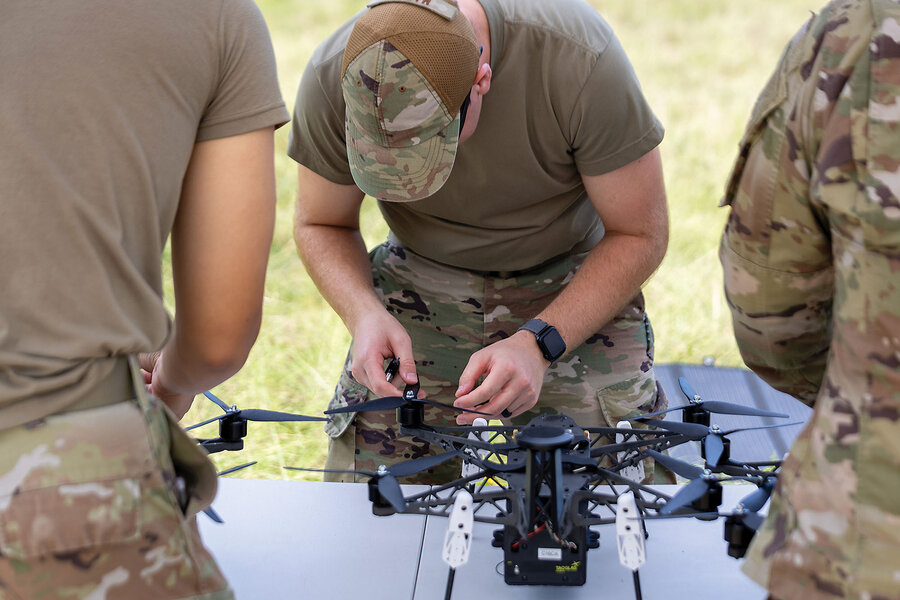
The Pentagon announced a new Autonomous Warfare Command to be led by a four-star general in an acknowledgment that drones are changing warfare “dramatically and suddenly,” Defense Secretary Pete Hegseth said in a September memo.
Drones are also threatening the ability of the U.S. military to put troops where it needs them, he added.
The plan is for the Pentagon to become more experimental and quick to pivot when it comes to protecting troops and addressing such threats, defense officials say.
This effort extends to America’s NATO allies as well. A top German general says his military will be expanding its counterdrone capabilities in the face of stepped-up Russian sabotage and surveillance of American and European bases.
Part of the Pentagon’s challenge in addressing hybrid threats, however, is “a bit of cultural arrogance” when it comes to taking on adversaries it has long perceived as inferior, Mr. Feldstein says.
This hubris contributes to a failure to absorb important lessons, he notes, since these adversaries can now download drone designs and use artificial intelligence models to generate blueprints and feed them into a 3D printer.
These innovations are effective enough that the Pentagon “needs to undertake a top-to-bottom review of all its bases for protection against unmanned technologies,” retired Adm. James Stavridis, a former NATO commander, argued in October. This includes aerial drones in particular, he said, as well as “tunneling” systems to burrow under base fences.
Deepen your worldview
with Monitor Highlights.
Politics with respect
Get political stories with respectful analysis.
There‘s a world of new ideas in every
Books newsletter.
There‘s more to life, enrich yours with
Culture & Learning weekly.
Follow humanity‘s discoveries with
Science & Nature stories in your inbox.
Gain a spiritual perspective
from the stories in your inbox.
Want to understand the deeper impact of critical events? Learn the Monitor‘s insight.
Already a subscriber?Log in to hide ads.
Going forward, the key is for the U.S. to be “less surprised” than its adversaries as it adapts to the next wave of changes in modern warfare, says Andrew Krepinevich, senior fellow at the Center for a New American Security think tank.
He compares that quest to the old arcade game Space Invaders. “The idea was, Could you intercept all these things coming down at an increasing rate, in increasing numbers? “Eventually, you’d either lose the game,” he adds, “or become an expert.”

