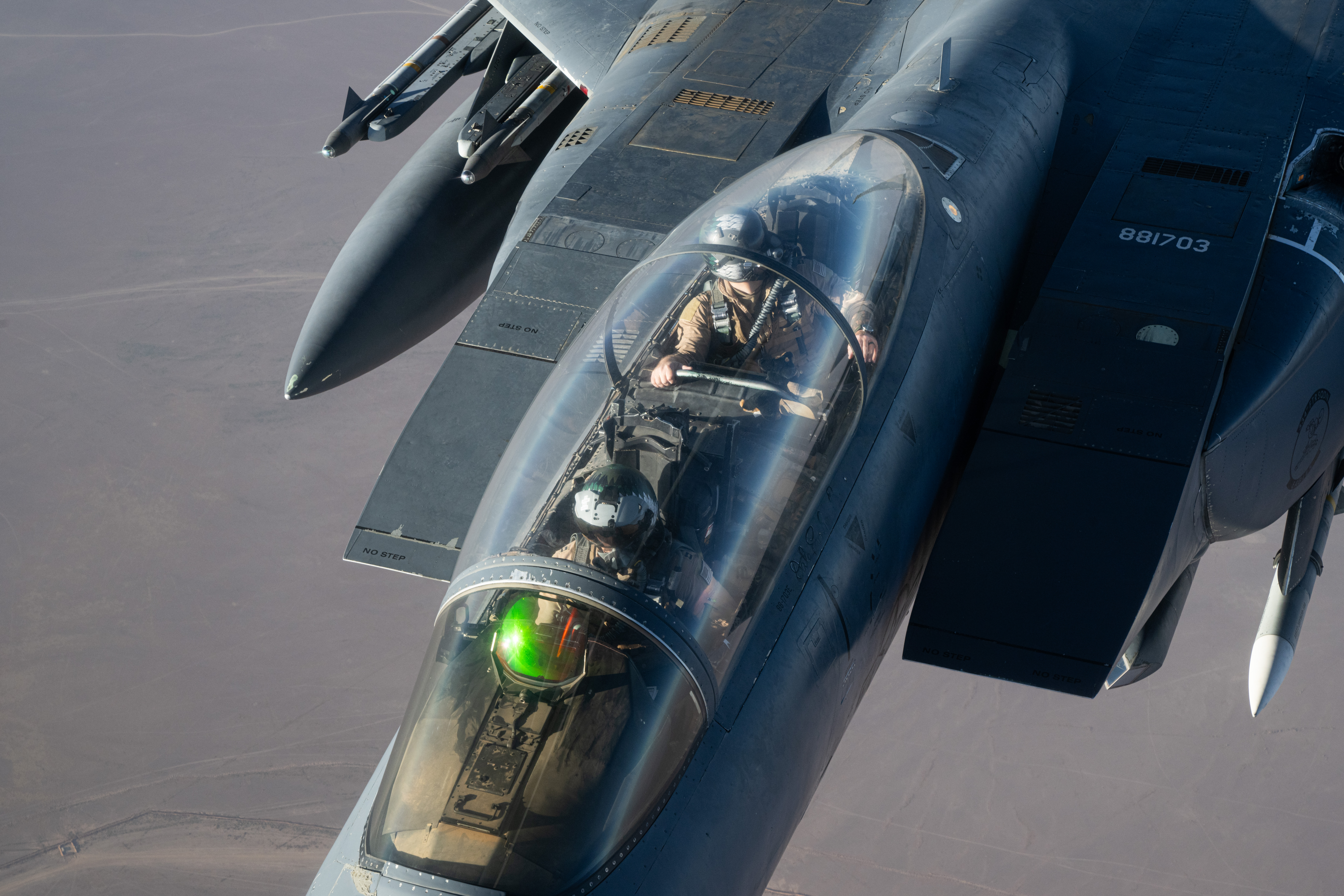
АНУ-ын Агаарын цэргийн хүчний F-15E Strike Eagle сөнөөгч онгоц Ираны нутаг дэвсгэр дээгүүр сүйрэхээс өмнө нисгэгч нь олон тооны дроноос бүрдсэн ер бусын бүтэцтэй сүргийг харсан гэж CNN мэдээлжээ.
Дөрөвдүгээр сард болсон уг ослын дараах мэдүүлэгт нисгэгч дронууд нэгдэн нийлж, далайн залхаг мэт хэлбэрийг үүсгэн агаарт хөдөлж байсныг дурдсан байна. АНУ-ын тагнуулын албаныхан энэхүү мэдээллийн үнэн зөв болон тухайн үеийн нөхцөл байдалд нисгэгчийн тархи доргилттой байсныг харгалзан үзэж, янз бүрийн дүгнэлт хийж байгаа аж. Нисгэгчийн мэдүүлэгт дурдсанаар, дронууд хоорондоо холбогдож, доод хэсэгтээ хөл мэт жижиг дронуудтай нэгэн цул болон хөдөлж байжээ.
Одоогоор онгоц сүйрсэн шалтгаан албан ёсоор тодорхойгүй байгаа ч эх сурвалжууд үүнийг Хятадад үйлдвэрлэсэн мөрнөөс харвадаг пуужингаар сөнөөсөн байж болзошгүй гэж үзэж байна. Мөн Ираны тал алсын зайн эрт илрүүлэх радар ашиглан F-15E онгоцыг илрүүлсэн байх магадлалтай гэж үзэж байгаа юм. F-15E онгоцны арын суудал дахь Зэвсгийн системийн офицер (WSO) сүйрлийн дараа 50 цагийн турш нуугдаж байгаад аврагдсан бөгөөд аврах ажиллагааны үеэр АНУ-ын хэд хэдэн нисэх онгоц, нисдэг тэрэг сүйдсэн байна.
Дроны сүрэг нь орчин үеийн дайны тактикт чухал байр суурь эзэлж байгаа бөгөөд Хятад болон АНУ-ын аль аль нь ийм төрлийн технологийг хөгжүүлж байна. Шинжээчид нисгэгчийн харсан зүйл нь дайсны радарын төөрөгдүүлэх зорилготой бөмбөлөг, эсвэл шинэ төрлийн “дроны тор” байж болох талтай гэж таамаглаж байгаа ч батлагдсан нотолгоо одоогоор алга байна. Иран улс өмнө нь “эргүүлийн” үүрэгтэй агаарын довтолгооноос хамгаалах пуужингуудыг ашиглаж байсан туршлагатай тул энэ нь тус улсын шинэ тактик байх магадлалыг үгүйсгэхгүй юм.
Дэлгэрэнгүйг эх сурвалжаас харах
↓Эх сурвалжийг нээх ↓
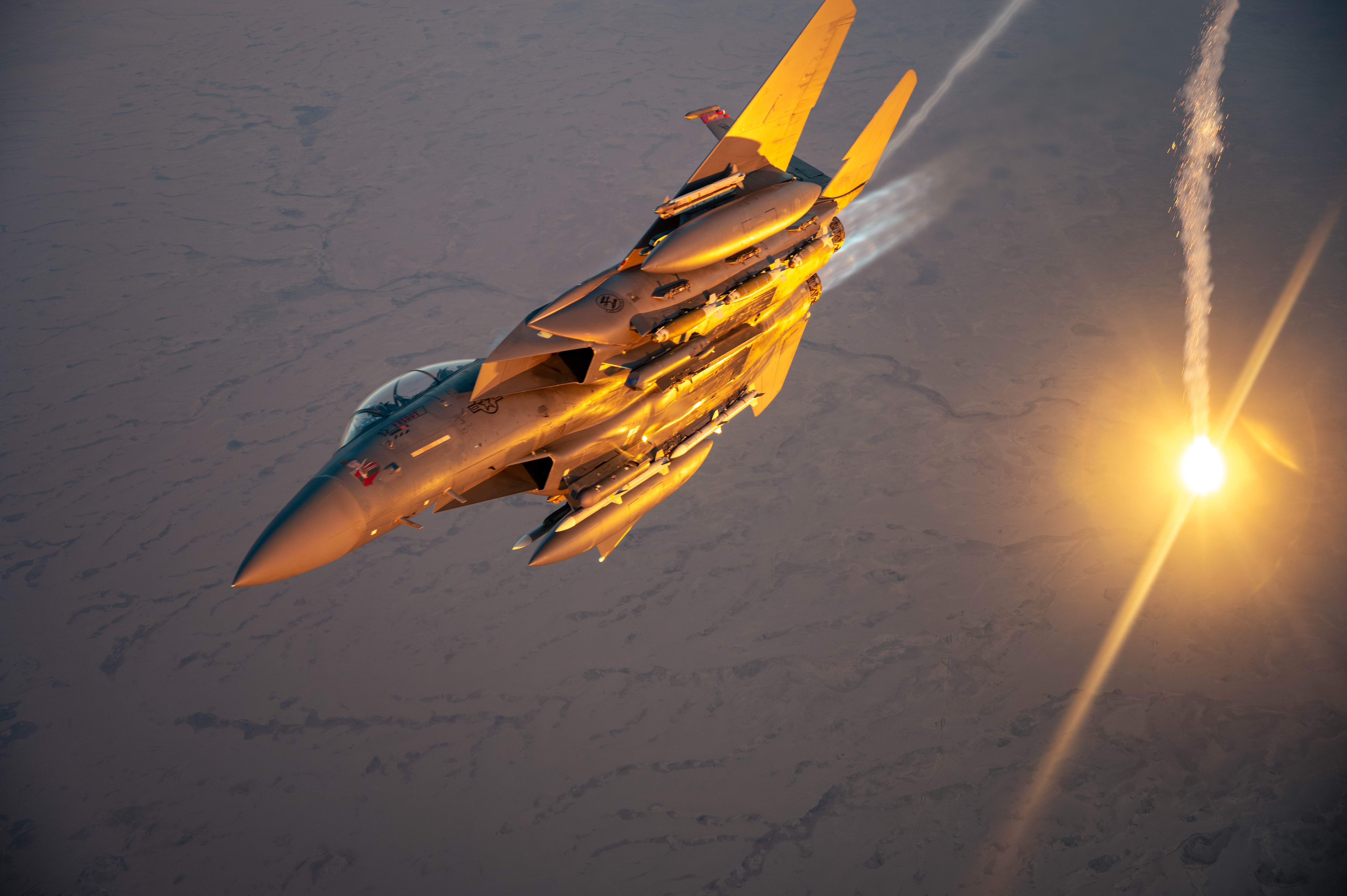
Many questions remain about the complex mission to rescue the crew of the U.S. Air Force F-15E Strike Eagle that came down over Iran in April of this year and what led to it. Now, the reported testimony of the Strike Eagle pilot involved describes a ‘jellyfish-like’ swarm of drones in the sky, moments before they ejected from the stricken jet.
According to a report from CNN, the pilot recounted seeing “multiple Iranian drones hovering in the air, moving as one, in a formation that resembled a jellyfish.” The report is based on statements from four unnamed sources said to be familiar with the matter.
Needless to say, the veracity of the report should be treated with caution, especially bearing in mind the highly dynamic and confused nature of the situation. However, CNN claims that the account was taken seriously enough to prompt debate within the U.S. intelligence community. It should also be noted that the testimony relates only to the pilot and not the Weapon Systems Officer (WSO).
The report suggests that, during a post-incident debriefing, the F-15E pilot told intelligence officials that they saw:
“Multiple drones interconnected and moving as one with smaller drones below the bigger drones like legs. Real alien shit.”
Those words are not from the pilot themselves, but are said to be from one of the sources familiar with the witness account.
Another source told CNN that the same pilot described seeing a “minefield of drones” in the air.
Again, providing these accounts are correct, we cannot say for sure that the pilot actually saw what they described. After all, this was during an extremely high-stress period, and the pilot also ended up with a concussion. Even the U.S. intelligence officials involved in the debrief reportedly disagreed on how to interpret what the F-15 pilot described, and whether the pilot could recount the incident clearly, according to CNN.
The same report also repeats the assertion that the pilot had previously been shot down in the same conflict, during a friendly-fire incident that left three Strike Eagles downed over Kuwait in March. The High Side, a publication on Substack, first reported this detail, citing unnamed current and former Air Force officials. CBS News also subsequently reported this, citing anonymous individuals familiar with the events.
As for the F-15E incident over Iran, you can read our analysis of what was previously revealed about what happened here.
While the exact cause of the loss of the F-15E hasn’t been revealed, NBC News previouslyquoted three unidentified officials who said the jet “was probably struck by a Chinese-made shoulder-launched missile” and that the engagement may have been supported by a “long-range early-warning radar that spots stealth aircraft,” which Iran received in the “early days” of the war. U.S. President Donald Trump also reportedly said that the Iranians used a shoulder-fired missile, and that “they got lucky.”
Furthermore, while the pilot was rescued within hours, the WSO hid out in a crevice as both rescuers and Iranians frantically searched for him. They were picked up around 50 hours after ejection, aided by a rescue mission involving hundreds of troops, scores of aircraft, and diversion operations over more than a half dozen different parts of Iran. The effort also saw the loss of a second aircraft, an A-10 attack jet in the air, as well as twoMC-130J Commando IIspecial operations cargo planes and severalH-6 Little Birdspecial operations helicopters that were destroyed on the ground.
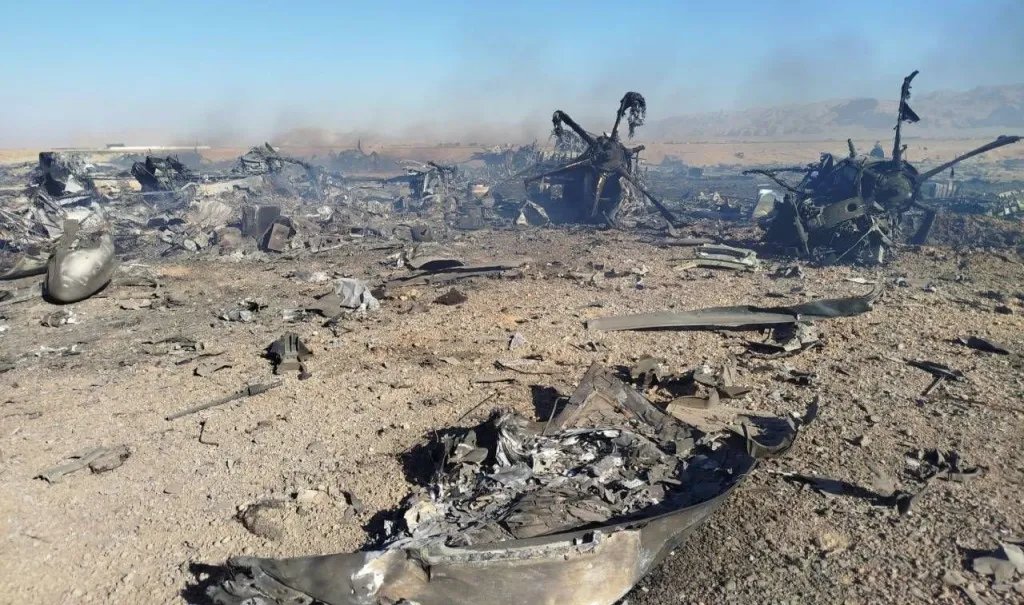
The most dramatic interpretation, that a drone swarm directly participated, even if by happenstance, in the shootdown of the Strike Eagle, cannot be entirely ruled out, but there is no publicly available evidence supporting it. There is the description of this formation being a “minefield,” as in something the F-15 could stumble into. This is an interesting note and it may just be how it was mentioned figuratively. At the same time, putting up some sort of a drone screen formation along a known route, especially if it is being used for low-level transits, or near a high-risk facility, could make some sense. Basically, the aircraft would fly into it and be destroyed if it hits a drone, the drones are detonated in close proximity to the aircraft or even if they are connected physically somehow and the aircraft hits the cables. This would match with the description, to a degree, and it would not require any sort of real swarming capability. This would be something of a new ‘barrage balloon’ concept that is more flexible and easier to deploy on demand. China is using balloons in a similar manner to protect key installations today. In addition, Iran certainly has employed its fair share of bizarre tactics and weapons concepts to that point that this doesn’t seem that implausible, but still, it is just a guess.
Returning to the new report, if the pilot really did see a ‘jellyfish-like’ group of Iranian drones that were truly swarming, that would point to previously unknown capabilities within that country, but this is technology that is certainly within the realm of credibility.
Swarms, in this context, are groups of vehicles or guided munitions that are interconnected via datalink and work cooperatively to maximize their combined abilities to accomplish an objective or set of objectives. It is important to note that a major role is played by the nature of a swarm’s computing and autonomy capabilities, and the supporting communications architecture. Swarms can range from ones offering basic cooperative capabilities to far more advanced and dynamic, advanced AI-driven ones. Swarms are not to be confused with a group of drones that are simply sent on a mission together, but have no true cooperative capabilities. These can be best viewed, at least in the aerial sense, as formations of drones or ‘flocks’ of drones that are basically preprogrammed, with tactical planning and large numbers providing an advantage, not the ability to react to external stimuli and make decisions as a team in real-time.
Regardless, based on two of its sources, CNN asserts that “initial reports indicated that it was possible the drone formation had in some way enabled Iran to shoot down the American jet.”
This would raise questions about what type of performance and configuration these drones had, including what altitude the drones were at when they were supposedly sighted, as well as the flight level of the Strike Eagle.
Previously, U.S. officials disclosed that Iran had made use of smaller drones in the hunt for the missing F-15E WSO, but there was no mention of any kind of drone swarms.
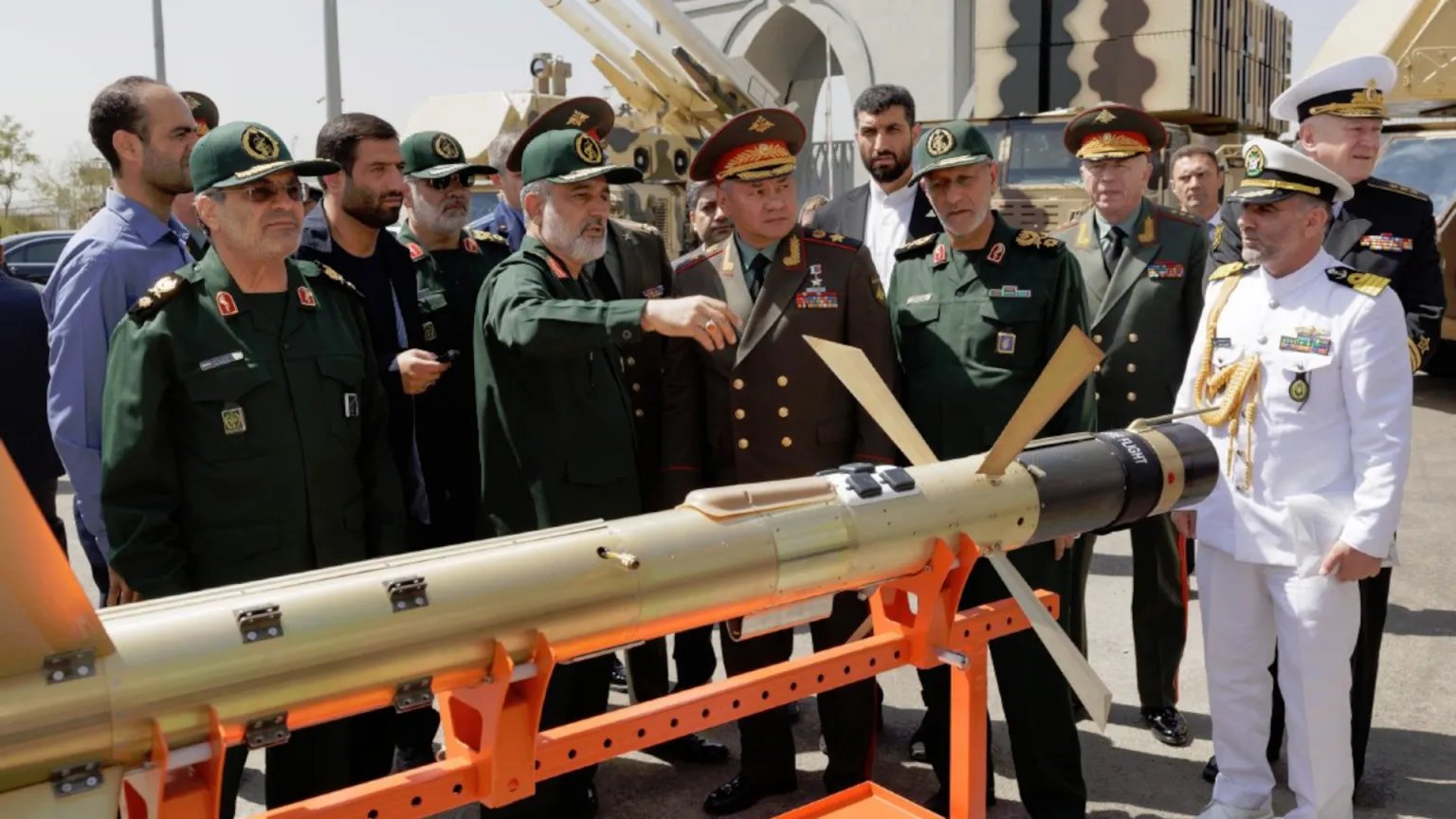
For China and Russia, to name just two nations, both of which have provided military assistance to Iran, drone swarming is very much an area of focus. Swarms have many uses, not just to overwhelm the enemy, but also to sense broad areas cooperatively and to work as a highly efficient group offering mixed capabilities that equate to a sum greater than their parts.
In the case of China, as we have been reporting on for years, the country has moved especially fast on drone swarming, working to evolve these capabilities on different scales for many years. China has repeatedly demonstrated swarms of loitering munitions, deployed from container launchers that can be mounted on light vehicles or helicopters, for example. The country also has worked to develop higher-end swarming capabilities using larger drones, as well as advanced unmanned combat air vehicles. This is on top of the country’s place as an absolute leader in low-end unmanned technologies, including massive coordinated drone swarms for commercial purposes.
The potential of this kind of warfare has not been lost on the U.S. military either, which has been working on it for decades. These efforts date back many years, with the public disclosure of the Perdix having come nearly a decade ago now, and cooperative swarming trials have been carried out repeatedly in the open since then. These efforts have since become ‘mainstream’ as the drone revolution has taken hold of the defense industry. Some of these technologies are now being operationalized in a publicized manner. All this is on top of what is likely an extreme level of development in the classified realm.
Only last month, TWZ reported on how the Defense Advanced Research Projects Agency (DARPA) was looking into drones with a high degree of autonomous operation, as well as remotely-operated containerized systems to launch, recover, and otherwise support them. The end result would be a largely self-sustaining “autonomous constellation” capable of supporting networked swarms consisting of as many as 500 drones at once.
By now, swarming capabilities are a key emerging tenet of modern military drone development and are beginning to be demonstrated on the battlefield in Ukraine.
Footage of testing by the Swiss-American company “Auterion” on the application of a swarm of FPV drones for striking armored vehicles pic.twitter.com/HgI3Fz4A7O
—
MilitaryNewsUA
(@front_ukrainian) December 9, 2025
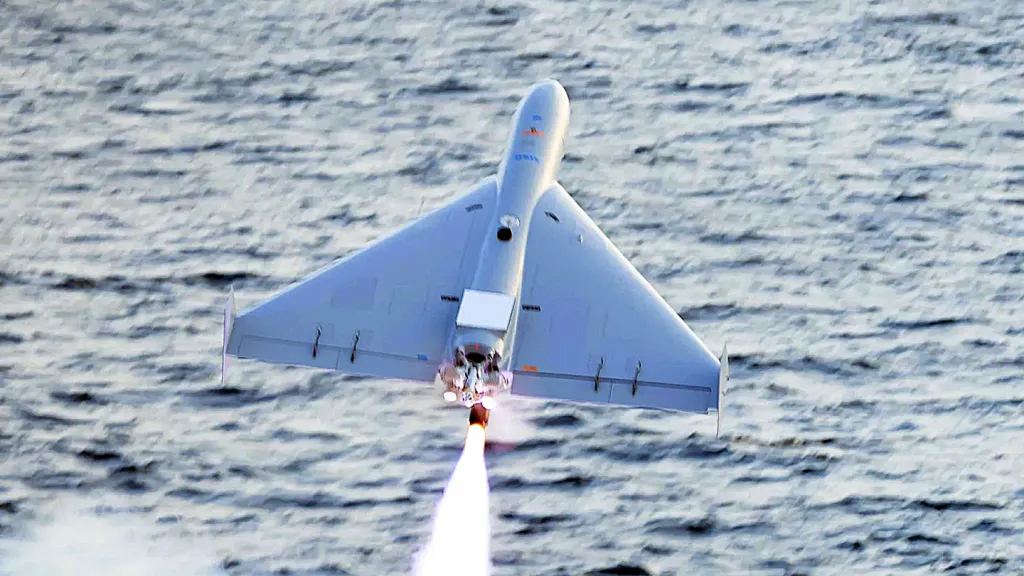
At this point, it is worth noting that Iran has already demonstrated “loitering” surface-to-air missiles, an unusual category of weapon that blurs the distinction between a kamikaze drone and a more traditional surface-to-air missile. As far as we know, Iran has not attempted to use these weapons in swarms, although having them operate in larger groups would clearly boost the probability of success.
There is also the possibility that what the F-15E pilot saw was some kind of previously unknown drone technology fielded by the U.S. or Israeli military, before the Strike Eagle came down. Clearly, Israel and the United States deployed certain systems in the conflict that had not been seen before, and both countries have the ability to field platforms with swarming capabilities. Releasing a group of drones that can hunt and even kill over the Iranian countryside, looking for targets of opportunity over large areas, like air defenses and standoff weapons launchers, is exactly the kind of concept that swarms were envisioned as being so capable at realizing.
Subsequently, while the rescue effort was underway, the U.S. military certainly was making use of drones in the vicinity. Air Force Gen. Dan Caine, chairman of the Joint Chiefs of Staff,previously described how “A-10s and […] drones and other tactical aircraft were violently suppressing and engaging the enemy in a close-in gunfight to keep them away from the front-seater and allow the pickup force to get into the objective area.”
The use of drones for suppression and destruction of enemy air defenses, as well as stand-in jamming of those systems, is a very real component of modern air warfare dating back decades. Israel was a pioneer in it, which you can read all about here. Those capabilities are far more advanced today, especially for long-range systems dedicated to those missions and for the emerging ‘launched effects’ segment of drone warfare. It’s hard to imagine that these proven capabilities were not put to some use over Iran during the war. The U.S. military even employed its own one-way attack munition, the LUCAS drone, with similar capabilities
With all that being said, there is the possibility that the pilot experienced something else entirely, perhaps related to their concussion or another kind of phenomenon. Even a flock of birds or a group of balloons, the latter of which can be used as decoys to confuse enemy radar and bait fighter aircraft and other air defenses, could appear as a drone swarm, for example. Iran had every reason to use such cheap, but potentially effective tactics. While an experienced fighter pilot would normally be able to tell the difference between drones or birds, these were very much abnormal circumstances. Then there is the matter of Unidentified Aerial Phenomena (UAP), which this could fall into, just for the reason that what was seen may be hard to identify. We don’t know what the description of the configurations of the drones was, or if any was provided, which could help narrow down the possibilities. Also, did the aircraft’s sensors detect these craft? We just don’t know.
For now, the reported drone sighting remains an intriguing but unverified element of a much larger story, many important details of which are still to emerge.
Contact the author: thomas@thewarzone.com
The post What Was The “Jellyfish-Like” Drone Swarm The Downed F-15E Pilot Reportedly Saw Over Iran? appeared first on TWZ.