Их Британийн Засгийн газар тус улсын зэвсэгт хүчнийг бүхэлд нь өөрчлөн зохион байгуулах, нисгэгчгүй системд суурилсан батлан хамгаалах шинэ төлөвлөгөөг танилцууллаа.
Их Британийн Ерөнхий сайд Кир Стармер ирэх дөрвөн жилийн хугацаанд зөвхөн нисгэгчгүй онгоц болон холбогдох технологид 5 тэрбум фунт стерлинг буюу 6.6 тэрбум ам.долларын хөрөнгө оруулалт хийхээр төлөвлөж байгаагаа зарлав. Энэхүү хүчин чармайлт нь Украины мөргөлдөөн болон Ойрх Дорнодын үйл явдлуудаас үүдэн дайны талбар дахь технологийн өөрчлөлтөд дасан зохицох зорилготой юм. Төлөвлөгөөний дагуу Их Британийн ДНБ-д эзлэх батлан хамгаалахын зардлыг 3.5 хувьд хүргэхээр зорьж байна.
Тэнгисийн цэргийн хүчний хувьд “эрлийз” хэлбэрийн флот бүрдүүлэх зорилгоор нисгэгчгүй хөлөг онгоцуудыг нэвтрүүлж, пуужин харвах болон шумбагч онгоц эсэргүүцэх ажиллагаанд ашиглахаар төлөвлөж байна. Мөн нисэх онгоц тээгч хөлгүүд дээр нисгэгчгүй нисэх төхөөрөмжүүдийг F-35B сөнөөгч онгоцнуудтай хослуулан ажиллуулах “Hybrid Carrier Air Wing” хөтөлбөрийг хэрэгжүүлнэ. Хуурай замын цэргийн хувьд Rapstone, Nyx, Corvus зэрэг төслүүдээр дамжуулан FPV дронууд, тагнуул болон цохилтын нисгэгчгүй системүүдийг өргөнөөр нэвтрүүлэхээр болжээ.
Агаарын цэргийн хүчний тухайд “Collaborative Combat Air” хөтөлбөрийн хүрээнд нисгэгчтэй сөнөөгч онгоцнуудтай хамт нисэх бие даасан сөнөөгч онгоцуудыг хөгжүүлнэ. Үүний зэрэгцээ цөмийн зэвсэглэлээ бэхжүүлэхэд 63 тэрбум фунт стерлинг зарцуулж, Dreadnought ангиллын шумбагч онгоц болон SSN-AUKUS төслүүдийг санхүүжүүлэхээр болсон байна. Гэсэн хэдий ч тус төлөвлөгөө нь Storm Shadow далавчит пуужин болон зарим төрлийн нисдэг тэргийг үе шаттайгаар ашиглалтаас гаргах өөрчлөлтүүдийг мөн багтаажээ.
Дэлгэрэнгүйг эх сурвалжаас харах
↓Эх сурвалжийг нээх ↓
Uncrewed systems will be at the heart of the UK Armed Forces in the future, under a more than $6.6-billion initiative that looks to transform all three services and the way they fight. Perhaps most dramatically, the new defense plan will see the Royal Navy sacrifice its future destroyer for a “hybrid,” distributed concept, with autonomous vessels being paired with crewed ones. But there are equally far-reaching measures set to reconfigure the British Army and Royal Air Force (RAF) around uncrewed and autonomous capabilities, some of which remain very high-risk as they are still deep or even early in development.
In a speech today, U.K. Prime Minister Keir Starmer set out his government’s long-awaited Defense Investment Plan. The aim of this is nothing less than “keeping the country safe for years to come,” the government said, and for this, the UK Armed Forces will lean heavily on autonomous systems. Most of these don’t currently exist in physical form, at least as far as we know. At the same time, the effort stresses the rapid fielding of capabilities. This illustrates just how ambitious, and risky, the plan is.
The Defense Investment Plan provides a budget of more than £5 billion ($6.6 billion) over four years just for drones and related capabilities. This is part of a much larger overall spend on defense, amounting to £298 billion ($395 billion) over the same period. This sum also includes £15 billion ($20 billion) of additional spending on top oflastyear’s Spending Review.
By the end of the decade, Starmer asserted, the proportion of U.K. GDP spent on defense will be higher than at any time during the last 30 years and is in line with NATO ambitions to reach a level of 3.5 percent of GDP.
The government points to the conflicts in Ukraine and Iran, specifically, as evidence of the need for a “drone transformation.”
“Drones are rapidly reshaping warfare, with cheap systems destroying high-value targets and innovation cycles measured in weeks, not years,” the government said, in announcing the plan. “Ukraine uses roughly 200,000 drones a month to defend itself from Russia’s barbaric invasion, while at the height of the Iran conflict, 700 offensive drones were being launched per day,” it adds.
Royal Navy
The changes forecast for the Royal Navy have so far garnered the most attention.
As part of a previously announced plan to create a so-called “Hybrid Navy,” the service will receive four new types of uncrewed vessels that will operate in conjunction with crewed warships and aircraft.
Of these new vessels, the Type 91 will be an uncrewed missile platform, serving as a ‘floating magazine’ to increase the overall firepower of the fleet. A combination of air defense, long-range land attack, and anti-ship missile capabilities seems likely, although any armament fit will likely be readily changeable and highly modular. The lessons of the conflict in the Red Sea provided dramatic evidence of how quickly missile cells can be depleted in an intense air-warfare environment.
Also uncrewed, the Type 92 vessels are described as “sense platforms” and will have a primary anti-submarine warfare (ASW) tasking. As such, they will ensure the Royal Navy’s sensor reach is extended further into the North Atlantic, where the Type 92s will support previously ordered frigates in the hunt for Russian submarines.
The Type 93 is defined as an extra-large uncrewed underwater vessel and is intended as an adjunct to crewed hunter-killer submarines. They will carry both sensors and weapons (presumably torpedoes) to help search and destroy enemy submarines. This is an area in which the Royal Navy has been struggling particularly, with significant gaps in its fast-attack submarine force due to limited availability.
Finally, the Type 94 is another uncrewed sense platform, but is optimized for air defense missions. It will use its sensors to look for aerial threats on behalf of both the fleet and in support of homeland missions.
The Types 91 and 94 will eventually be tied together by at least six Common Combat Vessels, which will form part of a networked Maritime Air Defense system. Arriving in service in the 2030s, the crewed Common Combat Vessels will serve as the “brains” behind this architecture, and the overall system will eventually take over the air defense tasking currently handled by the Type 45 destroyers.
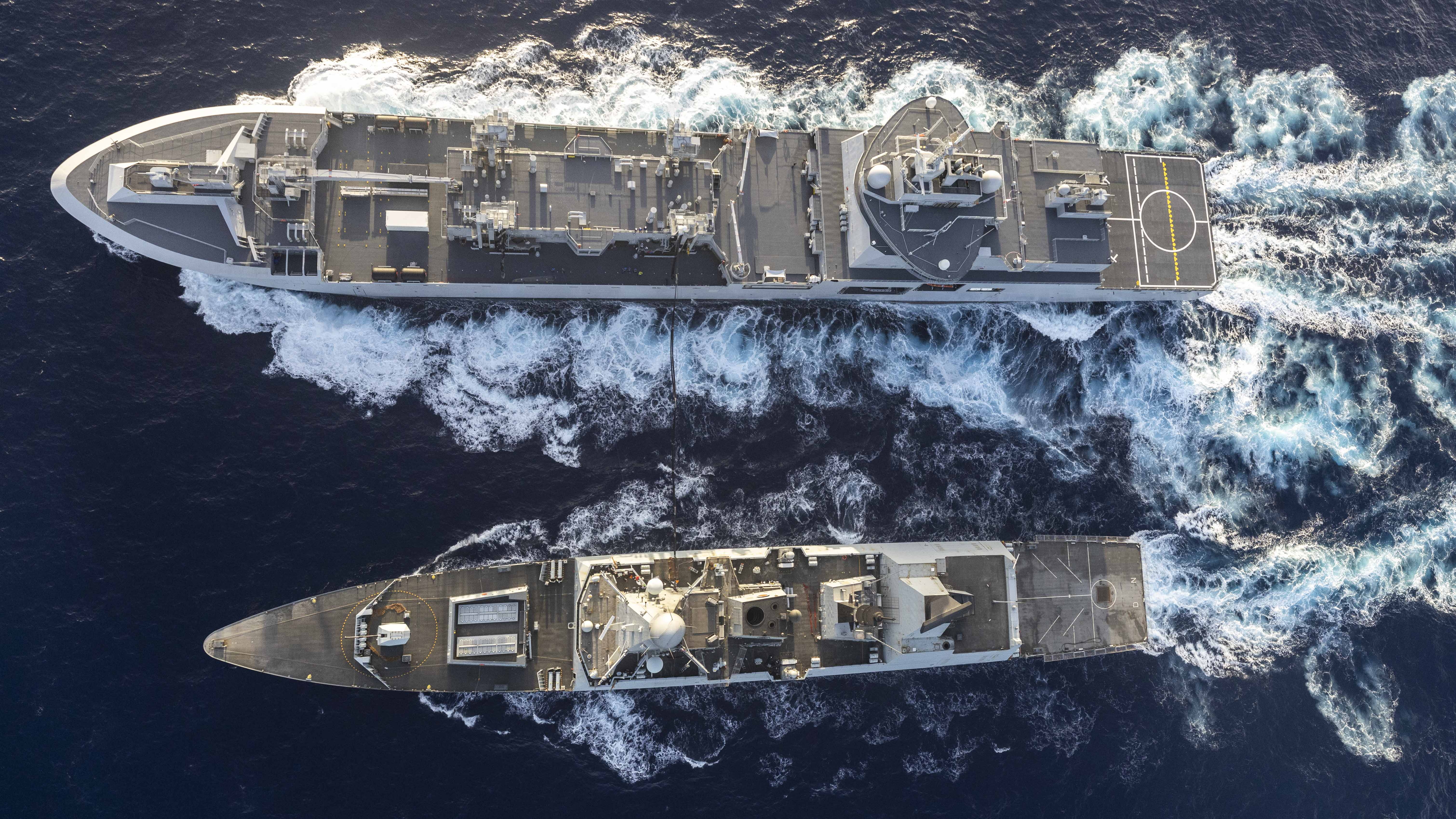
The Maritime Air Defense system and the Common Combat Vessels, which are widely assumed to be roughly frigate-sized vessels, supersede earlier plans for the new Type 83 destroyer. This was previously expected to replace the Type 45 in the late 2030s, although for some time now its future had appeared threatened by increasing Admiralty interest in ‘arsenal ship’ concepts like the Type 91.
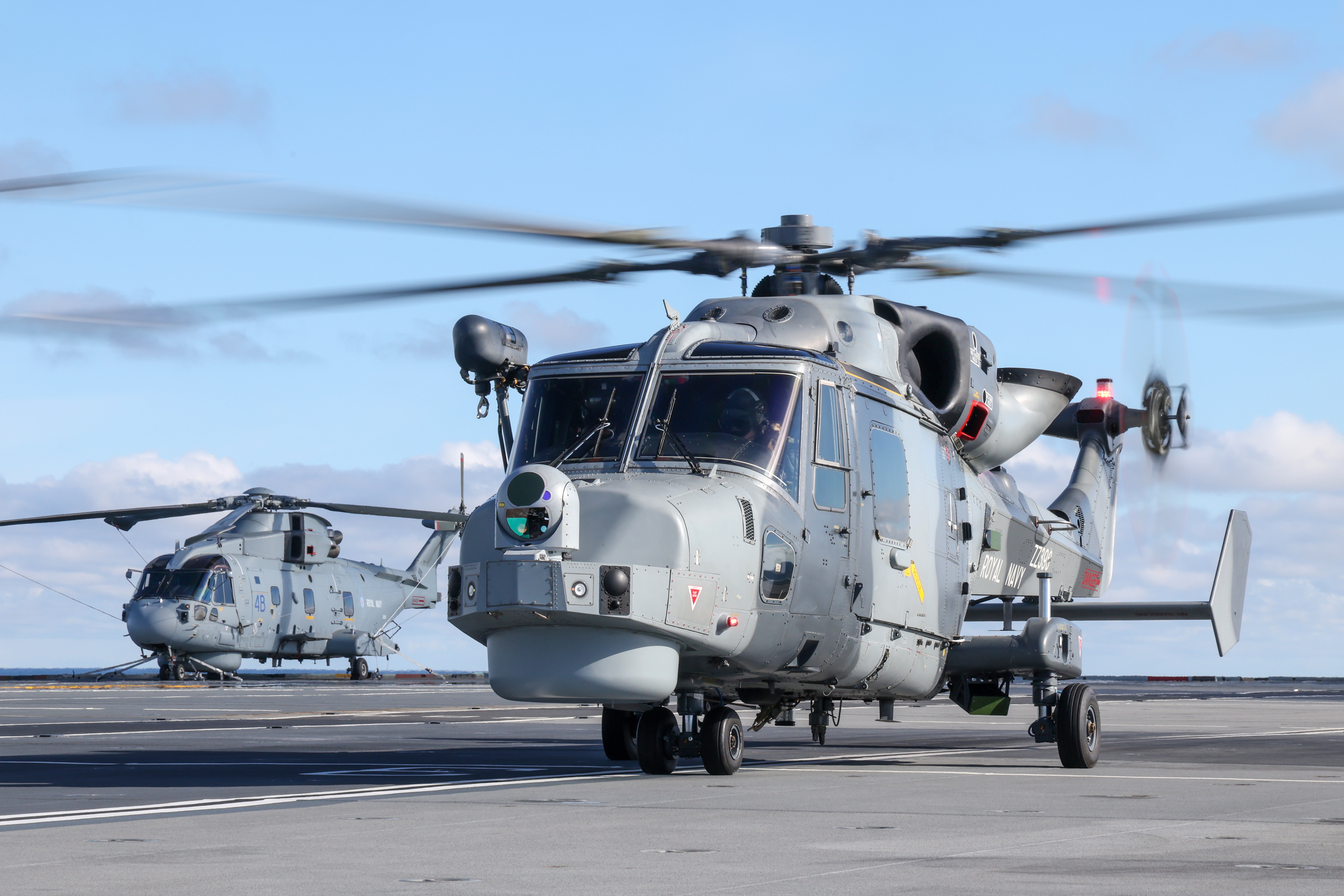
The Hybrid Carrier Air Wing outlined in the Defense Investment Plan is something we have discussed before.
In its last Strategic Defense Review, the U.K. Ministry of Defense introduced it as follows:
“The Royal Navy must continue to move towards a more powerful but cheaper and simpler fleet, developing a ‘high-low’ mix of equipment and weapons that exploits autonomy and digital integration. Carrier strike is already at the cutting edge of NATO capability, but much more rapid progress is needed in its evolution into ‘hybrid’ carrier air wings, whereby crewed combat aircraft (F-35B) are complemented by autonomous collaborative platforms in the air, and expendable, single-use drones. Plans for the hybrid carrier air wings should also include long-range precision missiles capable of being fired from the carrier deck.”
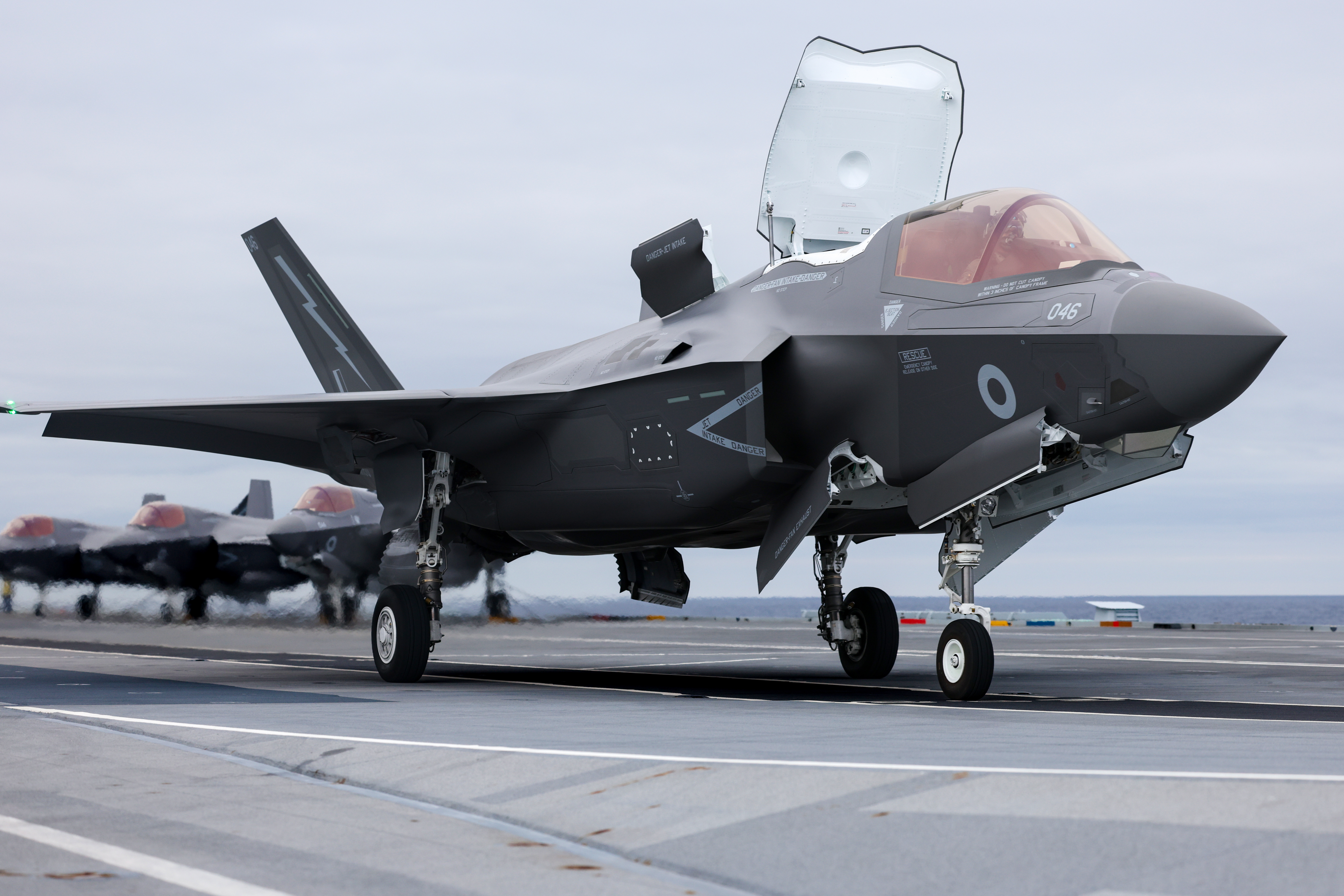
While there is no further mention of the deck-launched long-range precision missiles at this point, the Defense Investment Plan does note that Project Pantheon will serve as the development effort for the Hybrid Carrier Air Wing and will include trials of unnamed jet-powered drones alongside the F-35B.
While not referred to specifically, the Royal Navy has already outlined its ambition for ‘cat and trap’ drone operations aboard U.K. carriers, which is known as Project Ark Royal.
If realized, the project will see the twoQueen Elizabethclass carriers start to operate drones that can undertake a variety of missions and then increasingly heavier, complex, and higher-performance ones. Later on, full catapult-assisted takeoff but arrested recovery (CATOBAR) capability could also add fixed-wing crewed aircraft, as we have explored in the past.
Larger fixed-wing drones are an aspiration that the Royal Navy is already working toward under Project Vixen, which you canread more about here.
As we havediscussed in the past, there are many technological hurdles ahead as the Royal Navy looks to introduce carrier-capable drones. Beyond the launch and recovery systems, it will also need to develop control stations, datalinks, unique procedures, and much more to ensure the drones can be safely and effectively integrated within the carrier air group, for example. Even working out the intricacies of deck handling and flow integration involving drones combined with crewed fixed-wing jets and helicopters will be a considerable effort.
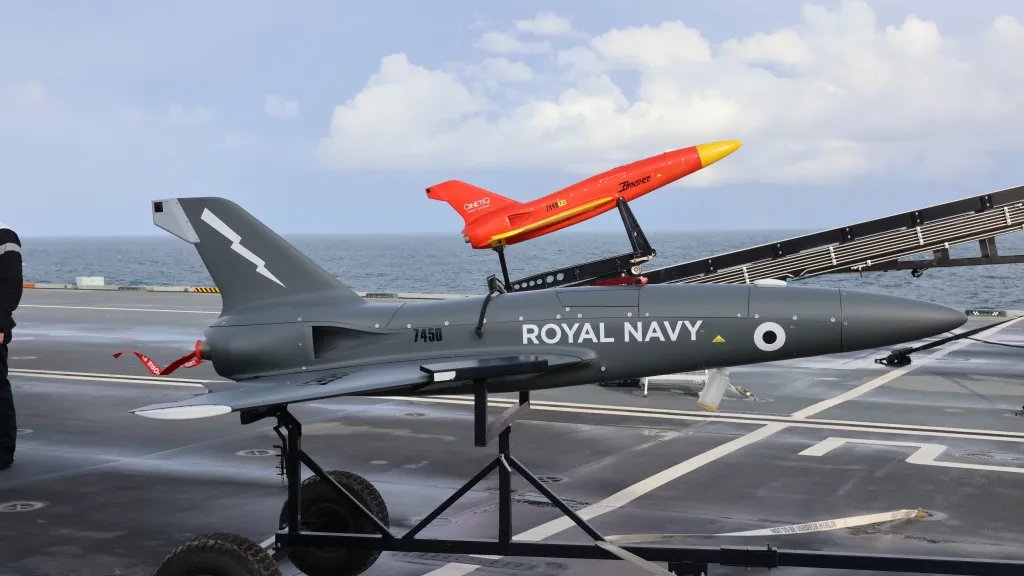
Project Pantheon certainly looks like it will move all of this ahead, although it should be noted that the size of the jet-powered drones for the program has not been stated. Already, the Royal Navyhas conducted trials involving smaller, jet-powered drones, with the QinetiQ Banshee Jet 80+, best known as a target drone, being launched from HMSPrince of Walesin 2021. Even the Banshee could provide a suitable platform for a rapidly introduced decoy or one-way attack munition.
The Royal Navy’s elite amphibious and special operations-capable light infantry force, the Commandos, are also earmarked for further investment including “new high-speed boats and the latest drone and autonomous technology.”
Less surprising was the government’s commitment to strengthen the U.K.’s nuclear deterrent, including allocating more than£63billion ($83 billion) over the next four years to fund the four Dreadnought class ballistic missile submarines and the SSN-AUKUS nuclear attack submarines, as well as a new warhead for British Trident submarine-launched ballistic missiles (SLBMs).
British Army
Moving on to the British Army, this service will benefit from more investment into “inexpensive expendable autonomous systems and loitering munitions.” This will include around $66 million boost over the next 12 months for the Army’s Rapstone program, which will pay for additional first-person view (FPV) and interceptor drones.
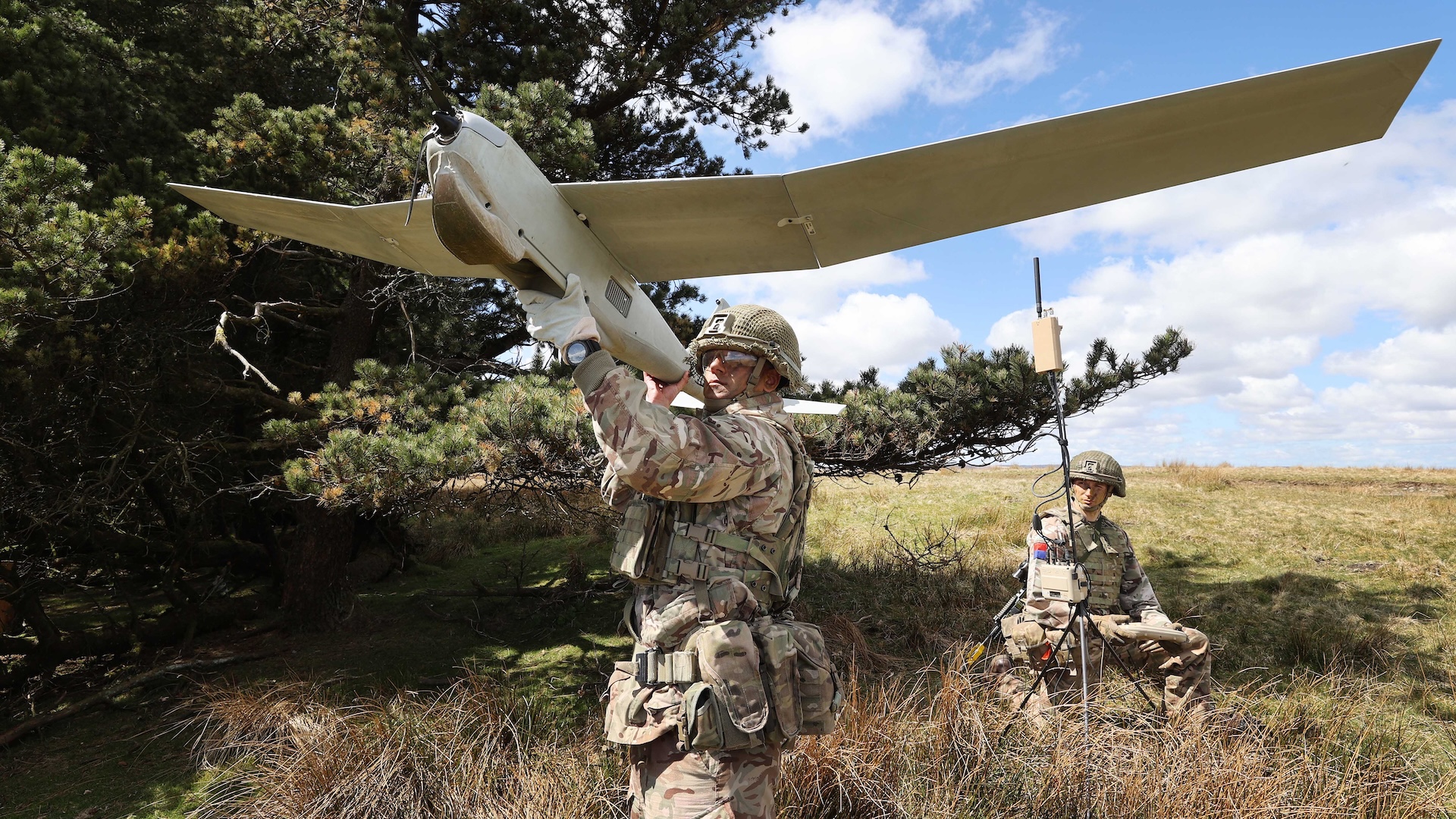
The British Army gets a new uncrewed ground vehicle (UGV) program, as yet unnamed, which plans to rapidly develop and produce uncrewed vehicles and associated mission systems via U.K. industry.
In the air, Project Nyx will provide the British Army with up to 24 autonomous armed drones that will operate in a crewed-uncrewed teaming arrangement with the service’s recently upgraded Apache attack helicopters. Planned to be operational by 2030, the drones will be outfitted for reconnaissance, precision strike, and electronic warfare.
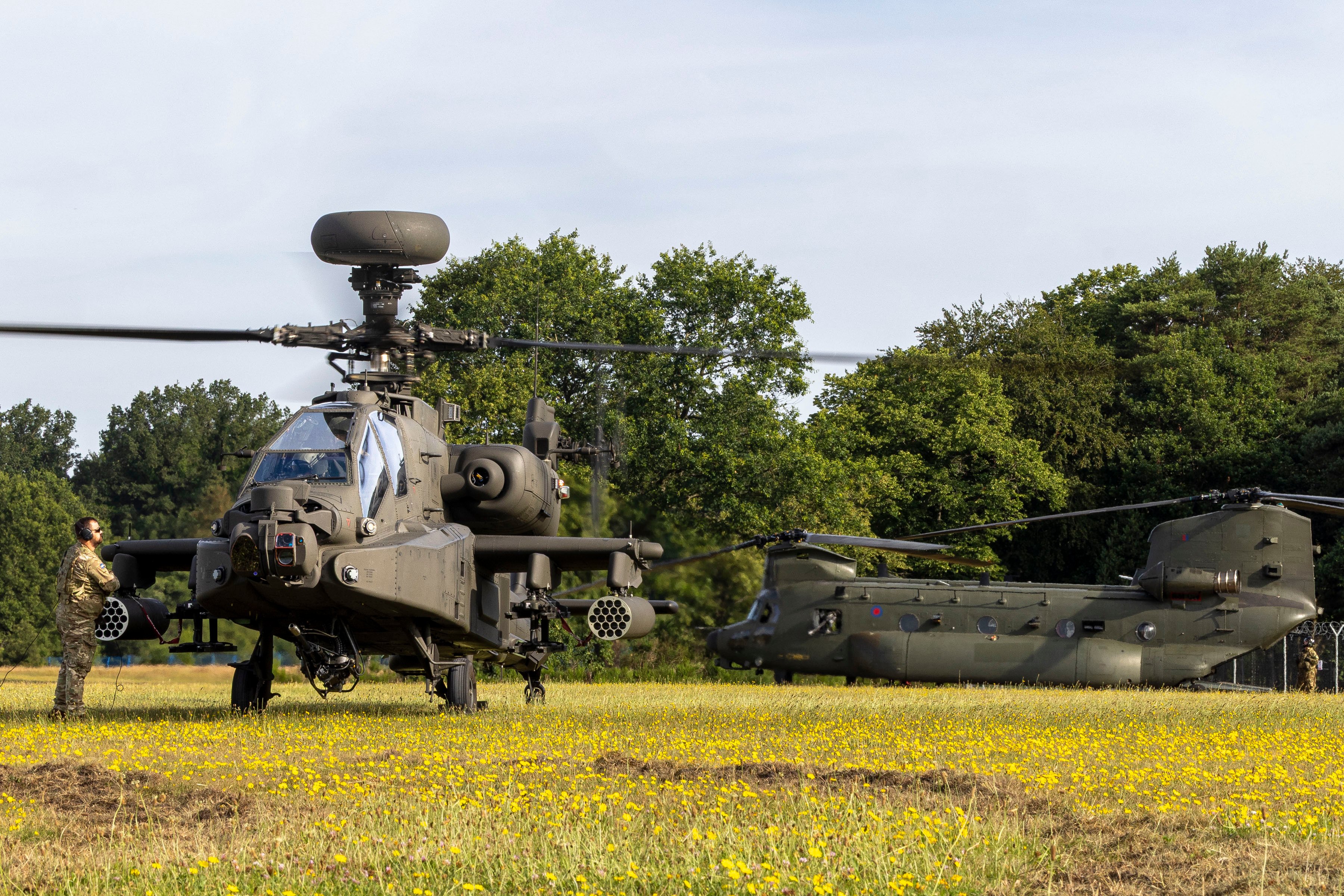
Lastly, under Project Corvus, up to 24 surveillance drones will replace the British Army’s much-troubled Watchkeeper drone system, carrying out intelligence, surveillance, target acquisition, and reconnaissance (ISTAR).

Royal Navy
While standout announcements for the Royal Air Force are fewer than for the other services, the flying branch does secure around $10.6 billion for the Global Combat Air Program (GCAP) over the next four years. This should drive forward the effort to a next-generation stealth fighter for the Royal Air Force, alongside Japan and Italy.
More intriguingly, the Defense Investment Plan mentions a “new, national Collaborative Combat Air program,” which would appear to supersede various earlier ‘loyal wingman’-type programs. The Collaborative Combat Air program aims to develop “new autonomous fighter jets which will fly alongside crewed jets,” and a demonstrator is expected to be in the air by at least 2030.
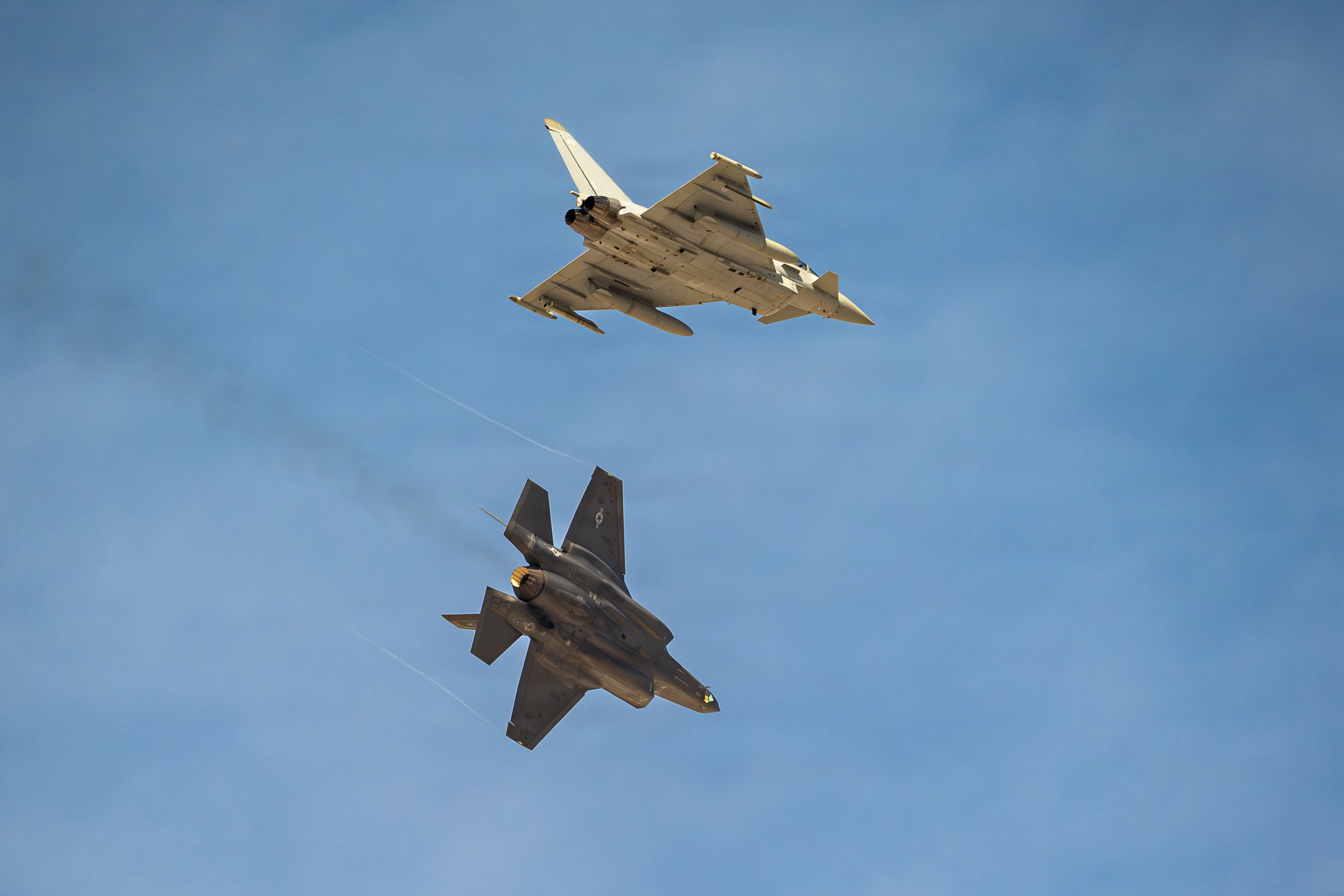
As part of the nuclear deterrence budget, the Royal Air Force will also receive the 12 F-35As that will be armed with U.S.-ownedB61-12 tactical nuclear bombs, allowing them to join NATO’s nuclear mission.You can read more about that plan — and questions about its feasibility — here.
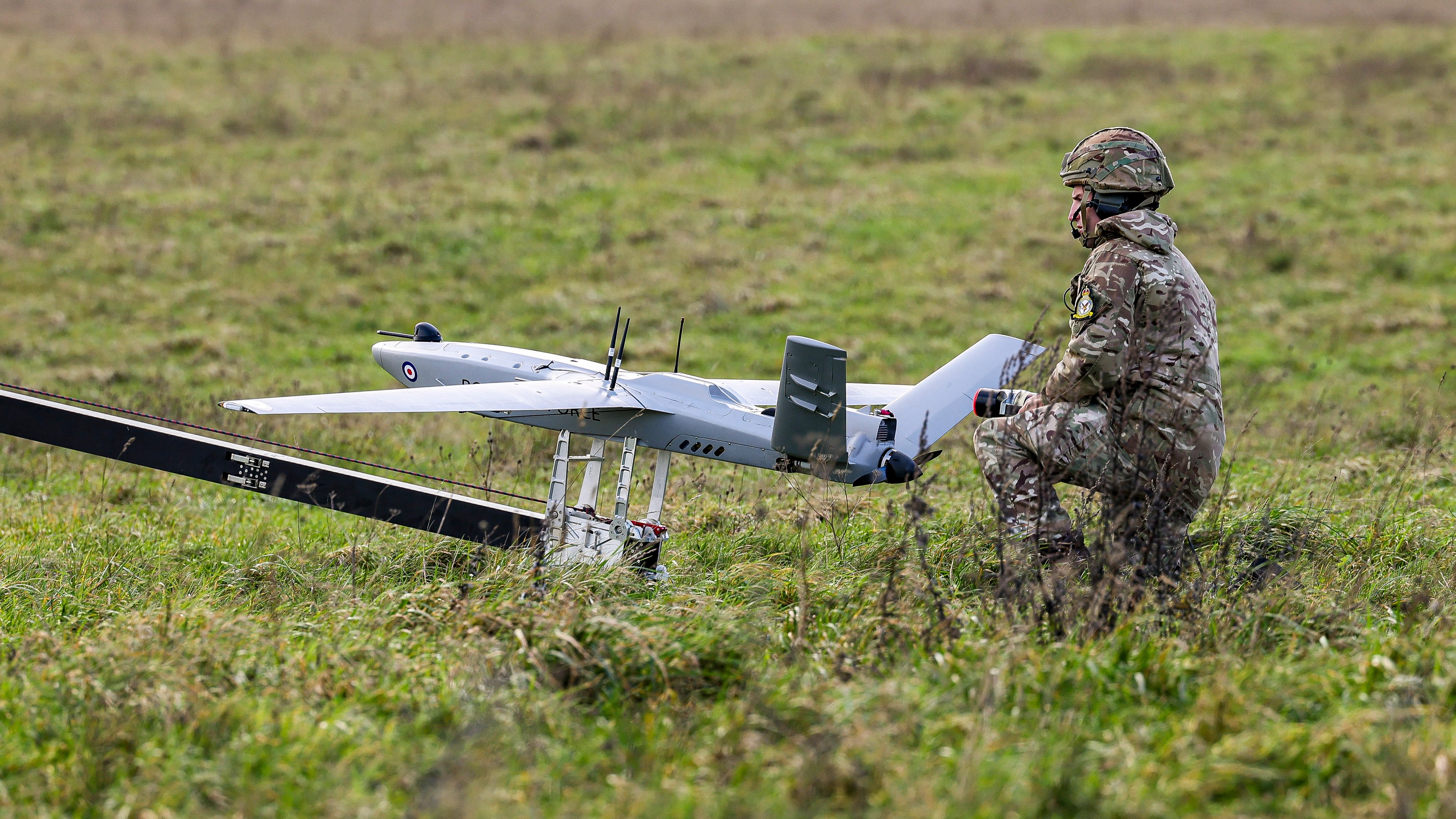
Finally, the Storm Shroud system will provide the Royal Air Force with a new uncrewed electronic warfare drone, which will enter service this year. The Storm Shroud has already been trialed in exercises and is equipped with the Leonardo BriteStorm stand-in jammer, which you can read more about here.
All three services will benefit from an initiative to boost munitions and weapons stockpiles, a growing concern for militaries across the board, which has been highlighted by depletions through transfers to Ukraine and conflict in the Middle East.
The United Kingdom will spend £11 billion ($14.5 billion) to increase U.K. stockpiles, includinglong-range strike weapons, low-cost cruise missiles, and one-way effectors. Conceivably, a lot of these efforts will be kickstarted by separate projects originally launched to provide Ukraine with U.K.-made weapons. By 2030, there is a plan to build at least six new energetics factories as part of an overall increase in national munitions production capacity.
Less obvious are the cuts that the British Armed Forces will face in some areas.
The government says it will phase out its Storm Shadow air-launched cruise missiles, many of which have already been transferred to Ukraine. The plan says that “We are now pivoting to the next generation of low-cost cruise missiles,” without providing further details.
Also facing the axe are more than 30 Wildcat and the oldest (Mk 6A variant) Chinook helicopters, as well as plans to upgrade a satellite communications system.
A drone-based defense plan
By putting drones squarely at the forefront, Starmer’s long-delayed Defense Investment Plan is certainly eye-catching. It also comes with immense developmental risk, involving many concepts that remain unproven in the real world.
However, there are still plenty of stress factors, not least the demands of senior officers from all three services for additional funding.
Tensions around the Defense Investment Plan have already led to fierce discussions between the Ministry of Defense and the Treasury. These came to a head when John Healey resigned as defense secretary earlier this month.
In an effort to placate criticisms, Starmer added another £1 billion ($1.3 billion) to the defense budget after Healey walked. However, Healey had reportedly been pushing the Treasury for a total rise closer to £18 billion ($23.8 billion).
The government has also responded to criticism that it is moving too slowly to address emerging threats and changing security demands.
“The Defense Secretary [Dan Jarvis] has spent the last two weeks refocusing the Defense Investment Plan so that it prioritizes getting the latest kit into the hands of military personnel,” the MoD said.
So, there we have it. The U.K. government has injected $6.6 billion into a defense plan that aims to do no less than reconfigure the British Armed Forces as “a flexible, integrated force with attack drones flying alongside Army helicopters, RAF jets made invisible from enemy detection with new drones, and a hybrid Royal Navy made up of crewed and uncrewed vessels.”
It is a bold vision and one that will face further challenges, not just in terms of cost and technological hurdles, but also from senior officers who will still question whether traditional crewed platforms — as well as all other military requirements — are adequately funded.
Contact the author: thomas@thewarzone.com