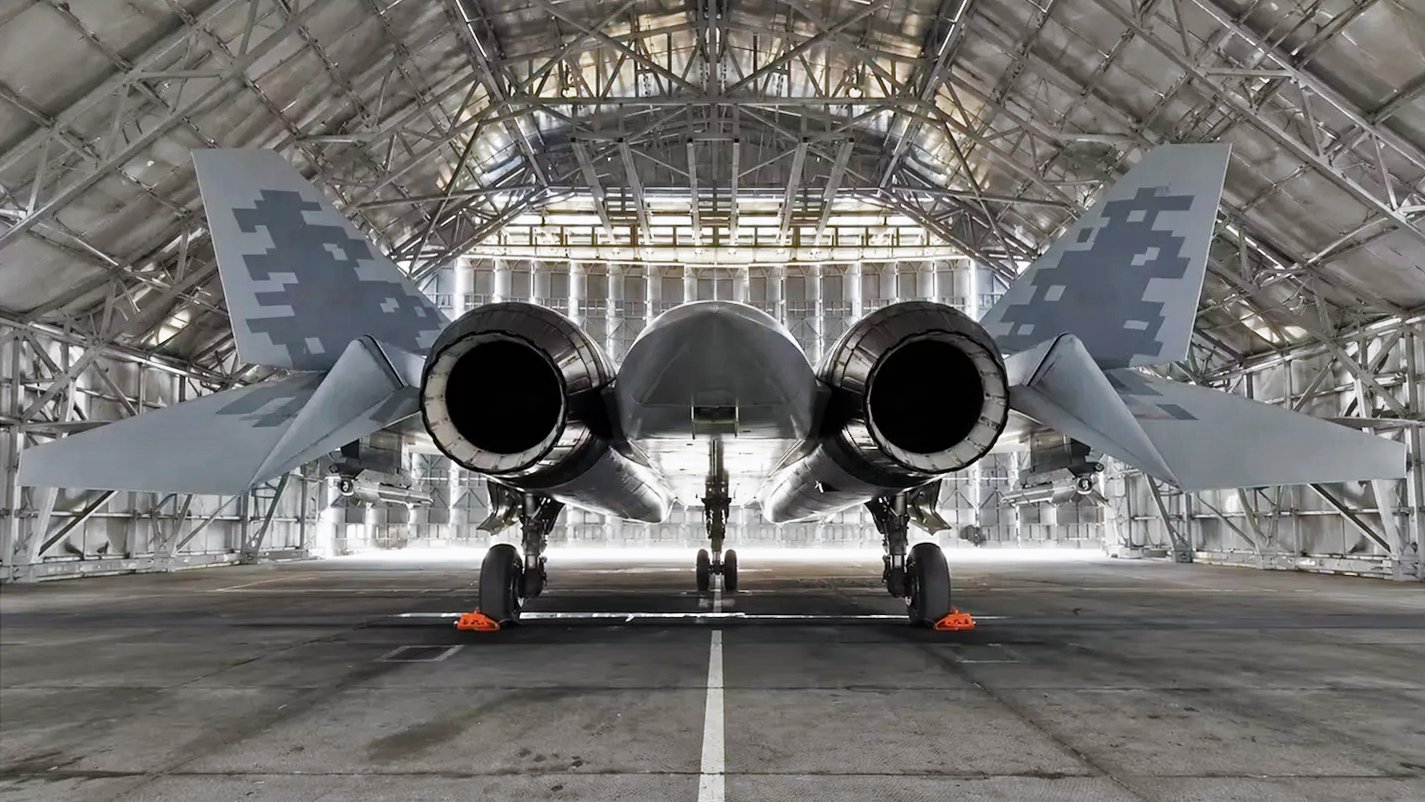
Оросын Агаарын сансрын хүчний Su-57 Felon сөнөөгч онгоцнууд нисгэгчгүй онгоц болон далавчит пуужин устгахад зориулсан шинэ тоноглолтой болсон байж болзошгүйг харуулсан гэрэл зургууд олон нийтийн сүлжээнд тархлаа. Уг онгоцны далавчны доорх тулгуурт R-73/R-74 загварын ойрын зайн агаар-агаар ангиллын пуужингуудыг бэхэлсэн бөгөөд зүүн хөдөлгүүрийн доод хэсэгт урьд өмнө харагдаагүй байж болох байршил тогтоох төхөөрөмж суурилуулсан байна.
Шинжээчдийн таамаглаж буйгаар, Su-57-г Украины алсын зайн довтолгооны дронууд болон далавчит пуужингуудыг илрүүлж устгах үүрэг гүйцэтгүүлэхээр ийнхүү тоноглосон байх магадлалтай байна. Su-57 нь AESA радар болон 101KS оптик-электрон системийг хослуулан ашигладаг тул жижиг хэмжээтэй, нам өндөрт нисдэг, радарт бага өртдөг байг илрүүлэх өндөр чадвартай юм. Хэдийгээр тус онгоц нь зэвсгээ их бие доторх тасалгаанд нуух зориулалттай боловч ойрын зайн тулаанд зориулж гадна талдаа пуужин тээвэрлэх нь ийм төрлийн зорилтот ажиллагаанд тохиромжтой шийдэл байж болох юм.
Оросын Астрахан муж дахь Ахтубинск нисэх онгоцны буудалд хийсэн агаарын цохилтын дараа тус улс байлдааны онгоцнуудаа хамгаалах зорилгоор хамгаалалтын байгууламжуудыг нэмэгдүүлж байна. Украины зүгээс Оросын нутаг дэвсгэрийн гүн дэх цэргийн болон стратегийн чухал байгууламжууд руу хийж буй довтолгоо эрчимжиж байгаа энэ үед Su-57 зэрэг өндөр технологийн зэвсэглэлийг агаарын довтолгооноос хамгаалах үйл ажиллагаанд татан оролцуулах болсон нь анхаарал татаж байна.
Одоогоор Оросын зэвсэглэлд байгаа Su-57 онгоцны тоо хязгаарлагдмал бөгөөд эдгээр нь Украины мөргөлдөөнд хэрхэн оролцож байгаа талаарх албан ёсны мэдээлэл хомс юм. Их Британийн Батлан хамгаалах яамны мэдээлснээр, Su-57-г 2022 оны зургадугаар сараас хойш Украины эсрэг ажиллагаанд ашиглаж эхэлсэн гэж үздэг. Одоогийн байдлаар тус сөнөөгч онгоцнууд нь алсын зайн Kh-69 далавчит пуужин болон бусад зэвсэглэлээр тоноглогдон агаарын довтолгооноос хамгаалах үүрэг гүйцэтгэхэд голлон анхаарч байж болзошгүй байна.
Дэлгэрэнгүйг эх сурвалжаас харах
↓Эх сурвалжийг нээх ↓
Imagery has recently appeared showing a Russian Sukhoi Su-57 Felon fighter with an unusual external weapons load of short-range air-to-air missiles, as well as what looks like a previously unseen type of targeting pod. While we cannot say for sure, we may just have gotten our first close look at a Su-57 equipped to counter the Ukrainian kamikaze drones and cruise missiles that are now a regular menace to air defenses increasingly deep inside Russia.
Two photos, the original source of which is unclear, show a Su-57 configured with a pair of R-73/R-74 (AA-11 Archer) series short-range air-to-air missiles on pylons under the wings. One of those photos further shows the mysterious targeting pod below the left engine nacelle.
Both show a Su-57 seen from the rear inside a large shelter. One photo apparently surfaced on the TikTok social media platform. Somewhat surprisingly, it is one of a pair that also show apparent teenagers posing alongside the Felon — one of them inside the fighter’s cockpit — suggesting some kind of unofficial tour of the base.
The photos have been reposted on Russian social media, with military bloggers identifying them as showing Su-57s configured to hunt and shoot down Ukrainian drones.
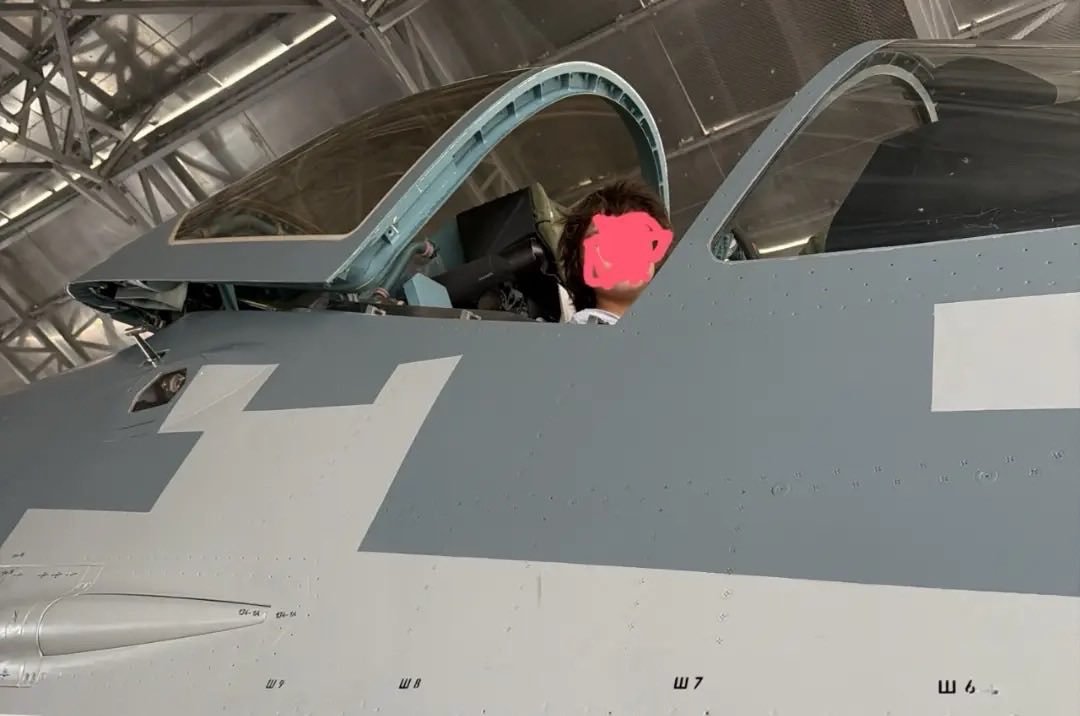
While this certainly seems likely, we should not rule out some other possibilities, including a Felon involved in some kind of weapons trials. On the other hand, it is unusual to see Su-57s, in operational service or otherwise, carrying short-range air-to-air missiles externally. After all, the jet has internal bays specifically for this purpose, something we have described in detail in the past.
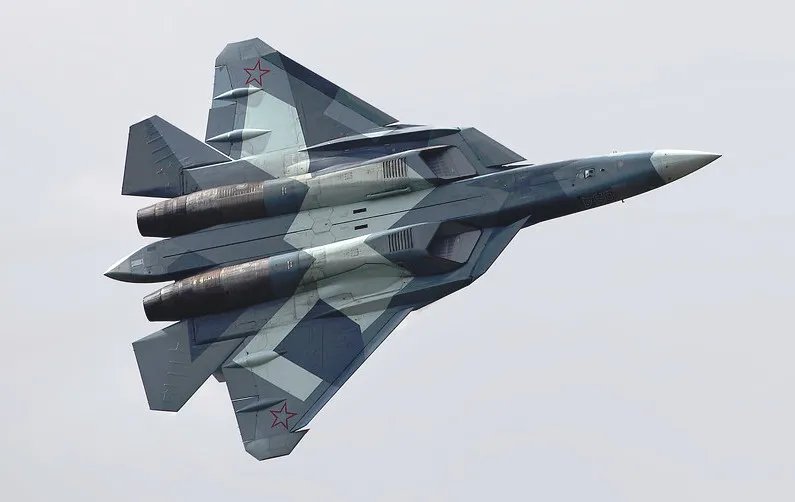
At the very least, this would appear to be a load-out optimized for close-range engagements, of the kind that would be required for hunting Ukrainian long-range one-way attack drones and, increasingly, cruise missiles.
It is also worth noting the large shelter in which the Su-57 is parked. This looks to be of the same type that has been installed at the airfield at Akhtubinsk in the Astrakhan region of the Russian Federation, located more than 350 miles from the front line. In June of 2024, Akhtubinsk was itself hit by Ukrainian drones, which appear to have severely damaged, if not destroyed, a Felon parked in the open.
Вперше уражено Су-57
8 червня 2024 року на території аеродрому «ахтубінск» в астраханській області рф, розташованому за 589 кілометрів від лінії бойового зіткнення, уражено багатоцільовий винищувач держави-агресора Су-57.
https://t.co/vyatL7cBjd pic.twitter.com/8wbopryp4l
— Defence Intelligence of Ukraine (@DI_Ukraine) June 9, 2024
Russian military bloggers complained bitterly about the lack of protection from drone attacks at Akhtubinsk.
This reflected wider questions about the ability of Russia’s widely dispersed andheavily targetedair defenses to counter Ukrainian drone incursions and the ability to protect its own aircraft. Almost all of these assets, at the start of the conflict, sat in the open without any sort of shelters, let alone hardened ones. This is an area that Russia has since begun to address, even extending this to its long-range bomber fleet.
The Su-57 is very much a prized, ‘silver bullet’ asset of the Russian Aerospace Forces (VKS). But it is also notably well-equipped for countering drones and cruise missiles, as we will come onto later.
The number of production configuration Su-57s in Russia’s inventory is notoriously limited. As of early 2023, there were just around nine series-production Su-57s in Russian service, along with less than a dozen pre-production and prototype aircraft that are not fully equipped for combat operations. The number of production Felons has expanded since then, but not on a grand scale as Russia prioritizes production of fighters like the cheaper and less complex Su-35S Flanker.
The scope of the Su-57’s contribution to Russia’s conflict in Ukraine is hard to quantify.
The U.K. Ministry of Defense has stated that Su-57s have been used in Ukraine since “at least June 2022.”
Latest Defence Intelligence update on the situation in Ukraine – 9 January 2023
Find out more about the UK government’s response: https://t.co/MFEwqMMnI3
#StandWithUkraine
— Ministry of Defence
(@DefenceHQ) January 9, 2023
Prior to that statement, there had been on-and-off claims of the Felon being used to launch standoff strikes, mirroring tactics for other Russian jets involved in similar missions, in which they avoid the highly contested airspace over Ukraine itself.
For this purpose, the Felon can be armed with the Kh-69 stealthy cruise missile, intended to destroy small, hardened targets at distances of over 180 miles. It also carries the Kh-58UShK anti-radiation missile (including in its internal weapons bays) with a maximum range of around 150 miles, depending on launch parameters.
There was also combat testing between the Su-57 and the S-70 UCAV that went terribly wrong.
Meanwhile, the Su-57 has very impressive air-to-air capabilities.
Most impressively, it is armed with the 124-mile-range R-37M (AA-13 Axehead) air-to-air missile, complemented by the R-77-1 (AA-12 Adder) air-to-air missile, with a range of 68 miles, which are also capable of engaging Ukrainian aircraft ‘across the border’ in some scenarios.
Using high-end, fifth-generation, or equivalent fighter jets to tackle hostile drones and cruise missiles would not be unique to Russia. The U.S. military, as well as Israel and the United Kingdom, have called upon their F-35 fleets to deal with lower-end threats like these in the Middle East.
The Su-57 is the only operational Russian fighter available in any kind of meaningful numbers with an active electronically scanned array (AESA) radar.
The N036 radar, which has five separate AESA arrays, is part of a broader, integrated fire-control system that includes the 101KS electro-optical suite, the N036Sh identification friend or foe (IFF) system, and the L402 electronic countermeasures suite.
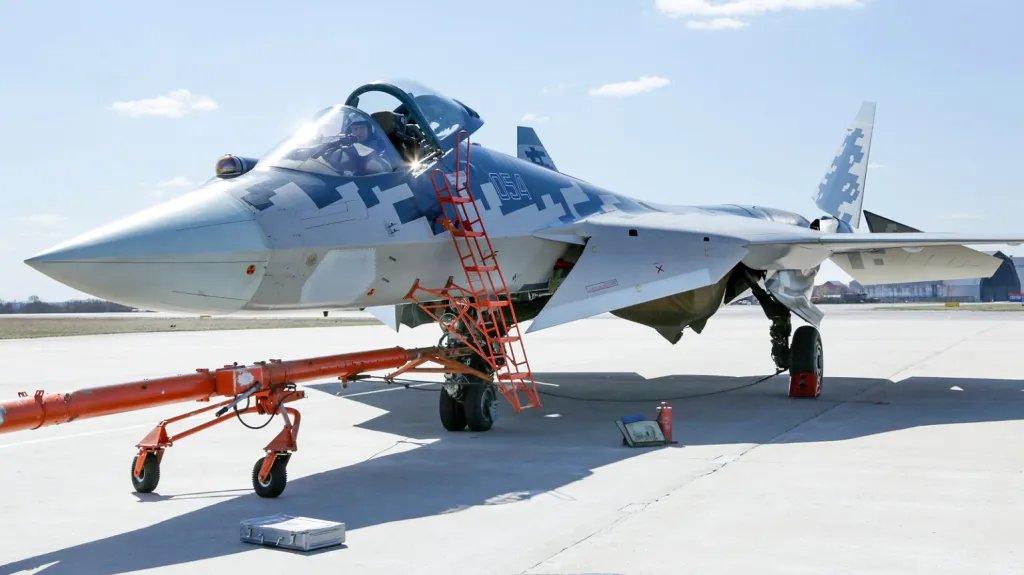
AESA radars are, in general, much better able to deal with drone and cruise missile threats.
Overall, any kind of AESA radar provides a significant boost to modern combat aircraft. In comparison with traditional mechanically scanned array technology, an AESA can find and track a target at a much greater range, more quickly, and with a greater degree of accuracy. This also applies to smaller threats, including those with limited radar signatures, or flying at very low levels, such as drones and cruise missiles.
Onboard radar stations of T-50 (PAK FA) Thanks @saidpvo via @KRETRussia pic.twitter.com/2ZEsp1O32V
— KURYER
(@RSS_40) August 30, 2015
The passive 101KS electro-optical suite should also be very useful against the same kinds of threats. It comprises an infrared search-and-track (IRST) sensor ahead of the cockpit, four ultraviolet missile-approach warning sensors, two directional infrared countermeasures turrets, and one imaging infrared sensor for low-level flying. Using the IRST, in particular, for counter-drone and cruise missile work, would reflect U.S. fighters’ employment of podded infrared sensors for the same. These sensors allow for long-range detection of low-radar-signature targets, including drones and cruise missiles. They can work collaboratively with the radar and other sensors to detect, classify, and engage these kinds of hard-to-spot targets at long distances.
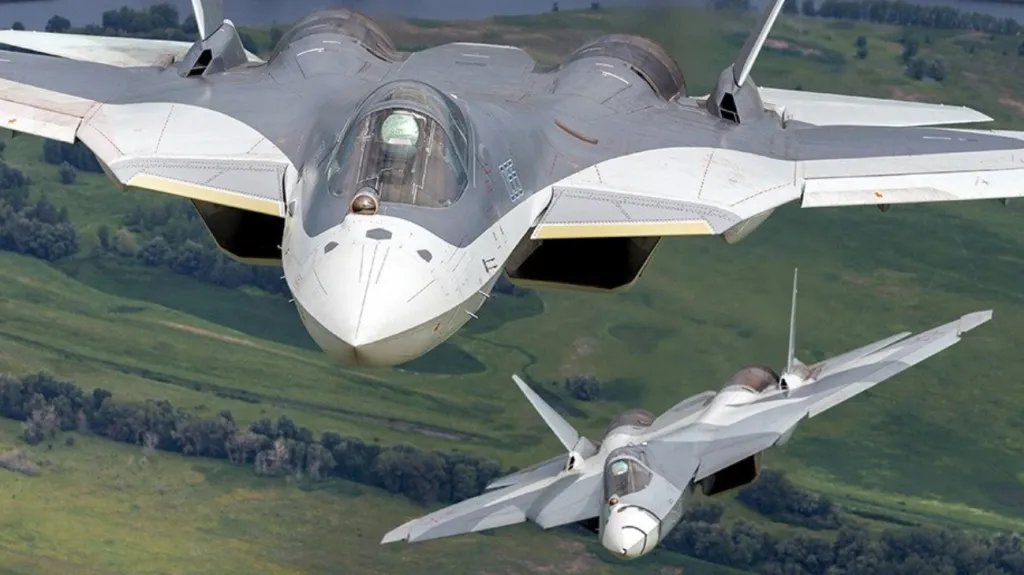
Furthermore, unlike previous Russian tactical fighters, the Su-57 has a navigation and targeting pod, the 101KS-N, developed for it from the outset. Again, these kinds of stores have begun to be employed much more widely in efforts to counter drones and cruise missiles.
While targeting pods were first fielded for air-to-ground applications, they can also be used for air-to-air engagement, being highly important for visual ID at range. The laser designator can also be employed to illuminate, or ‘laze,’ a target, although that does not come into play with the Felon, since the aircraft has no laser-guided air-to-air weapons that we know of.
Most likely this is the 101KS-N Atoll from UOMZ.
If that’s the case, that’s actually very good—UOMZ usually produces some pretty low-quality stuff. https://t.co/54laFDZ6gc pic.twitter.com/6cqMFyYIzw— 𝔗𝔥𝔢 𝕯𝔢𝔞𝔡 𝕯𝔦𝔰𝔱𝔯𝔦𝔠𝔱△
(@TheDeadDistrict) May 18, 2026


Interestingly, the pod seen in the accompanying image has a different rear end from the standard 101KS-N. It is unclear if it represents a new version of the pod, or even one that is optimized for air-to-air engagements, but that is a possibility. We also should not rule out that this is another type of store entirely, although its position on the nacelle makes that less likely.
Meanwhile, despite claims that Russia is developing laser-guided rockets that can be used for air-to-air engagements, like the U.S. developments of the 70mm Advanced Precision Kill Weapon System II (APKWS II) rocket as a lower-cost way to down drones, there is no evidence that these have yet been fielded. This leaves the R-73/R-74 series short-range air-to-air missiles as the cheapest option for bringing down these kinds of threats.
When the R-73 first emerged in the early 1980s, it soon established itself as a very capable short-range air-to-air missile. Its combination of an all-aspect infrared seeker, high off-boresight capability, thrust-vectoring controls, and the fact it could be cued by the pilot’s helmet-mounted sight was unusual for the time, but is now much more commonplace. It has also been proven as a drone-killer, as seen in the video below, of a Russian MiG-29 Fulcrum shooting down one of Georgia’s Israeli-made Hermes 450 drones over Abkhazia in March 2008.
The successor to the R-73 is the R-74M, which looks almost identical but has a new two-band infrared seeker. This provides an increased seeker range and an expanded off-boresight capability, reducing the possibility of the enemy aircraft escaping it in a tight-turning dogfight.
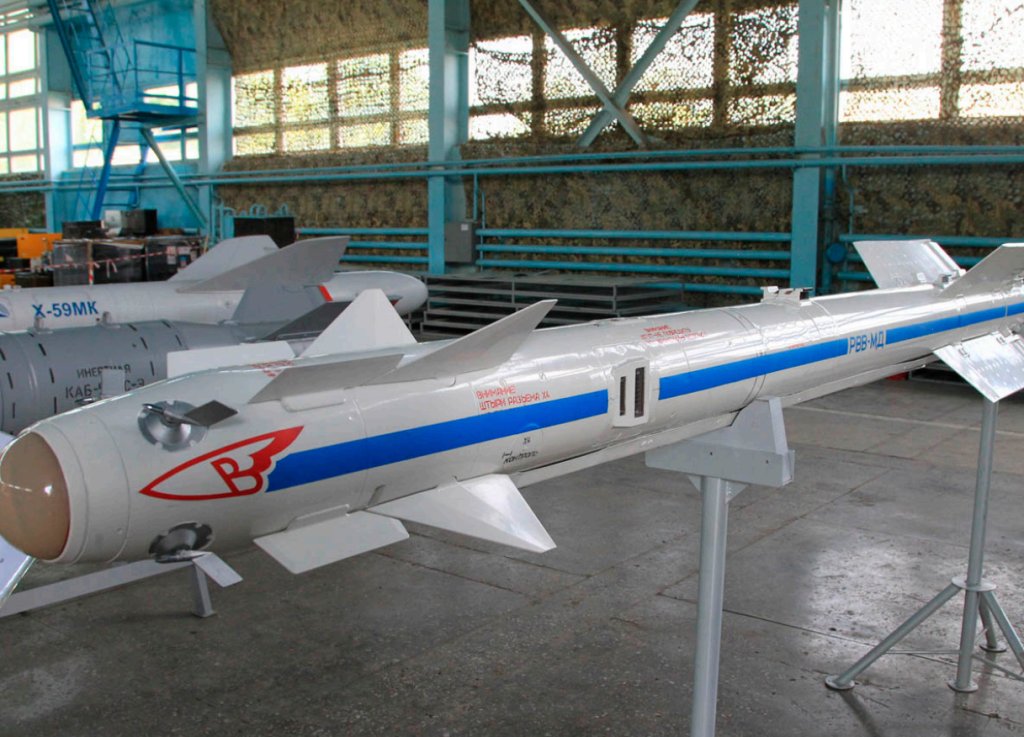
However, since critical parts of the R-74M were sourced from Ukraine, Russia then moved to the R-74M2, which is optimized for internal carriage by the Su-57. This uses a Russian-made seeker and a rocket motor with increased burn time, for longer range. The weapon can also be fired in lock-on-after-launch mode, which is typically required when launched from an internal bay, the missile beginning its flight under inertial control before achieving an in-flight lock-on.
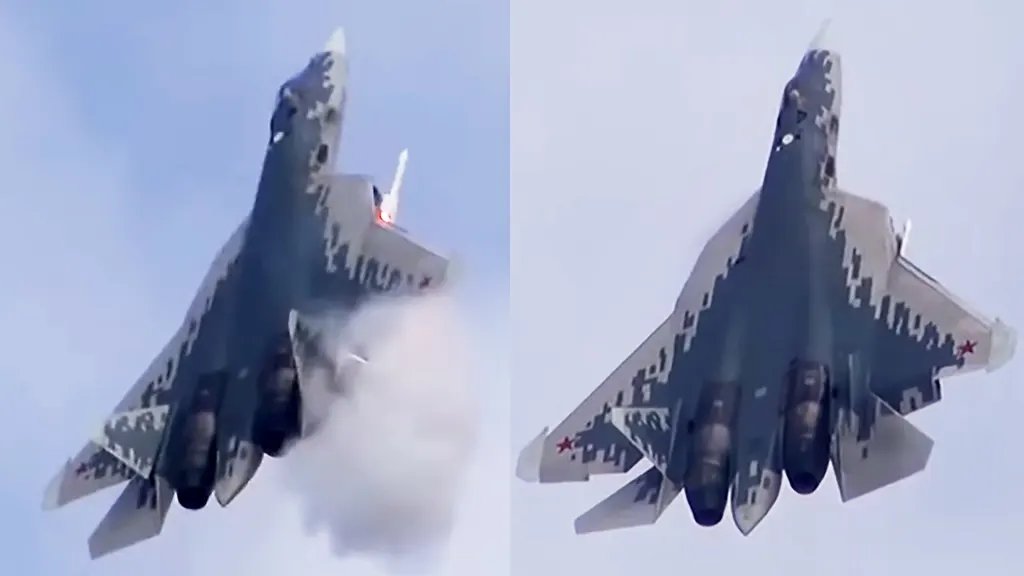
It’s unclear which of these weapons are carried under the wings of the Su-57 in these images. However, with plentiful stocks of older R-73s still available, it would make good sense to carry these externally, since they cannot be accommodated in the internal weapons bays.
Another key counter-drone and cruise missile weapon could be the Su-57’s 30mm single-barrel cannon within the starboard wing root and provided with 150 rounds of ammunition. You can see it in actionhere. On the other hand, downing slow and low drones with the gun is very challenging from a fighter and can be outright dangerous. The 30mm gun on the Felon also has a notably limited magazine size.
All in all, there is some circumstantial evidence that Su-57s are now being used — whether routinely, or as part of combat trials — for air defense against Ukrainian drones and cruise missiles.
Clearly, this is a growing problem for Russia, underscored very publicly by the large-scale daylight raid on Moscow last month. In what was one of the biggest attacks on the Russian capital in the conflict, multiple Ukrainian drones and cruise missiles hit several locations across the city.
Ukraine is pursuing a relentless campaign that is particularly targeting Russia’s refineries, as well as weapons production sites, and key military facilities.
In response, Russia is calling upon a wide variety of assets to help defend against the drones and cruise missiles.
Although many key assets are deployed closer to the front lines in Ukraine, there is now an array of additional layered air defenses deployed in and around key potential targets. Defensive systems extend fromS-400long-range surface-to-air missile batteries to attack helicopters tasked with gunning down drones in midair. Most prominently, Pantsir short-range air defense batteries have been positioned on rooftops and elevated towers.
The ruSSians are using a Mi-26 heavy-lift helicopter to deliver a Pantsir-SMD-E air defense system onto the roof of the Nordstar Tower business center in downtown Moscow.
Well thanks, now everyone knows where the next Ukrainian drone is going to hit

pic.twitter.com/hgeIPJUwSq
— 𝔗𝔥𝔢 𝕯𝔢𝔞𝔡 𝕯𝔦𝔰𝔱𝔯𝔦𝔠𝔱△
Ukraine has demonstrated it can now strike targets over vast expanses of Russian territory. With its ground-based air defenses already stretched extremely thin, robustly protecting a growing landmass from potential strikes with those systems alone just isn’t possible. With Ukraine increasingly using long-range cruise missiles capable of delivering very heavy warheads, the stakes are further increased. Even if fighter aircraft were just focused on defensing key targets from the heavy cruise missile threat, it would make sense as these missiles can do huge amounts of damage and are easier to spot using both infrared and radar sensors.
In addition, we know fighters are part of the overall response equation already. For instance, they have been forward-stationed on alert at the bomber base at Engels for some time now.
These kinds of fighter activities are less visible, and the Russian authorities are unlikely to publicize them much, since the fact they are doing this work paints a less-than-impressive picture of the state of Russian air defenses, and further underlines expanding Ukrainian capabilities. This is especially true of the prized Su-57s, which may well now be involved in these lower-end defensive efforts.
Contact the author: thomas@thewarzone.com
The post New Su-57 Weapons Configuration Points To Drone And Cruise Missile Defense Mission appeared first on TWZ.

