АНУ-ын Тэнгисийн цэргийн хүчний цөмийн зэвсгийн удирдлагын шинэ онгоц бүтээх төсөл техникийн хүндрэлээс үүдэн нэг жилээр хойшилсон талаар Засгийн газрын хариуцлагын алба (GAO) мэдээлэв.
АНУ-ын Тэнгисийн цэргийн хүчин хуучирсан E-6B Mercury онгоцуудыг орлуулахаар C-130J-30 нисэх онгоцонд суурилсан E-130J Phoenix II хөтөлбөрийг хэрэгжүүлж байна. TACAMO буюу “цөмийн цохилтын удирдлага, хяналт” гэх стратегийн чухал үүрэг гүйцэтгэх энэхүү онгоц нь шумбагч онгоц болон бусад цөмийн хүчинтэй холбоо тогтоох зориулалттай юм. Гэвч өнгөрсөн жил GAO-гаас анхааруулж байсан техникийн эрсдэлүүд, тухайлбал онгоцны даац, жин, болон системийн нэгтгэлийн асуудлууд бодит саад бэрхшээл болон хувирчээ.
Тайлангаас үзэхэд, гүйцэтгэгч талууд E-130J онгоцны жинг бууруулах, номлолын системүүдийг C-130J-30-д тохируулан өөрчлөхөд ихээхэн хүчин чармайлт гаргаж байна. Энэхүү техникийн хүндрэлийн улмаас анхны бага оврын үйлдвэрлэлийг эхлүүлэх шийдвэрийг 2029 оны дөрөвдүгээр сар хүртэл хойшлуулахаас өөр аргагүй болжээ. Хэдийгээр албаныхан төсөл төлөвлөгөөний дагуу явж байгаа гэж мэдэгдсэн ч GAO-гийн шинжээчид үүнийг нотлох баримт хангалтгүй байгааг онцолсон байна.
E-6B Mercury онгоцны парк нь 1991 онд үйлдвэрлэл нь зогссон Boeing 707 загварт суурилсан тул ашиглалтын хугацаа дуусч, засвар үйлчилгээний хувьд улам бүр хүндрэлтэй болж байна. C-130J-30 нь хуучин онгоцыг бодвол хурд болон нислэгийн өндрийн хувьд дутагдалтай ч, олон улсын нисэх буудлуудад ашиглагдаж буй, сэлбэг хэрэгслийн хангамж сайтай, ложистикийн хувьд илүү давуу талтай юм. АНУ-ын Агаарын цэргийн хүчин E-6B-ийн гүйцэтгэдэг өөр нэг үүрэг болох цөмийн бөмбөгдөгч онгоц болон тив хоорондын баллистик пуужинг удирдахад зориулсан “Looking Glass-Next” хөтөлбөрийг тусдаа хэрэгжүүлж байна.
Дэлгэрэнгүйг эх сурвалжаас харах
↓Эх сурвалжийг нээх ↓
The U.S. Government Accountability Office (GAO) says concerns it raised last year about the U.S. Navy’s E-130J Phoenix II program “have morphed into realities.” The timeline for moving from the development of the aircraft to putting it into actual production has already slipped by approximately one year. The E-130Js are set to supplant aging E-6B Mercury jets in support of the Take Charge And Move Out (TACAMO) mission. This involves providing aerial command and control support for nuclear ballistic missile submarines, including the ability to send them orders to launch strikes while they are submerged. Platforms tasked with nuclear support missions like TACAMO are commonly called ‘doomsday planes.’
GAO has provided a new update on the E-130J effort in its latest annual assessment of multiple high-profile U.S. military procurement programs. The Congressional watchdog released this report earlier today.
In last year’s iteration of this report, GAO explicitly called into question the choice of C-130J-30 Hercules aircraft, a four-engine turboprop transport plane, as the basis for the E-130J, warning that it might “not meet operational availability requirements.” The existing 16 E-6B aircraft are based on the larger, jet-engined Boeing 707 airliner, which is now long out of production. It is important to note that the Mercury fleet also supports a U.S. Air Force nuclear mission set called the Airborne Command Post (ABNCP), and more commonly known by the nickname Looking Glass. In that role, the planes provide aerial command and control support to nuclear-capable bombers and silo-based Minuteman III intercontinental ballistic missiles. They are equipped to initiate the launch of Minuteman IIIs while in flight. The forthcoming Phoenix IIs will only be tasked with the TACAMO mission, something we will come back to later on.
“As we reported in last year’s assessment, the Navy awarded its contract despite significant technical risks it acknowledged the E-130J program faced. A September 2024 independent technical risk assessment highlighted the complexity associated with the program’s planned integration effort, which officials acknowledged could increase as they integrate additional technologies,” per GAO’s latest assessment. “Since our 2024 report, the program has delayed its low-rate production decision by approximately a year as these system integration risks have morphed into realities.”
“For example, program officials said that contractors are now focused on modifying already-existing mission systems to reduce their weight, which the independent assessment anticipated would be necessary to accommodate them on the C-130J-30 airframe,” the report released today adds.
“The program office stated that the E-130J program remains on track to recapitalize TACAMO capability through developing an MVP [minimum viable product], iterating system capabilities through software improvements, and establishing digital frameworks,” according to GAO. “The program office also stated that it is aligned with Secretary of Defense guidance through an acquisition approach that allows for tradeoffs and implementation of a modular open systems approach. The program office did not provide any documentation to substantiate any of these claims, which run counter to our own analyses of E-130J program documentation.”
In its annual assessment last year, GAO said the Navy “acknowledges technical risk,” but also that the service had highlighted “risk reduction contracts with subcontractors to address obsolescence and size, weight, and power-cooling risks.”
The Navy’s Fiscal Year 2027 budget request provides some additional context about the suite of systems the E-130J will need to perform the TACAMO mission.
“A dedicated communications platform, TACAMO aircraft features the ability to communicate on virtually every radio frequency band from very low frequency (VLF) up through Advanced Extremely High Frequency (AEHF) using a variety of modulations, encryptions and networks, maximizing the likelihood an emergency message is received by U.S. strategic forces,” per the Navy’s budget documents. “Included in these efforts are Government and Contractor Systems Integration Laboratories, Contractor System Test Integration Laboratory, Government Furnished Property (National Security Agency approved encryption devices, Ultra High Frequency modems), High Frequency and the Advanced Extremely High Frequency solutions, Top Secret network development and building required infrastructure includes power generation systems, cooling, flight deck avionics, Electric Magnetic Pulse (EMP) hardening, cyber hardening, and structural modifications to support integration of E-130J mission system equipment.”
A particularly notable and critical capability found on the existing E-6Bs is the ability to extend a five-mile-long antenna to communicate with submerged submarines. The E-130J will have a very similar, if not identical, antenna system to support the TACAMO mission.
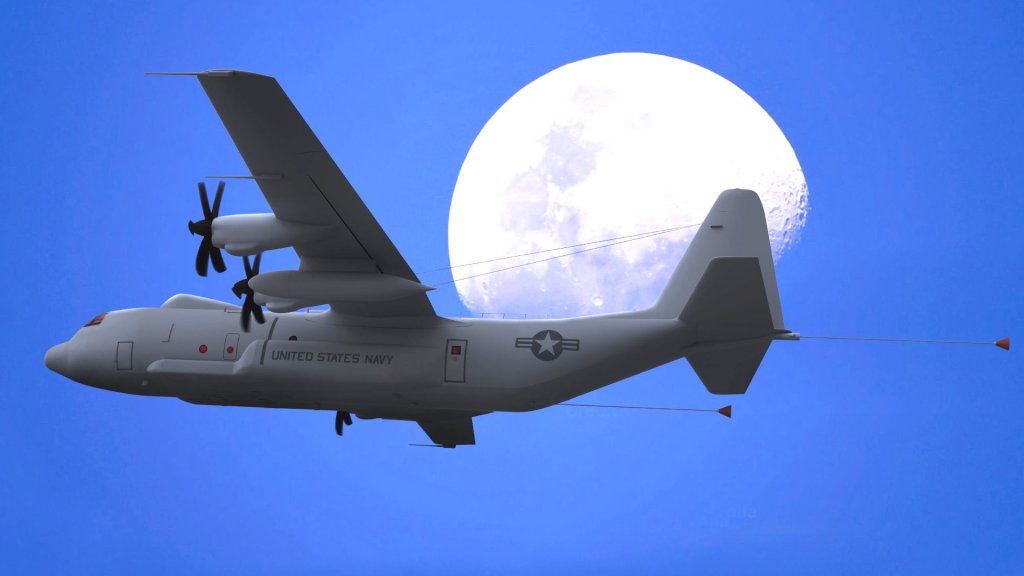
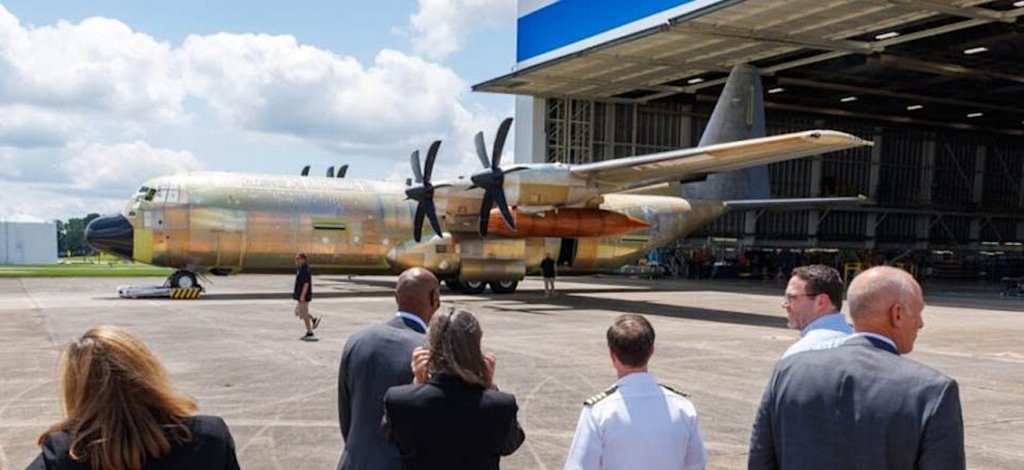
As it stands now, the Navy plans to acquire six pre-production E-130Js in Fiscal Year 2027 to support different aspects of the aircraft’s ongoing development. At least one initial example is already being built. Some portion of those test aircraft might eventually take on operational roles. In its latest report, GAO says a critical design review is expected to come at the end of next year. With the aforementioned delay, the decision to then move into low-rate initial production (LRIP) is now projected to occur in April 2029. The initial LRIP lot is expected to be between three and six aircraft, but the total expected size of the E-130J fleet is unclear.
It is worth remembering that the Navy did previously operate modified C-130s in the TACAMO role before the first E-6A arrived in 1989. The Navy subsequently upgraded those aircraft in the late 1990s and early 2000s to the E-6B standard.

TWZ has previously explored the pros and cons of going back to a C-130-based platform for this critical Navy mission set, writing:
“It’s certainly worth pointing out that the E-6Bs, conversions of what were some of the last and most modern 707 airliners built, were larger and higher performance platforms than the EC-130Qs. The C-130J-30 is certainly a more capable aircraft than the C-130H on which the EC-130Q was based, but it won’t have the base speed and altitude capabilities of an airliner-sized multi-engine jet. Compared to the Mercuries, any TACAMO-configured C-130J-30 would not be able to get on station as quickly, or fly as high, limiting its ability to get above bad weather or establish a better line of sight for its communications systems.”
“At the same time, as the Navy itself has noted, the C-130J-30 platform does immediately open up the ability to use a larger number of air bases, airports, and airfields, including austere ones that the E-6B cannot operate from. This could be very useful in a contingency scenario where an opponent may have destroyed or otherwise rendered unusable many well-established bases, as well as larger secondary dispersal sites, which include large commercial airports. Being able to fly from smaller, tertiary locations could help to ensure that the TACAMO mission continues without significant disruption under such circumstances. This is also true during peacetime as targeting the TACAMOs on the ground would be much harder if they could easily operate from and sit alert at a much larger number of airports.”
“A C-130J-30 configured for the TACAMO mission would certainly have a mid-air refueling capability and the Hercules is already a platform that has demonstrated the ability to loiter over particular areas for long periods of time. Unlike the Boeing 707, the C-130J is still in production, as well, meaning that TACAMO aircraft based on this plane would be inherently easier to maintain and support logistically, and may also be easier to convert to this specialized configuration begin with. As time goes on, the J looks set to increasingly become the default base C-130 model across the U.S. military, as well. Compared to the long out of production 707-based E-6, support for the C-130J is already distributed across the U.S., and beyond. Training C-130J crews is even an easier proposition.”

The issue increasingly looming now is the age of the existing E-6Bs, which are becoming increasingly more challenging to operate and sustain. As noted, the Mercury fleet represents some of the very last 707s ever built before Boeing shuttered that line for good in 1991. The Navy’s plans to phase out the E-6Bs as the E-130Js arrive to help avoid any capacity gaps, which means the Mercury fleet will have to soldier on until that happens.
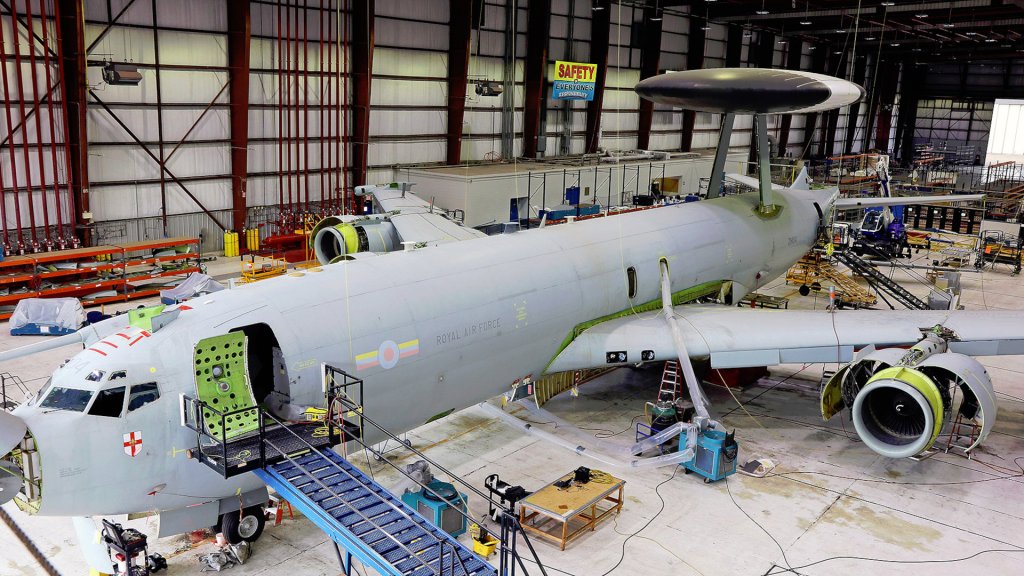
Last year, the Navy confirmed that it had scrapped plans to convert an ex-Royal Air Force E-3D Sentry airborne early warning and control aircraft, another Boeing 707-based type, into a dedicated TE-6B crew trainer, something TWZ was first to report. The TE-6B was explicitly intended to help relieve strain on operational E-6Bs. The Navy is now utilizing a contractor-owned, but government-operated (COGO) Boeing 737NG airliner to help meet pilot training demands.
To reiterate, the current plan is also for the E-130J to only perform the TACAMO mission. The Air Force is now in the very early stages of a separate effort to acquire what it is currently calling Looking Glass-Next (LG-N) to take over that mission from the E-6B fleet.
Part of that solution may entail integrating ABNCP-specific capabilities onto its future Boeing 747-basedE-4C Survivable Airborne Operations Center(SAOC) jets. The E-4Cs are set to replace the service’s four E-4B Nightwatch aircraft, as you can read more about here. The existing E-4Bs already have a ‘doomsday plane’ role, but do not have the exact same mix of capabilities as the E-6B. The Nightwatch jets notably lack the ability to order launches of Minuteman III IBCMs while in flight.
For the Air Force, the LG-N program is tied to larger nuclear command and control modernization plans, which might see more of these functions move to space-based assets, as well. All of this is also heavily intertwined with the ongoing development of the new LGM-35A Sentinel ICBM. Sentinel suffered huge setbacks, delays, and cost overruns, but primarily with the infrastructure side of the program, not the missile, as you can read more about here.

Enabling Peace Through Deterrence
When it comes to the Navy’s TACAMO modernization plans, challenges in integrating the necessary capabilities onto the C-130J-30 platform have now set back these efforts at least by a year.
Contact the author: joe@twz.com