Эрдэмтэд дархлааны эсүүдийн эх үүсвэр болох эсүүдийг лабораторийн нөхцөлд гарган авч, олшруулах аргачлалыг боловсруулсан нь хорт хавдрын эмчилгээнд шинэ дэвшил авчирч болзошгүй байна.
Дархлааны тогтолцооны макрофаг эсүүд нь хавдрын эсийг устгах чадвартай боловч тэдгээрийг хүний биеэс гадна өсгөвөрлөх, хадгалах, шаардлагатай хэмжээнд хүргэж олшруулах нь хүндрэлтэй байсаар ирсэн. University of Southern California-ийн эрдэмтэн Qi-Long Ying-ээр ахлуулсан баг макрофаг эсийн өмнөх үе шат болох гранулоцит-моноцит үүсгэгч эсүүдийг (GMPs) ашиглан энэ асуудлыг шийдвэрлэжээ. Эдгээр эсүүд нь өөрийгөө тасралтгүй хувилах чадвартай тул дархлаа эмчилгээнд шаардлагатай эсийг их хэмжээгээр гарган авах боломжийг бүрдүүлж байна.
Судлаачид лабораторийн нөхцөлд инженерчилсэн GMP эсүүдийг ашиглан хүчтэй нөлөө бүхий CAR-M эсүүдийг гарган авчээ. Хулганы загвар дээр хийсэн туршилтаар эдгээр эсүүд нь биеийн бүх хэсэгт тархаж, цусны болон хатуу хавдрын өсөлтийг саатуулж байгаа нь ажиглагдсан байна. Энэ нь өмнө нь зөвхөн цусны хавдарт үр дүнтэй байсан CAR-T эмчилгээний хязгаарлалтыг давах боломж олгож магадгүй юм.
Stanford University-ийн биологич Ravi Majeti-ийн тэмдэглэснээр, энэхүү аргачлал нь дархлаа эмчилгээний олон талт хэрэглээнд хаалга нээж байна. Одоогоор эрдэмтэд эдгээр эсийн үйл ажиллагааг сайжруулах чиглэлээр судалгаагаа үргэлжлүүлж байгаа бөгөөд судалгааны үр дүнг Cell сэтгүүлд нийтэлжээ. Энэхүү шинэ арга нь зөвхөн хавдрын эсрэг төдийгүй халдварт өвчин болон бусад нөхцөлд эмчилгээний шинэ гарц болох боломжтой юм.
Дэлгэрэнгүйг эх сурвалжаас харах
↓Эх сурвалжийг нээх ↓
The human immune system has evolved an incredible ability to fight off cancerous cells.
One of the first lines of defense is a specialized white blood cell called a macrophage.
Its name is derived from the Greek words for “big” and “eater”, and, as its name suggests, this type of cell has a fierce appetite for cancer.
Macrophages can even sound an “eat me” alarm from within tumors, kicking other immune players like T Cells into action.
They are a wonderful target for cancer research, but so far, next-generation therapies have largely failed to unlock their true potential.
A team led by scientists at the University of Southern California (USC) may have at last found the key.
They can now genetically engineer the cells that ultimately give rise to macrophages in the lab, or macrophage progenitor cells.
These are not stem cells, but the cells that go on to form stem cells, and they seem to have a superpower up their sleeves:
They can make copies of themselves over and over.
“The prevailing view has been that long-term self-renewal in the blood system is primarily a property of the … stem cells that can generate any type of blood or immune cell,” explains biologist Qi-Long Ying at USC.
“We found that, under the right conditions, [progenitors] can also self-renew, dividing extensively while keeping their identity and ability to produce functional immune cells.”
“That gives us a scalable starting point for engineering cell therapies for cancer, infectious disease, and potentially many other conditions.”
CAR-T is a famous and groundbreaking cancer therapy that requires taking a patient’s T cells, genetically engineering them to better fight cancer, and then infusing them back into the body’s circulation.
So far, versions of CAR-T have shown remarkable success, significantly extending the lives of patients in clinical trials.
But while they work best for cancer in the blood, they don’t work as well against solid tumors.
Typically, macrophages are the most abundant immune cells within a cancerous mass, but they are more challenging to engineer in the lab.
These white blood cells have also proven difficult to grow outside the human body, often failing to proliferate to necessary levels.
What’s more, they are tricky to freeze and store long-term.
But all hope is not lost for a therapy like CAR-M, which is similar to CAR-T, but with macrophages instead of T-cells.

The progenitor cells of macrophages, called granulocyte-monocyte progenitors (GMPs), could be the ticket.
Using mouse and human GMPs, Ying and colleagues have figured out exactly what these cells need to eat to grow, feeding them a complex mix of chemicals at very specific stages.
The hope is that this endless supply of GMPs can now be used for future cancer immunotherapies.
In the lab, engineered GMPs generated potent CAR-Ms.
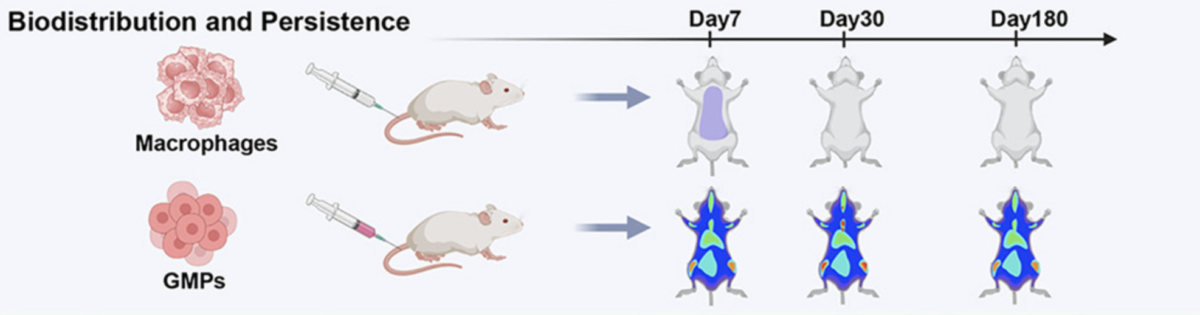
When these lab-grown GMPs were injected into mice with blood cancer and solid tumors, researchers found that the progenitor cells generated a steady supply of macrophages and other immune players.
Unlike injected macrophages, these GMPs spread throughout the rodent body and stalled the cancer’s progression in blood and in solid tumors.
“This method for the expansion and engineering of GMPs opens the door to numerous translational applications, much like T cell expansion and engineering,” says biologist and collaborator Ravi Majeti from Stanford University.
“We have already demonstrated engineering of these cells to drive multiple potent functions, and there is a lot more to be explored.”
Related: New Immune System Discovery Could Help Beat a Sneaky Cancer Cell Trick
For many years, scientists have tried to determine which T cells are best to re-engineer for CAR-T therapies. This new research, however, suggests that targeting the progenitors of immune cells is a potentially better route to success, covering more bases all at once.
“Our study suggests that the future of immunotherapy may depend not only on designing better CAR receptors, but also on choosing the right developmental stage of the cell,” concludes Ying.
The study is published in Cell.
This article was fact-checked by Jess Cockerill and edited by Michelle Starr. While we pride ourselves on our process, we are only human. If you spot a mistake, please let us know.