
Израилийн Weizmann Institute of Science-ийн судлаачид MTCH2 уураг нь хүний эсийн эрчим хүчний зарцуулалт болон өөх тосны хуримтлалд хэрхэн нөлөөлдгийг судалсан байна.
Ozempic зэрэг GLP-1 төрлийн жин хасах эмүүд нь булчин болон ясны масс алдагдах сөрөг нөлөөтэй байж болзошгүй тул эрдэмтэд илүү байгалийн аргаар жин удирдах боломжийг эрэлхийлж байна. Өмнө нь хулганы булчингийн эсэд MTCH2 (буюу “Mitch”) уургийн үйлдвэрлэлийг зогсооход тус амьтад таргалалтаас сэргийлэгдэж, тэсвэр тэвчээр нь нэмэгдэж байжээ. Энэхүү судалгааг үргэлжлүүлэн, судлаачид хүний эсэд тус уургийг устгаж, бодисын солилцооны 100 гаруй бодист үзүүлэх нөлөөг хэдэн цаг тутамд хэмжсэн байна.
Судалгааны үр дүнд MTCH2 уураггүй эсүүдэд эсийн амьсгалах үйл явц эрчимжиж, нүүрс ус, өөх тос, амин хүчлийг эрчим хүч болгон хувиргах явц хурдасдаг болох нь тогтоогджээ. Биологич Сабита Чоурасиагийн тайлбарласнаар, энэхүү уураг нь митохондрийн нэгдлийг саатуулж, эсийн энерги боловсруулах үр ашгийг бууруулдаг байна. MTCH2-гүй эсүүд эрчим хүчний дутагдалд орж, улмаар эсийн мембраны бүтцэд байх өөх тосыг түлш болгон шатаадаг болохыг биологич Атан Гросс онцолжээ.
Түүнчлэн MTCH2-ийн дутагдал нь эсүүд өөхний эс болон ялгаран хөгжих үйл явцыг саатуулдаг байна. Өөх тос хуримтлагдах үйл явцад их хэмжээний энерги шаардлагатай байдаг бол энэхүү уураггүй эсүүдэд энерги дутагдалтай байдаг тул өөхний хуримтлал багасдаг аж.
Гэсэн хэдий ч судалгааны багийнхан энэ нь одоогоор эрт үеийн нээлт болохыг анхаарууллаа. Эсийг ийнхүү эрчим хүчний дутагдалтай, хэт ачаалалтай байдалд оруулах нь эд эрхтэнд гэмтэл учруулах эрсдэлтэй тул цаашид илүү нарийвчилсан судалгаа хийх шаардлагатай байна. Судалгааны үр дүнг EMBO Journal сэтгүүлд нийтэлжээ.
Дэлгэрэнгүйг эх сурвалжаас харах
↓Эх сурвалжийг нээх ↓
While GLP-1 drugs such as Ozempic have been dramatically effective at helping people lose weight in recent years, bone and muscle loss have been noted as side effects.
With that in mind, the search is on for more natural methods of managing weight without any downsides attached, and the protein MTCH2 – informally known as ‘Mitch’ – may be one route to this type of treatment.
In a 2016 study, researchers found that when Mitch production was shut down in mouse muscles, the animals were protected against obesity, while also improving in markers of stamina and endurance.
Together with other previous Mitch research, that prompted a newly published study from researchers led by a team from the Weizmann Institute of Science in Israel: It asks the question, might the same effects be seen in humans?
To find out, they knocked out the Mitch-producing gene in human cells in the lab.
“After deleting Mitch, we examined, every few hours, the effect that had on more than 100 substances taking part in metabolism in human cells,” says biologist Sabita Chourasia from the Weizmann Institute of Science.
“We saw an increase in cellular respiration, the process in which the cell produces energy from nutrients, such as carbohydrates and fats, using oxygen. This explains the increase in muscular endurance in previous experiments using mice.”
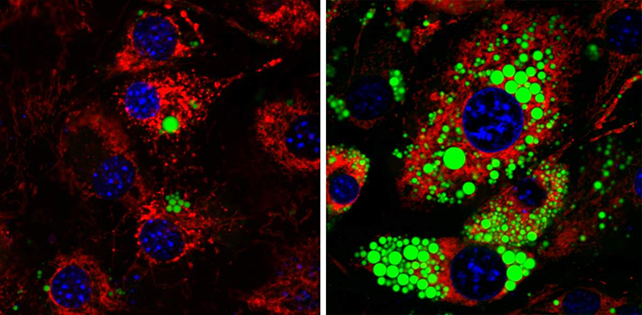
The analysis revealed in much more detail what Mitch actually does: It makes it harder for the cell energy engines known as mitochondria to fuse together, which in turn makes the cell less efficient at processing energy.
That means Mitch-less cells are always running on empty and scrambling around for more fuel – resulting in substances like carbohydrates, fats, and amino acids getting burned up more quickly. This goes some way to explaining why mice without Mitch in their muscles don’t get obese.

The researchers also determined that cells without any Mitch also focused on fats in particular as an energy source. They effectively started burning up the fatty building blocks around the cell membranes.
“We discovered that deleting Mitch led to a major drop in fats in membranes,” says biologist Atan Gross from the Weizmann Institute of Science.
“At the same time, we saw an increase in fatty substances used to produce energy, and we realized that the fat was being broken down from the membrane to be used as fuel. In other words, we showed that Mitch determines the fate of fat in human cells.”
Another larger-scale fat-related discovery emerged: the absence of Mitch disrupts the process of entire cells turning into fat tissue too, known as fat cell differentiation.
“The process of fat accumulation requires a large amount of available energy, but in cells without Mitch, there is a shortage of energy,” says Gross.
“In addition, the expression of genes necessary for differentiation is suppressed, and there is a shortage of the substances vital for this process to occur. As a result, differentiation of new fat cells is reduced, along with fat accumulation.”
We’re still a long way from the stage of developing actual treatments, but the discovery of Mitch’s core role in two fat burning and fat accumulating processes makes it a worthy candidate for future study
Much more research will be required to fully understand what the presence or absence of Mitch actually does. Putting cells into such a frantic, energy-starved state risks stressing tissues and organs to the point of damage, which is something any potential treatments will need to avoid.
Related: To Tackle Our Obesity Crisis, Experts Say Everything We Do Must Change
“Our findings demonstrate that MTCH2 knockout induces a hypermetabolic state, leading to an imbalance in cellular energy flow and activating multiple metabolic pathways to meet the heightened energy utilization and demand,” write the researchers in their published paper.
“These results underscore MTCH2’s role as a crucial regulator of cellular energy flow.”
The research has been published in the EMBO Journal.
This article was fact-checked by Rachel Garner and edited by Peter Dockrill. While we pride ourselves on our process, we are only human. If you spot a mistake, please let us know.


