
Хятадын Ардын чөлөөлөх армийн (АЧА) пуужингийн туршилтын гол төв болох Жилантайн баазад дээвэр нь онгойдог, бэхжүүлсэн шинэ байгууламжууд баригдсан нь хиймэл дагуулын зургаар илэрчээ.
АНУ-ын Агаарын цэргийн их сургуулийн дэргэдэх Хятадын сансрын судлалын хүрээлэнгийн (CASI) мэдээлснээр, 2022 оны сүүлчээр эхэлсэн уг бүтээн байгуулалт 2023 оны сүүлч гэхэд гаднах байдлаараа дууссан байна. Шинжээч Эли Тиркийн дүгнэлтээр, эдгээр байгууламж нь тив алгасах баллистик пуужингийн (ICBM) цооногоос илүү жижиг, гүн багатай тул дунд болон ойрын тусгалтай баллистик пуужин, эсвэл далавчит пуужин харвахад зориулагдсан байх магадлал өндөр аж.
Шинэ байгууламжууд нь босоо байрлалаас пуужин харвах систем (VLS)-ийн зориулалттай байж болох бөгөөд энэ нь Хятадын тал мөргөлдөөний эхний шатанд хурдан цохилт өгөх чадавхыг бэхжүүлэх сонирхолтой байгааг илтгэж байна. Ийм систем нь Тайвань болон бүс нутаг дахь АНУ-ын цэргийн баазуудад богино хугацаанд олон төрлийн пуужингаар цохилт өгөх боломжийг олгох юм. Гэсэн хэдий ч, энэ нь байнгын бэхжүүлсэн байгууламж тул дайны үед хурдан илрүүлэгдэж, устгагдах эрсдэлтэй гэж шинжээчид тэмдэглэжээ.
Уг байгууламжийг пуужингийн эсрэг хамгаалалтын системтэй холбоотой эсэх талаар таамаг дэвшүүлж байгаа ч, одоогийн байдлаар радарын систем зэрэг холбогдох дэд бүтэц ажиглагдаагүй байна. Хятад улс сүүлийн жилүүдэд цэргийн баазууддаа бэхжүүлсэн нисэх онгоцны хоргодох байр, пуужингийн цооног зэрэг хамгаалалтын байгууламжуудыг олноор барьж байгаа нь дэлхий дахинд ажиглагдаж буй цэргийн дэд бүтцийг бэхжүүлэх ерөнхий хандлагатай нийцэж байна.
Дэлгэрэнгүйг эх сурвалжаас харах
↓Эх сурвалжийг нээх ↓
Satellite imagery shows China has built what looks to be a new pattern of hardened structures with retractable roofs at a key missile test and training base in Inner Mongolia. Since the late 2010s, this base has also played a key role in the Chinese People’s Liberation Army’s (PLA) dramatic expansion of its silo-based intercontinental ballistic missile (ICBM) capabilities. The more recent additions to the facility appear to be too small and shallow for this purpose. A new report posits they could be used to fire smaller ballistic and/or cruise missiles, and might point to plans for a new “conventional quick-strike capability.”
The China Aerospace Studies Institute(CASI), part of the U.S. Air Force’s Air University, first called attention to the two new structures yesterday. Though CASI published the report, it stressed that the “opinions, conclusions, and recommendations expressed or implied within are solely those of the author,” Eli Turk, and “do not necessarily represent the views of the Air University, the Department of the Air Force, the Department of Defense, or any other U.S. government agency.” Tirk is a member of CASI’s staff.
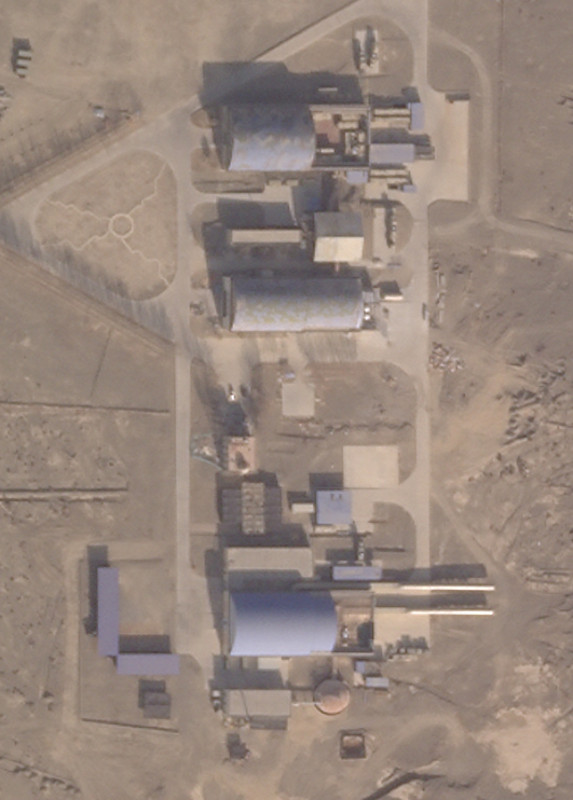
“The People’s Liberation Army Rocket Force (PLARF) has constructed an unknown type of fixed launch system at the 1st Test and Training District in Jilantai that appears capable of launching multiple missiles,” Tirk writes. “Construction began sometime in late 2022, and, at least externally, appeared to be near completion by late 2023.”
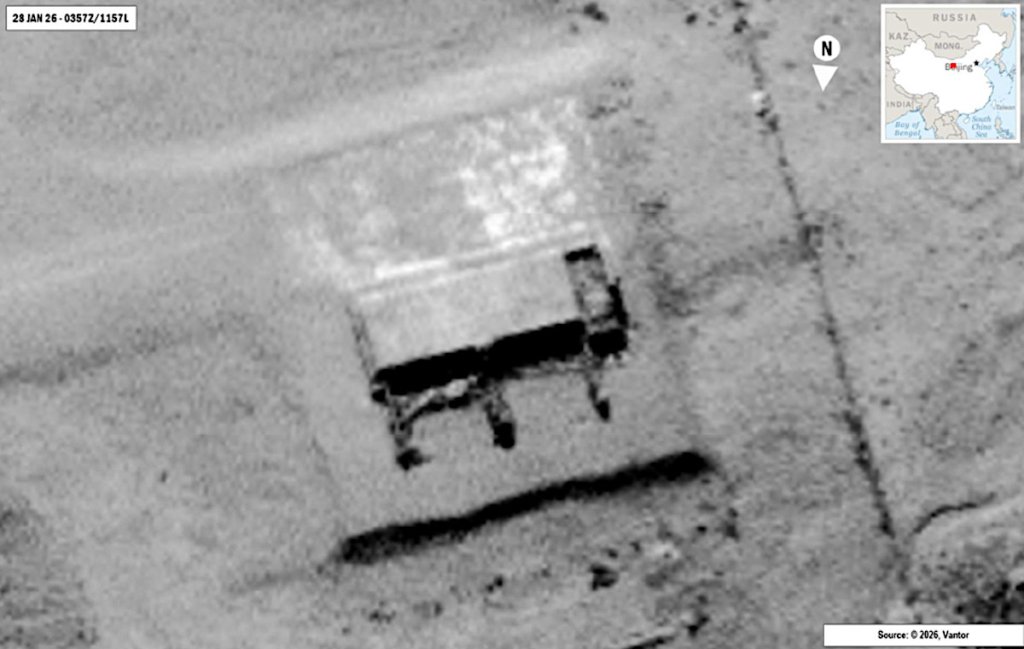
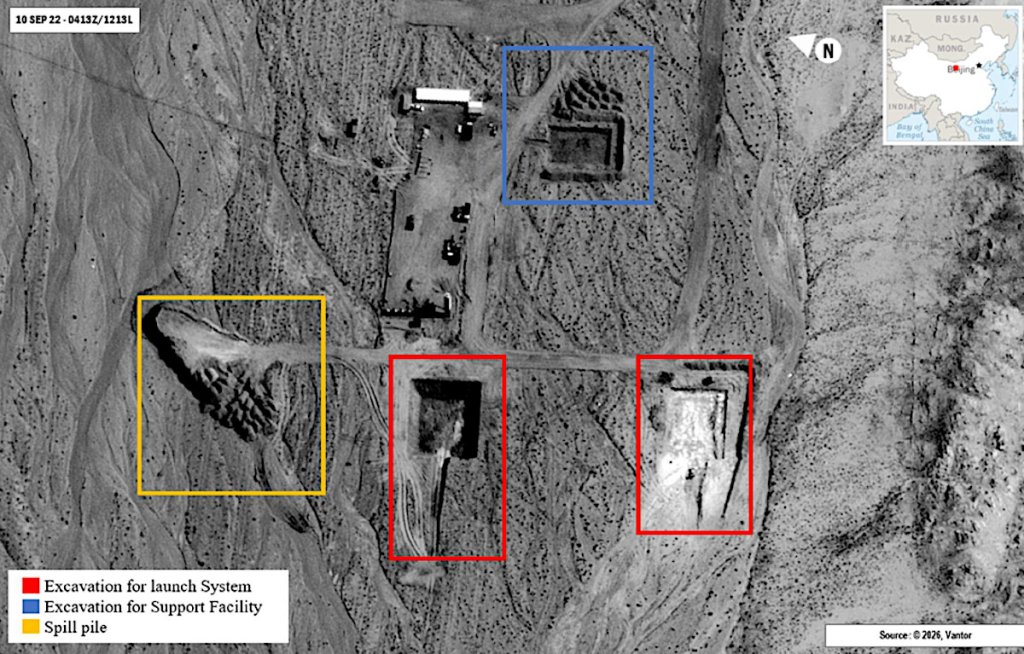
The report includes satellite images of the site taken in September and December 2022, as well as January of this year, as seen above and below.
“The excavation for the northern launcher … measures roughly 12.5 meters [40 feet] deep when the image was captured [in September 2022]. While it is possible that this foundation was dug deeper, it is not likely that it would have been significantly deeper, given the potential size of the finished interior of the launch system,” according to Tirk. “The limited imagery available of the finished structure prior to the installation of the launcher closure door restricts more accurate measurement, but this structure appears to be somewhere between 6.4 meters and 11.8 meters [21 to 38 feet] in depth.”
Additional satellite imagery TWZ has reviewed from PlanetLabs shows the rectangular retractable roofs to be approximately 65.5 feet (20 meters) long and just over 21 feet (6.5 meters) wide. The roofs also look to open by sliding sideways along three large rails.
There is at least one other large structure at the site, which could be used for various support functions. There may be additional infrastructure underground. It is also worth noting here that the area with the new hardened structures is connected by road to an earlier facility immediately to the northeast. The tertiary site has several additional large structures contained within a clearly visible perimeter wall.
The roof design, at least, has some broad similarities to the covers on silos associated with older DF-5-series ICBMs, which are also rectangular in shape. For further comparison, the cover on a known ICBM test silo at Wuzhai, some 350 miles to the East of Jilantai, is nearly 74 feet (22.5 meters) long and around 29.5 feet (9 meters) wide. It also slides open to one side along two large rails. Underneath is a tubular silo that would have to be at least around 131 feet (40 meters) deep based on the dimensions of DF-5.
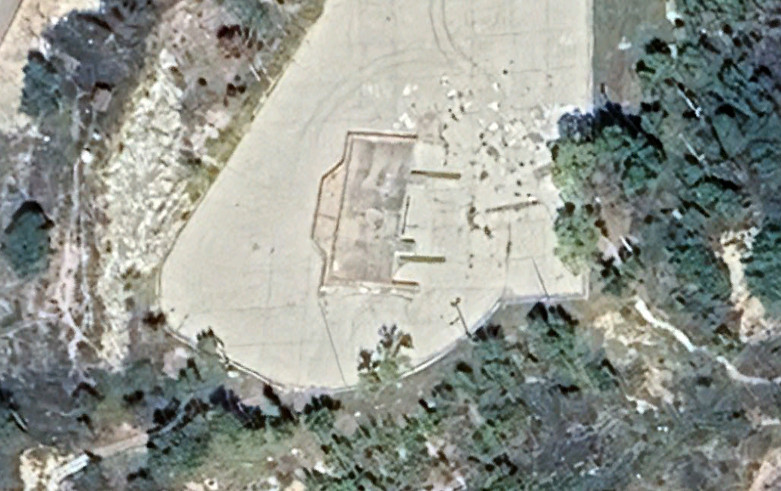
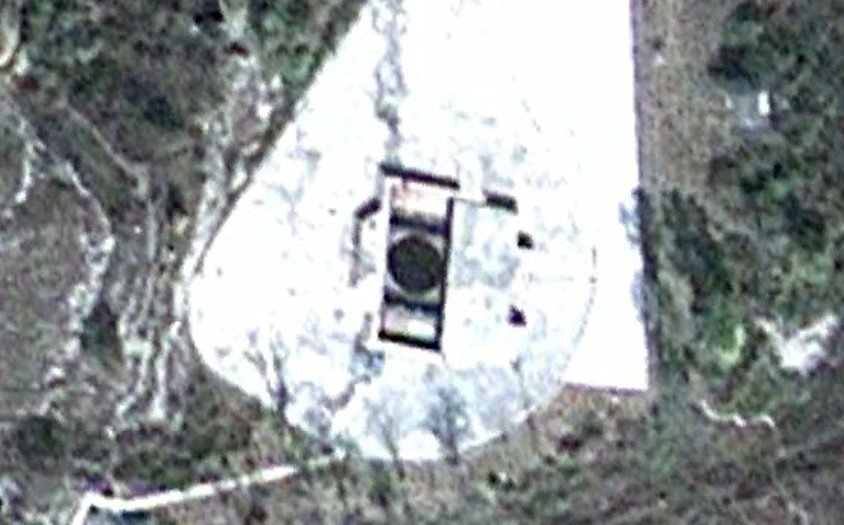
Silos constructed at Jilantai and other sites in China since the late 2010s, associated with newer DF-31 and DF-41 ICBMs, have completely different lid designs.
The new structures appear “to have a shorter depth than silos intended for intercontinental ballistic missiles (ICBMs), suggesting that it may support short-range ballistic missiles (SRBMs), medium-range ballistic missiles (MRBMs), and cruise missiles,” per Tirk’s assessment. “Assuming the actual depth of the launch system is closer to the maximum range, these measurements suggest that these structures would likely be able to support up to an MRBM-class missile, assuming the roughly 10-meter length [nearly 33 feet] of a DF-21 or 11-meter length [approximately 36 feet] of a DF-17. It is also highly likely that this launch structure could easily accommodate SRBMs and cruise missiles.”
The DF-21 is a traditional MRBM design, and there is an anti-ship variant with a reentry vehicle capable of a certain degree of maneuvering in the terminal phase of flight. Though MRBM-sized, the DF-17 is topped with a hypersonic boost-glide vehicle and functions in a completely different manner from typical ballistic missiles. In general, hypersonic weapons of this type offer benefits when it comes to penetrating past enemy defenses and for prosecuting time-sensitive targets at long ranges, as you can learn more about here.

China’s Dong-Feng 21 “carrier killer” Salvo Launch
“While there may be space within this launch structure to store a small number of missiles horizontally that are erected vertically prior to launch, a more efficient configuration appears to be a vertical launch system,” he adds “A vertical launch system would enable the massing of fires for effect, reduce signatures, and maintain the flexibility to employ a variety of different munitions from a single launcher simultaneously, enabling these units to conduct rapid strikes against numerous target types.”
How missiles would be loaded into the launch system is unclear and would depend on its exact design. A specialized loading vehicle or at least a crane might be necessary. There is no indication that the structures allow for road-mobile transporter-erector-launchers to simply drive inside and fire through the open roof.
Tirk also raises the possibility that the site could be tied to Chinese ballistic missile defense developments. The line between ballistic missiles and mid-course anti-ballistic missile interceptors, as well as ground-launched anti-satellite interceptors, is often blurry. The U.S. Ground-Based Interceptor (GBI) is notably a silo-launched design, as is Russia’s A-135.
However, Tirk also notes that the base at Jilantai primarily serves the PLARF. This branch of the PLA is not known to have a major missile or air defense role. That responsibility largely falls to the PLA Air Force (PLAAF). There are no signs of radars or other features associated with these missions, either. As TWZ has previously reported on in detail, we have seen different types of hardened and unhardened structures with retractable roofs emerge near the border with India and on islands in the South China Sea that do look to be air defense sites.
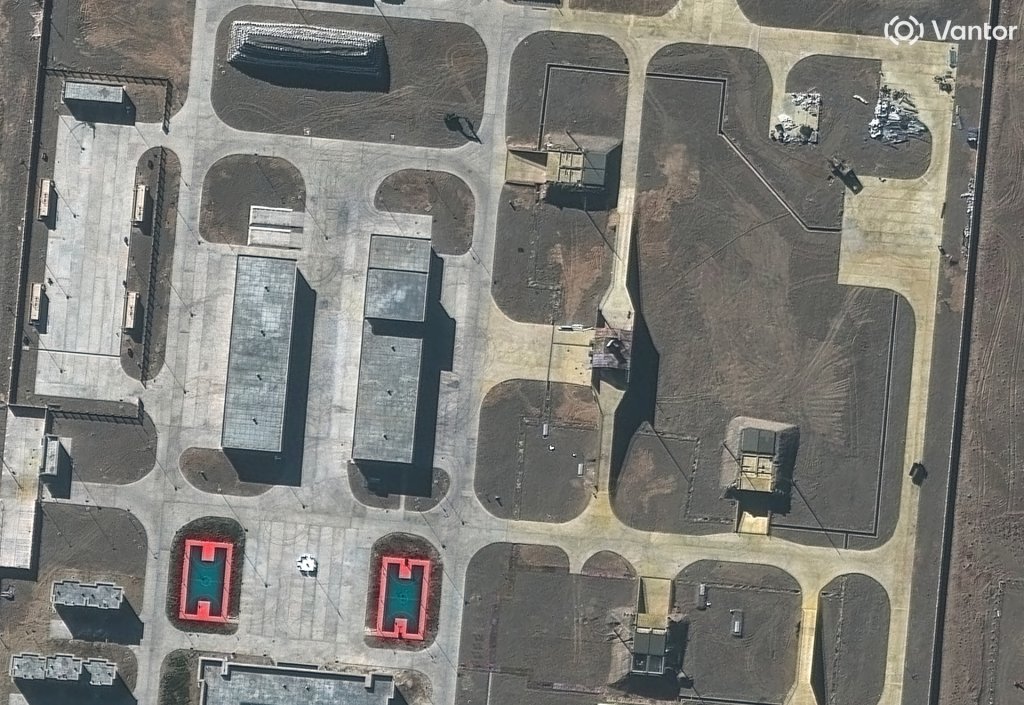
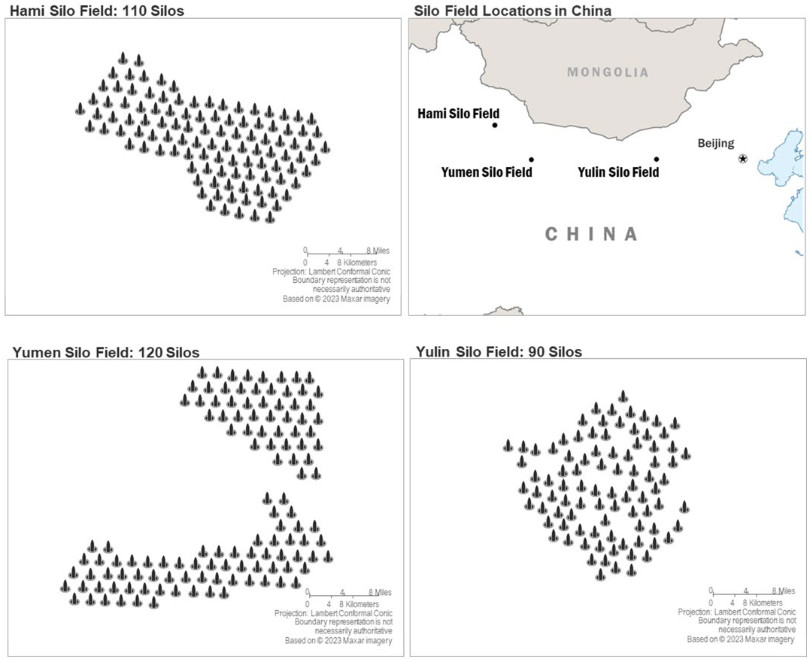
Other significant additions to the facilities at Jilantai have been observed in recent years. As already noted, this has been especially heavily intertwined with China’s construction of hundreds of new ICBM silos and associated infrastructure spread across three separate fields in the north and western ends of the country.
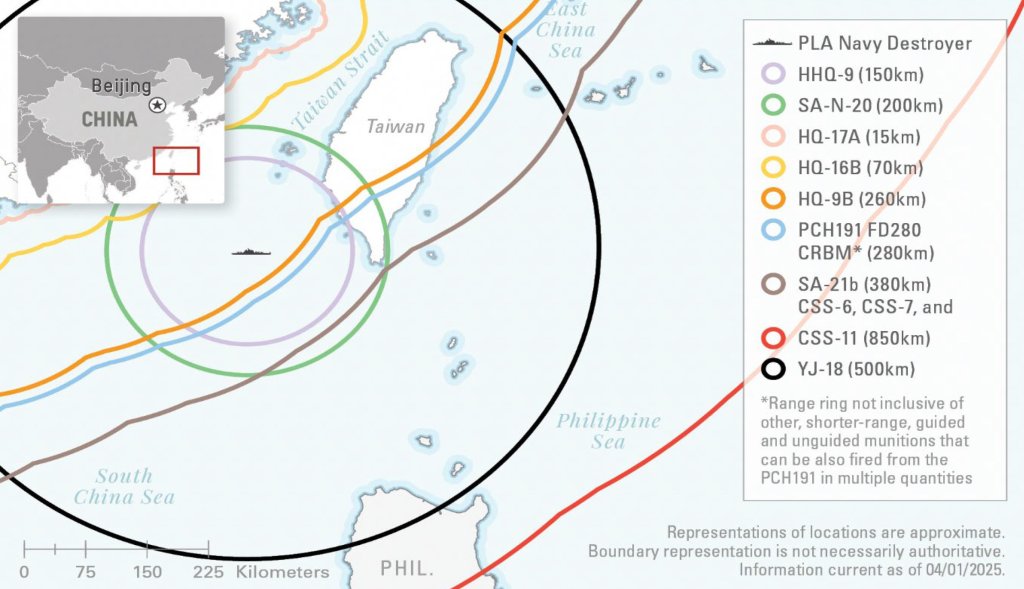
Overall, Tirk posits that the new structures at Jilantai might reflect “an intent to field a conventional quick-strike capability for a counter-intervention mission set, or possibly to conduct strikes against Taiwan, both of which would provide the PLA with additional capabilities to influence U.S. strategic decision-making.”
“A conventional quick strike capability, like that provided by a vertical launch system, could make PLA leadership more confident in their ability to compel Taiwan and U.S. behaviors during a crisis by threatening or conducting rapid preparatory strikes or counterintervention fires in the early stages of a conflict,” he adds. “Building out these launch systems in sufficient quantities could allow the PLA to rapidly escalate from a quarantine or blockade of Taiwan to conducting elements of a massive preparatory fires campaign against targets on Taiwan, U.S. bases in the first island chain, or U.S. Navy task groups if positioned along the coast.”
“Fixed launching options, however, are difficult to conceal, protect with active defenses and – depending on their location – potentially of limited utility for continued use after their first launch. Expansive investment in this type of system may provide significant “use or lose” incentives to the PLA leadership in the event of an escalating crisis,” he also notes. “It is currently unclear how many of these systems the PLARF intends to construct, which PLARF Base they will be deployed under, and the specific mission set they are intended to support.”
There is still the possibility that these structures could serve another purpose, even just within the PLARF. In particular, if the foundation was dug deeper, this could fundamentally change the assessment. From the outside, the roofs do still look to be too narrow for there to be a traditional silo underneath for any of China’s known ICBMs. That being said, a deeper foundation could accommodate intermediate ballistic missiles (IRBM) or hypersonic types that use larger ballistic missile-type boosters, but that are still smaller than an IBCM. The DF-26 family of IRBMs, at least some variants of which are understood to be capable of carrying conventional or nuclear warheads, is a particularly key component of the PLARF’s arsenal, and might also benefit from a new fixed launch infrastructure. Like the DF-21, there is also an anti-ship version of the DF-26.

China tests DF-26 missile destroying Mock Aircraft Carrier
Hardened structures with retractable roofs could conceal other assets beyond launchers for any kind of missile, too. TWZ has previously highlighted other hangar-like structures with retractable roofs, some of which are camouflaged, in an area known as Korla East in the western end of the country. PLAN facilities in this region have been tied to work on missile defense, anti-satellite, directed energy weapon, and electromagnetic pulse technologies, as you can read more about here. Still, this seems less likely to be the case given the PLARF-centric nature of the Jilantai base and the other construction that has been observed there since the late 2010s.
The new structures at the base in Jilantai also reflect a broader trend when it comes to hardened military infrastructure in China, as well as elsewhere globally. As we wrote last year, after the emergence of the apparent new pattern of hardened air defense sites near China’s border with India:
“The shelters with retractable roofs at the sites in Gar County and near Pangong Lake also highlight a larger trend when it comes to physical hardening, or at least ‘enclosing,’ that has been observed at Chinese military facilities in recent years. There has been a particularly visible surge in the construction of new hardened aircraft shelters, as well as unhardened, but fully enclosed hangars, at air bases across China, including ones situated on the Tibetan Plateau.”
“Vast fields of new silos for intercontinental ballistic missiles have also been built in the western end of China over the past few years. This is all on top of the PLA’s existing array of hardened infrastructure, which includes deeply buried air and naval bases.”
“Chinese construction of new hardened and unhardened aircraft shelters, in particular, is reflective of larger global trends, including in Russia, North Korea, and Iran, as well. It has also stood in notable contrast to the lack of such developments in the United States, something that has become a topic of heated debate, which TWZ has been tracking very closely.”
“Growing threats posed by long-range, one-way attack drones, which offer a relatively low-cost way to launch large volume strikes, especially against fixed targets like air bases and air defense sites, have become a particularly significant factor in the hardening debate. Ukraine’s Operation Spiderweb also underscored the threats that smaller, shorter-range drones can pose to aircraft and other assets out in the open, and in areas far away from active combat zones. Drones could also be layered in with the many other methods of attack that would be used against the same array of targets.”
Though questions remain about their exact purpose, and the concepts of operations behind them, the new hardened structures with retractable roofs in Jilantai might be a sign of things to come.
Contact the author: joe@twz.com


