АНУ-ын Хойд Дакота мужийн Медора хотын ойролцоох байгалийн үзэсгэлэнт бүсэд байгаль хамгааллын эцэг гэгддэг Теодор Рүүзвельтийн нэрэмжит шинэ музей нээгдлээ.
Медора хотын ойролцоох Maah Daah Hey маршрутаар уулын дугуйгаар аялах нь Дакотагийн өвөрмөц тогтоц бүхий толгод болон хавцал дундуур аялах гайхалтай боломжийг олгодог. Энэхүү бүс нутагт байрлах Теодор Рүүзвельтийн нэрэмжит үндэсний цэцэрлэгт хүрээлэн нь байгалийн нөөц баялаг, зэрлэг ан амьтдыг хамгаалах үзэл санааг түгээн дэлгэрүүлдэг онцгой цэг юм. Аялагчид тус бүс нутагт явган аялал хийхээс гадна ойр орчмын Little Missouri National Grassland-д төлөвлөгдөж буй 16 милийн урттай явган аяллын шинэ маршрутуудыг сонирхох боломжтой.
Нийт 96,000 хавтгай дөрвөлжин фут талбай бүхий уг музей нь байгаль орчинд ээлтэй, орчин үеийн технологиор бүтээгдсэн бөгөөд Теодор Рүүзвельтийн амьдралын түүхийг интерактив байдлаар харуулдаг. Музейн дотор хиймэл оюун ухаан ашиглан түүхэн үйл явдлуудыг танин мэдэх боломжтой ба үзмэрүүд нь түүний байгаль хамгаалал, нийгмийн шинэчлэлд оруулсан хувь нэмрийг онцолсон байна. Тус байгууламж нь зөвхөн үзвэр төдийгүй байгаль орчныг хамгаалах, гэр бүлээрээ чөлөөт цагаа өнгөрөөх томоохон төв болох зорилготой юм.
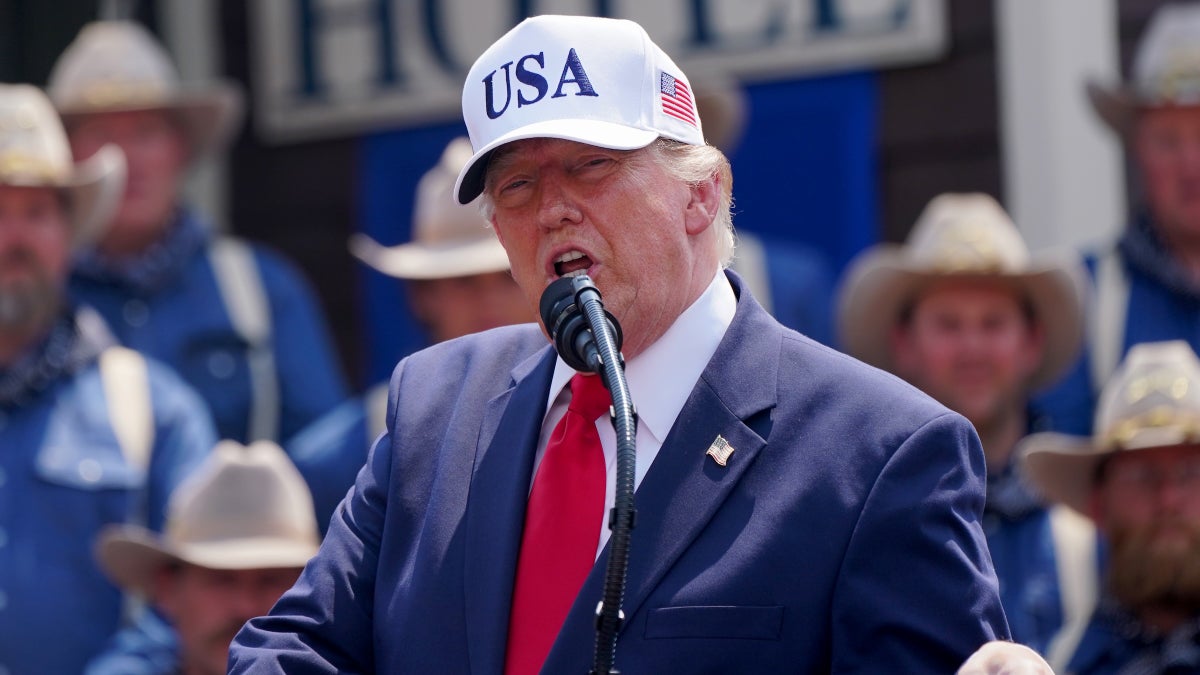
2026 оны долдугаар сарын 4-нд болсон музейн нээлтийн үйл ажиллагаанд АНУ-ын Ерөнхийлөгч Дональд Трамп оролцсон нь тухайн бүс нутагт аялж байсан жуулчид болон орон нутгийнхны анхаарлыг татсан үйл явдал боллоо. Тус музейг үзэхэд тодорхой хэмжээний төлбөр хураамж авдаг бол музейг тойрсон ногоон байгууламж болон явган аяллын замууд нь нийтэд нээлттэй байх юм. Аялагчид тус бүс нутагт зорчихдоо байгалийн нөөцийн ашиглалт, ялангуяа газрын тосны олборлолттой холбоотой байгаль орчны асуудлуудад анхаарал хандуулж, соёлтой аялахыг зөвлөж байна.
Дэлгэрэнгүйг эх сурвалжаас харах
↓Эх сурвалжийг нээх ↓
“TRAIL CLOSED,” declared a half-dozen signs.
I was mountain biking through rolling badlands when I unwittingly coasted past a security perimeter.
Earlier that afternoon, my wife and I had ridden the fun Maah Daah Hey Trail south from Medora, through grassy hills broken by layered cliffs. She stopped for a break at a scenic highpoint, offering views of the new Theodore Roosevelt Presidential Library (TRPL) complex, where we’d soon enjoy a sneak preview.
Meanwhile, I plunged downhill into a narrow valley where I encountered a Forest Service ranger and a plainclothes official closing the trail. Fortunately, my story checked out. Clearly, I was a legit mountain biker with so-so skills, and not, I guess, a sleeper agent in downcountry disguise.
“OK, I believe you,” said the ranger, showing a map of the buffer zone, before releasing me back into the wild.
“Hey, I heard the president’s coming to town,” I volunteered.
“I don’t know,” he said cryptically.
That was hard to believe. Almost everyone was talking—well, more like muttering—about the impending visit. Donald J. Trump would be attending the grand opening of a monumental museum dedicated to the father of U.S. conservation. Hold for applause irony.
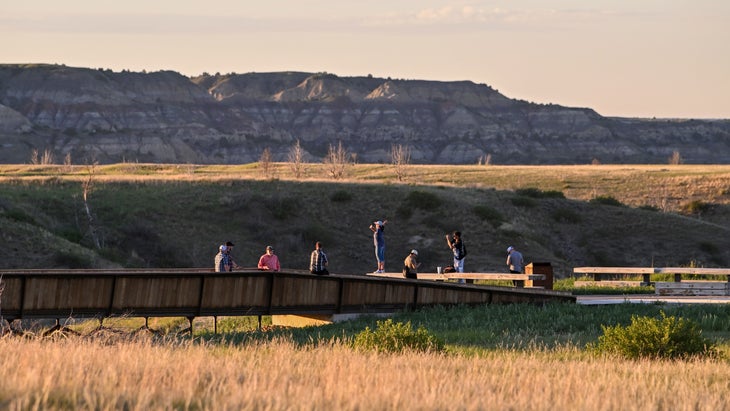
Like many places that I’ve visited across the country during the past year, no one around here seemed that enthused about the President. This was especially true in nearby Theodore Roosevelt National Park, named to honor Number 26 for expanding what became the beloved National Park Service system. Naturally, park goers were particularly down on Number 45/47, who seems intent on dismantling the system, gutting the workforce, and potentially selling off public lands for development. Curiously, few were even calling the big guy by name. This made our few days in the badlands feel like the opening act of an outdoorsy horror movie.
He’s coming, people whispered on trails, glancing around, like they feared a lurching bison. We’re getting out of Dodge before it’s too late.
Maybe he’s coming by helicopter, suggested a retired couple, who’d witnessed two military V-22 Ospreys landing at the Painted Canyon Visitor Center. I heard he’s coming by train, said a young local. One person joked about horseback. No one seriously debated him hiking in, even when an ominous pair of boots was found abandoned at the remote Petrified Forest trailhead.
“It’s like the hiker jumped out of their shoes and ran off,” mused one investigator, possibly me, as thunder cracked and a storm rolled in.
Three days before Trump became official visitor #1, my wife and I got to preview the TRPL.
The muted colors and sweeping roofline of this 96,000-square-foot facility purposefully pay homage to the serene landscape. Inside, the zero-emission building is made from glossy wood and rammed-earth construction, a modern variation on an ancient technique of compacting sediments into walls with natural cooling properties.
The so-called “library” is actually an immersive museum, and visitors walk through intricately designed rooms, each depicting scenes from Teddy Roosevelt’s life. There are interactive digital displays, many using AI in various ways. Visitors can superimpose their faces into historical images, for example, thus taking refuge in simpler times. Or they can talk to an AI Roosevelt and ask whether the latest Trump-induced crisis is an actual objective or just another distraction.
“We’re not trying to tell you what to think about TR,” said Matt Briney, the communications chief who showed us around. “We’re just trying to tell the story and let you decide for yourself.”
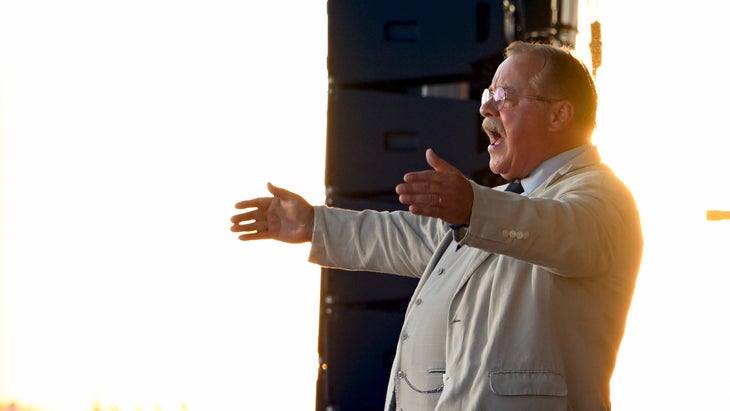
After a wealthy childhood battling asthma in 1860s New York City, Roosevelt entered state politics as a young man. Then his life was upended when his wife and mother unexpectedly died on the same night. A distraught Roosevelt withdrew to hunt and ranch in the wild Dakota badlands, where he found renewed purpose as a cowboy-like champion for the common people against powerful business interests.
Roosevelt’s trustbusting approach led to progressive reforms concerning labor, health, regulation, and conservation. He established five national parks and hundreds of national forests, monuments, and game preserves. His presidency was not without controversy, including an expansion of U.S. imperialism overseas. However, domestically, he challenged the wealthy elites and won the hearts of a wide bipartisan swath of the American people. Not to give everything away, but dude’s face was later carved into Mount Rushmore.
(Thus far, I’m not spotting any uplifting parallels between the presidencies of TR and DJT. But if you find one, please write it up in old-timey letter and send via Pony Express.)
During our preview, we toured the TRPL grounds. A one-mile path winds over the green rooftop’s terraced gardens and around the campus hilltop, which features native grasses and plants. An intriguing rope trampoline allows kids (and outdoor writers known for embarrassing their wives) to jump above the badlands for joy or frustration.
That’s kind of the point. This edutaining museum is meant to be a hub for not just learning and conservation but family fun. Outdoorsy visitors may want to wait until the TRPL builds out its planned 16-mile hiking trail system into the adjacent Little Missouri National Grassland. Trails will be free to access, while touring the museum involves a moderately high admission fee.
During our preview, we also kept crossing paths with the advance team. Secret Service, White House reps, and TRPL staff rushed around, discussing how to handle the flow of Trump’s visit based on the big question: Will he like the museum or not?
My wife and I were lucky enough to split for Montana the day before Trump rolled into Medora on a custom-painted Freedom 250 train. The “fake news” drew attention to crowd size, mentioning how only a few hundred people came out to greet the President. Pro-Trump outlets emphasized that this remote tourist town has a tiny population of less than 200. Such a qualification overlooks the fact that thousands of people, from across the political spectrum, had already arrived for the July 4th weekend and TRPL opening.
Maybe they were “washing their hair” out on the trails, exploring the Dakota badlands that still need Roosevelt-style protection. The national park has the typical backlog of deferred maintenance. Water levels in the Little Missouri River are down to a trickle these days, due to extractions for agriculture, development, and more recently hydraulic fracking.
Fortunately for the TRPL, Trump appeared to enjoy his visit, meaning their public funding is expected to continue. Number 45/47 spoke with AI Number 26, asking this ghostly projection of a domestic champ, oddly enough, if Roosevelt considered his greatest accomplishment to be the Panama Canal.
Even AI Teddy seemed somewhat flummoxed by the topic, answering not the question he was asked, but delivering a message the library hopes to convey to all visitors, including its official first.
“Every day a president faces storms most people never see, but if you keep your nerve and remember the nation comes first, you get through…”
Wise words from the father of U.S. conservation, who now has a monumental museum broadcasting a message about public service that’s often ignored: the nation comes first.
The post Op-Ed: The New Theodore Roosevelt Library Is a Tribute to Conservation. Ironically, President Trump Was Its First Official Visitor. appeared first on Outside Online.

