
Калифорнийн их, дээд сургуулиудын цагдаагийн албадууд AR-15 загварын буу, дууны долгионоор нөлөөлөх төхөөрөмж (LRAD) зэрэг цэргийн зориулалттай техник хэрэгслийг ашиглаж байгаа нь илэрчээ. Гэвч ихэнх сургуулиуд эдгээр зэвсэглэлийн ил тод байдлыг хангах, олон нийтийн хяналтыг хэрэгжүүлэх тухай 2021 оны мужийн хуулийг зөрчиж байна.
“CalMatters”-ийн хийсэн судалгаагаар Калифорнийн 148 их, дээд сургуулийн цагдаагийн байгууллагууд хуульд заасан жил бүрийн тайлангаа гаргах, бараа материалын бүртгэлээ нийтэд ил болгох, оюутан болон ажилтнуудтай нээлттэй хэлэлцүүлэг өрнүүлэх үүргээ хангалтгүй биелүүлж байгаа нь тогтоогджээ. Зарим сургууль сэтгүүлчдийн шаардлагаар л тайлангаа гаргасан бол зарим нь шаардлагатай дэлгэрэнгүй мэдээллийг нууцалсан байна.
Хууль тогтоомжийн хэрэгжилт сургуулийн системүүдийн дунд эрс ялгаатай байгаа бөгөөд тухайлбал, San Jose State болон San Francisco State их сургуулиуд Cal State-ийн бодлогоор зөвшөөрөгдөөгүй AR-15 буу эзэмшиж байжээ. Мөн UCLA зэрэг сургуулиуд оюутны эсэргүүцлийн цуглааны үеэр сонсголын эрхтэнд гэмтэл учруулах эрсдэлтэй LRAD төхөөрөмжийг олон удаа ашигласан нь оюутнуудын эсэргүүцлийг төрүүлж байна.
Мөрдөн шалгах ажиллагаа болон оюутнуудын идэвхтэй тэмцлийн дүнд зарим сургуулийн удирдлагууд зэвсэглэлийн бодлогоо эргэн харж, алдаагаа засахаа мэдэгджээ. Тухайлбал, Compton College зэрэг сургуулиуд хууль бусаар эзэмшиж байсан зэвсэг хэрэгслийн асуудлыг шийдвэрлэхээр төлөвлөгөө боловсруулсан байна. Хууль тогтоомжийн дагуу цагдаагийн байгууллага нь олон нийтийн аюулгүй байдлыг хангах өөр боломжит аргагүй тохиолдолд л цэргийн зориулалттай техник ашиглах ёстой юм.
Дэлгэрэнгүйг эх сурвалжаас харах
↓Эх сурвалжийг нээх ↓
<![CDATA[{"className":"sc-1ge0fwe-0","newsletterData":{"pianoFieldName":"receiveEveningHeadlinesUSNews","regTitle":"Evening Headlines","subscriptionGroup":"us_evening_headlines","subscriptionGroupId":"4326e634-422a-4447-8e1e-604a937cd3b5","type":"daily_news","pathPrefix":["/us","/news/world/americas","/news/world/americas/crime"],"title":"The latest headlines from our reporters across the US sent straight to your inbox each weekday","mobileTitle":"Your briefing on the latest headlines from across the US","imageSrc":"https://static.independent.co.uk/static-assets/images/newsletters/usEveningHeadlines1_1.png","label":"I would like to receive morning headlines Monday – Friday plus breaking news alerts by email“,”newsletterKey”:”receiveEveningHeadlines”,”regSourceSection”:”Americas”,”regSourceNewsletter”:”NSC”},”isClimate”:false}]]>
California’s public colleges and universities are arming campus police with military-grade equipment including AR-15-style rifles, stun grenades designed to cause temporary blindness and long-range acoustic devices known in the military as the “voice of God.” But a CalMatters investigation found many schools are failing to comply with a state law requiring public oversight and transparency over such weapons.
The investigation examined 148 campuses across the California Community Colleges, University of California and California State University systems and found widespread failures to follow a 2021 law requiring governing boards to annually approve military equipment policies, publish inventories and hold public forums where students and staff can weigh in.
Many campus police departments only produced required reports after being contacted by CalMatters, despite the law requiring them to remain publicly available online. Others omitted key details, including equipment quantities, inventories and manufacturers’ descriptions.
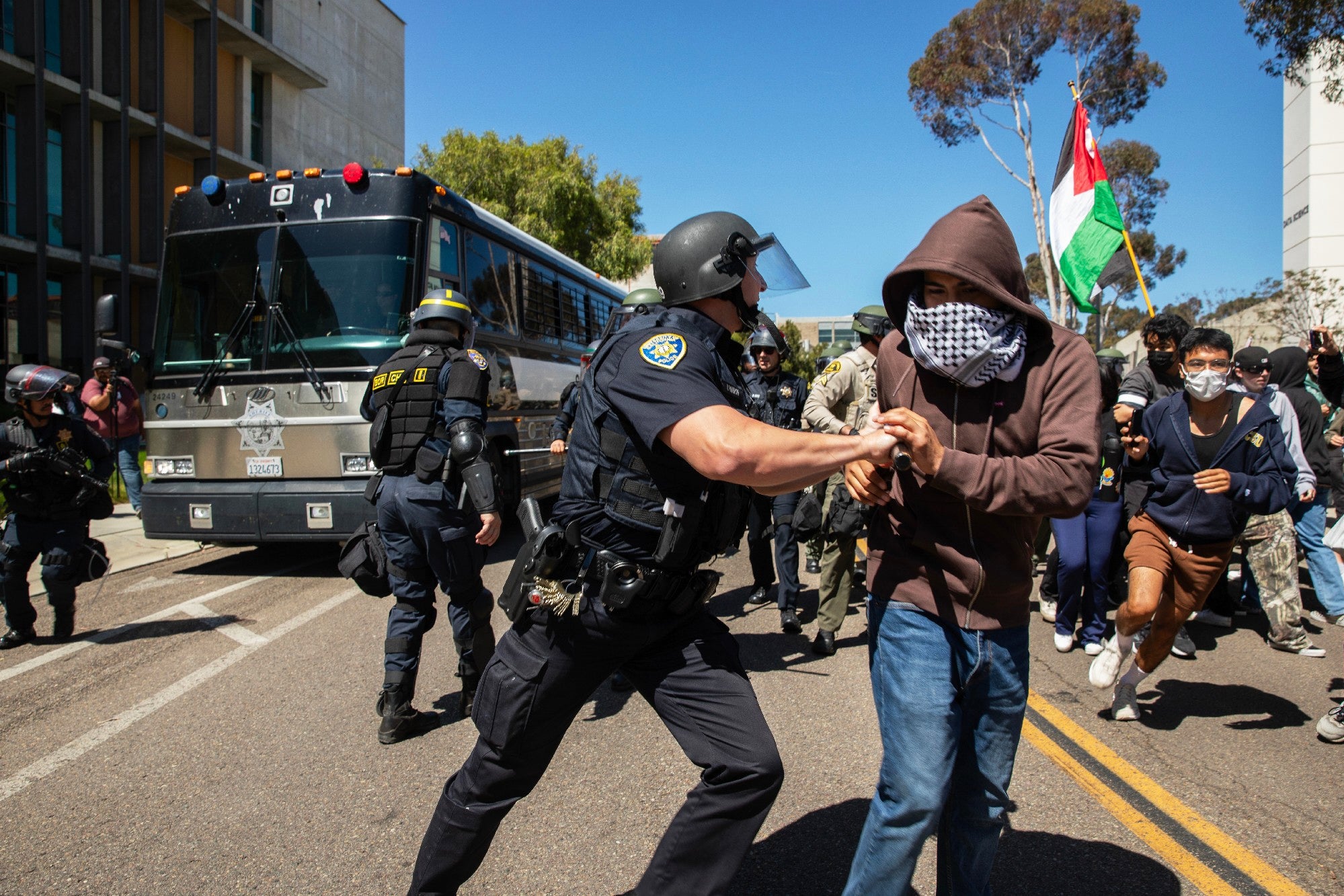
At UC Berkeley, for example, police did not publish their military equipment inventory until April after repeated inquiries from CalMatters, even though the UC Board of Regents had approved the report months earlier.
cookie.trim() === ‘__DEBUG__=true’)) { console.log(‘Ad logs: “mpu1”, injectedAtParagraph: 4’); }]]>
The investigation also uncovered inconsistencies over what equipment is being tracked. San Jose State University and San Francisco State University possess AR-15 rifles even though Cal State policy does not authorize them. A Cal State spokesperson argued the rifles are “standard issue” and exempt from reporting, while San Jose State’s own report classified them as “specialized firearms.”
Compliance with the law varies widely across the state’s higher education systems. Some departments submit reports to governing boards, while others do not. Several campuses acknowledged they failed to hold required public forums this year or could not show they had properly advertised them.
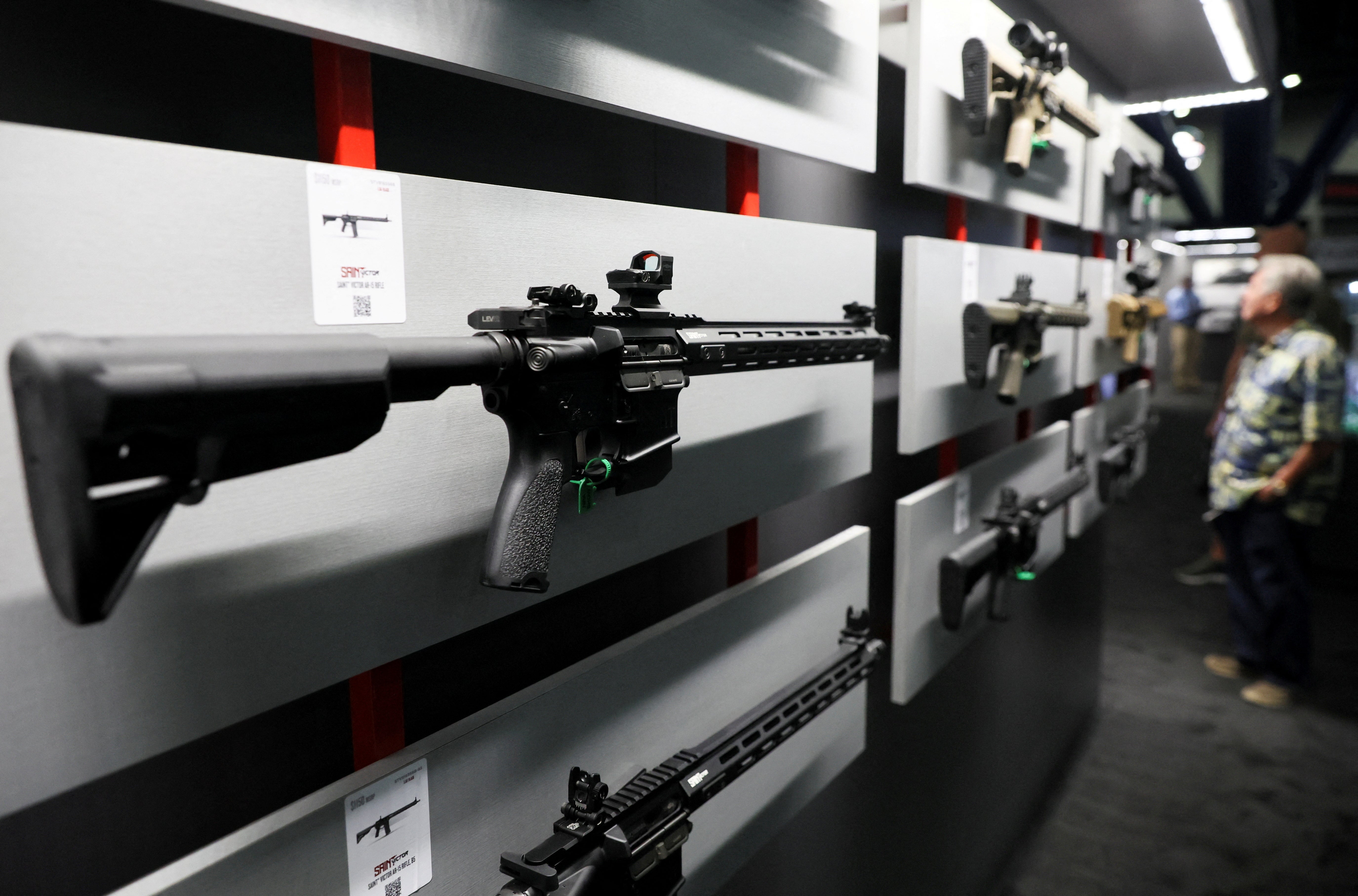
The California State University Board of Trustees has not reviewed its systemwide military equipment policy since 2022, despite the law requiring annual approval. The chancellor’s office also acknowledged it does not track whether campuses are complying with the transparency requirements.
cookie.trim() === ‘__DEBUG__=true’)) { console.log(‘Ad logs: “taboola-carousel-thumbnails”, injectedAtParagraph: 7’); }]]>
CalMatters’ review found hundreds of semi-automatic rifles, thousands of chemical munitions containing pepper agents and hundreds of thousands of rifle rounds spread across California’s public colleges and universities.
cookie.trim() === ‘__DEBUG__=true’)) { console.log(‘Ad logs: “mpu2”, injectedAtParagraph: 8’); }]]>
The law, authored by former Democratic Assemblymember David Chiu, allows police agencies to acquire military equipment only if civilian safety cannot reasonably be achieved through less militarized alternatives.
Some campuses have gone beyond firearms. Cal State Monterey Bay’s emergency management department owns camera drones classified under state law as military equipment, even though the unit is not a police agency.
cookie.trim() === ‘__DEBUG__=true’)) { console.log(‘Ad logs: “mpu3”, injectedAtParagraph: 10’); }]]>
Student opposition to campus militarization has also intensified.
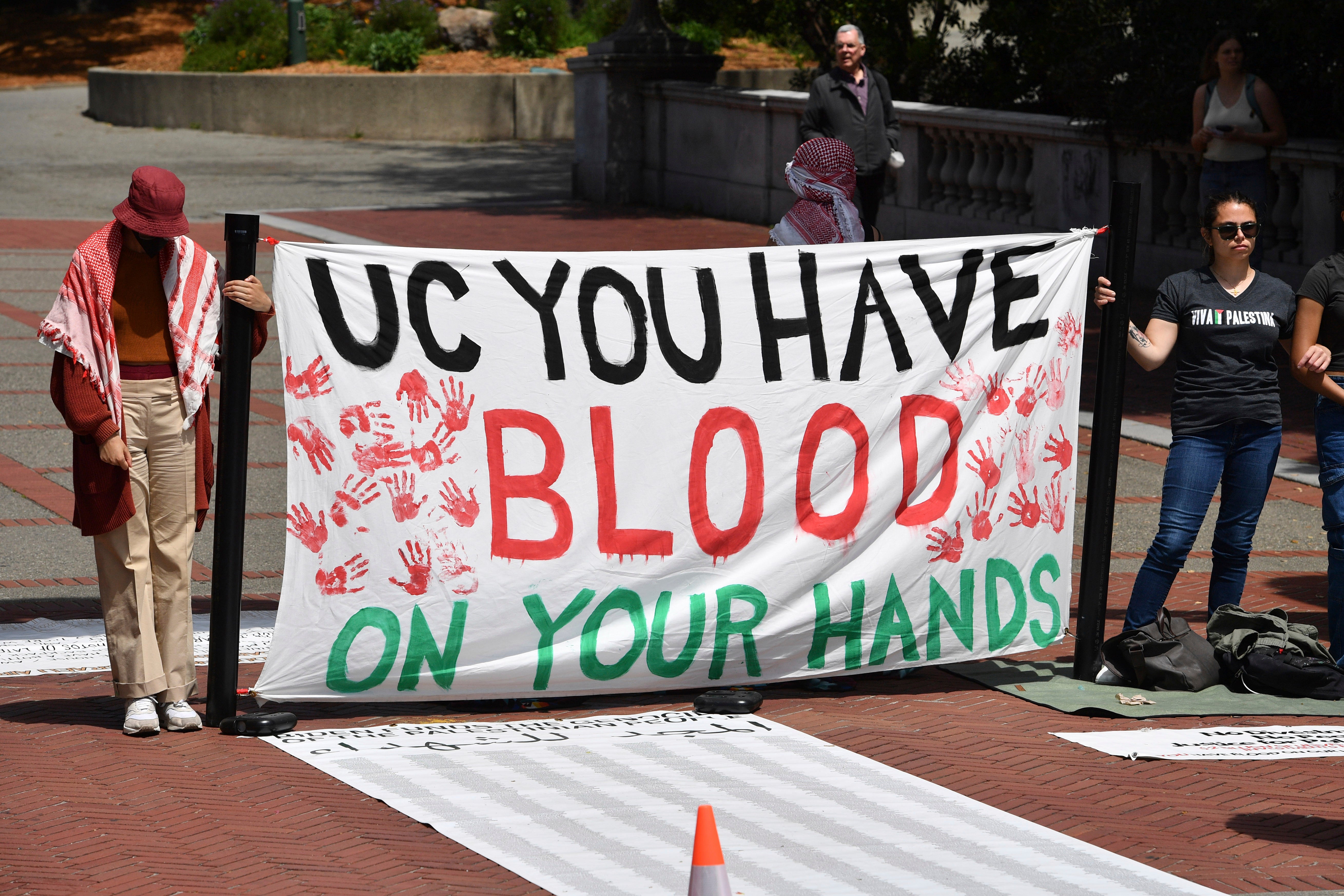
At UCLA, the UC Divest Coalition criticized university leaders for spending tuition dollars on military equipment. UCLA police deployed long-range acoustic devices 71 times during the 2024-25 academic year to manage protests, demonstrations and other large gatherings. The devices can emit sounds reaching 160 decibels, loud enough to cause permanent hearing damage. UC Santa Cruz police also used a similar device during pro-Palestinian encampment protests in 2024.
The investigation uncovered additional equipment that appears to fall outside approved policies. A 2025 memo showed San Jose State police possessed 33 tear gas grenades not authorized under Cal State rules. Captain Jermaine Thomas said the department has never used them and plans to destroy both the grenades and an unauthorized submachine gun.
Public engagement has been uneven. UCLA’s online forum reportedly drew no attendees, while El Camino College’s attracted about 30 people despite serving more than 21,000 students. Other campuses reported more active participation, with students questioning officers about military equipment policies, training and the use of drones for crowd control.
One of the strongest pushbacks came at Mt. San Antonio College after officials proposed adding AR-15 rifles to the department’s arsenal.
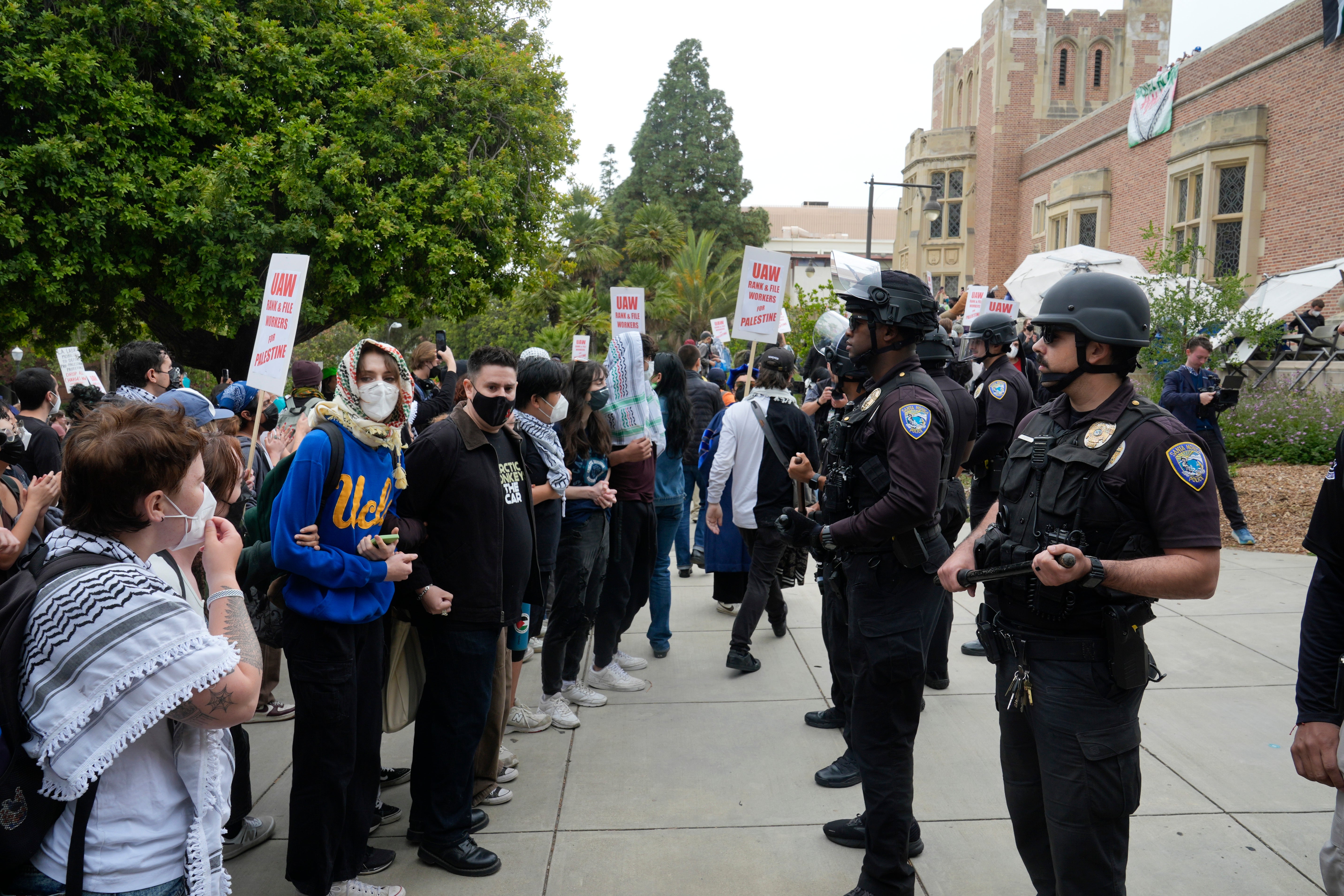
Student César Tlatoāni Alvarado argued the weapons would make many students, particularly veterans and students of color, feel less safe and could discourage protest.
A student-led coalition organized demonstrations and packed a board meeting.
“There were so many students that were yelling,” Tlatoāni Alvarado said. “They were upset, they were frustrated. They felt betrayed.”
As of June 2026, the college had not purchased the rifles, a result Alvarado called a victory for student activism.
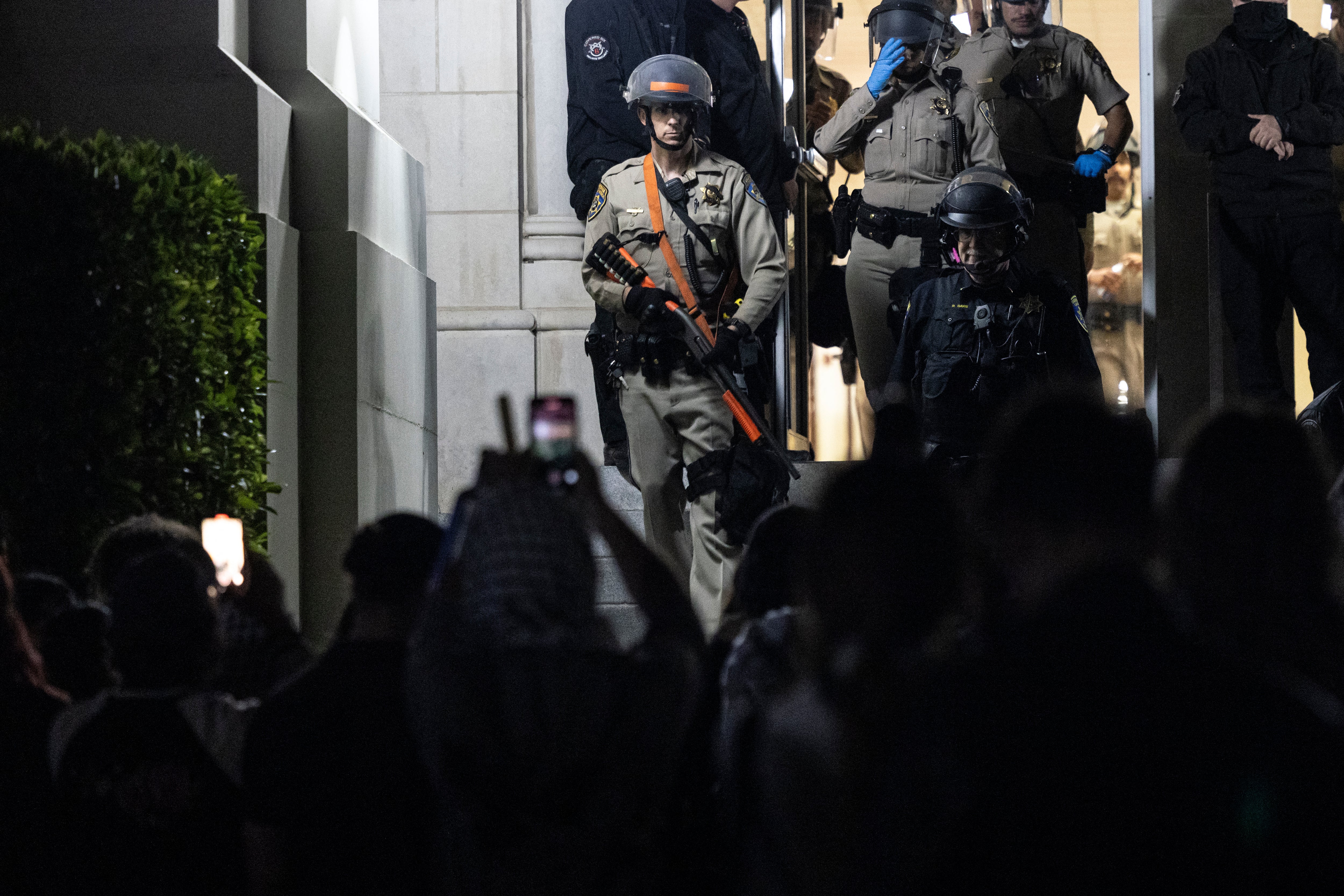
The investigation also prompted several schools to address compliance failures.
Compton College President Keith Curry said he learned through CalMatters that campus police had been issuing semi-automatic rifles for more than seven years without an approved use policy. The college has since adopted a corrective action plan, approved a formal policy, held a public meeting and established new oversight measures.
“As a leader, you have to understand what mistakes are made,” Curry said. “You have to fix the mistakes.”
Other colleges, including Chaffey College, Cal State Monterey Bay and MiraCosta College, also updated policies or pledged to reduce military equipment inventories after receiving questions from reporters.
For Alvarado, the debate extends beyond weapons.
“College campuses are a focal point for where our activism can translate into real-world change,” they said. “Colleges are trying to quash that dissent. But what they need to know … is that there’s many more of us than there are of them.”


