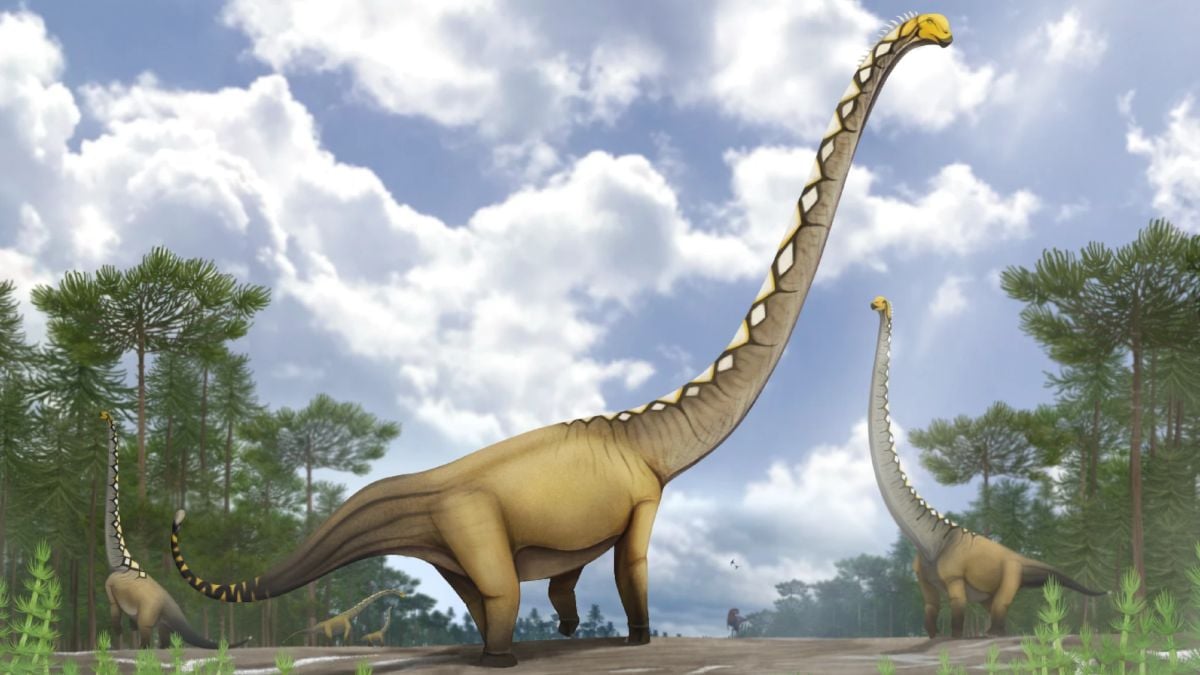
Тайландын нутгаас олдсон нэг ширхэг нугалам ясанд үндэслэн эрдэмтэд урт хүзүүт үлэг гүрвэлийн цоо шинэ төрлийг тодорхойлжээ.
Тайландын Махасаракхам их сургуулийн палеонтологич Апирут Нилпанапан тэргүүтэй судлаачдын баг Uragasaurus kalasinensis хэмээн нэрлэсэн энэхүү аварга биет үлэг гүрвэлийг илрүүлсэн байна. Энэ нь ойролцоогоор 143 сая жилийн тэртээх Юрийн галавын сүүлч үед Зүүн Өмнөд Азийн ойд амьдарч байсан, ургамал идэшт зауропод бүлгийн амьтан юм. Уг олдвор нь Тайландын зүүн хойд хэсгээс олдсон Mamenchisauridae овгийн анхны албан ёсоор нэрлэгдсэн гишүүн болж байна.
Судлаачид Тайландын Пху Крадунг тогтоцын үе давхаргаас олдсон ясанд CT дүрслэл болон нарийвчилсан шинжилгээ хийжээ. Ясны гадна талын Y хэлбэрийн сэртэн болон амьсгалын тогтолцооны агаарын хөндийн байршил нь энэ үлэг гүрвэлийг бусад төрлөөс ялгаатай, өвөрмөц болохыг баталсан байна. Хэдийгээр тухайн бүс нутгаас өөр олон яс олдсон ч зөвхөн энэхүү нугалам яс нь шинэ төрлийг тодорхойлох хангалттай анатомийн шинж чанарыг агуулж байжээ.
Энэхүү нээлт нь Mamenchisauridae овгийн үлэг гүрвэлүүд зөвхөн Хятадад төдийгүй Зүүн Өмнөд Азид тархсан байсныг баталж, тэдний хувьслын түүх болон газарзүйн тархалтын талаарх мэдлэгийг тэлж байна. Шинжлэх ухааны салбарт багахан хэмжээний олдвор ч гэсэн бүхэл бүтэн төрөл зүйлийн хувьсал, нүүдлийн түүхийг нөхөн сэргээхэд чухал хувь нэмэр оруулдаг болохыг уг судалгаа харууллаа. Судалгааны үр дүнг Scientific Reports сэтгүүлд нийтэлжээ.
Дэлгэрэнгүйг эх сурвалжаас харах
↓Эх сурвалжийг нээх ↓
The popular image of paleontology is a scientist in shorts and a wide-brimmed hat, dramatically uncovering a magnificent, intact skeleton from desert sands.
The reality is that most prehistoric remains are isolated. A tooth here. A phalanx there.
But to a paleontologist, these scattered fragments can tell much larger stories – and from a single vertebra found in a fossil bed in Thailand, researchers have identified a whole new species of giant dinosaur.
Its name is Uragasaurus kalasinensis, and it was a long-necked sauropod – the group of giant plant-eating dinosaurs, including Diplodocus and Brontosaurus – that lived in forests in Southeast Asia just before the Jurassic-Cretaceous transition, which began around 143 million years ago.
It’s also the first formally named member of the long-necked dinosaur family Mamenchisauridae from northeastern Thailand.
“This discovery expands the known diversity of mamenchisaurid sauropods in Southeast Asia and provides new information on the geographic distribution and evolutionary history of the clade,” writes a team led by paleontologist Apirut Nilpanapan of Mahasarakham University in Thailand.
Their discovery has been detailed in a paper published in Scientific Reports.
More often than not, the moment a fossil is removed from the ground is only the beginning of a paleontologist’s work.
From there begins the painstaking work of puzzle-solving – the figurative and often literal backbone of the discipline.
For Nilpanapan and his colleagues, that backbone was discovered in the Phu Kradung Formation, a fossil bed formed over millions of years as a complex system of rivers deposited sediment and debris on a vast floodplain.
Because of the way these remains were deposited, the formation has yielded little more than fragments, and even fewer confident identifications.
But, in the case of Uragasaurus, the researchers realized that they were looking at something special.
To the untrained eye, one sauropod vertebra can look much like another. But to a paleontologist, a vertebra can contain a great deal of detailed information.
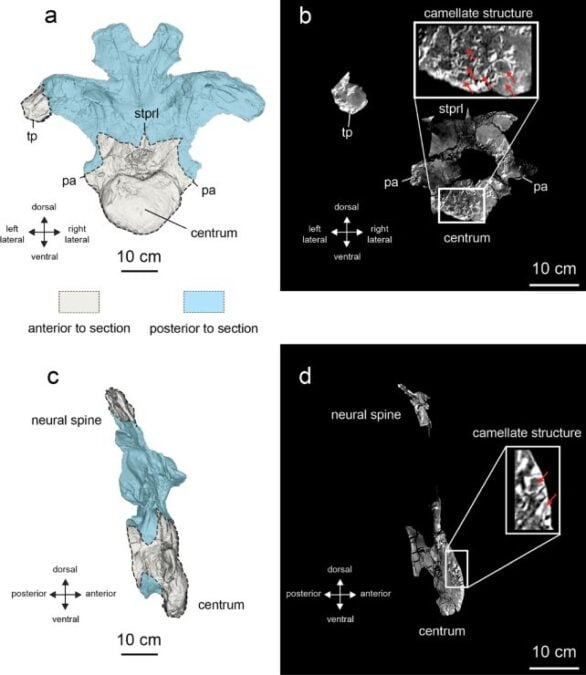
The shape, the arrangement of supporting ridges, the hollows where air sacs extended from the respiratory system, and the internal structure of the bone – all these details can differ, significantly or minutely, between different dinosaur species.
Visual examination and CT scans revealed that the vertebra in question had a combination of features not seen in any other species.
The position and shape of the air pockets left by the dinosaur’s respiratory system inside the fossil, and an unusual Y-shaped arrangement of bony ridges on the exterior, marked the fossil as one-of-a-kind.
Interestingly, the excavation yielded several other sauropod bones nearby – including a fibula, coracoid, cervical vertebrae, and other vertebrae – that the researchers say may have belonged to the same species – but none preserved features distinctive enough to confidently assign them to Uragasaurus.
Only the original vertebra had the anatomical ‘fingerprint’ required to diagnose a new species.
Other clues showed the dinosaur belonged to the mamenchisaurids – but it wasn’t any mamenchisaurid scientists had seen before.

Even that identification tells us something new about the family.
Most mamenchisaurids have been found in China. Uragasaurus tells us that this family was also present in what is now Southeast Asia during the Late Jurassic – a new piece of the sauropod family tree.
It’s just a single vertebra, washed onto a floodplain and buried in silt millions of years ago – yet the story it tells extends far beyond the animal itself.
Even if it seems like just another bone to you or me, discoveries like this help paleontologists piece together how entire groups of dinosaurs evolved and spread across the ancient world.
“Continued discoveries from the Phu Kradung Formation and other Jurassic deposits in Southeast Asia may therefore provide important insights into the early evolutionary history and biogeographic dispersal of mamenchisaurid sauropods,” the researchers write.
The new species was detailed in Scientific Reports.
This article was fact-checked by Rebecca Dyer and edited by Peter Dockrill. While we pride ourselves on our process, we are only human. If you spot a mistake, please let us know.


