Италийн Эмилия-Романья бүс нутагт нүүрлэсэн хэт халалт нь Parmigiano Reggiano бяслагны үйлдвэрлэл болон мал аж ахуйн салбарт томоохон сорилт үүсгэж байна.
Италийн алдарт Parmigiano Reggiano бяслагны үйлдвэрлэл нь цаг агаарын эрс тэс уур амьсгалын улмаас хүнд байдалд орлоо. Температур 40 хэмээс давж байгаа нь үнээний сүүний гарцыг 10 хүртэлх хувиар бууруулж, бяслаг үйлдвэрлэхэд шаардлагатай түүхий эдийн чанар, тоо хэмжээнд сөргөөр нөлөөлж байна. Parmigiano Reggiano консорциумын тэргүүн Никола Бертинеллигийн тайлбарласнаар, хур тунадас багассанаас үнээний тэжээлийн өвс ургахгүй байгаа нь үйлдвэрлэлийн суурь нөхцөлийг алдагдуулж байна.
Малчдын хувьд үнээг сэрүүцүүлэхийн тулд сэнс болон ус шүршигч системийг тасралтгүй ажиллуулахаас өөр аргагүй болжээ. Энэ нь эрчим хүчний зарцуулалтыг эрс нэмэгдүүлж, бяслагны агуулахын зардлыг өсгөхөд хүргэв. Жишээлбэл, 500,000 гаруй дугуй бяслаг хадгалдаг Magazzini Generali delle Tagliate агуулахын өдөр тутмын эрчим хүчний хэрэглээ оргил халалтын үеэр 30 хувиар өссөн байна.
Эмилия-Романья бүс нутгийн 4.5 тэрбум еврогийн орлоготой энэхүү салбар нь олон зууны уламжлалыг хадгалахын зэрэгцээ орчин үеийн технологийг ашиглаж байна. Бяслагны чанарыг рентген шинжилгээ болон мэргэжилтнүүдийн гараар тогших аргаар хянадаг бөгөөд хүний хүчин зүйл нь үйлдвэрлэлийн гол давуу тал хэвээр байгааг албаныхан онцолжээ. 2025 оны байдлаар тус бүтээгдэхүүний экспортын 50 гаруй хувийг гадаад зах зээлд нийлүүлж байгаа бөгөөд АНУ нь хамгийн том худалдан авагч хэвээр байна.
Дэлгэрэнгүйг эх сурвалжаас харах
↓Эх сурвалжийг нээх ↓
A traditional practice in Italy‘s Emilia-Romagna region has intensified as farmers battle record heatwaves threatening their iconic Parmigiano Reggiano cheese.
Fifty years ago, barn windows were opened at night during summer to cool cattle.
Today, with temperatures soaring, these windows remain open round the clock. This constant ventilation is vital to protect the cows and their milk, the very foundation of the area’s centuries-old industry.
“Extreme heat impacts milk’s quality and quantity,” said Nicola Bertinelli, president of the Parmigiano Reggiano Consortium, who also runs the dairy farm that his family founded in 1895 on the outskirts of Parma.
Costs continue to rise as cheese ages
Extreme heatwaves, exceeding 40 degrees Celsius, are drastically reducing milk production for Italy‘s iconic Parmigiano Reggiano cheese. Cows, vital for the cheese, spend more time lying down and eat less, resulting in up to a 10 per cent drop in milk yield – a key ingredient alongside salt and rennet.
Authentic Parmigiano Reggiano is exclusively produced in five provinces, mainly Emilia-Romagna, where strict rules dictate cows must be fed local grass and hay. This reliance is now problematic. Producer Bertinelli, 54, told Reuters: “If it doesn’t rain, grass doesn’t grow, hay cannot be produced and it’s impossible to obtain the milk needed to make the cheese.”
To cool livestock, producers have installed fans and water-mist systems, but these measures have sent energy costs soaring. Rising bills also impact warehouses where cheese wheels age for at least 12 months, often longer, adding further financial strain.
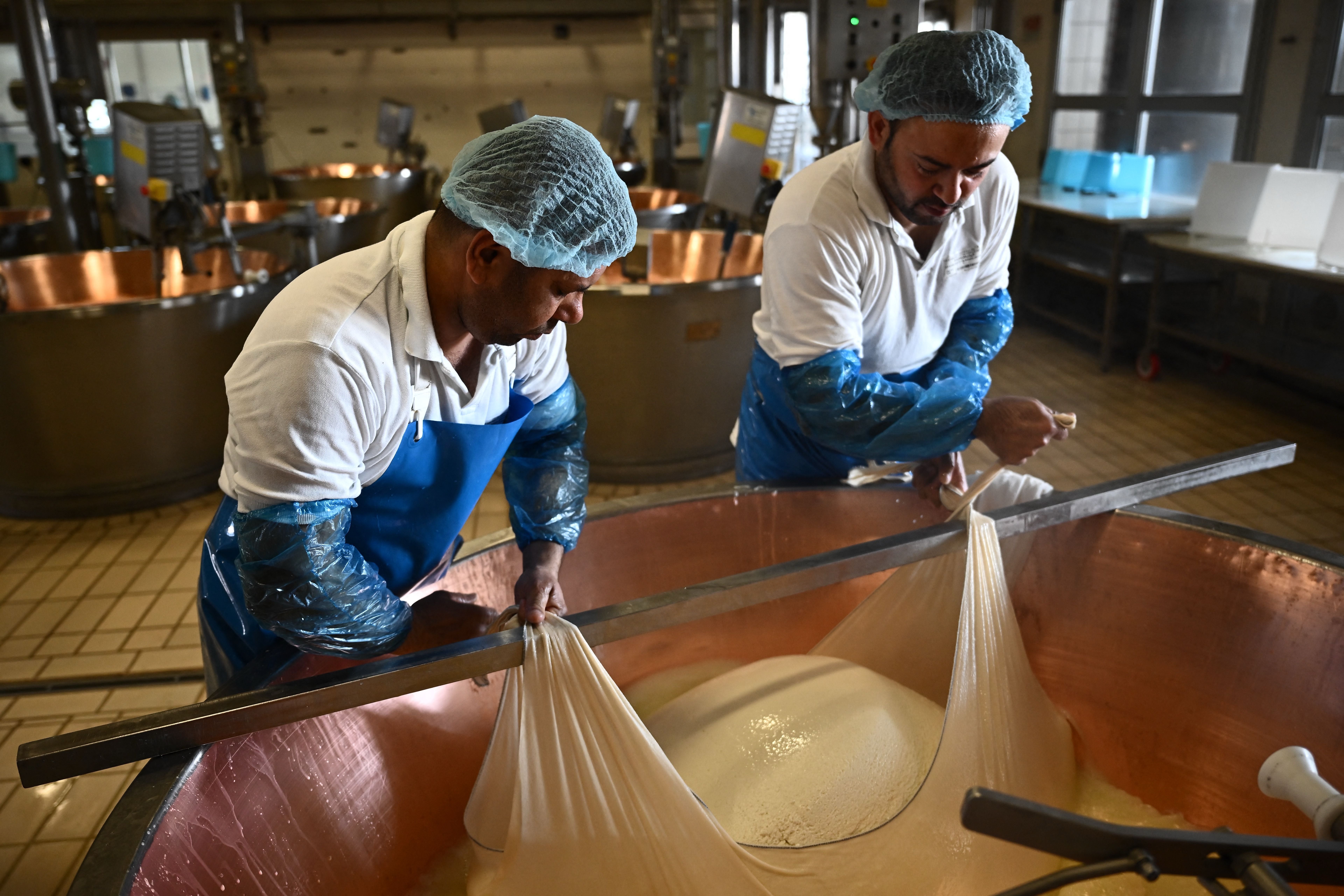
More than 500,000 wheels of Parmigiano Reggiano, together worth more than €300 million, are stored in the two warehouses operated by Credito Emiliano unit Magazzini Generali delle Tagliate (MGT) in the provinces of Reggio Emilia and Modena. “During this year’s peak heatwaves, our daily energy consumption rose by about 30%,” MGT director Giancarlo Ravanetti said.
“To make our facilities `as energy-efficient as possible, we have improved our cooling systems and boilers, upgraded building insulation and increased renewable energy production,” he added.
Preserving a €4.5 billion industry
The region’s climate-controlled warehouses have become institutions, collectively known as the Bank of Parmigiano. Behind their walls, technology and tradition go hand in hand.
Each wheel of Parmigiano Reggiano undergoes strict quality inspections – including X-ray scans – to rule out defects. The cheese is checked weekly by experts who tap each wheel with small hammers, listening for signs of flaws that may have developed during the ageing process. “The human factor remains key and is the real strength of the entire process,” Ravanetti said.
Paolo Ganzerli, international sales director at food group GranTerre, which posted consolidated revenue of €1.87 billion in 2025, echoed Ravanetti’s concerns about rising bills. “If extreme events become longer-lasting and more intense, they will certainly have an impact on both the quantity and quality of milk, but above all they will lead to higher costs,” he said.
There is a lot at stake. The Parmigiano Reggiano industry generates an estimated €4.5 billion ($5.15 billion) in revenue a year, employing thousands and powering the local economy.
In 2025, exports of the cheese accounted for more than 50% of Parmigiano Reggiano’s global sales, with the United States as its largest foreign market. Parmigiano Reggiano “has existed for more than 800 years,” Ganzerli said.
“We don’t want to be the last generation to eat it.”