Андын нурууны үүлэн ойд ургадаг, өвөрмөц төрхтэй Дракула цахирмаа цэцгийг олноор худалдаалах нь биологийн олон янз байдалд ноцтой эрсдэл учруулж байгааг эрдэмтэд анхааруулав.
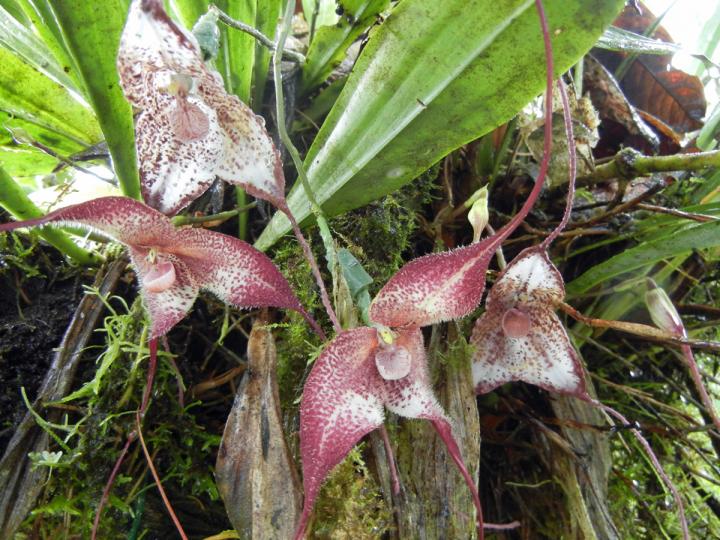
Дракула (Dracula) төрлийн цахирмаа нь урт, хурц үзүүртэй цэцгийн дэлбээтэй тул латинаар “бяцхан луу” гэсэн утгатай нэр авчээ. Сүүлийн үед сошиал сүлжээнд “сармагчны нүүртэй” хэмээн алдаршсан энэхүү ургамлыг цуглуулагчид ихээр сонирхох болсон нь зэрлэг байгальд устах аюулд ороход хүргэж байна. Оксфордын их сургуулийн судлаач Диого Вериссимогийн багийн судалгаагаар тус төрлийн 133 зүйлийн бараг 70 хувь нь мөхлийн ирмэгт иржээ.
“Biological Conservation” сэтгүүлд нийтлэгдсэн судалгаагаар 1981 оноос хойш 112 мянга гаруй Дракула цахирмааг олон улсын хэмжээнд худалдаалсан байна. Эдгээр ургамлыг бүгдийг нь “зохиомлоор үржүүлсэн” гэж бүртгэсэн боловч судлаачид үүнд эргэлзэж байна. Учир нь шинээр нээгдсэн зүйлүүд бүртгэгдсэнээсээ хойш маш богино хугацаанд худалдаанд гардаг нь тэдгээрийг зэрлэг байгалиас хууль бусаар түүж байж болзошгүйг харуулж байгаа юм.
Дракула цахирмаа нь ихэвчлэн Андын нурууны тодорхой нэг хөндий эсвэл ой модны хэсэгт л ургадаг тул нэг удаагийн хууль бус түүлт ч тухайн зүйлийг бүрмөсөн устгаж болзошгүй. Иймд эрдэмтэд одоогийн мөрдөгдөж буй худалдааны хязгаарлалтыг чангатгаж, тус төрлийн ургамлыг CITES-ийн нэгдүгээр хавсралтад оруулах замаар арилжааны зориулалттай худалдааг бүрэн хориглохыг уриалж байна.
Дэлгэрэнгүйг эх сурвалжаас харах
↓Эх сурвалжийг нээх ↓
In the misty cloud forests of the Andes, there’s one particular genus that wildlife traders can’t get enough of.
It’s not a primate or reptile – no, the target is something subtler and a little spookier: dracula orchids.
They look and sound like they should be named for blood.
But the genus actually takes its name from the Latin for “little dragon”, thanks to their long, dark, fang-like sepals.
When the first species was taken from Colombia’s Western Andes in 1871, 19th-century botanists described the flowers as “grotesque and whimsical,” provoking what one called “irresistible attraction.”
Orchid hunters started shipping them to European greenhouses almost immediately.
That attraction never really faded.
The orchids are viral online not only for their spooky name and gothic appearance, but because they seem to resemble a ‘monkey face’ in their sepals.
Many enthusiasts and professional growers trade in cultivated plants responsibly, but others still seek wild orchids, and Dracula species are no exception. For a plant that may exist in populations of just a few dozen individuals, a single collecting trip can be disastrous.
“What’s striking about Dracula orchids is the contrast between their huge online popularity and the almost complete lack of knowledge we have about their conservation status,” Diogo Veríssimo, from the University of Oxford’s Environmental Change Institute wrote last year.
He was part of an assessment that revealed almost 70 percent of the genus’s 133 species were threatened with extinction.
“We often assume that species we see widely shared on social media must be well studied, but for these orchids, that’s far from true. Their viral fame hasn’t translated into understanding or protection, and that’s what makes the new assessment so urgent,” said Veríssimo.
Nearly all of the known Dracula orchid species are epiphytes clinging to trees in the cloud forests of the Andes, mostly in Colombia and Ecuador.
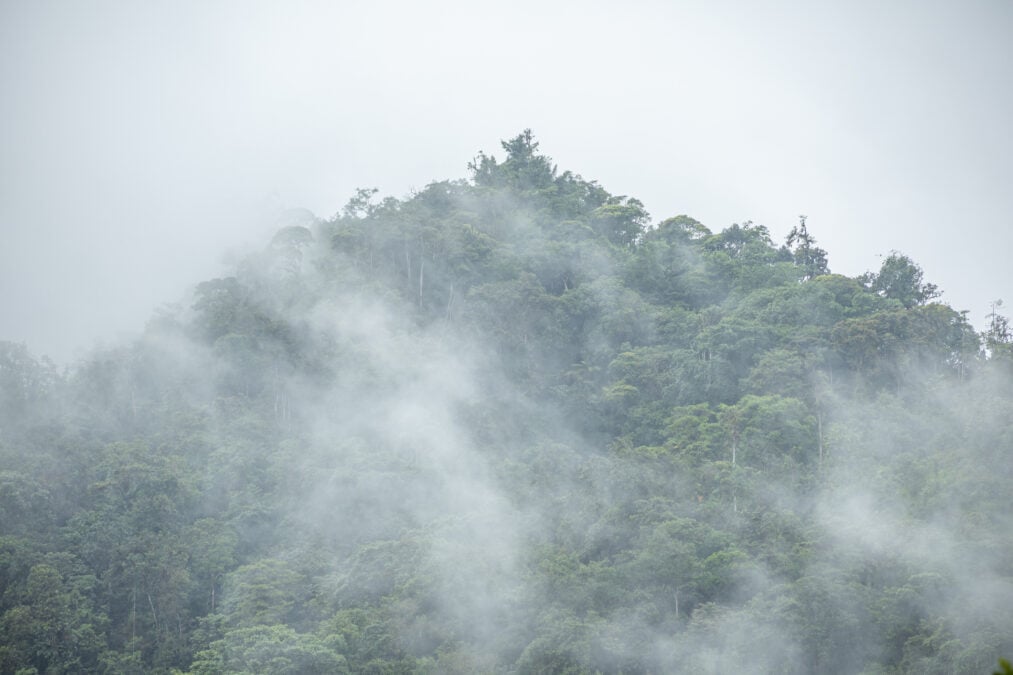
A massive 69 percent of the genus are known from fewer than six locations anywhere on Earth. Some exist in a single valley.
A new study in Biological Conservation has now tracked exactly what’s happened to that “irresistible attraction” over four decades of formal trade records.
It found that 121 of the genus’s 133 species – 91 percent – have been legally, internationally traded since 1981.
That’s over 112,000 individual plants, moving through 25 exporting and 52 importing countries.
Nearly half of that trade – 49 percent – came from countries where the species doesn’t even grow.
The single biggest shipment in the whole 42-year record was 4,650 plants of Dracula cordobae, a species found nowhere on Earth except Ecuador, sent from Taiwan to Belgium in 2004.
Every one of those 112,000-plus plants was officially logged as artificially propagated. Not one, in over four decades of records, was ever declared as taken from the wild.
The researchers aren’t sure that can fully be trusted.
“For newly described or recently discovered species, key life-history traits such as longevity are often unknown or lack empirical scientific evidence,” the team, led by orchidologist Edicson Parra-Sánchez from the University of Cambridge in the UK, wrote in their paper.
“This uncertainty complicates the determination of propagation status and may increase the risk of wild-sourced individuals being misclassified as artificially propagated.”
In fact, 89 percent of all Dracula species were originally described to science using plants that were already sitting in nurseries – not documented wild populations.
Many of those founding plants were outside the orchid’s native country altogether, overwhelmingly in the United States. Only 7 percent of species were ever formally described from confirmed wild plants.
In other words, by the time science had a name for many of these orchids, they were already for sale. Which is a little suspicious.
Across the genus, the median time between a species’ formal scientific description and its first appearance in commercial trade was 8 years – dropping to 5 for species described after 1981.
Eighteen percent of species entered trade within two years of being named.
One, D. fuligifera, was already being exported a full year before it was formally described at all.
D. anthracina is known from a single forest patch, home to just 17 recorded adult plants. It has been in international trade since the year it was discovered.
Around 10 percent of all recorded Dracula trade – more than 11,000 plants – was logged only as “Dracula sp.,” with no species name attached at all, obscuring exactly what was bought and sold.

The researchers also found individual mix-ups hiding in the official record: one species mislabelled in a 2013 shipment, another traded for years under a name later corrected by taxonomists, and two naturally occurring hybrids exported and recorded as if they were full species.
Dracula is currently listed under CITES Appendix II, which allows regulated trade with permits.
The study’s authors argue that’s not enough, and are calling for the genus to be upgraded to Appendix I, which prohibits international trade for commercial purposes.
“Our results indicate that listing the genus in CITES Appendix I may be necessary to prevent further erosion of evolutionary history,” the researchers write.
That higher level of protection will force a little more time between species being discovered and entering trade.
Not every Dracula species has even made it that far.
Three are still so rare that they barely exist outside a research paper. D. irmelinae has known wild populations but has never been recorded in cultivation.
Related: Scientists Studying Earth’s Flowering Plants Issue a Stark Warning to Humanity
D. inexperata has only ever been grown at the single site where it was first found.
D. fafnir hasn’t been seen by anyone, in the wild or otherwise, since the day it was formally described.
The research has been published in Biological Conservation.
This article was fact-checked by Rachel Garner and edited by Michael Irving. While we pride ourselves on our process, we are only human. If you spot a mistake, please let us know.