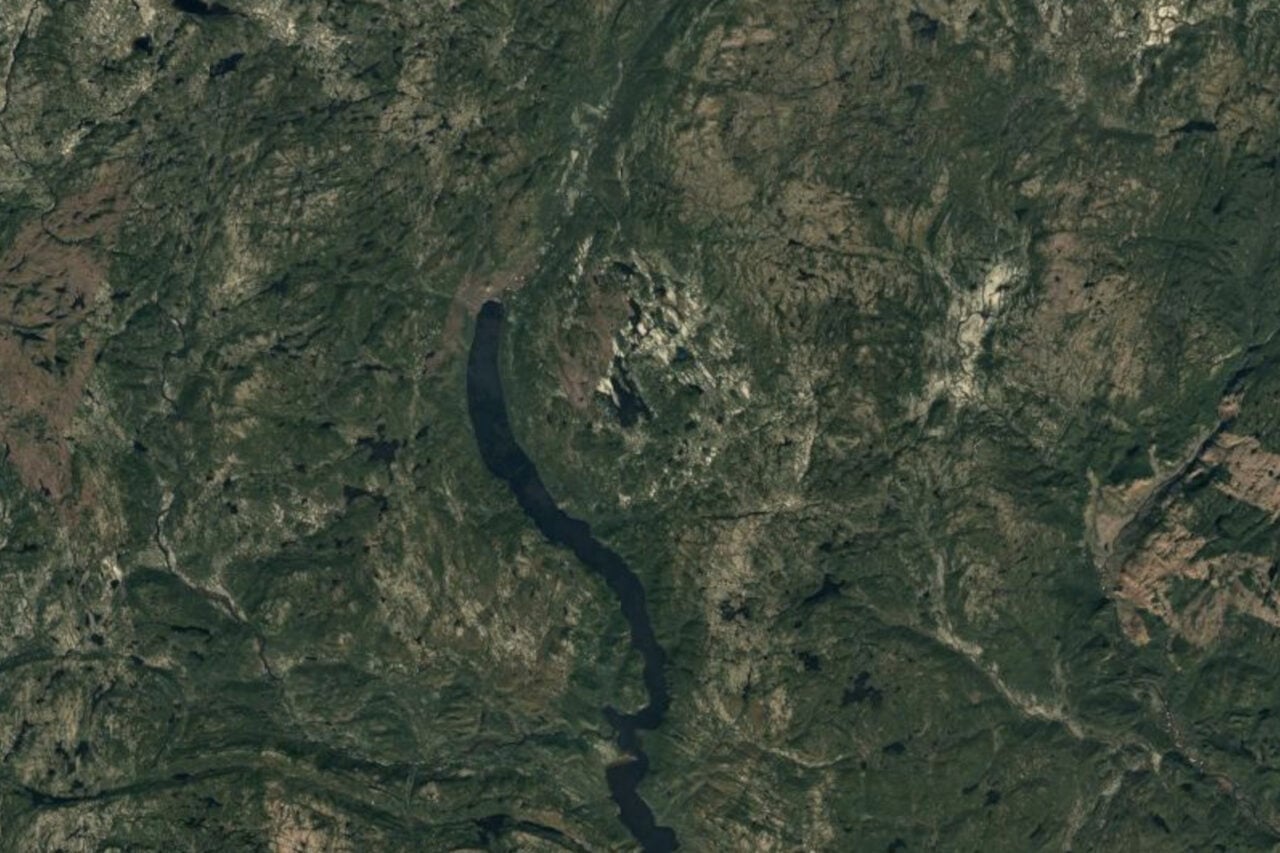
Квебек мужийн нутгаас 390 сая жилийн настай, 15 км-ийн өргөн солирын тогоог илрүүлснээ судлаачид зарлав.
Сонирхогч одон орон судлаач Жоэл Лапуант Квебекийн Марсал нуурын орчимд аялал төлөвлөх явцдаа Google Maps ашиглан ер бусын хонхорхойг олж харжээ. Тухайн байршлын топограф нь солирын нөлөөгөөр үүссэн байх магадлалтайг тэрээр анзаарсан байна. Түүний мэдээллийн дагуу геологичдын баг 2025 оны аравдугаар сард таван өдрийн турш газар дээр нь судалгаа хийж, уг тогтоц нь солирын мөргөлдөөнөөс үүссэн болохыг баталжээ.
Уг тогоог анх галт уулын идэвхжлээс үүдэлтэй гэж таамаглаж байсан ч геологийн шинжилгээгээр солирын нөлөөлөл болох нь тодорхой болсон байна. Судлаачид тухайн газраас солирын мөргөлдөөний үед үүсдэг циркон эрдэс, цохилтын долгионоор үүсэх конус хэлбэрийн хагарал болон хайлмаг чулуулгийн давхаргыг илрүүлжээ. Энэхүү олдвор нь дэлхий дээр бүртгэгдсэн 200 гаруй солирын тогооны 27 дахь нь болж Канадын нутаг дэвсгэрт бүртгэгдлээ.
Уг тогоог тухайн бүс нутгийн уугуул иргэдийн Экуанитшит Инну зөвлөлтэй зөвшилцсөний үндсэн дээр “Ухаачатик тогоо” хэмээн нэрлэжээ. Судалгааны баг олдворынхоо талаарх дэлгэрэнгүй мэдээллийг наймдугаар сарын 9-өөс 14-ний хооронд Германы Франкфурт хотноо болох Meteoritical Society-ийн жилийн чуулганд танилцуулах юм.
https://www.cbc.ca/news/canada/montreal/quebec-meteorite-impact-crater-1.7313418
Жоэл Лапуант энгийн иргэн ч гэсэн шинжлэх ухаанд хувь нэмэр оруулах боломжтойг онцлоод, хүмүүсийг өөрийн ажиглалт, зөн совиндоо итгэж, мэргэжлийн бус салбар байсан ч судалгаагаа үргэлжлүүлэхийг уриалжээ. Энэхүү нээлт нь дэлхийн гадаргуу дээрх эртний солирын мөргөлдөөний түүхийг дахин нэгээр баяжуулж байна.
Дэлгэрэнгүйг эх сурвалжаас харах
Эх сурвалжийг нээх ↓
Joël Lapointe was casually browsing Google Maps, planning hiking routes for an upcoming camping trip, when he stumbled upon an unusual indentation near Marsal Lake in Quebec. As an amateur astronomer, Lapointe recognized that the large pit may be the site of a meteorite impact that left a scar on the terrain. Scientists just confirmed that he was right.
Researchers announced the existence of a large crater in the Côte-Nord region of Quebec, which dates back to around 390 million years ago, the Canadian Broadcasting Corporation (CBC) reported. Following Lapointe’s initial discovery in 2024, a team of geologists set out to examine the impact site and were able to verify that a meteorite did in fact smash into Earth at this particular point.
The team’s research will be presented at the annual congress of the Meteoritical Society, which will be held on August 9 to 14 in Frankfurt, Germany.
A solid hunch
Many reports from the public on potentially unidentified meteor craters turn out to be false. But when Lapointe reached out to scientists pointing out his Google Maps find, they felt there could be something there.
“Looking at the topography, it’s very suggestive of impact,” Pierre Rochette, geophysicist at theFrench Research Center for Geosciences and the Environment in Aix-en-Provence, France, told CBC.
The pit measures around 9 miles (15 kilometers) wide and formed a near-perfect ring of small mountains centered around Lake Marsal. It was originally interpreted as a volcanoclastic diatreme formation, whereby magma rises up through a crack in Earth’s crust, but its features seemed to be more aligned with that of a crater floor.
In October 2025, a team of geologists examined the crater site over the course of five days, gathering evidence to confirm Lapointe’s suspicion. Samples retrieved from the site contained a mineral called zircon, which often forms during meteor impacts, according to LiveScience.
The team also identified shatter cones—cone-shaped patterns caused by shockwaves as they travel through the ground. They also found big cliffs of impact melt rock, which forms from the intense pressure and temperature of an asteroid or meteorite crashing on Earth.
Quite an impact
Based on the evidence, the team of geologists confirmed that the unusual pit was created in the aftermath of a meteorite strike that took place millions of years ago. The team named it Uhaachatik Crater following discussions with the Ekuanitshit Innu council, which represents the indigenous people in the area, LiveScience reported.
There are currently around 200 confirmed impact sites on Earth, according to Impact Earth’s database; 27 are in Canada, and the most recent confirmation prior to this was in 2010.
For his part, Lapointe is glad he followed through with his initial gut feeling. “It’s not every day that an ordinary citizen finds a 390-million-year-old crater,” Lapointe said in an interview with Radio-Canada.“I encourage everyone to not ignore intuition or an observation, even if it isn’t part of your field of expertise.”

