Европын холбоо Оросын эсрэг хориг арга хэмжээг чангатгаж байгаа ч эрчим хүч, металлын салбар дахь худалдааны урсгал үргэлжилсээр байна.
Евростатын мэдээллээр, 2026 оны эхний дөрвөн сарын байдлаар ОХУ-аас Европын холбооны гишүүн орнууд руу 7.7 тэрбум еврогийн бараа бүтээгдэхүүн экспортолжээ. Худалдааны хэмжээ дайны өмнөх үеэс эрс буурсан хэдий ч байгалийн шингэрүүлсэн хий (LNG), нефть болон металлын нийлүүлэлт тодорхой хөнгөлөлт, хоригт ороогүй салбаруудаар дамжин үргэлжилж байна. Европын холбоо 2027 он гэхэд Оросын LNG-ийн импортыг бүрэн хориглохоор төлөвлөж байгаа бөгөөд одоогоор нефть боловсруулах үйлдвэрүүдийн өмчлөлийг өөрчлөх үйл явц явагдаж байна.
https://www.themoscowtimes.com/2025/10/28/what-new-us-sanctions-on-rosneft-and-lukoil-mean-for-russias-oil-trade-a90957
Металлын салбарт Оросын Rusal болон NLMK компаниуд Европын зах зээлд томоохон байр суурь эзэлсэн хэвээр байна. Тухайлбал, 2026 оны эхний дөрвөн сард Оросын гангийн экспорт 700 сая еврогоос давсан бол хөнгөн цагаан 65 сая еврогоор хэмжигджээ. NLMK групп Бельги, Итали, Дани улсад үйлдвэрүүдээ ажиллуулж, Оросоос ирсэн хагас боловсруулсан ганг эцсийн бүтээгдэхүүн болгон боловсруулж байна. Эдгээр үйлдвэрүүд Европын аж үйлдвэрийн салбарт чухал үүрэг гүйцэтгэдэг тул шууд хориг тавих нь ажлын байр болон үйлдвэрлэлд сөргөөр нөлөөлөх эрсдэлтэй гэж үзэж байна.
Европын холбооны гадаад бодлогын тэргүүн Кая Каллас хориг арга хэмжээний цоорхойг хаах, ялангуяа металлын салбарт хяналтыг чангатгах шаардлагатай байгааг мэдэгдээд байна. Гэсэн хэдий ч зарим гишүүн орнууд өөрийн улс дахь үйлдвэрүүдийн үйл ажиллагааг хамгаалах байр суурьтай байгаа нь нэгдсэн шийдвэр гаргахад хүндрэл учруулж байна. Шинжээчдийн үзэж буйгаар, NLMK-ийн Европын үйлдвэрүүд Оросын түүхий эдээс шууд хамааралтай тул эдгээр компанийг хоригт оруулах нь Европын аж үйлдвэрийн сүлжээг тасалдуулах эрсдэлтэй юм.
https://www.ft.com/content/33c2e340-8964-4124-b0d7-21851a5d8dcb
Дэлгэрэнгүйг эх сурвалжаас харах
↓Эх сурвалжийг нээх ↓
As the war in Ukraine enters its fifth year, Russia continues to maintain commercial ties with the European Union despite mounting pressure to close the remaining gaps in the bloc’s sanctions regime.
Russia exported goods worth 7.7 billion euros ($9.0 billion) to the EU in the first four months of 2026, according to the latest Eurostat data.
Although trade has fallen sharply from pre-war levels, Russia continues to supply the bloc with energy, metals and other industrial goods through exemptions and sectors that have so far avoided the toughest restrictions.
Energy still accounts for the largest share of Russia-EU trade, led by liquefied natural gas, followed by oil and petroleum products.
Those commercial ties are gradually shrinking as sanctions take effect.
The EU has already banned most imports of Russian seaborne crude oil, while a full ban on Russian LNG imports — worth about 2.8 billion euros, or roughly 60% of the remaining energy trade — is due to take effect in 2027.
Europe’s last two Russian-owned oil refineries — Lukoil facilities in Romania and Bulgaria — are also preparing to change ownership after the company was sanctioned by the United States last year.
From energy to metals
Yet the sanctions leave a significant gap when it comes to another major Russian sector with substantial commercial and industrial footprint in Europe: metals.
Russia exported more than 700 million euros of steel and over 65 million euros of aluminum to the EU in the first four months of the year, according to Eurostat.
Aluminum producer Rusal, founded by billionaire Oleg Deripaska, operates facilities in Ireland, Sweden and Germany, although production at its Italian plant has been suspended since 2025.
The plants manufacture aluminum products for European industries, including casting alloys used in automotive components as well as construction materials such as roofing and ventilation systems.
Operation EUNAVFOR MED boards an oil tanker suspected by EU officials to be sailing under a false flag.
Kaja Kallas via X via Reuters
Deripaska is under EU sanctions but does not directly own Rusal, which itself has not been sanctioned. Some reports continue to link him to the company.
Leading steelmaker NLMK Group, controlled by Russia’s sixth-richest man Vladimir Lisin, meanwhile continues to operate mills in Belgium, Italy and Denmark.
Those facilities import semi-finished steel slabs from Russia and process them into finished products for European customers, including shipbuilders and energy infrastructure companies.
Demand has remained strong because Russian slabs are cheaper than many competing supplies. EU imports rose 24% year on year to 1.65 million metric tons between January and April.
Belgium, home to NLMK’s largest European facility, accounted for around half of those imports, while Denmark and Italy were also among the largest buyers.
Neither Rusal nor NLMK has been sanctioned by the European Union despite their close integration with Russian supply chains. Previous media reports have said products from their Russian operations may have been used by Russia’s military.
The EU has also continued to allow imports of Russian steel slabs under exemptions that currently run until 2028.
Finding buyers for the companies’ European assets would be difficult, while forcing the plants to close could threaten thousands of jobs and disrupt European manufacturing, making sanctions politically difficult for member states that host the facilities.
Rusal says it employs more than 1,000 people across Europe, while NLMK says its European division has nearly 2,000 employees.
Political scrutiny of Rusal has nevertheless intensified after media reports said its Aughinish Alumina refinery in Ireland may have supplied alumina,a raw material used to produce aluminum, that was ultimately shipped to Russia, raising concernsthat some of the material could end up in the hands of Russia’s defense industry.
The reports prompted Irish authorities to investigate the refinery. Swedish authorities had previouslyopened a separate investigation into possible sanctions violations involving Rusal’s local operations.
Against that backdrop, EU imports of Russian aluminum fell to a record low of 24,654 metric tons between January and April, down from 108,747 metric tons a year earlier, Eurostat data reviewed by The Moscow Times showed.
EU exports of aluminum to Russia also declined, falling to 655 metric tons from 2,073 metric tons during the same period of 2025.
The increased scrutiny has prompted Brussels to consider additional restrictions on Russian aluminum, including metal routed through third countries.
The Lukoil oil refinery in Bulgaria. neftochim.lukoil.com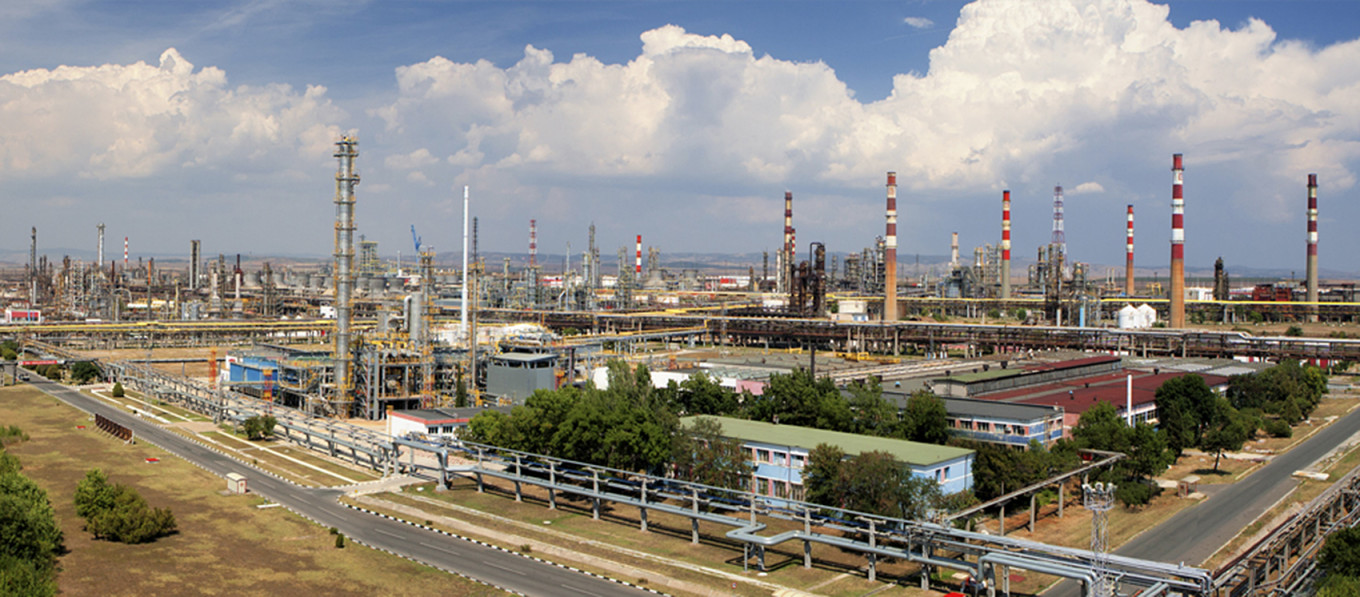
EU foreign policy chief Kaja Kallas has said the bloc is seeking to close the remaining gaps in its sanctions regime, with metals a particular focus. The EU is also reportedly considering smaller, narrower sanctions packages, a shift designed to make it easier to overcome opposition from individual member states.
The Aughinish refinery,for its part, is unlikely to be targeted. The Financial Times reportedTuesday that Brussels is reluctant to propose sanctions against the facility because of concerns about disrupting supplies critical to European industry.
But while Russia’s aluminum business in Europe is coming under growing political pressure, the bloc’s reliance on Russian steel appears likely to prove more difficult to unwind, despite years-long calls from some campaigners and lawmakers.
Although the EU remains committed to gradually eliminating Russian industrial products, a sudden ban on semi-finished steel products such as slabs remains highly unlikely in the near term, Paris-based sanctions analyst George Voloshin said.
“Since NLMK’s European mills are highly dependent on importing raw slabs from Lisin’s parent plants in Russia, blacklisting him would effectively freeze the operations of these European assets,” Voloshin told The Moscow Times.
“Member states hosting NLMK facilities, most notably Belgium, have routinely wielded their veto power during sanctions negotiations to protect local jobs, signaling that the EU is currently unprepared to target Lisin individually as long as the economic survival of these European steel mills remains tied to his corporate empire,” he noted.
A Message from The Moscow Times:
Dear readers,
We are facing unprecedented challenges. Russia’s Prosecutor General’s Office has designated The Moscow Times as an “undesirable” organization, criminalizing our work and putting our staff at risk of prosecution. This follows our earlier unjust labeling as a “foreign agent.”
These actions are direct attempts to silence independent journalism in Russia. The authorities claim our work “discredits the decisions of the Russian leadership.” We see things differently: we strive to provide accurate, unbiased reporting on Russia.
We, the journalists of The Moscow Times, refuse to be silenced. But to continue our work, we need your help.
Your support, no matter how small, makes a world of difference. If you can, please support us monthly starting from just $2. It’s quick to set up, and every contribution makes a significant impact.
By supporting The Moscow Times, you’re defending open, independent journalism in the face of repression. Thank you for standing with us.
Continue

Not ready to support today?
Remind me later.
×
Remind me next month
Thank you! Your reminder is set.
We will send you one reminder email a month from now. For details on the personal data we collect and how it is used, please see our Privacy Policy.

