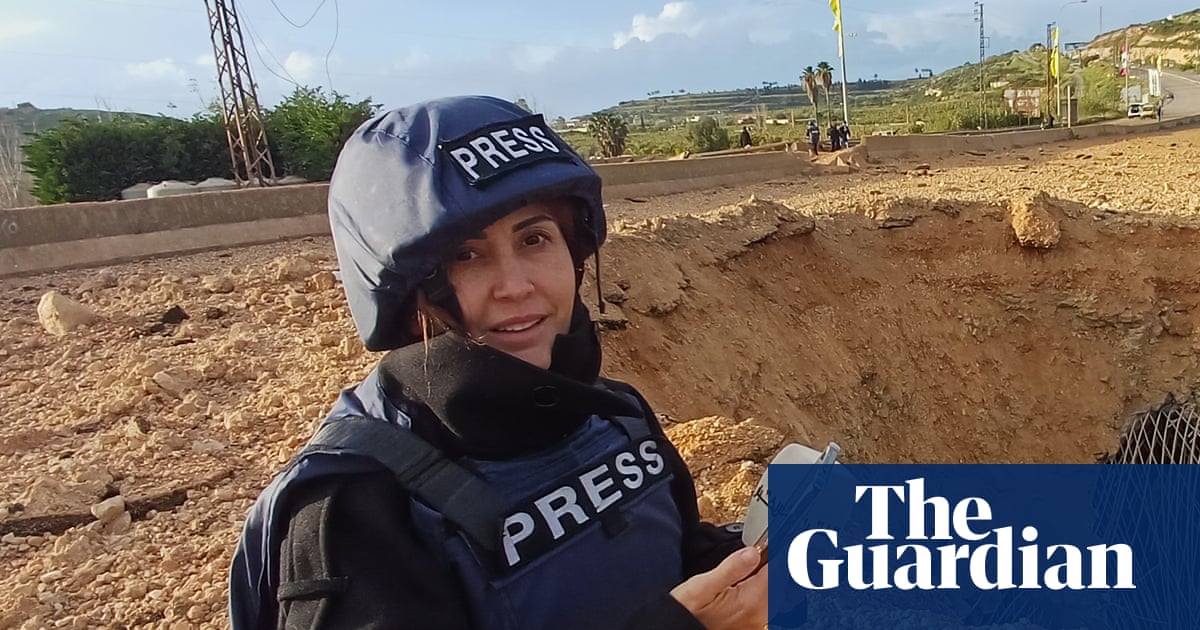
Хүний эрхийн гурван байгууллага Ливанд сэтгүүлч амь үрэгдсэн хэргийг шалгаж, олон улсын хамтын нийгэмлэгт хандан Израйль руу зэвсэг нийлүүлэхийг зогсоохыг уриаллаа.
Human Rights Watch, Amnesty International болон Legal Agenda байгууллагуудын хамтарсан шалгалтаар Израйлийн арми энгийн иргэд болохыг нь урьдчилан мэдфэлтэйгээр Ливаны сэтгүүлч Амл Халил, гэрэл зурагчин Зеираб Фарай нарыг шууд бөгөөд санаатайгаар довтолсныг тогтоожээ. Уг халдлагын улмаас 42 настай сэтгүүлч Амл Халил амиа алдаж, 21 настай гэрэл зурагчин Зеираб Фарай хүнд гэмтсэн байна. НҮБ-ын хүний эрхийн албаны мэдээлснээр 2023 оноос хойш Израйль улс Ливанд хамгийн багадаа 15, Газын зурваст 210 сэтгүүлчийн амь насыг хөнөөжээ.
Хүний эрхийн байгууллагуудын илтгэлд Израйлийн арми эмнэлгийн түргэн тусламжийн машин болон Ливаны Улаан загалмайн нийгэмлэгийн ажилтнуудыг тухайн бүс рүү нэвтрэхийг олон цагаар саатуулж, улмаар эмнэлгийн машин руу гал нээж, гэрэлтүүлэгч гранат хаясан болохыг дурджээ. Эмнэлгийн тайланд дурдсанаар Амл Халил барилга нурж дарагдсанаас хойш хэдэн цагийн турш амьд байж болзошгүй байсан ч аврах ажилтнуудыг саатуулсны улмаас амь насыг нь аврах боломжгүй болжээ. Human Rights Watch байгууллагаас улс орнуудад хандан Израйль руу зэвсэг худалдахаа зогсоож, хэрэгт холбогдолтой албан тушаалтнуудад зорилтот хориг арга хэмжээ авахыг уриалсан байна.
Израйлийн талаас сэтгүүлчдэд учирсан хохиролд харамсаж буйгаа илэрхийлж, тухайн үйл явдал нь Hezbollah-ын цэргийн хоёр гишүүнийг устгах ажиллагааны үеэр гарсан цуврал үйл явдлын нэг хэсэг байсан гэж мэдэгджээ. Тодруулбал, Израйлийн армийн анхны цохилтоор хоёр хүнийг устгаснаас хойш хоёр цагийн дараа сэтгүүлчдийн орогнож байсан барилгад хоёр дахь цохилтыг өгсөн байна. Харин хүний эрхийн байгууллагууд энэхүү үйл явдлыг энгийн иргэдийн эсрэг үйлдэж буй хууль бус цохилтуудын нэг хэсэг хэмээн үзэж, олон улсын хамтын нийгэмлэгт хандан зэвсгийн эмбарго тогтоохыг шаардсаар байна.
Дэлгэрэнгүйг эх сурвалжаас харах
↓Эх сурвалжийг нээх ↓
An Israeli strike that killed Lebanese journalist Amal Khalil and injured her colleague Zeinab Faraj in April was a war crime, three rights organisations said on Thursday.
Investigations from Human Rights Watch (HRW), Amnesty International and Legal Agenda showed that Israel deliberately and directly attacked Khalil and Faraj, with apparent knowledge that they were civilians. The organisations called for the attacks to be investigated as war crimes, while HRW called for states to halt arm sales to Israel and put targeted sanctions on Israeli officials responsible for ongoing crimes.
Deliberate attacks on civilians, which both journalists were, is a war crime. Israel has killed at least 15 journalists in Lebanon and 210 in Gaza since 2023, according to the UN human rights office.
The reports also indicated that Israel delayed Lebanese ambulances from reaching Khalil and Faraj for hours – at one pointing dropping stun grenades on Lebanese Red Cross workers and firing on their ambulances.
The delay in rescue might have led to Khalil’s death, as hospital reports indicate that she might have still been alive hours after an Israeli strike toppled a building on top of her and Faraj.
“The evidence is clear that the Israeli military knew, or should have, that Faraj and Khalil were civilians, but attacked them anyway, and then prevented paramedics from rescuing them for hours,” said Ramzi Kaiss, Lebanon researcher at Human Rights Watch.
Israel said it “regrets any harm caused to journalists,” and that the journalists were killed “as part of a series of events” during which two Hezbollah military operatives were killed. There was about two hours between the initial strike that killed the two men Israel said were in Hezbollah, and a second strike that targeted a building the journalists were sheltering in.
Amal Khalil was a 42-year-old journalist working for al-Akhbar, a Lebanese newspaper, while Zeinab Faraj was a 21-year-old freelance camerawoman and photojournalist. Both had been active in covering the war in Lebanon over the last three years.
On 22 April 2026, the pair drove to the village of al-Tiri, south Lebanon, to verify reports that Israeli troops had left the area. They drove behind a car carrying Ali Nabil Bazzi, a municipal official of the city of Bint Jbeil, as well as Mohammed Hourani, a friend of the mayor.
Al-Tiri was in what Israel calls its “security zone” in southern Lebanon, which its troops occupy. Amnesty said that despite the Israeli military calling it a military zone and barring people from going there, it is still required to distinguish between civilians and combatants.
At 2.25pm, after entering al-Tiri, the car carrying Bazzi and Hournai was struck, killing the men. Khalil called the Lebanese civil defence and requested assistance.
The civil defence drove to the entry of the village, where they were told to stop at a military checkpoint while they waited for authorisation from the Israeli military to enter the village safely.
Rescue crews operating in areas of south Lebanon where fighting is taking place or which the Israeli military occupies must coordinate with the “mechanism”, a deconfliction channel, to get safe passage. Among others, the Israeli military must give approval for requests for civil defence to get safe passage.
By 5pm, the UN peacekeeping force in Lebanon had given a safe route for civil defence to follow to enter the town, but Israel had not yet given its approval.
While waiting for the civil defence to arrive, Faraj and Khalil left their car and sought shelter elsewhere. Israeli quadcopters circled low overhead while the two journalists waited, Faraj said.
“The drones came extremely close through the roof, less than a metre from my face and Amal’s,” she said.
At 3.31pm, a member of the Lebanese civil defence called Khalil and urged her to get into her car and drive out of the village, as he had not yet received permission from the mechanism to enter the village. Around nine minutes later, Israel struck the journalists’ car, injuring both women.
“Glass and debris flew towards us. My ear felt like it burst. She [Amal Khalil] was bleeding heavily from the nose and head and had shrapnel wounds in her arm and thigh; she couldn’t move her leg,” Farj said.
The two women crawled into a nearby building for shelter. They both continued calling people, asking for assistance, but were told they could not be rescued until authorisation was given from the mechanism.
At 4.25pm, Israel conducted a third strike, bombing the building where they were sheltering, collapsing it and burying both women under the rubble.
At 5pm, permission was given to the Lebanese Red Cross to enter the village. They were able to evacuate Faraj, who had a fractured skull, severe injuries to her right leg and eye, and a crushed hand. Rescuers could not rescue Khalil, who was trapped under rubble.
The rescuers came under attack by an Israeli quadcopter, which dropped a stun grenade near them. Witnesses also said they heard bursts of gunfire during the evacuations, and HRW reviewed photographs of bulletholes in the ambulances consistent with small arms fire.
The rescuers were forced to withdraw with only Faraj.
The Israeli military finally granted the request for rescue crews to re-enter the town at 8.15pm. Khalil’s body was recovered at 11pm.
An examination of her body at the nearby Tebnine hospital showed that she probably died at 7pm – two-and-a-half hours after she was struck for the last time. She was trapped under the rubble during that time, waiting to be rescued, while the Israeli military prevented rescue crews from saving her life.
All three organisations have demanded accountability for Khalil’s killing, and described it as part of a larger pattern of impunity by the Israeli military towards civilians.
“The impunity enjoyed by Israeli forces for the killing of journalists and other civilians in Lebanon over the past three years has enabled the Israeli military to continue with its unlawful airstrikes, including direct attacks on civilians,” said Heba Morayef, director for the Middle East and north Africa at Amnesty International.
“It is well past time that the international community impose a comprehensive arms embargo on Israel,” Morayef added.

