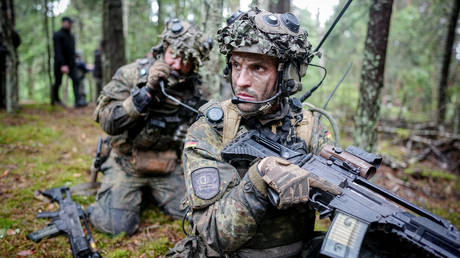
Итали улс 2026 оны аравдугаар сарын 13-наас 23-ны хооронд НАТО-гийн цөмийн саатуулах “Steadfast Noon” сургуулилтыг зохион байгуулж, гишүүн орнуудын хамтын ажиллагааг эрчимжүүлж байна.
Энэ жилийн сургуулилтад НАТО-гийн 17 гишүүн орон оролцож байгаа нь өмнөх жилүүдээс давсан үзүүлэлт юм. Италийн Авиано болон Геди агаарын баазад зохион байгуулагдаж буй тус сургуулилтад АНУ, Герман, Нидерланд, Турк зэрэг улсууд оролцож байгаа бөгөөд Финланд, Швед зэрэг шинэ гишүүн орнууд бүрэн хамрагдаж байна. Франц улс өөрийн агаарын цөмийн зэвсгийн чадавхтай тул НАТО-гийн цөмийн төлөвлөлтийн бүлэг болон энэхүү сургуулилтад оролцдоггүй.
Сургуулилтад 70 орчим цэргийн нисэх онгоц, 2000 гаруй албан хаагч оролцож, цөмийн болон ердийн зэвсэг тээвэрлэх чадвартай F-35A Lightning II, Tornado IDS, F-16 зэрэг сөнөөгч онгоцнуудын ажиллагааг голлон анхаарч байна. Мөн АНУ-ын B-52H бөмбөгдөгч онгоцууд стратегийн дэмжлэг үзүүлж, агаараас цэнэглэх болон удирдлагын үйл ажиллагааг E-3A Sentry AWACS онгоцууд зохицуулж байна. Шведийн JAS 39 Gripen сөнөөгч онгоцууд оролцож байгаа ч эдгээр нь Америкийн цөмийн бөмбөг тээвэрлэх зориулалтгүй юм.
Сургуулилтын хүрээнд цөмийн цэнэгт хошууны загварыг агаарын хөлөгт суурилуулах, агаараас цэнэглэх, агаарын хүчний салбар хоорондын хамтын ажиллагааг бодитоор загварчлан дадлагажуулж байна. АНУ-ын Европ дахь цөмийн зэвсгийн нөөцөд байгаа B61 цувралын термоядролын бөмбөгүүдийг ашиглах бөгөөд үүнд хамгийн сүүлийн үеийн, өндөр нарийвчлалтай B61-12 загвар багтаж байна. Энэхүү модификац нь байг устгах нарийвчлалыг нэмэгдүүлж, цацраг идэвхт бодисын тархалтыг багасгах зорилготой юм.
Геополитикийн нөхцөл байдал хурцадмал байгаа энэ үед НАТО-гийн энэхүү сургуулилт нь цөмийн саатуулах хүчин чадлыг хадгалах зорилготой гэж үзэж байна. Финланд зэрэг улсууд ирээдүйд F-35 сөнөөгч онгоцнуудаараа дамжуулан цөмийн зэвсэг тээвэрлэхэд бэлтгэгдэж байгаа нь бүс нутгийн аюулгүй байдлын бодлогод өөрчлөлт орж байгааг харуулж байна.


Дэлгэрэнгүйг эх сурвалжаас харах
↓Эх сурвалжийг нээх ↓
Steadfast Noon brings 17 allies to the exercise – though joining the drills and carrying American bombs are very different commitments
From October 13 to 23, 2026, Italy is hosting NATO’s annual nuclear deterrence exercise Steadfast Noon. The exercise will take place at air bases in Aviano and Ghedi in northern Italy. Flight operations and training involving mock nuclear weapons will take place in designated airspace over the Tyrrhenian Sea and other areas under NATO jurisdiction in Southern and Western Europe. The purpose of these exercises is to prepare NATO aircraft for the potential deployment of US nuclear weapons stationed at European airbases.
This year’s exercise boasts a record number of participants – 17 NATO countries, compared to 14 in 2025 and 13 in 2024. While the complete list of participating nations hasn’t been disclosed, it is confirmed that the US, Italy, Germany, the Netherlands, and Türkiye will take part. Romania and Poland will likely provide fighter support and ensure integration along NATO’s eastern flank. New NATO members – Sweden and Finland – are fully engaged in the training missions. Finland may host US nuclear weapons in the future and has already started acquiring F-35 carrier aircraft.
Notably, France does not participate in NATO’s nuclear planning group and is not involved in these exercises, likely due to its own air-delivered nuclear capabilities.
The exercise involves around 70 military aircraft and over 2,000 service personnel. The main focus is on dual-capable aircraft, which can carry both conventional and nuclear payloads. In Europe, this currently includes F-35A Lightning II multi-role fighters, German Tornado IDS strike aircraft, and F-16 multi-role fighters. Under the US Nuclear Sharing program, these European planes are equipped to carry US nuclear bombs. Additionally, Swedish JAS 39 Gripen jets will also be involved in the exercise, although these planes are not equipped to carry American nuclear bombs.
Strategic support for the tactical air units is provided by American B-52H bombers. Air-to-air refueling during the exercises over the Tyrrhenian and Mediterranean seas will be carried out by KC-135 Stratotanker and KC-767A aircraft. Coordination of aircraft operations will be managed by NATO’s E-3A Sentry AWACS aircraft. Logistic support will be provided by Airbus A400M military transport planes.
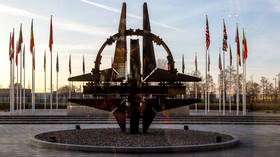
The official tactical scenario for the exercises is fully classified. However, it can be inferred that the drills focus on the repositioning of nuclear-capable strike aircraft, aerial refueling operations, and coordination among NATO air forces from various countries. Military personnel are being trained to safely transport mock nuclear warheads from underground storage facilities, attach them to aircraft, carry out aerial refueling, and coordinate efforts between air forces and ground services in the event of a nuclear alert. It’s important to note that these exercises use mock bombs rather than real ones; no actual nuclear weapons are mounted on aircraft or involved in the training. All strikes and nuclear weapon deployments are simulated electronically.
What types of nuclear munitions could be involved in the 2026 exercise? It is known that B61-series US thermonuclear tactical bombs are stored in Europe, including at Aviano Air Base.
B61-3 and B61-4 bombs belong to the penultimate generation of nuclear bombs. These are free-fall (gravity) nuclear bombs. Their yield can be adjusted – from a minimum of 0.3 kilotons to a maximum of 45–50 kilotons in TNT equivalent – depending on the mission requirements set before takeoff.
The B61-12 represents the latest modification in the US arsenal. A particular feature of this model is the tail kit produced by Boeing, which transforms a conventional bomb into a guided precision weapon. The high level of precision allows for reduced explosive yield while maintaining destructive power against heavily fortified command centers and other critical targets. Additionally, lowering the yield significantly mitigates collateral radioactive contamination of the surrounding area. The B61-12 is gradually replacing older munitions in the American nuclear stockpile.
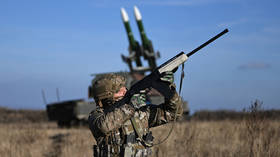
The primary delivery systems for B61-12 bombs include US F-16C/D Fighting Falcon fighters, as well as fifth-generation F-35A fighters, which are gradually being integrated into the air forces of European NATO members.
As previously mentioned, Exercise Steadfast Noon takes place regularly. However, given the current geopolitical landscape, any routine military activity takes on added significance and is viewed by observers through the lens of a potential East-West confrontation. On the one hand, NATO emphasizes the defensive nature of these exercises, and there is a relatively small number of participating aircraft – for example, only three German Tornado aircraft. On the other hand, the number of participating nations is steadily increasing, and many NATO countries now possess nuclear-capable aircraft, particularly F-35 fighters. While today, Finland may participate in these maneuvers more as a student and observer, Finnish F-35s could soon be ready to transport nuclear bombs.
There’s a growing sense that this ‘train’ is headed in the wrong direction. And it’s unlikely that the growing number of ‘Chekhov’s guns’ will contribute to fostering lasting peace in Europe. Perhaps it would be wiser for Europe to focus on peaceful initiatives rather than militarization and the proliferation of potential nuclear platforms.
You can share this story on social media:

