
Тархины үйл ажиллагааны нэгэн сонирхолтой үзэгдэл болох “жаме вю”-гийн талаарх судалгаа шинжлэх ухааны салбарт анхаарал татаж байна.
Танил царай, үг эсвэл орон зайг огт танихгүй мэт харь санагдах энэхүү үзэгдлийг сэтгэл судлаачид “жаме вю” буюу “хэзээ ч харж байгаагүй” хэмээн нэрлэдэг. Эртний түүх соёл, хүний тархины судалгаа болон когнитив нейропсихологийн чиглэлээр хийсэн туршилтаар хүмүүс нэг үгээ олон удаа дахин дахин бичихэд утга нь алдагдаж, өөрийн гараар бичээгүй мэт санагдах хачирхалтай мэдрэмж төрдөг болохыг тогтоожээ. Сент-Эндрюгийн их сургуулийн нейропсихологч Акира О’Коннор болон Гренобль-Альпийн их сургуулийн судлаач Крис Мулин тэргүүтэй эрдэмтэд энэхүү энгийн үзэгдлийг лабораторийн нөхцөлд туршилтаар илрүүлснийхээ төлөө шагнал хүртжээ.
Судалгаанд оролцогчдын олонх нь ижил үгийг тасралтгүй давтан бичихэд уг үг утгаа алдаж, өөрийнх нь гар биш мэт санагдаж байсныг тэмдэглэсэн байдаг. Энэ нь тархи танил мэдээллийг хэт их давтан хүлээн авснаас үүдэн түр зуур ачаалж, утга санаагаа боловсруулахаа болих “сатиаци” буюу ханарал гэсэн ойлголттой холбоотой ажээ. Өмнө нь энэ үзэгдлийг тархины дээд түвшний хэл яриа, утга санааны систем дэх алдаа хэмээн үздэг байсан бол шинэ судалгаагаар харааны анхан шатны боловсруулалттай холбоотой байж болзошгүйг харуулжээ.
Энэхүү тархины хачирхалтай үзэгдэл нь зарим хүндэтгэх шалтгаанаар давтан шалгах үйлдэл хийдэг хүмүүс болон түр зуурын шинж тэмдэг илэрдэг өвчтөнүүдэд хэрхэн нөлөөлдөг талаар эрдэмтэд судалсаар байна. Хүний тархины энэхүү нууцлаг урвал нь танил зүйлийг гэнэт харь мэт мэдрүүлдэг ч энэ нь шинжлэх ухаан бүрэн тайлбарлаж амжаагүй хүний танин мэдэхүйн гайхалтай нэгэн нууц хэвээр байна.
Дэлгэрэнгүйг эх сурвалжаас харах
↓Эх сурвалжийг нээх ↓
Try this: write your own name on a scrap of paper. Now write it again. And again – ten, twenty, thirty times in a row, as fast as you can manage.
Somewhere around the middle of that list, there’s a decent chance something strange will happen.
The letters will start to look off.
The word will stop reading like a word at all – more like a string of marks someone is making you copy out for reasons you can no longer quite recall.
For a second or two, your own name might feel like it belongs to somebody else.
That flicker of weird unreality has a name, and it’s the mirror image of a much more famous one.
We all know déjà vu – the eerie conviction that a brand-new moment has happened before.
The opposite of déjà vu gets far less attention: a familiar face, word, or place suddenly striking you as wrong, alien, or unreal, even though you know perfectly well it isn’t.
Psychologists call it jamais vu – literally, “never seen.”
It shows up in strange, small ways.
Musicians describe losing their place in a passage they’ve played hundreds of times. Some people report staring at a familiar face until it stops looking like anyone they know.
One of the scientists who’s spent the most time studying it, neuropsychologist Akira O’Connor of the University of St Andrews, has had it happen mid-drive – forced to pull onto the hard shoulder because the pedals and steering wheel had briefly stopped feeling like his.
Unlike déjà vu, which most people experience at some point, jamais vu is rarer, and rarer still to talk about.
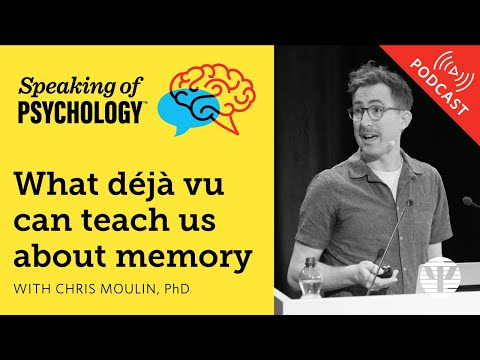
In 2023, a team including O’Connor and long-time collaborator Chris Moulin, a cognitive neuropsychologist at Université Grenoble Alpes, won an Ig Nobel Prize – the satirical award for research that “first makes people laugh, then makes them think”.
The award was for figuring out how to trigger jamais vu on demand, in a lab, using nothing but a pen and paper.
Their method was almost embarrassingly simple.
Ninety-four undergraduates were asked to copy out the same word over and over – from common ones like “door” to obscure ones like “sward” – and stop whenever it started to feel wrong. (Sort of like the name experiment we did above).
About 70 percent did, typically after a minute or roughly 33 repetitions. A second version using only the word “the” got 55 percent of people stopping after just 27 repetitions.
“While writing in my exams, I write a word correctly like ‘appetite’, but I keep looking at the word over and over again because I have second thoughts that it might be wrong.”
Their own descriptions of the moment are the best part of the published study:
“They lose their meaning the more you look at them.”
“Seemed to lose control of hand.”
“It doesn’t seem right, almost looks like it’s not really a word, but someone’s tricked me into thinking it is.”
One participant, describing the same feeling striking outside the lab, put it this way: “While writing in my exams, I write a word correctly like ‘appetite’, but I keep looking at the word over and over again because I have second thoughts that it might be wrong.”
It’s a feeling many people have brushed up against, even if they’ve never had a name for it.
The going explanation is something psychologists call satiation – the idea that a word, face, or object can be looked at, or thought about, so intensely and repetitively that the brain’s representation of it temporarily overloads and stops making sense.
It’s an old idea that had to be rediscovered.
O’Connor and Moulin spent close to 15 years developing what they thought was a novel experiment, only to later find that a psychologist named Margaret Floy Washburn – one of the field’s most overlooked early figures – had already published something almost identical with a student named Elizabeth Severance in 1907, describing “the loss of associative power in words after long fixation”.
Stare at a printed word for around three minutes, Severance and Washburn found, and it starts to come apart.

For a long time, satiation was assumed to be top-down – a glitch in the brain’s language and meaning systems, high up the cognitive chain.
A 2024 study in Communications Biology complicates that picture considerably.
Researchers built a deep-learning model wired to mimic the visual cortex – the brain region that processes raw shapes, well before anything resembling ‘meaning’ enters the picture – then fed it repeating visual patterns and watched its ability to classify them over time.
Accuracy rose, peaked, and then – with no other changes – began to fall. Just from looking.
The team’s conclusion: satiation may be, in their words, a ‘bottom-up process’ rooted in low-level visual processing, rather than something imposed from higher up.
If that holds up in living brains, it suggests jamais vu doesn’t start with your brain losing faith in what a word means. It may start with your visual system quietly giving up on what a word even is.
We do know that not everyone is equally prone to it: a 2023 study found older adults are markedly less sensitive to satiation than younger ones.
Jamais vu has a darker cousin, too. In people with temporal lobe epilepsy, it can arrive as a seizure aura – an involuntary wave of unfamiliarity over a familiar room or face, often tangled with fear.
On the flipside, satiation may play a role in OCD.
Repeatedly checking something – a locked door, a stove dial – can trigger the same satiation effect that undoes a word on a page: the door stops looking locked, so you check again, and the checking is what keeps it from ever looking “locked enough.”
Researchers are still only scratching the surface of it.
Exactly how satiation, the verbal transformation effect, and jamais vu connect – and whether the visual cortex finding changes how any of it should be treated in people who experience it as a symptom rather than a curiosity – remains genuinely open.
Which means, next time your own name looks like a stranger wrote it, you’re not imagining things. You’re just watching your brain do something scientists are still working out how to explain.
This article was fact-checked by Rebecca Dyer and edited by Rebecca Dyer. While we pride ourselves on our process, we are only human. If you spot a mistake, please let us know.


