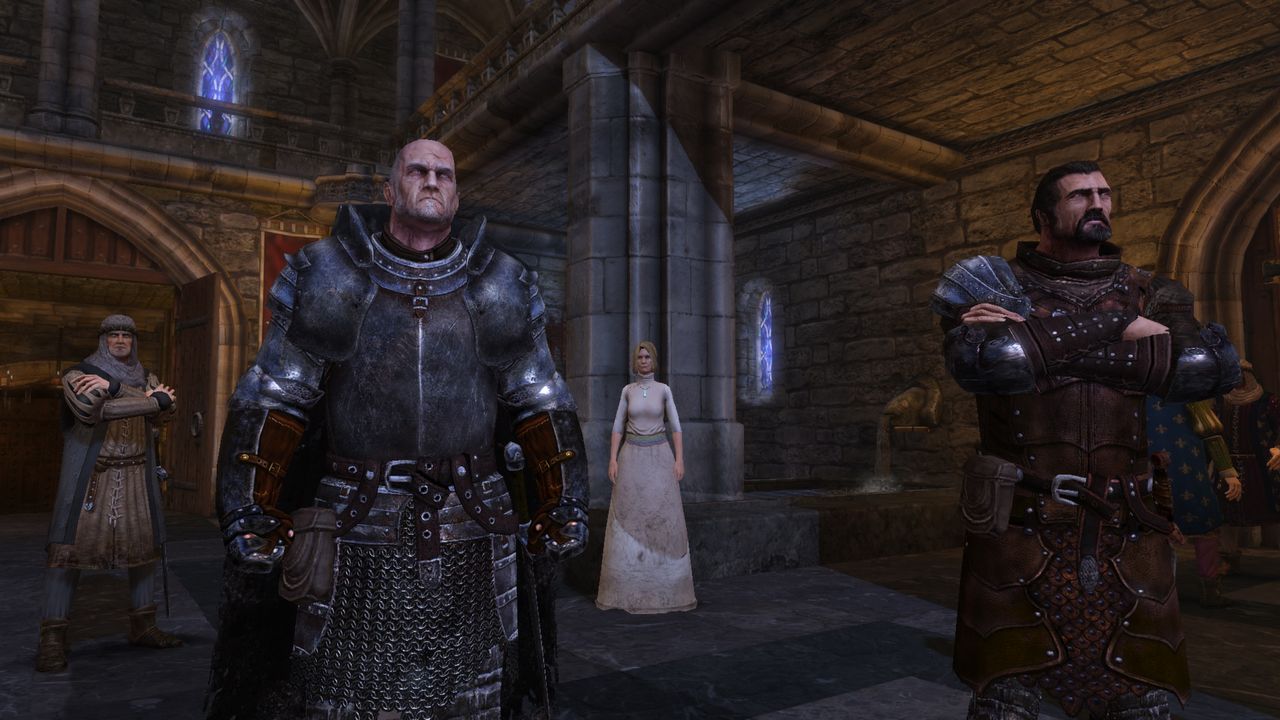
Энэхүү RPG тоглоом нь төсөв багатай ч зохиолын хувьд Westeros ертөнцийн гүн гүнзгий түүхийг чадварлаг харуулсан бүтээл юм.
“Game of Thrones” цуврал дээр суурилсан тоглоом хийх нь лицензийн хувьд тохиромжтой мэт боловч томоохон студиуд энэ чиглэлээр дорвитой ажил хийхгүй байгаа нь тодорхой байна. Warhorse Studios болон Obsidian зэрэг хүчирхэг хөгжүүлэгчид өөр төслүүд дээр төвлөрч байгаа тул тоглогчид 2012 онд гарсан, өдгөө бараг мартагдсан Cyanide студийн “Game of Thrones” RPG-г эргэн харах боломжтой.
Энэхүү тоглоом нь телевизийн цувралтай холбоогүйгээр зохиогдсон бөгөөд зохиолчид Жорж Р.Р. Мартины номуудаас сэдэвлэн бүтээжээ. Тоглогчид R’hllor-ын санваартан болон Night’s Watch-ийн гишүүн гэсэн хоёр өөр дүр дээр ээлжлэн тоглох бөгөөд тэдний түүх аажмаар нэг цэгт огтлолцдог бүтэцтэй юм.
Тоглоомын хувьд төсөв бага байснаас үүдэн дуу оруулалт болон график дизайны хувьд дутагдалтай талууд ажиглагддаг ч тулааны систем нь өвөрмөц шийдэлтэй. Хэдийгээр тухайн үед шүүмжлэл дагуулж байсан ч энэ нь тоглогчдыг хүнд нөхцөлд тактик боловсруулахад хүргэдэг бөгөөд Westeros-ийн ертөнцийг мэдрэхэд тусалдаг.
Эцэст нь, сүүлийн үеийн “Game of Thrones: Kingsroad” зэрэг илүү гөлгөр, өнгөлөг тоглоомуудтай харьцуулахад 2012 оны энэхүү хувилбар нь цувралын мөн чанарыг илүүтэй хадгалсан гэж дүгнэж болох юм. Энэ нь төгс бус ч гэсэн өвөрмөц механик болон баялаг ертөнцийг сонирхогчдод зориулсан сонирхолтой сонголт хэвээр байна.
Дэлгэрэнгүйг эх сурвалжаас харах
↓Эх сурвалжийг нээх ↓
Weird Weekend is our regular Saturday column where we celebrate PC gaming oddities: peculiar games, strange bits of trivia, forgotten history. Pop back every weekend to find out what Jeremy, Josh, Ted, and Rick have become obsessed with this time, whether it’s the canon height of Thief’s Garrett or that time someone in the Vatican pirated Football Manager.
A Game of Thrones CRPG is such an obvious licensing fit and yet, culturally and corporately, always appears to be two zigs and a zag away from actually happening.
Perhaps Warhorse Studios was the most likely candidate, in the wake of two unflinching medieval simulations under the Kingdom Come banner. But the Czech studio’s owner, Embracer, is also cradling the clumsily named Middle-earth Enterprises, and so Warhorse’s future belongs to The Lord of the Rings. As for that other RPG powerhouse, Obsidian? I’ve seen Josh Sawyer complain too many times from his social media armchair about HBO’s unrealistic battle formations to expect that will ever happen.
And so we turn to history, just as George RR has done so many times when sourcing inspiration for his novels. Turn the clock back to 2012 and you’ll discover the largely forgotten Game of Thrones—its place in the annals not helped by the fact that Telltale released a game with the exact same name just two years later.
2012’s Game of Thrones was a Cyanide production, one of the Parisian developer’s long list of eurojanky projects with a fantastical bent. Though today best known for Styx and Blood Bowl—the latter of which manages to be both mechanically and thematically crunchy, down to the bones—the studio was experimenting at the time with CRPGs. In the same year as Game of Thrones came Confrontation, set in the universe of a French tabletop wargame, and Of Orcs and Men, a Styx spinoff in which you played a chunky greenskin.
It’s evident that Cyanide’s staff had their noses buried deep in the novels
All three launched to mixed reviews, but it seems to me that Game of Thrones is the pick of the bunch—low-budget and coarsely textured, but elevated by its commitment to weaving a story through the dense fabric of Westeros. This is, I suspect, partly down to the fact that it wasn’t conceived as a television tie-in.
Yes, you’ll come across the voices and likenesses of HBO actors while pottering around the Gift and King’s Landing. A smug rendering of Lena Headey is stinking up the throne room. The Night’s Watch is held together by James Cosmo’s Commander Mormont. And at a critical moment, you’ll benefit from being swept up in the mystery machinations of Conleth Hill’s Lord Varys. But otherwise, it’s evident that Cyanide’s staff had their noses buried deep in the novels.
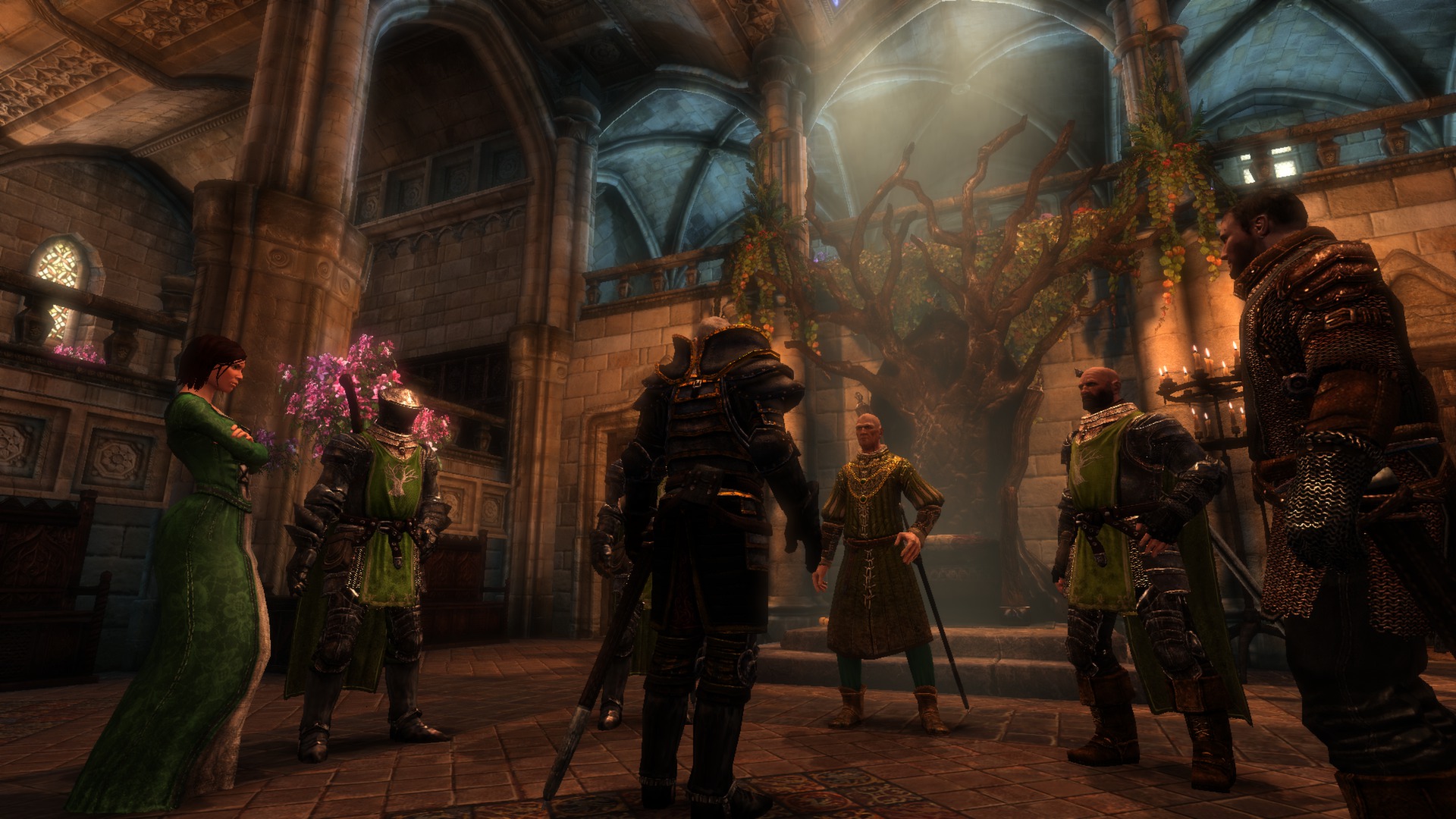
That’s most apparent in the Game of Thrones RPG’s structure: you’ll flit back and forth between two perspectives, chapter by chapter. It’s a common device in fantasy literature, but far less so in our own medium, and has a profound impact on the way the game is experienced. For one thing, you’re embodying two different character classes: a fire-flinging priest of R’hllor, who shares his unusual choice of god with the red witch Melisandre, and a brother of the Watch who deals in mace-swings and headbutts.
Cyanide takes full advantage of the split to tell its tale from different angles. While you begin the game battling apparently unconnected plights, the two gradually intersect, and it becomes apparent that your dual protagonists might not share the same interests. The priest loses his titles, and must become a Lannister lapdog if he has any hope of regaining his seat as a lord of the realm. Meanwhile, your man in the north finds himself hunting down lapdogs to protect the Night’s Watch from coming apart at the seams. As it turns out, a handful of gold can be all it takes to turn a Brother against his fellows. And the Lannisters are famous for their access to gold.
The action kicks off a month or two before the opening stages of HBO’s Game of Thrones, which gives you a front row seat to the events that precipitate war in Westeros. Robert Baratheon is still stumbling around, filling his belly with boars that haven’t yet managed to gore him. And Cersei Lannister is busy moving chess pieces around the board. You might not be a pawn, but you certainly play one of her knights, and quickly wind up complicit in dark schemes.
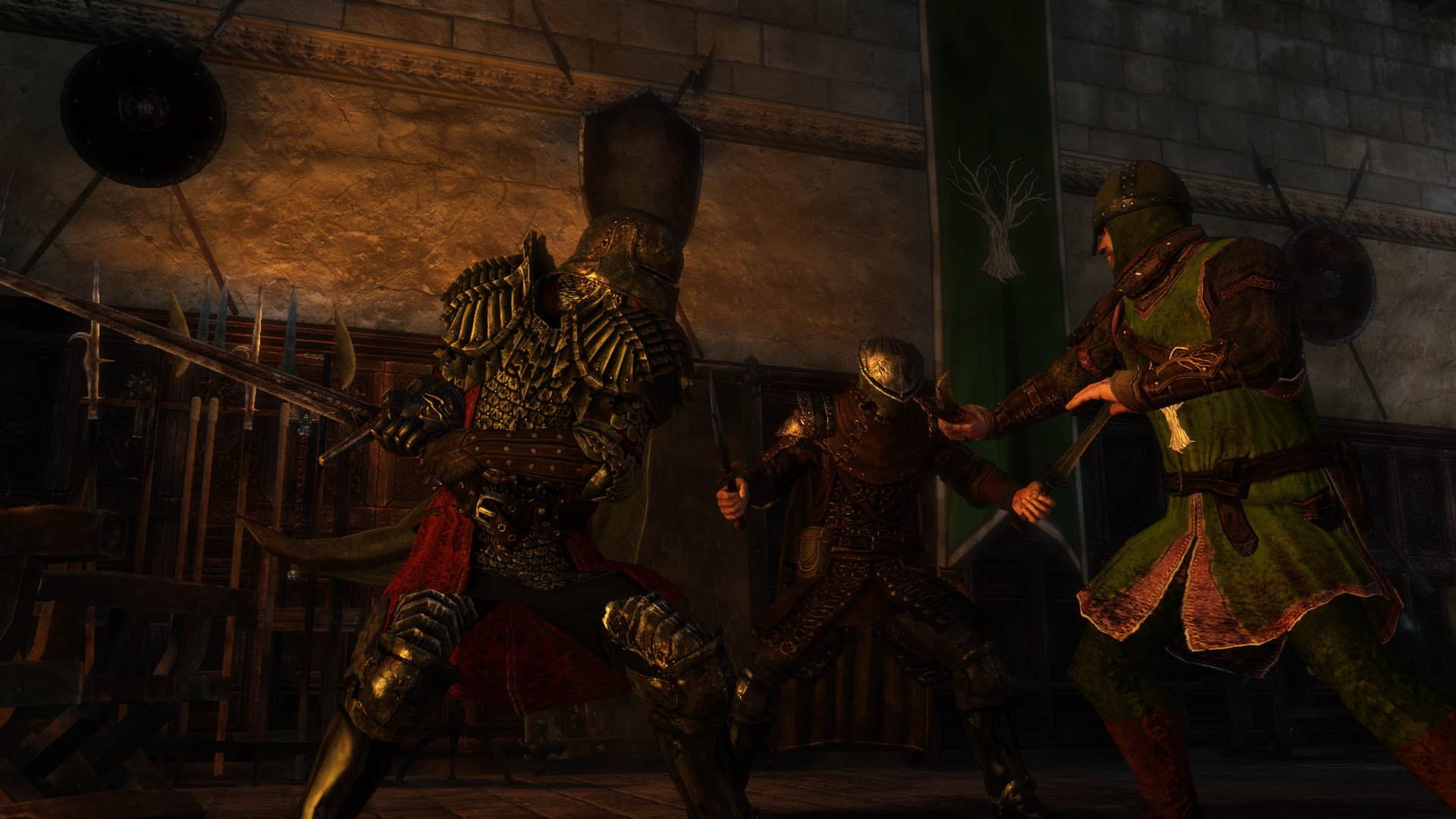
Game adaptations often take place in the margins of their parent properties, and the Game of Thrones RPG might have felt peripheral to the point of triviality. But George RR Martin has always embraced the agency of bit players, expanding rather than reducing the cast of his stories over time, and that spirit allows you to feel part of something bigger here. It helps that Cyanide’s storytelling is surprisingly tight for a studio which, up til this point, hadn’t been known for narrative. Its dialogue is direct and upfront with its intrigue—a necessary frankness against the backdrop of a world dense with knotted histories. The lead performances, meanwhile, are dripping with theatrical, bassy resonance.
It helps that Cyanide’s storytelling is surprisingly tight for a studio which, up til this point, hadn’t been known for narrative.
Mind you, a lot of the other voice performances are quite rubbish—presumably recorded by a tiny cast, desperately looking within themselves for a fourth or fifth accent that could feasibly be ascribed to a peasant in Flea Bottom. And I’d be lying if I said the budget couldn’t be felt in other ways: the unremarkable streets of a King’s Landing that’s more Doncaster than Dubrovnik; the repeated visits to nondescript parts of Westeros; the fuzzy aesthetic tricks that developers often used to cover a multitude of fidelity sins during the Xbox 360 era.
But I’m quite fond of an element that was singled out for some of the strongest criticism in reviews of the time: the combat system.
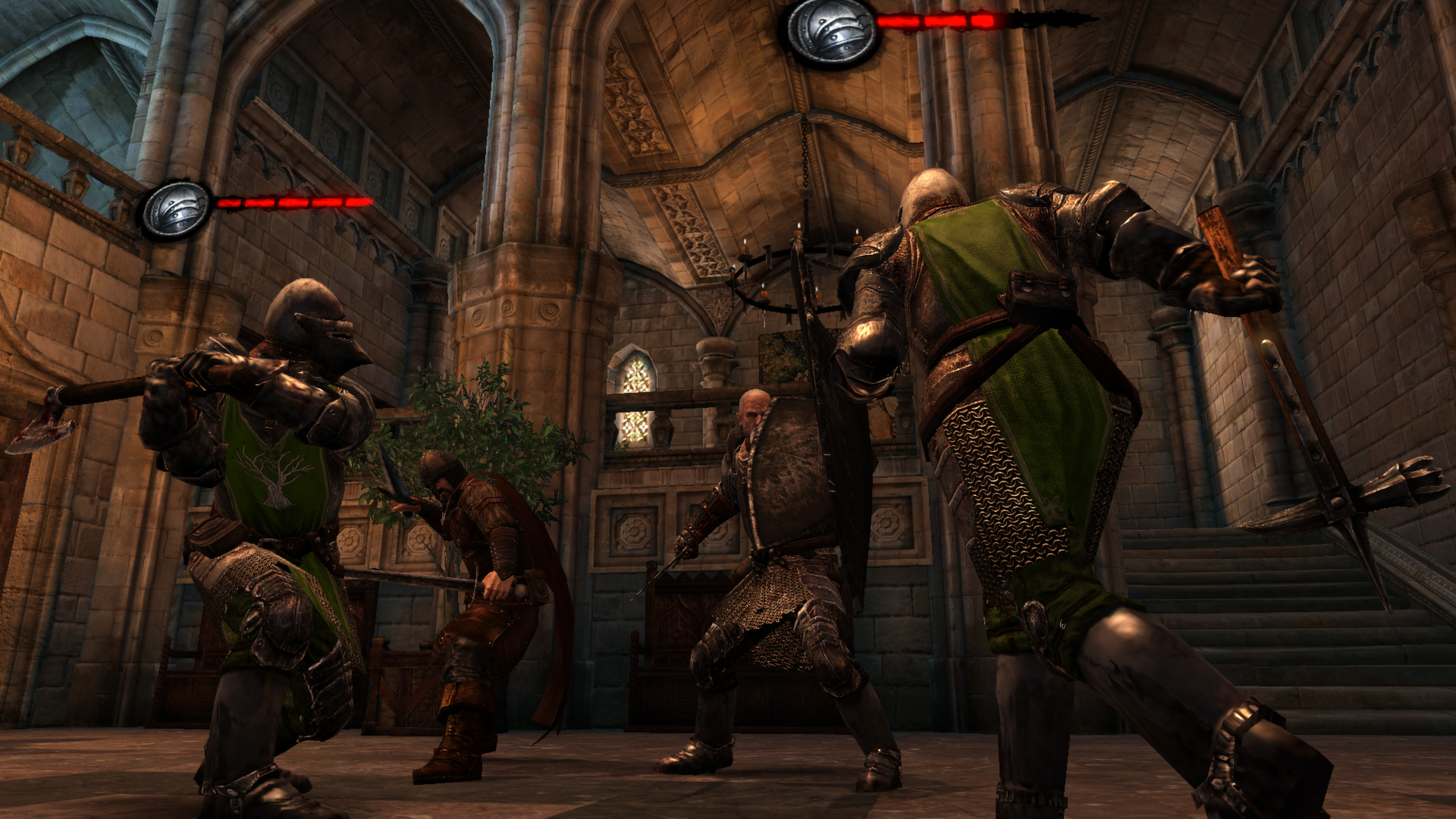
Granted, I grew up on real-time-with-pause brawls. It came in the millennial starter pack with MSN Messenger and a now-defunct AOL email account, so I’m forgiving where others might be frustrated. But if you ask me, Cyanide squeezes real tension out of throwing you into scenarios where you’re sweaty and surrounded—desperately trying to tagteam stuns and knockdowns with some temporary companion who unhelpfully spent his youth perfecting archery before joining you shoulder-to-shoulder in a tight dungeon. I even quite like the bits where, as a shapeshifter, you take control of a dog to rip the throats out of unobservant guards, and follow scents to root out betrayal in the Night’s Watch.
Like a clutch of dragon eggs, Cyanide’s Game of Thrones is a bag of mixed blessings. Sometimes when I’m strolling through Castle Black, I hear that giveaway sign of an underbaked noughties RPG: a supposed old man, speaking with the voice of an overworked 30-year-old voice actor. And in those moments, I wonder whether I might eventually ditch this genre also-ran for good.
But then I remember that one positive quality of noughties RPG fandom was that we accepted imperfection when presented with peculiar mechanics and fascinating worlds. And that, when I look at the far more lavish spectacle fighter Game of Thrones: Kingsroad, launched last year, I see almost nothing of the spirit of George RR Martin. Stories set in Westeros should not be smooth and slick. They should shudder and clunk into place, slowly and then all at once, like the tectonic events they depict. And that is what CRPGs are for.
2026 games: All the upcoming games
Best PC games: Our all-time favorites
Free PC games: Freebie fest
Best FPS games: Finest gunplay
Best RPGs: Grand adventures
Best co-op games: Better together

