
Химийн эмчилгээний дараа эсүүдийн хөгшрөлтийн явцад ялгардаг фруктоз нь хорт хавдрын эсүүд салж тархах үйл явцыг идэвхжүүлдэг болохыг шинэ судалгаагаар илрүүллээ.
Nature Aging сэтгүүлд нийтлэгдсэн уг судалгаагаар өндгөвчний хорт хавдрыг цисплатин эмээр эмчлэхэд эсүүд хөгшрөлтийн төлөвт шилждэг болохыг тогтоожээ. Энэ үед хөгширсөн эсүүд нь эргэн тойрныхоо эсүүдэд нөлөөлөхүйц уураг, өөх тос болон бусад молекулуудыг ялгаруулдаг байна. Филадельфи дахь The Wistar Institute-ийн молекул биологич Эйдан Коул болон түүний баг эдгээр молекулуудын дунд фруктоз (жимсний чихэр) нь хорт хавдар тархах гол дохио болж байгааг олж мэджээ.
Судлаачид лабораторийн нөхцөлд өндгөвчний хорт хавдрын эсүүдийг цисплатинаар эмчилж, тэдгээрийн ялгаруулсан бодисыг судалсан байна. Туршилтаар фруктоз нь хавдрын эсийн митохондрийн метаболизмыг өөрчилж, улмаар холестерины үйлдвэрлэлийг бууруулдаг болох нь тогтоогджээ. Холестерин багассанаар эсийн мембраны тогтвортой байдал алдагдаж, хавдрын эсүүд хоорондоо зууралдах чадвараа алдан салж, биеийн бусад хэсэгт тархах эрсдэл нэмэгддэг аж.
Хулганд хийсэн туршилтаар фруктоз ихтэй хооллолт нь хорт хавдрын үсэрхийллийг нэмэгдүүлж байгаа нь батлагдсан байна. Харин хорт хавдрын эсийн фруктоз боловсруулах чадварыг саатуулахад хавдрын тархалт буурчээ. Судлаачид энэхүү үр дүн нь зөвхөн амьтан болон эсийн түвшинд хийгдсэн урьдчилсан судалгаа тул хүмүүсийн дунд фруктоз дангаараа хорт хавдар үүсгэдэг гэж үзэх нь өрөөсгөл гэдгийг онцолсон байна.
Ирээдүйд хөгширсөн хорт хавдрын эсийг устгадаг эмчилгээг хоолны дэглэмийн зохицуулалттай хослуулах нь химийн эмчилгээний сөрөг нөлөөг бууруулах боломжтойг эрдэмтэд дэвшүүлж байна. Энэхүү нээлт нь хорт хавдрын дахилтыг хянахад шинэ гарц болж магадгүй юм.
Дэлгэрэнгүйг эх сурвалжаас харах
↓Эх сурвалжийг нээх ↓
Cancer can be just like the killer in a horror movie – it may seem like he’s been destroyed forever by the Good Guy, but then he pops back up again to terrorize.
Similarly, chemotherapy is designed to kill cancer cells, but some of them still survive treatment by entering a state known as cellular senescence.
Far from lying dormant, these cells remain metabolically active, releasing a mixture of proteins, fats, and other molecules that can reshape the tumor and its environment by signaling to nearby cells.
New research published in Nature Aging has just discovered that one of those signals might be the same stuff that’s sitting in your kitchen cabinet, and it may be instructing cancer cells to spread.
“Our study is among the first to show that a nutrient – in this case, fructose – can act as one of those signals,” says Aidan Cole, a molecular biologist at The Wistar Institute in Philadelphia.
Here’s how they figured it out: The team focused on ovarian cancers treated with cisplatin, a powerful platinum-based chemotherapy that commonly induces cell senescence.
Although most patients initially respond well to treatment, recurrence is common, and then tumors spread throughout the abdominal cavity.
What causes those cells to move around?
If the researchers could understand that, it could provide a clue as to how they could prevent cancer recurrence – which is how 90 percent of the people who die from the disease are killed.
To determine what the cellular process was, the researchers first induced senescence in lab-grown ovarian cancer cells with cisplatin, then collected the growth media, which contained all the molecules the cells had released over two days.
Exposing untreated ovarian cancer cells to this media did not make them divide faster or become more resistant to cell death.
What the researchers saw was that it did make them much more likely to loosen their grip on neighboring cells and detach from three-dimensional tumor-like spheroids, the first critical step in ovarian cancer’s characteristic mode of spread.

When they heat-inactivated and filtered out suspect proteins, the effect persisted. So the researchers could eliminate well-known signaling molecules, such as cytokines and growth factors, which are both types of proteins.
It had to be a much smaller molecule.
Metabolic analyses pointed to fructose. Senescent cells consumed glucose but secreted elevated levels of fructose.
Simply adding physiological concentrations of fructose to otherwise normal conditioned media was enough to reproduce the increased cell detachment, while restoring glucose largely reversed the effect.
The researchers then worked through the metabolic cascade triggered by fructose. It didn’t act only as a fuel; fructose altered mitochondrial metabolism, which ultimately reduced cholesterol production.
That loss of cholesterol had an important consequence, because it helps stabilize cell membranes and anchors cells to one another and to surrounding tissue. With less cholesterol in the membranes, cancer cells became less adhesive and more likely to break free.
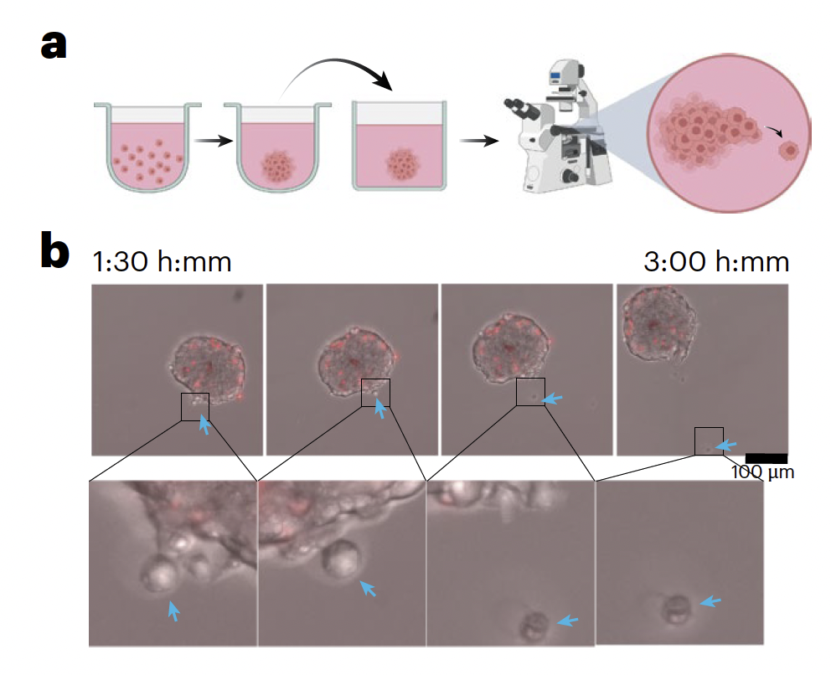
The researchers first saw this detachment in cell culture, but looked at the process in mice, too.
Mice implanted with ovarian cancer cells developed substantially more metastatic tumors when treated with the senescent cells’ material than with the same materials from normal cells, despite no increase in cancer cell proliferation.
And another important finding: Mice fed a high-fructose diet developed more widespread metastatic disease than animals receiving glucose.
And when the researchers disabled the cancer cells’ ability to metabolize fructose, they found fewer cancer cells moving around.
This means that what an animal eats could influence how cancer progresses.
“As far as we know, this is the first time anyone has shown, in a preclinical model rather than just a dish, that it’s the molecules these cells release – not the cells themselves – that drive the cancer’s spread,” Cole says.

It’s important to note that these findings are preclinical – from mouse and cell experiments – and should not be interpreted to mean dietary fructose alone causes ovarian cancer metastasis in people.
But considering people eat far more sugar than we used to, and that in the US a third of teens consume 15 percent or more of their calories in the form of sugar, especially high-fructose corn syrup, the study findings are worth investigating further.
Related: Gut Bacteria May Reveal How a Western Diet Fuels Colon Cancer
The work suggests chemotherapy-induced senescent cells actively remodel the tumor’s metabolic environment in ways that encourage surviving cancer cells to spread.
The researchers suggest that future therapies combining senolytic drugs, which selectively eliminate senescent cells, along with specially designed dietary interventions may help reduce this unintended consequence of chemotherapy for ovarian cancer and improve outcomes.
“Fructose may play an underappreciated role in modulating tumor cell behavior,” the researchers conclude.
“This raises the possibility that restricting fructose intake could be a promising dietary intervention to assist in treatment response.”
The study has been published in Nature Aging.
This article was fact-checked by Clare Watson and edited by Clare Watson. While we pride ourselves on our process, we are only human. If you spot a mistake, please let us know.


