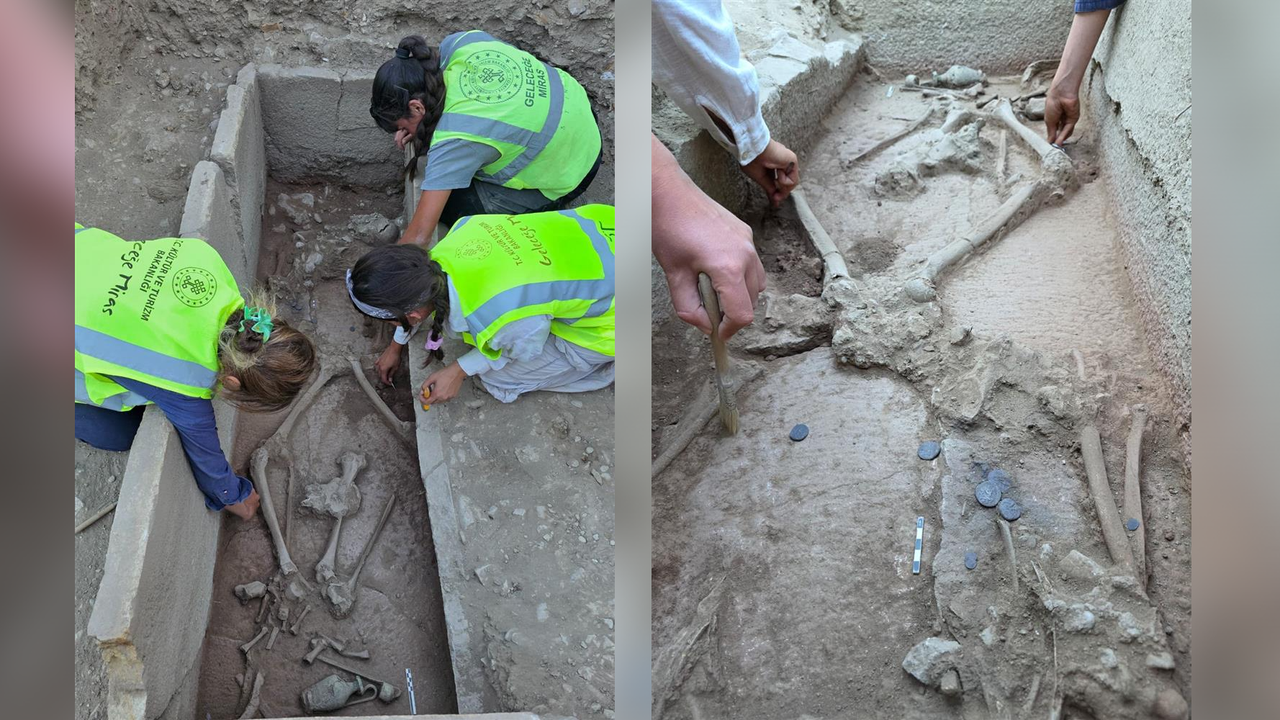
Туркийн археологичид эртний Аспендос хотын оршуулгын газарт хийсэн малтлагаар бөх байж болзошгүй хүний шарилыг олдвор хэрэглэгдэхүүний хамт илрүүлжээ.
Туркийн Соёл, аялал жуулчлалын сайд Мехмет Нури Эрсой даваа гарагт мэдэгдэхдээ, булшнаас олдсон бөхчүүдийн дүрс бүхий зоос болон бусад эд зүйлс нь талийгаачийг спортын үйл ажиллагаатай холбоотой байсныг илтгэж байна гэв. Чулуун хавтангаар хийсэн хайрцаг хэлбэрийн уг булш нь МЭӨ 475-300 оны хооронд буюу тус хотын сонгодог үед хамаарах боломжтой ажээ.
МЭӨ V зуунд Грекийн колоничлогчдын байгуулсан Аспендос хот нь худалдаа, соёлын томоохон төв байв. Тус хотын мөнгөн зоосон дээр нүцгэн бөхчүүдийг дүрсэлсэн байдаг нь тухайн үед бөх барилдаан нийгмийн чухал ач холбогдолтой байсныг нотолдог хэмээн Айовагийн их сургуулийн түүхч Сара Э.Бонд зэрэг судлаачид тэмдэглэжээ.
Гэсэн хэдий ч булшнаас олдсон зоос нь тухайн хүнийг заавал бөх байсан гэдгийг бүрэн нотлох хангалттай баримт биш юм. Судлаачид талийгаачийн яс болон бие махбодын онцлогт нарийвчилсан шинжилгээ хийж байж эцсийн дүгнэлтэд хүрэх шаардлагатай гэж үзэж байна.
Дэлгэрэнгүйг эх сурвалжаас харах
↓Эх сурвалжийг нээх ↓
Archaeologists excavating near the ancient town of Aspendos in Turkey have discovered the grave of a person who may have been a pro athlete over two millennia ago.
“Coins with depictions of wrestlers and other artifacts found in the tomb indicate that the person buried here may have been involved in sports, perhaps even a wrestler,” Mehmet Nuri Ersoy, Turkey’s minister of culture and tourism, said in a translated statement Monday (Aug. 10).
The archaeologists found the skeleton and artifacts in a box-style sarcophagus made of stone slabs while digging in one of the cemeteries outside Aspendos. The tomb likely dates to between 475 and 300 B.C., during the city’s Classical period, according to the statement.
Aspendos was a Greco-Roman city in southwest Turkey, roughly 10 miles (16 kilometers) inland from the Mediterranean Sea. The city was founded by Greek colonists in the fifth century B.C. and quickly rose to prominence as a trading center for salt, olive oil, wood and horses. Aspendos had a large Greek gymnasium as well as a large stadium that was erected in the second century A.D. and could hold up to 8,000 spectators who watched footraces, javelin contests and wrestling.
The ancient sport of wrestling is linked to Aspendos primarily through the city’s coinage. Aspendos minted its own silver coins with the image of two naked wrestlers on one side.
These coins, called staters, were minted for well over a century, which suggests wrestling held civic significance for Aspendos, Oğuz Tekin, an archaeologist at Koç University in Turkey, suggested in a 2000 study.
Although wrestler-type Aspendos coins were discovered in the newly excavated grave, it is unclear whether the deceased was a wrestler.
“There will need to be much more analysis before a positive identification of the body as a wrestler can be determined,” Sarah E. Bond, a historian at the University of Iowa who was not involved in the discovery, told Live Science. For example, signs of a broken and healed nose could indicate the person was an athlete.
“Coins alone cannot indicate this was a Classical era Greek wrestler,” Bond said, because “these coins were numerous and used as payment by the entire populace, not by wrestlers alone.”
The grave is part of the ongoing excavation of a newly discovered cemetery at Aspendos, according to Ersoy. “With every new find in Aspendos, we will continue to complete the missing pages of our history, protect our cultural heritage through scientific studies, and carry it into the future,” he said in the statement.
See if you know what these mysterious artifacts are with our archaeological fragments quiz!


