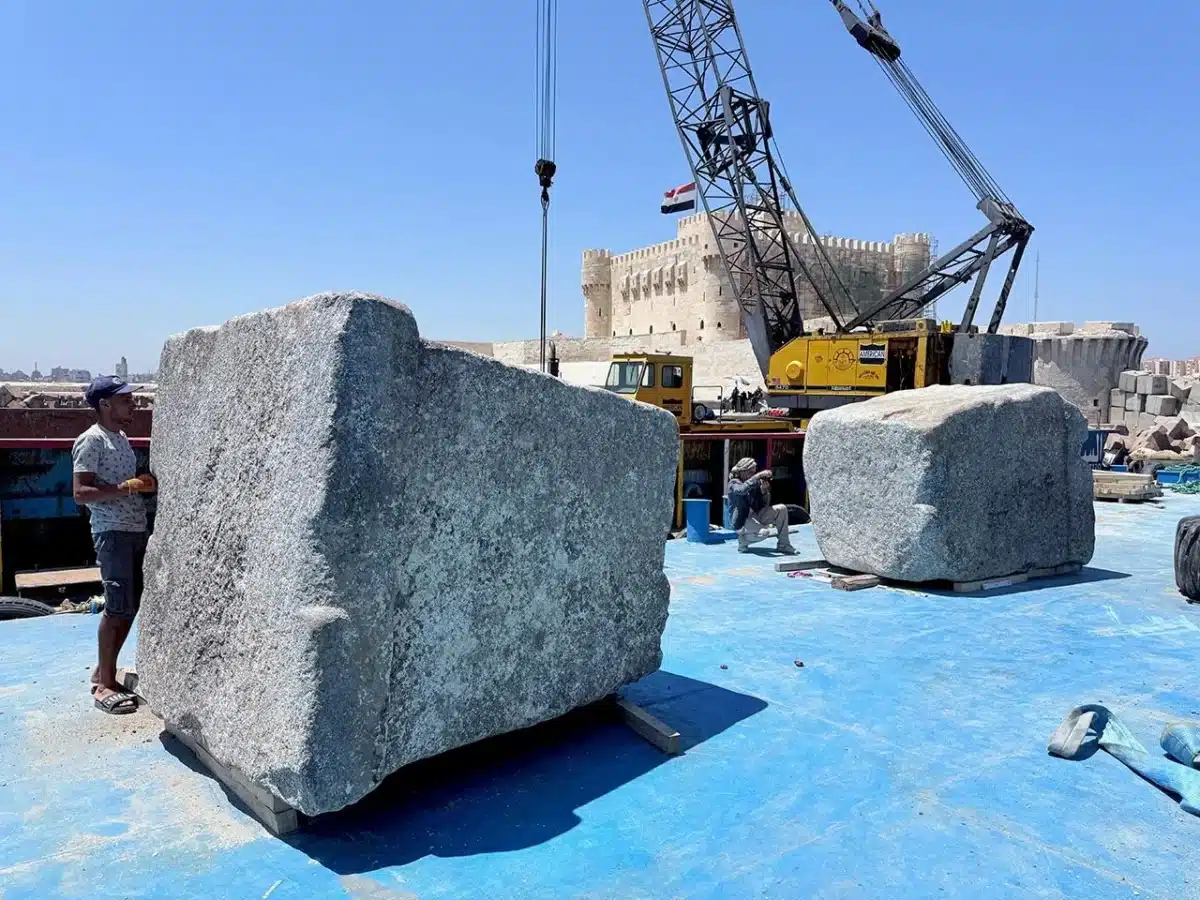
Судлаачид эртний дэлхийн долоон гайхамшгийн нэг болох Александрын гэрэлт цамхгийн архитектурын бүтцийг дахин бүтээн байгуулах зорилгоор далайн ёроолоос аварга том чулуун блокуудыг татан гаргажээ.
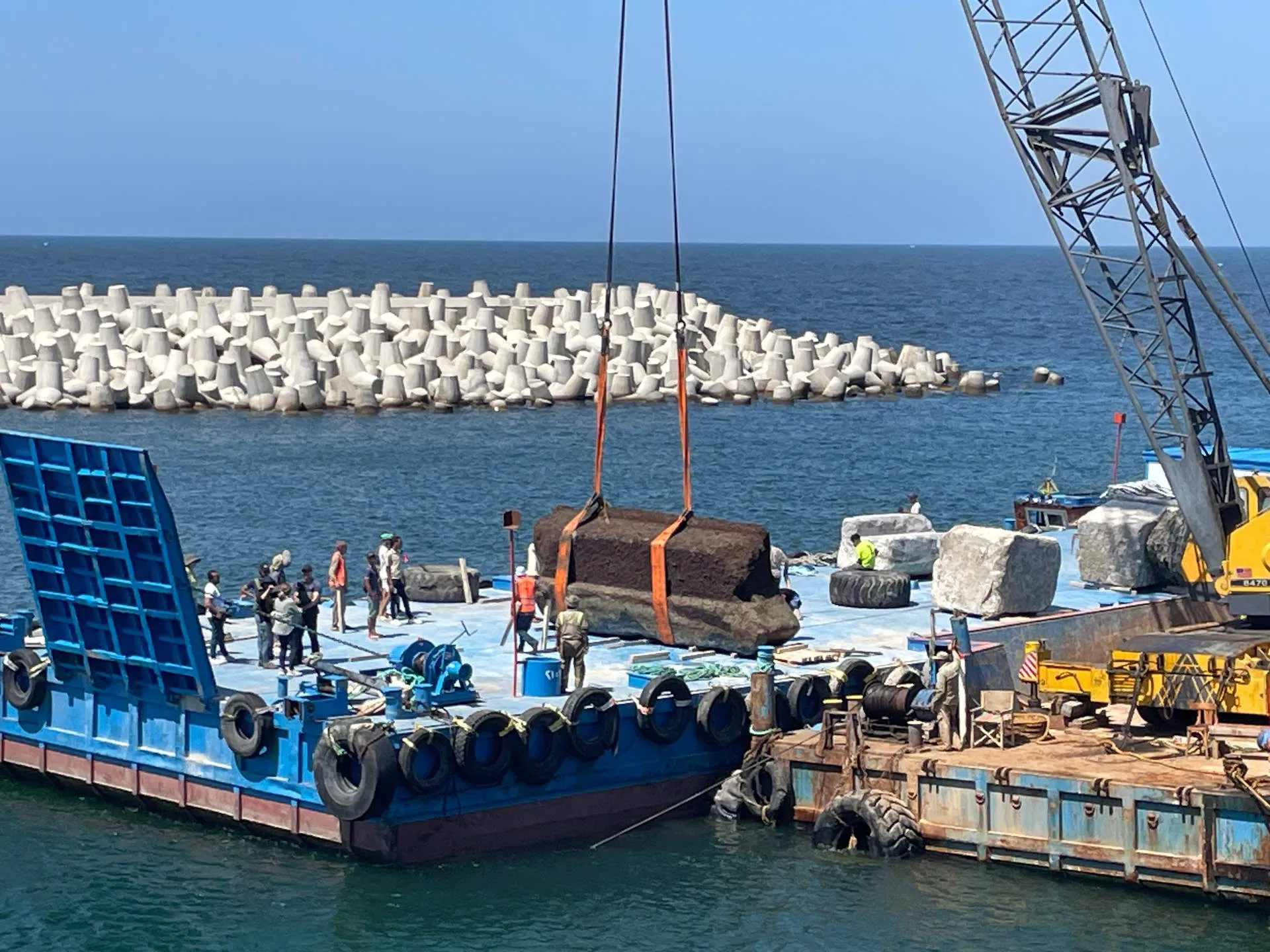
Францын Шинжлэх ухааны судалгааны үндэсний төвийн (CNRS) археологич Изабель Эригийн удирдсан баг Египетийн Александрия хотын эрэг орчмын Газар дундын тэнгисийн ёроолоос 70-80 тонн жинтэй 22 чулуун блокийг татан гаргав. Эдгээр олдвор дунд хаалганы хөндлөвч, босго, суурийн хавтангууд болон Египет маягийн хаалгатай пилон зэрэг эртний Хелленист үеийн архитектурын чухал элементүүд илэрсэн нь уг байгууламжийн гол хаалганы хэсэг байсан байж болзошгүй гэж судлаачид үзэж байна.
Уг ажиллагаа нь 1995 оноос хойш үргэлжилж буй PHAROS хөтөлбөрийн хүрээнд хийгдэж байгаа бөгөөд олдворуудыг өндөр нарийвчлалтай фотограмметрийн аргаар сканнердаж, гурван хэмжээст загварчлал бүтээхэд ашиглаж байна. Dassault Systèmes Foundation-ийн дэмжлэгтэйгээр инженерүүд өмнө нь дижитал хэлбэрт шилжүүлсэн 100 гаруй блокийн мэдээлэл дээр тулгуурлан гэрэлт цамхгийг виртуал орчинд эвлүүлэн угсрах судалгааг хийж байна. Энэхүү дижитал ихрийн загвар нь уг байгууламжийн анхны төрх болон түүнийг хэрхэн барьж, сүйрсэн талаарх таамаглалыг шинжлэх ухааны үндэслэлтэйгээр шалгах боломжийг олгох юм.
МЭӨ III зуунд Птолемей I Сотерын зарлигаар босгосон уг гэрэлт цамхаг нь 100 гаруй метр өндөртэй, тухайн үеийн хамгийн өндөр барилгуудын нэг байв. Олон зууны турш газар хөдлөлтөд өртөж суларсан уг байгууламж 1303 оны газар хөдлөлтийн дараа бүрэн сүйрч, үлдэгдлийг нь 1477 онд Кайтбей цайзыг барихад ашигласан байна. Тэнгисийн ёроолд хадгалагдан үлдсэн чулуунууд нь дундад зууны үеийн барилгачдын гар хүрээгүй тул эртний архитектурын нарийн хийцийг хадгалж үлджээ.
Дэлгэрэнгүйг эх сурвалжаас харах
↓Эх сурвалжийг нээх ↓
The blocks had been on the seabed for centuries. Now, 22 of them have been lifted from the Mediterranean off the coast of Alexandria, each weighing between 70 and 80 tons, in an operation that researchers say marks a significant step toward digitally reconstructing the Lighthouse of Alexandria, one of the seven wonders of the ancient world.
The mission was led scientifically by Isabelle Hairy, an archaeologist and architect at France’s Centre national de la recherche scientifique (CNRS), through its permanent unit in Egypt, the Centre d’Études Alexandrines (CEAlex). Egypt’s Ministry of Tourism and Antiquities oversees the excavation. The Dassault Systèmes Foundation has funded it for the past three years.
Blocks From the Lighthouse Entrance
Among the recovered pieces are monumental door lintels, doorjambs, a threshold, large base slabs, and elements of a structure the project had not previously identified: a pylon with an Egyptian-style door from the Hellenistic period. The team believes this group of elements formed the lighthouse’s monumental entrance, an architectural zone where Egyptian and Greek design traditions intersected.
Getting them out of the water required a barge and crane. French production company GEDEON Programmes funded both for the current mission.
The Dassault Systèmes Foundation notes that the lifted blocks will be studied and scanned, joining a collection of more than 100 blocks already digitized underwater over the last decade. Each piece goes through high-precision photogrammetry, a technique that constructs accurate three-dimensional models from overlapping photographs, before engineers can begin working with it virtually.
Thirty Years of Work Beneath the Surface
The site has been known since 1968, when the ruins were first observed on the seabed. Systematic investigation took longer to get going.
In 1995, archaeologist Jean-Yves Empereur of the CEAlex led a mission that formally identified and cataloged the submerged remains. Before that, a 1994 campaign had already counted more than 3,300 objects on the seabed: sphinxes, obelisks, columns, granite blocks, all tied to the lighthouse and the structures around it. The current lifting operation is the latest in nearly three decades of continued work at the site, but it has produced some of the largest pieces extracted so far.
The archaeological effort runs under what the project calls the PHAROS program, led by Hairy and funded by the Dassault Systèmes Foundation. It is separate from an EU marine biodiversity initiative that shares the name. This PHAROS brings together historians, numismatists, archaeologists, and architects with a specific goal: collecting ancient depictions and written descriptions of the lighthouse from the late fourth century BCE through its destruction in the early 15th century CE. Those sources help fill the gaps the fragmented physical remains cannot.
A Puzzle Built in Virtual Space
After photogrammetric processing, the block data goes to volunteer engineers working with the Dassault Systèmes Foundation. They approach the reconstruction as an enormous puzzle: each block has to be analyzed and placed virtually in relation to all the others, using scientific simulations and virtual environments to test different hypotheses about how the lighthouse was built and, eventually, how it fell.
The goal is a digital twin of the structure, one detailed enough for visitors to move through as if they were standing on the island of Pharos itself.

Physical evidence alone cannot get them there. Ancient written accounts and visual representations spanning roughly 1,800 years supplement what the seabed has yielded. The Dassault Systèmes Foundation points out that no major ancient lighthouse survives today, making Alexandria’s the only reference point for understanding what the building type looked like from the ground up and how it was engineered.
Built in the Third Century, Destroyed Over Centuries
Ptolemy I Soter commissioned the lighthouse at the start of the third century BCE. Sostratus of Cnidus designed it. Standing on the island of Pharos off Alexandria’s coast, it reached more than 100 meters, placing it among the tallest structures humans had built to that point. The Dassault Systèmes Foundation describes it as humanity’s first skyscraper. For over a millennium, its light helped sailors find the port of Alexandria across the eastern Mediterranean.
Earthquakes weakened it progressively. A major seismic event in 1303 left the structure beyond repair. What remained standing was quarried over the following century and a half for building material elsewhere. By 1477, much of what was left had been incorporated into the Qaitbay Citadel, built on the same site.
The stones that ended up underwater largely escaped that medieval salvage. They have sat on the seabed since the structure’s collapse, preserving architectural detail that the citadel’s builders never touched.
GEDEON Films the Operation
GEDEON Programmes has been part of this story since 1995, when the company co-financed Empereur’s mission and produced the documentary “The Seventh Wonder of the World,” broadcast on France 2 and internationally on the BBC, PBS, ZDF, RAI, and NHK.
Three decades later, the company returned to fund the barge and crane for the current operation. Its teams, led by director Laurence Thiriat, filmed the entire lifting sequence for a 90-minute documentary scheduled to premiere in prime time on France Télévisions.
Enjoyed this article? Subscribe to our free newsletter for engaging stories, exclusive content, and the latest news.

