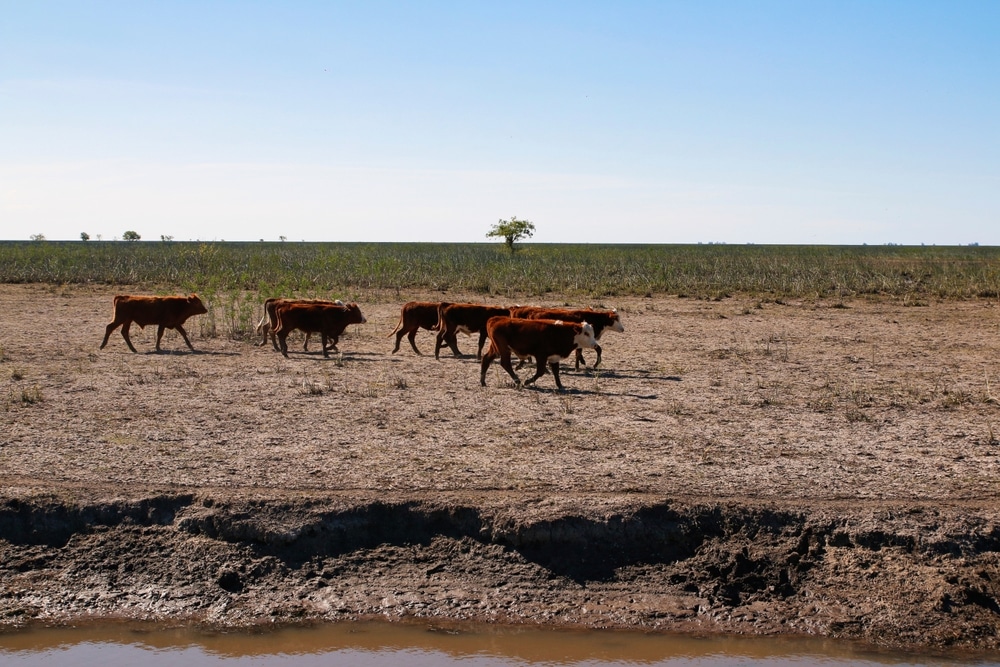
Эрдэмтэд 1871 онд тусгаарлагдсан арал дээр үлдсэн цөөн тооны үхрийн ДНХ-г шинжилж, тэдний удамшил болон биеийн жижиг хэмжээний шалтгааныг тогтоов.
1871 онд Амстердам арал дээр орхигдсон таван үхэр 140 орчим жилийн турш 2,000 толгой хүртэл өсөж, зэрлэгшсэн сүрэг болжээ. 2010 онд уг сүргийг устгахаас өмнө цуглуулсан 18 үхрийн генетикийн материалд хийсэн 2024 оны судалгаагаар тэдний удамшлын бүтцийг бүрэн сэргээн тогтоосон байна. Молекул биологи ба хувьслын чиглэлээр хийгдсэн уг шинжилгээгээр эдгээр үхэр нь европ үхэр болон Энэтхэгийн далайн зэбү үхрийн эрлийз болох нь тогтоогджээ.
Геномын судалгаагаар сүргийн 75 орчим хувь нь европ үхрийн, үлдсэн хэсэг нь зэбү үхрийн удамтай болохыг харуулсан бөгөөд энэхүү холимог гарал нь арал дээр ирэхээс өмнө бүрэлдсэн байж болзошгүй байна. Хэдийгээр цөөн тооны үхрээс үүдэлтэй генетикийн “нарийн хүзүүний” (bottleneck) үеийг туулсан ч сүрэг нь генетикийн олон янз байдлаа харьцангуй сайн хадгалж чаджээ. Энэхүү олон янз байдал нь сүргийг удаан хугацаанд мөхөхөөс хамгаалсан гол хүчин зүйл болсон гэж судлаачид үзэж байна.
Өмнөх судалгаануудад Амстердам арлын үхрүүд тусгаарлагдсан орчинд амьдарсны улмаас биеийн хэмжээ нь жижгэрсэн хэмээн таамаглаж байв. Гэвч шинэ шинжилгээгээр тэдний өвөг дээдэс болох Жерси болон Мадагаскар зэбү үхрүүд нь анхнаасаа жижиг биетэй байсныг тогтоожээ. Иймд энэ нь тусгаарлагдсан орчны нөлөөгөөр биеийн хэмжээ багассан гэхээс илүүтэй удамшлын шинж чанартай болохыг харуулж байна.
Судлаачид мөн зэрлэгшсэн сүргийн геномоос мэдрэлийн систем болон зан авирын өөрчлөлттэй холбоотой генүүдийг илрүүлсэн нь гэрийн тэжээмэл амьтан зэрлэгших үйл явц хэрхэн явагдсаныг гэрчилж байна. 2010 онд арлын экосистемийг хамгаалах зорилгоор сүргийг бүрмөсөн устгасан ч хадгалагдан үлдсэн ДНХ-ийн дээж нь уг өвөрмөц бүлгийн түүхийг шинжлэх ухааны хувьд нээлттэй үлдээжээ.
Дэлгэрэнгүйг эх сурвалжаас харах
↓Эх сурвалжийг нээх ↓
When five cattle arrived on Amsterdam Island in 1871, there was little margin for genetic error. Cut off on a remote island and descended from only a handful of founders, the animals nevertheless established a feral herd that eventually numbered about 2,000.
The population endured for nearly 140 years before the last cattle were killed in 2010. By then, researchers had preserved genetic material from 18 animals — samples that would later make it possible to reconstruct how such a severely bottlenecked population had persisted.
That reconstruction produced an unexpected result. A 2024 study in Molecular Biology and Evolution found that the cattle carried a mixture of European taurine and Indian Ocean zebu ancestry, giving the tiny founding population more genetic variation than its head count alone suggested. The analysis also challenges an earlier explanation for another distinctive feature of the herd: its small body size.
Mixed Ancestry Survived an Extreme Genetic Bottleneck
Researchers analysed genetic material from 18 Amsterdam Island cattle. Twelve had been sampled in 1992 and six in 2006, with eight of the older samples containing enough preserved DNA for whole-genome sequencing.
The genomes pointed to a mixed origin. An ancestry model estimated that about 75% of the population’s genome came from a source related to European taurine cattle, with the remainder linked to Indian Ocean zebu. Among the European breeds studied, Jersey cattle were among the closest genetic matches.
The mixture appears to predate the cattle’s arrival on Amsterdam Island. All eight animals with whole-genome data also carried a mitochondrial haplogroup found in African cattle, including African zebus. The researchers said this supports the possibility that the founders had already mixed with local breeds before they were transported from La Réunion.
That ancestry mattered because the herd began with so few animals. Genetic reconstruction detected a severe population bottleneck consistent with the historical record of five founders in 1871, followed by rapid population growth.
Historical records cited in the study put the herd at roughly 2,000 cattle in both 1952 and 1988.
Even after generations of isolation and high inbreeding, the genomes showed only a moderate reduction in genetic diversity. The researchers also found no significant evidence that highly deleterious genetic variants had been purged from the population.
MedlinePlus Genetics describes genome sequencing as a way of determining the order of DNA building blocks across the genome, allowing researchers to examine genetic variation on a much broader scale than tests focused on individual genes.
The Cattle May Not Have Become Smaller on the Island
The Amsterdam cattle were noticeably small, and an earlier study offered one explanation.
A 2017 paper in Scientific Reports, based on measurements from 90 adult cattle, described the population as an example of rapid dwarfing in an isolated mammal population.
The genomic evidence points elsewhere.
The 2024 study linked the Amsterdam cattle to populations that were already relatively small, particularly Jersey cattle and Madagascar zebu. The researchers found that the recorded dimensions of the island animals were consistent with those ancestral groups without requiring a rapid reduction in body size after isolation.

They also examined genetic variants associated with adult height. Predicted height values for the sequenced Amsterdam cattle fell between those calculated for Madagascar zebu and Jersey cattle and well below those for Holsteins.
Crucially, the researchers found no evidence that natural selection had enriched variants associated with short stature in the island herd.
The study therefore argues against insular dwarfism as the main explanation for the cattle’s size. Instead, it concludes that the animals were probably small largely because their ancestors were already small.
Feral Life Left Signals in the Genome
Body size was not the only trait the researchers examined. The herd had spent generations without domestic management, allowing the team to look for genetic signals associated with the transition from domesticated cattle to a self-sustaining feral population.
Many of the candidate genes found in regions showing signs of selection were related to nervous-system function and development. The authors said those signals were consistent with behavioural changes accompanying feralization, although the number of sequenced animals was limited.

Historical observations cited in the study described a structured social system. Females and younger males formed some groups, adult and subadult males formed others, and mixed groups appeared around the reproductive season.
The researchers treated the genetic connection cautiously. Their results describe feralization as a complex process rather than a straightforward reversal of domestication.
Conservation Efforts Ended the Herd in 2010
The cattle survived their genetic bottleneck, but they did not remain on Amsterdam Island indefinitely.
Concerns about their effects on endemic species and the island ecosystem led to control and restoration measures. The Agreement on the Conservation of Albatrosses and Petrels reported that shooting and fencing were used during conservation work on the island.
The final cattle were killed in 2010. Restoration efforts also included planting the indigenous Phylica arborea tree and removing selected introduced plants.
No biological samples were deliberately collected during the final eradication, according to the genomic study. The genetic reconstruction was possible because samples from 18 cattle collected in 1992 and 2006 had already been preserved, leaving a record of a herd that began with five founders in 1871 and survived until 2010.
Enjoyed this article? Subscribe to our free newsletter for engaging stories, exclusive content, and the latest news.

