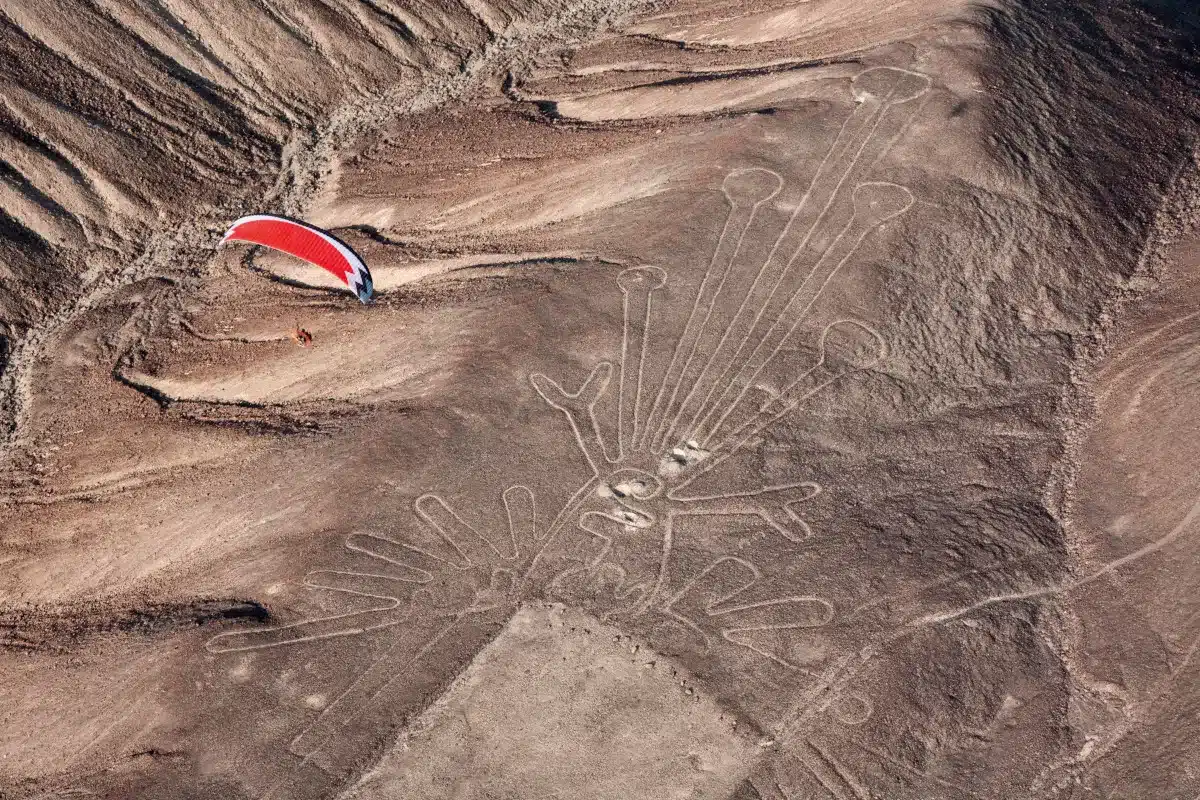
Судлаачид хиймэл оюун ухааны тусламжтайгаар Наскагийн цөлд урьд өмнө бүртгэгдээгүй 303 шинэ геоглифийг нээсэн нь уг олдворуудын тоог бараг хоёр дахин нэмэгдүүллээ.
Перугийн Наска Пампа бүс нутагт хийсэн судалгааны баг 629 хавтгай дөрвөлжин километр талбайг хамарсан өндөр нарийвчлалтай агаарын гэрэл зургуудыг хиймэл оюун ухааны загвараар шинжилжээ. Уг загвар нь байгалийн гэрэл зургийн санд тулгуурлан сургагдсан бөгөөд олон арван мянган боломжит байршлаас археологийн ач холбогдолтой байж болох 1309 цэгийг ялган гаргасан байна. 2022 оны есдүгээр сараас 2023 оны хоёрдугаар сарын хооронд үргэлжилсэн хээрийн шинжилгээний ажлын үр дүнд 303 шинэ дүрс, мөн 42 геометрийн дүрс илэрснийг “Proceedings of the National Academy of Sciences” сэтгүүлд 2024 оны есдүгээр сарын 23-нд нийтэлжээ.
Шинээр илэрсэн дүрсүүдийн 81.6 хувь нь хүн эсвэл хүний үйл ажиллагаатай холбоотой зүйлсийг дүрсэлсэн байдаг нь өмнө нь мэдэгдэж байсан том оврын геоглифүүдээс эрс ялгаатай юм. Том оврын дүрсүүдийн 64 хувь нь зэрлэг амьтдыг дүрсэлсэн байдаг бол жижиг оврын дүрсүүдэд хүн дүрст болон толгойн дүрсүүд, гаршуулсан тэмээний төрлийн амьтад зонхилж байна.
Судалгааны багийн ахлагч, Ямагата их сургуулийн профессор Масато Сакай болон түүний хамтран ажиллагсад эдгээр дүрсүүдийн байршил, зориулалтын ялгааг тогтоожээ. Жижиг оврын дүрсүүд нь эртний жимүүдийн ойролцоо байрладаг тул хувь хүмүүс эсвэл жижиг бүлгүүдийн харилцааны хэрэгсэл байсан байх магадлалтай гэж судлаачид таамаглаж байна. Харин илүү том хэмжээтэй дүрсүүд нь геометрийн шугамуудтай ойр оршдог тул олон нийтийн зан үйлийн зориулалтаар бүтээгдсэн байж болзошгүй юм.
Дэлгэрэнгүйг эх сурвалжаас харах
↓Эх сурвалжийг нээх ↓
Some of the hardest Nazca figures to find are also among the smallest. Unlike the vast line-type designs that can stretch across the desert, relief-type geoglyphs average about 9 meters and can be difficult to distinguish in aerial imagery.
Researchers searching Peru’s Nazca Pampa used artificial intelligence to narrow tens of thousands of possible locations into a much smaller set worth inspecting on the ground. The system analyzed high-resolution aerial imagery across 629 square kilometers, producing candidate locations that archaeologists could check in person.
That approach led to the confirmation of 303 previously unknown figurative geoglyphs during six months of fieldwork, nearly doubling the number of known relief-type figurative designs. The results were published on September 23, 2024, in the Proceedings of the National Academy of Sciences.
Before the project, researchers had documented 430 figurative Nazca geoglyphs: 380 relief-type figures and 50 much larger line-type figures. The new discoveries brought the total used in the study to 733 figurative geoglyphs, including 683 relief-type examples.
AI Cuts Down a Vast Archaeological Search
The challenge was not simply recognizing a familiar shape in a photograph. Researchers had only a few hundred known relief-type geoglyphs available for training, so they used an AI model pretrained on natural photographs and then fine-tuned it for the archaeological material.
The model generated 47,410 candidate boxes that might contain geoglyphs. Researchers examined those candidates visually and selected 1,309 as having high potential.
Field teams then used that shortlist to decide where to investigate. From September 2022 through February 2023, researchers visited 341 locations under permission from Peru’s Ministry of Culture.
Screening the AI results took about 1,200 labor hours. Field verification required another 1,440.

Of the 303 newly confirmed figures, 178 had been individually suggested by the AI. Another 66 were found in groups where the system had directed researchers to at least one geoglyph. The remaining 59 were identified during fieldwork or screening without an AI-predicted location.
The survey also documented 42 previously unknown geometric geoglyphs.
The Smaller Figures Depict a Different Set of Subjects
With hundreds of additional examples documented, researchers could compare the smaller relief-type figures with the much larger line-type designs.
Among the relief-type geoglyphs, 81.6% depict humans or things modified by humans. Humanoids account for 33.8%, decapitated heads for 32.9%, and domesticated camelids for 14.9%. Wild animals make up 6.9%.

The 50 known line-type figurative geoglyphs have a different distribution. Sixty-four percent depict wild animals, according to the study.
Newly documented relief-type figures include humanoids, human heads, camelids, killer whales, birds and felines. Researchers also recorded scenes involving interactions between humans and animals.
Masato Sakai, a distinguished research professor at Yamagata University and an author of the study, lists the work among his publications on his ResearchGate profile. The research also involved collaborators including IBM Research.
Relief-Type Figures Cluster Near Ancient Trails
The expanded inventory also gave researchers more evidence about where the two kinds of figurative geoglyphs appear across the Nazca Pampa.
Groups of relief-type geoglyphs were found an average of 43 meters from the nearest ancient trail. Individual figures outside groups could be seen from those trails, while some grouped figures became visible only after people approached other geoglyphs in the same group.
The researchers suggest that these smaller figures were most likely created and viewed by individuals or small groups and may have communicated information connected with the human activities depicted in them. The paper does not present that interpretation as the only possible function.
The much larger line-type figurative geoglyphs show a different relationship with the landscape. They lie an average of 34 meters from the nearest line or trapezoid in the formal geometric network. The researchers suggest they were probably created and used at the community level for ritual activities.
The contrast extends beyond size: the two types differ in their subjects, their locations and the routes with which they are associated.
Enjoyed this article? Subscribe to our free newsletter for engaging stories, exclusive content, and the latest news.

