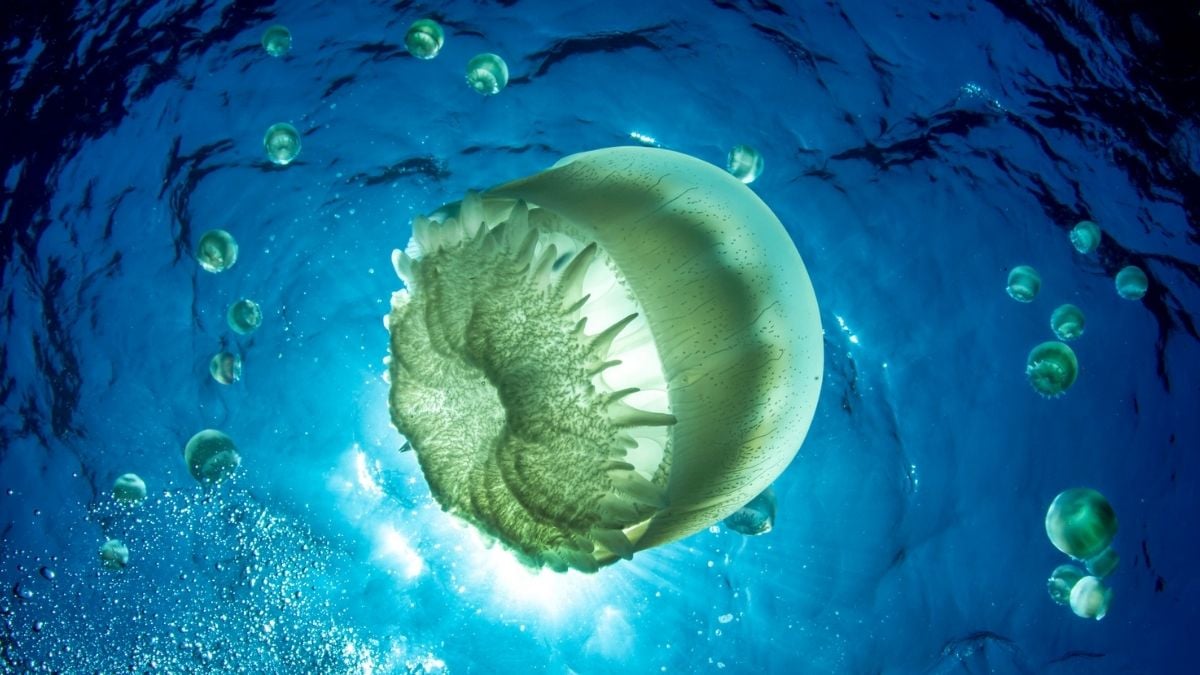
Францын цөмийн цахилгаан станцын үйл ажиллагааг далайн залхаг бөглөж зогсоосон нь уур амьсгалын өөрчлөлт зэрлэг амьтдын зан төлөв болон тархалтад хэрхэн нөлөөлж буйг харуулж байна.
Францын Гравелин цөмийн цахилгаан станцын хөргөлтийн системд далайн залхаг ихээр хуримтлагдсаны улмаас реакторуудын ажиллагааг дахин зогсоожээ. Уур амьсгалын өөрчлөлтөөс үүдэлтэй усны температурын өсөлт нь залхагны идэш тэжээл болох планктоны хэмжээг нэмэгдүүлж, тэдний үржлийн хугацааг сунгаснаар ийнхүү олноор үзэгдэх болсон байна. Станцын оператор EDF компани залхагны нүүдлийг хянахын тулд загас агнуурын хөлөг онгоцуудыг эргүүл хийлгэх арга хэмжээ авчээ.
Амьтад хүний дэд бүтцэд саад учруулсан тохиолдол зөвхөн үүгээр хязгаарлагдахгүй. Тухайлбал, АНУ-ын Коннектикут мужид нэгэн элбэнх цахилгаан дамжуулах дэд станцад нэвтэрсний улмаас олон мянган хэрэглэгч цахилгаангүй болж байв. Мөн Вашингтон дахь Гравитацын долгионы ажиглалтын төвд (LIGO) хэрээнүүд хөргөлтийн хоолойг тогшиж, мэдээллийн алдаа үүсгэж байсан тохиолдол бий.
Эрдэмтдийн үзэж буйгаар эдгээр явдал нь хүн төрөлхтний үйл ажиллагаа байгаль орчин, амьтдын амьдрах орчинд хэрхэн гүнзгий нөлөөлж байгааг сануулж байна. Бали аралд макаку сармагчингууд хүмүүсийн эд зүйлийг хулгайлж, хоолоор солилцох замаар “наймаа” хийж сурсан нь амьтдын дасан зохицох чадвар хувьсан өөрчлөгдөж буйн нэгэн илрэл юм. Хүн ба зэрлэг амьтдын хоорондын энэхүү зөрчил нь экосистемийн тэнцвэрт байдал алдагдаж буйн дохио гэж судлаачид дүгнэж байна.
Дэлгэрэнгүйг эх сурвалжаас харах
↓Эх сурвалжийг нээх ↓
It seems animals may have had just about enough of human activity and technology.
Jellyfish have shut down a nuclear reactor in northern France for the second time, and it’s far from the only attack nature has launched on our infrastructure in recent years.
Whether the gloopy marine creatures were taking aim at French energy policy or simply got lost isn’t clear – there’s been no official comment from their side.
However, given that this has happened two years in a row, and on exactly the same date each time, it does feel rather coordinated.
As Politico reports, the Gravelines nuclear power plant spent hundreds of thousands of euros in 2025 to stop this happening again, only to see a repeat 12 months later.
The shutdown happened as a precautionary measure after an overload of jellyfish clogged up the pumping systems that the plant relies on to function.
All jokes aside, the incident is a serious consequence of climate change.
Increasing temperatures in the water can produce more of the plankton and animals that jellyfish feed on, as well as accelerating life cycles and extending breeding seasons.
French utility provider EDF says that fishing vessels are now patrolling the waters around the clock in order to keep jellyfish blooms away from the nuclear power plant. Full-capacity operations are expected to return in the coming days.
It’s not just jellyfish that have a habit of disrupting human energy infrastructure.
Last year in Connecticut, a single raccoon caused more than a thousand power outages, as reported by CT Insider.
It’s not clear exactly what the raccoon did, but we do know it somehow got into a substation and caused damage to the equipment in there.
The unwitting act of sabotage left more than 2,500 customers in the area without power at one stage – though repairs were swiftly carried out.
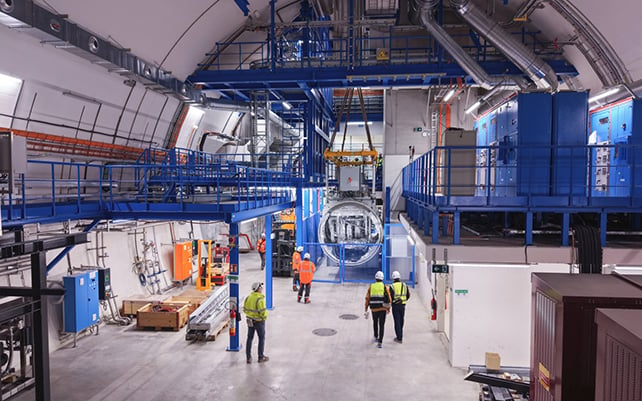
Sometimes these kinds of animal accidents strike closer to the heart of science – such as the Laser Interferometer Gravitational-Wave Observatory (LIGO) in Washington.
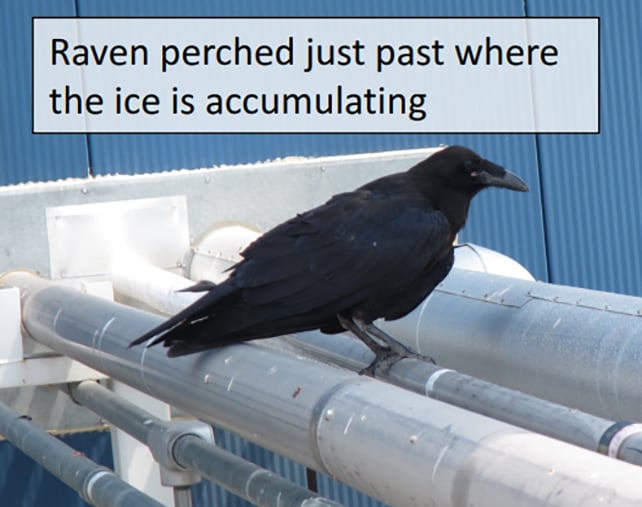
Here, as the logbooks from July 2017 record, ravens getting refreshment by pecking at an ice-covered cooling pipe were causing vibrations that affected the delicate instruments at the observatory. The bird pecks were essentially leading to glitches in the data.
After suspecting ravens could be to blame for certain aberrations in the observatory’s measurements, researchers on site captured photos of the birds in the act. What’s more, when pecks on the pipe were created artificially by the observatory team, they led to the same data glitches as before.
The site was then adapted to present freezing on the cooling pipes, reports Forbes – which meant the ravens had to drink somewhere else.

Then there’s the mysterious case of the CERN baguette.
A 2009 bulletin for the CERN particle physics laboratory (where the Large Hadron Collider is based) explains the incident, where a power cut in the site’s cryogenic systems needed repairs across a couple of days to be carried out.
No one really knows what caused the power cut, but feathers and a piece of bread were found at the scene. The popular theory is that a small piece of baguette may have interfered with the machinery somewhere along the line.
As entertaining as these stories might be, they’re also a reminder of the way human activity is encroaching on the natural world around us.
Without meaning to, we’re giving animals our diseases, changing their habitats, and shifting their behavior in numerous ways.
Related: Animals Are Thriving in Chornobyl’s Human-Free Zone, Study Finds
With that in mind, some pushback is perhaps to be expected.
A 2022 study published in Scientific Reports, from researchers in the US and Indonesia, detailed how macaque monkeys in Bali have learned to rob items from humans and then barter for food before returning them.
From jellyfish to monkeys, and electricity substations to gravity wave detectors, there are signs the animal kingdom isn’t best pleased with Homo sapiens.
This article was fact-checked by Rachel Garner and edited by Peter Dockrill. While we pride ourselves on our process, we are only human. If you spot a mistake, please let us know.

