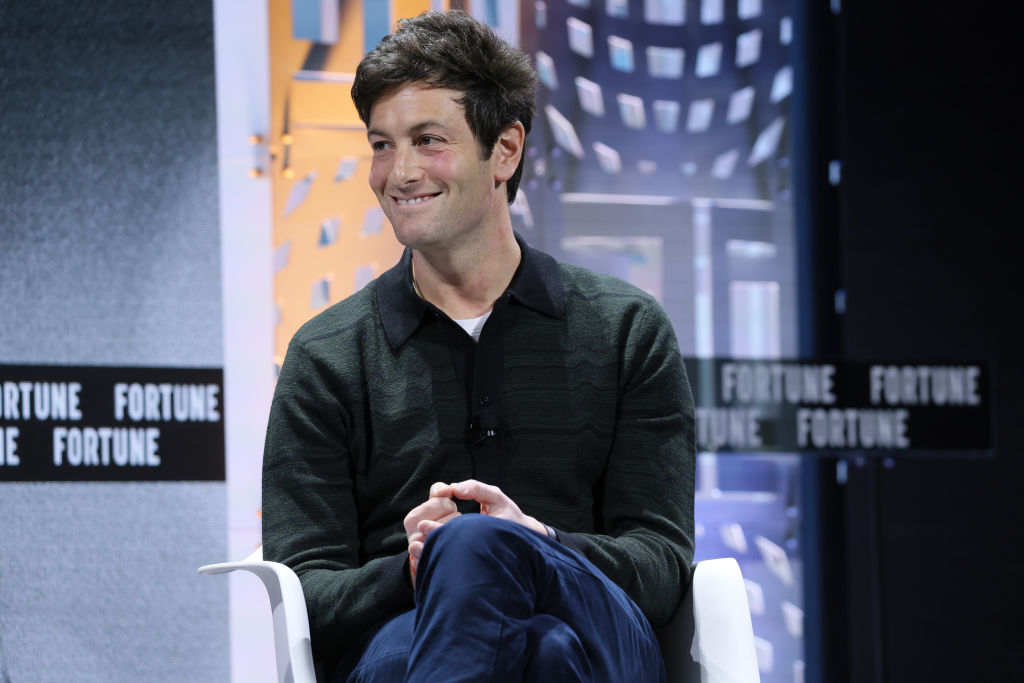
Хөрөнгө оруулалтын Thrive Capital сангийн удирдлага хиймэл оюун ухааны технологийн өсөлтөд тулгуурласан хэт өөдрөг үзэл нь хөрөнгө оруулалтын сахилга батыг сулруулж болзошгүй гэж үзжээ.
Thrive Capital-ийн үүсгэн байгуулагч Жошуа Кушнер анх удаагаа хөрөнгө оруулагчиддаа илгээсэн захидалдаа Силиконы хөндийн хөрөнгө оруулагчдын хиймэл оюун ухаанд хандах хандлагыг шүүмжилсэн байна. Тэрээр салбарынхан технологийн үндсэн чиглэлээс илүүтэй ач холбогдол багатай өөрчлөлтүүдэд хэт төвлөрч байгааг онцлоод, зах зээлийн хөөсрөл нь хөрөнгө оруулалтын бодит дүгнэлтийг орлох ёсгүй гэжээ. Түүний удирддаг Нью-Йорк хотод төвтэй тус сан нь олон тооны стартап руу бага хэмжээний хөрөнгө оруулалт хийх “spray-and-pray” стратегийг үгүйсгэж, өөрсдийн сонгосон цөөн тооны компаниудад их хэмжээний хөрөнгө төвлөрүүлэх бодлогыг баримталдаг байна.
Thrive Capital нь OpenAI, Anduril, SpaceX зэрэг компаниудад эрт үеэс хөрөнгө оруулсан бөгөөд 2022 онд байгуулсан 516 сая долларын сан нь зургадугаар сарын эцсийн байдлаар 3.7 тэрбум долларын үнэлгээнд хүрсэн байна. Тус сан нь нийт 60 тэрбум долларын хөрөнгийг удирдаж байгаа бөгөөд сүүлийн 12 сарын хугацаанд хөрөнгө оруулагчиддаа нэг тэрбум гаруй долларын ашгийг эргүүлэн олгожээ. Мөн 2025 оны арванхоёрдугаар сард OpenAI компани Thrive Holdings-д хөрөнгө оруулалт хийснээр хоёр тал хамтын ажиллагаагаа гүнзгийрүүлж, хиймэл оюун ухааныг бизнесийн үйл ажиллагаанд нэвтрүүлэх чиглэлээр ажиллаж байна.
Кушнер нь Силиконы хөндийн хөрөнгө оруулалтын үндсэн зарчим болох олон стартапаас цөөн хэдэн “амжилттай” компани тодрохыг хүлээх үзлийг үгүйсгэж, зах зээлийг дотроос нь өөрчлөх боломжид илүүтэй анхаарч байна. Түүний үзэж буйгаар хурдацтай өсөж буй бүх бизнес онцгой байж чадахгүй тул хөрөнгө оруулагчид үнийн хэт өсөлт болон компанийн бодит үнэ цэнийг ялгаж салгах үүрэгтэй аж.
Дэлгэрэнгүйг эх сурвалжаас харах
↓Эх сурвалжийг нээх ↓
In Thrive Capital’s first-ever investor letter, founder Joshua Kushner has some unexpected things to say about his venture capital rivals on the West Coast.
“It is difficult to overstate the magnitude of the opportunity,” Kushner wrote about AI in the letter, leaked to Bloomberg. “It would also be a grave error in our minds to let excitement weaken our investment discipline. … Within Silicon Valley in particular, the industry can become fixated on hyperincremental technological turns rather than where the technology ultimately leads.”
While his secretive New York-based firm, just like those in Silicon Valley, is betting heavily on AI, Thrive is doing so differently, he argues. There’s no so-called spray-and-pray investing. Thrive tends to goes big on the companies it backs. Bloomberg estimates about 90% of its capital is poured into the top 15 investments in each fund.
That makes Thrive, he contends, a company of independent thinkers. “We are independent because markets move between fear and enthusiasm, and neither is a substitute for judgment.”
His comments are in direct contrast to one of the basic premises of Silicon Valley venture capital: that it is a business of “outliers” as espoused by Marc Andreessen.
In the “outlier” view, a VC firm makes a lot of bets prepared to lose money on many — even most — of them. The few big hits will be so lucrative that they will cover the losers and much, much more. That philosophy leaves VCs forever looking for the next OpenAI or another mega hit. It can also lead to, as we saw during the post-pandemic lean years, cutting ongoing support for startups not deemed to be on track to be the biggest winners.
In contrast, Kushner writes, “We believed an investment firm could be opportunistic across stage, sector, and geography, while remaining deeply concentrated in a small number of people and ideas.” The idea is to “build Thrive to concentrate our time, capital, and energy on the people and ideas we believe in most.”
He also dismisses Silicon Valley’s idea that VCs are in the business of disrupting incumbents.
“Unlike many of our peers, our conviction was not only that these industries would be disrupted from the outside in but also that many would be transformed from the inside out,” he wrote about AI’s impact.
Thrive has largely stuck to this thesis. Its deepening relationship with OpenAI is its biggest example. The VC firm is a major investor in the AI lab. But in December 2025, the roles switched when OpenAI took an ownership stake in Thrive Holdings, the VC firm’s spinout. Thrive Holdings buys companies and then works with OpenAI to give them an AI makeover. Part of the deal involved OpenAI dedicating employees to work with Thrive’s companies.
Thrive Holdings has bought more than 70 businesses and has a team of 35 engineers. Kushner says its accounting platform uses agents to produce tax returns 30% faster with 98% accuracy, and its IT services firm has agents independently solving half of its help desk tickets.
Still, Thrive’s strategy is working in part because it nabbed stakes in some of the industry’s best-performing startups ever. Its $516 million 2022 early-stage fund, for instance, made early bets on OpenAI, Anduril, and SpaceX, and is now worth more than $3.7 billion as of the end of June, Bloomberg reports. Thrive has, over its 15 years, increased its stakes in all of them (and also had a sizeable stake in Cursor, which just closed its sale to SpaceX).
It has also backed Wiz, Ramp, and Stripe, to name a few other big names. Plus, it has led seed investments in new labs like Essential AI, founded by former Google Brain researcher Ashish Vaswani,the lead writer of the famed “Transformers” paper that spawned today’s AI industry.
All told, Thrive has $60 billion of assets under management, Kushner revealed in the letter. He reports impressive profits: a gross internal rate of return (IRR) across all funds of 41% and a net IRR of 33%. Thrive has returned more than $1 billion of liquidity to its investors in the last 12 months alone, he said.
“There may be an opportunity for billions of dollars in additional liquidity in the coming quarters,” he promises.
He doesn’t specify which companies are headed for their exits but obviously, the SpaceX IPO was a start, and OpenAI is working toward its own public debut.
It should be pointed out that both Kushner’s and Andreessen’s approaches obviously work in terms of making money. Andreessen Horowitz returned $25 billion to its investors between 2009 and 2025, according to the last leaked returns, reported by Eric Newcomer.
Thrive’s philosophy of concentrating capital may not even be possible for most smaller, scrappy emerging seed funds, whose founders weren’t born into the kind of access that the son of a billionaire New York real-estate family has.
That said, Kushner’s general premise of how overheated Silicon Valley’s AI investing has become isn’t wrong either. As he puts it: “Not every fast-growing business is exceptional. And not every exceptional company is a great investment at every price. Our responsibility is to maintain those distinctions.”
When you purchase through links in our articles, we may earn a small commission. This doesn’t affect our editorial independence.

