Судлаачид дроны тусламжтайгаар 95.5 метр үргэлжлэх бүрэн гүйцэд мөрийг 3D загварчлалаар судалж, эртний амьтны алхалтын онцлогийг тогтоожээ.
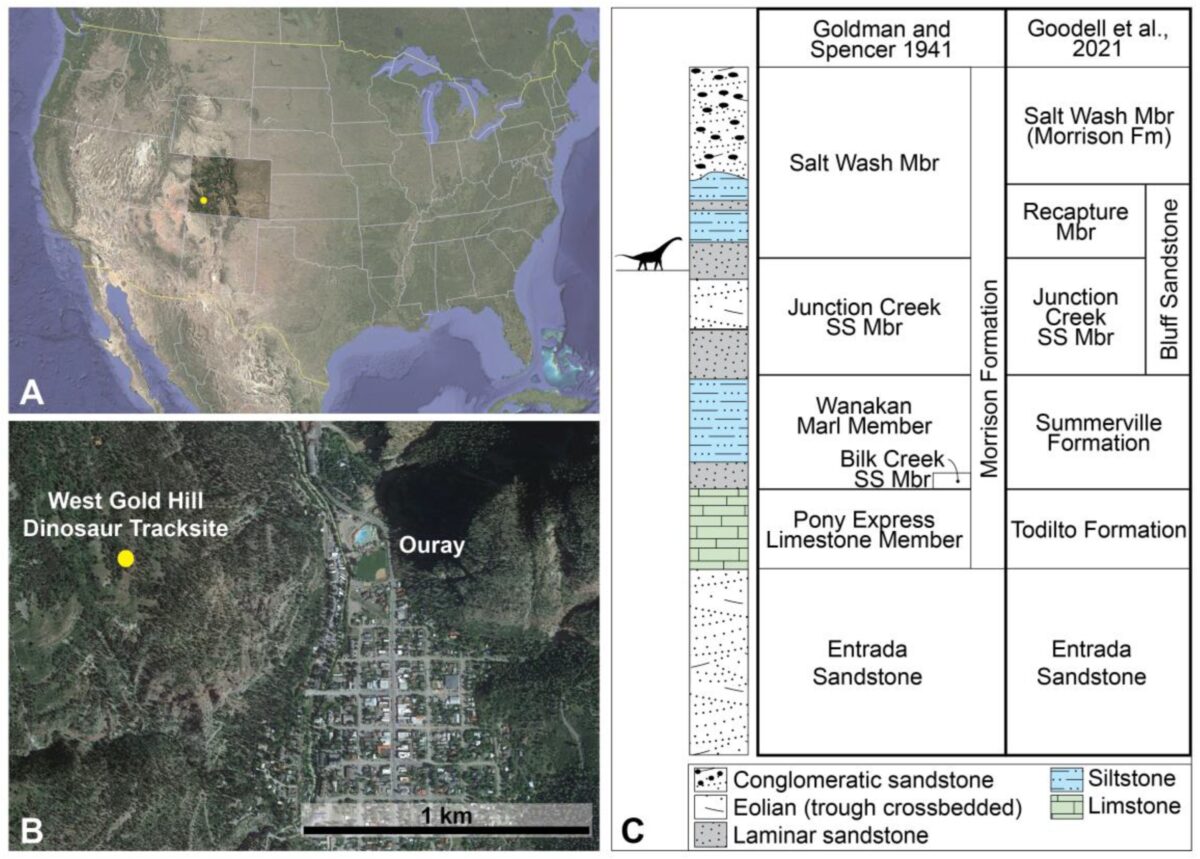
АНУ-ын Колорадо мужийн Оурэй хотын ойролцоох Вест Голд Хилл талбайгаас олдсон 130 гаруй үлэг гүрвэлийн мөр нь Юрийн галавын сүүлч үед амьдарч байсан аварга том сауроподын хөдөлгөөнийг нарийвчлан харуулж байна. Энэхүү олдвор нь 95.5 метр үргэлжлэх бөгөөд үлэг гүрвэл чиглэлээ алдалгүй бүтэн тойрог үүсгэн алхсаныг баримтжуулсан хамгийн бүрэн гүйцэд мөрүүдийн нэг юм. Квинсландын их сургуулийн Динозаврын лабораторийн судлаач, доктор Энтони Ромилио болон түүний баг уг олдвор нь амьтны алхалтын хэв маягийг судлахад хосгүй ач холбогдолтой болохыг онцолжээ.
Судлаачид уг талбайн хэмжээ том тул газраас баримтжуулахад хүндрэлтэй байсан тул дрон ашиглан агаарын зураглал авч, миллиметрийн нарийвчлалтай 3D загвар бүтээсэн байна. Сан Диегогийн Байгалийн түүхийн музейн доктор Пол Мёрфигийн тайлбарласнаар, энэхүү дижитал шинжилгээний арга нь мөрийн өөр өөр хэсгүүдийг хооронд нь харьцуулах боломжийг олгосон юм. Ингэснээр үлэг гүрвэл эргэлт хийх үедээ алхалтын хэмнэлээ хэрхэн өөрчилснийг илүү тодорхой харжээ.
Мөрний хоорондох зай болон алхалтын урт өөрчлөгдөж байгаа нь үлэг гүрвэлийн хөдөлгөөний хэв маяг тогтмол биш байсныг харуулж байна. Тухайлбал, баруун болон зүүн хөлний алхалтын урт 10 орчим сантиметрийн зөрүүтэй байсан нь амьтныг доголон байсан эсвэл биеийн нэг талыг илүү ашигладаг байсан байж болзошгүй гэсэн таамаглалыг дэвшүүлж байна. Гэсэн хэдий ч олдсон мөрүүд нь энэхүү өөрчлөлтийн шалтгааныг эцэслэн тогтооход хангалтгүй бөгөөд цаашид энэхүү аргачлалыг дэлхийн бусад урт мөрүүдэд ашиглах нь үлэг гүрвэлийн зан төлөвийн талаарх илүү их мэдээллийг олж авахад тус дөхөм болно.
Дэлгэрэнгүйг эх сурвалжаас харах
↓Эх сурвалжийг нээх ↓
A giant dinosaur left behind a 150-million-year-old trail that reveals something unusual about the way it walked. More than 130 fossil footprints in Colorado show a sauropod making a complete loop, while a small difference between its steps suggests it may have had an uneven gait. The trackway was discovered at the West Gold Hill Dinosaur Tracksite near Ouray, Colorado, and is one of the most complete curved sauropod trails ever found.
Stretching across 95.5 meters, the fossil path preserves the movements of a single animal in much greater detail than most dinosaur track discoveries. The footprints were made during the Late Jurassic period, when giant long-necked dinosaurs such as Diplodocus and Camarasaurus lived in North America. According to Dr. Anthony Romilio from The University of Queensland’s Dinosaur Lab, the trail is unusual because the dinosaur completed a full loop before continuing in the direction it was originally heading.
Instead of simply showing where the animal went, the trackway records how it moved. Changes in footprint spacing and step length have given researchers clues about the dinosaur’s walking style and possible physical condition.
Ancient Dinosaur Trail Reveals a Sudden Turn
The fossil trackway tells the story of a dinosaur taking an unexpected route. Researchers found that the animal started walking toward the northeast, curved around to complete a full circle, and then continued while facing the same direction as before. The complete loop makes the site especially valuable for studying movement. A shorter trail might show only a few steps, but this longer sequence preserves how the dinosaur’s walking pattern changed during a turn.
“This trackway is unique because it is a complete loop,” Dr. Anthony Romilio said. The preserved path allowed scientists to examine how a massive sauropod handled a tight curve before returning to its original course.
The reason the dinosaur followed this circular route remains unclear. The footprints do not explain what caused the change in direction, but they preserve a rare moment of dinosaur movement in detail.
Drones Reveal a Hidden Path Across the Site
The size of the West Gold Hill Dinosaur Tracksite made it difficult to document the entire trail from the ground. Researchers used drones to capture a complete view of the footprints and their positions. Dr. Paul Murphey from the San Diego Natural History Museum noted that the aerial images were used to create a detailed 3D model of the trackway.
“It has been challenging to document these footprints from the ground because of the size of the trackway,” he explained. “With these images we generated a detailed 3D model, which could then be digitally analyzed in the lab at millimeter-scale accuracy.”

As mentioned in the study featured in Geomatics, the reconstruction revealed the full sequence of steps and gave scientists a way to compare different sections of the trail. It revealed that the dinosaur’s movement changed naturally as it followed the curve. The method also showed why studying long trackways can be valuable. Small sections may not always reflect the way an animal usually walked, while a complete trail can reveal patterns that would otherwise remain hidden.
Ancient Tracks Show a Dinosaur Struggling to Move
The researchers found one of the most interesting clues in the spacing between the dinosaur’s feet. The width between left and right footprints changed along the trail, shifting from narrow areas to much wider placements. The finding shows that a dinosaur’s footprint pattern was not always identical from one step to the next. This means that short sections of fossil tracks may give an incomplete picture of how an animal moved.
The team also noticed that the dinosaur’s left and right steps were not exactly the same length. The difference was small but consistent, measuring around 10 centimeters, or about 4 inches. This pattern could have been caused by a limp, but it could also simply reflect a preference for one side of the body. The footprints alone cannot provide a definite answer.

Supported by the U.S. Forest Service, the study shows how fossil trails can preserve details about dinosaur behavior, not just their presence.
“There are many long dinosaur trackways around the world where this method could be applied to extract behavioral information that was previously inaccessible,” concluded Romilio.
Enjoyed this article? Subscribe to our free newsletter for engaging stories, exclusive content, and the latest news.


