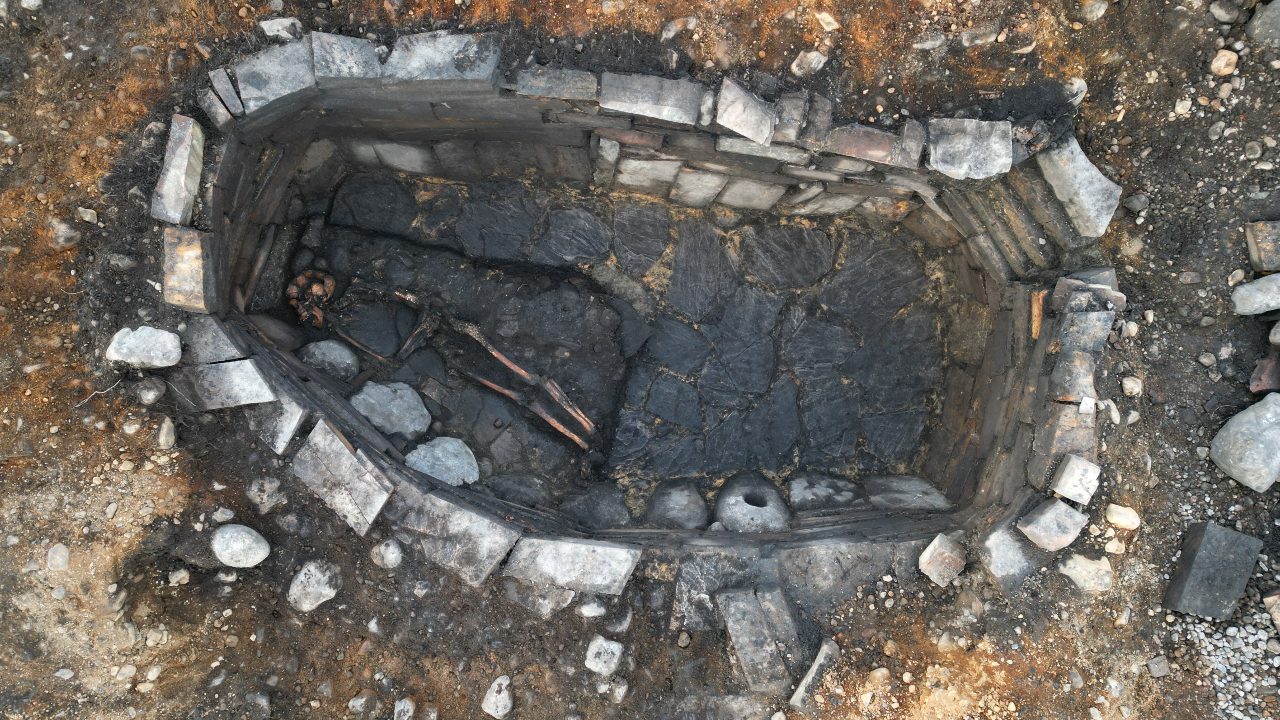
Археологичид Шотландын хойд хэсгийн нэгэн хуучин худагт зан үйлийн зориулалттай байж болзошгүй насанд хүрсэн хүний булш олсон байна.
Шотландын өндөрлөг газрын карьерын өргөтгөлийн ажлын үеэр Highland Archaeology Services байгууллагын судлаачид энэхүү нууцлаг булшийг малтан илрүүлжээ. Ойролцоогоор 3 метр урт, 1 метр гүн уг худгийн ёроолыг чулуун хавтангаар доторлож, цоорхойг нь шавраар чигжсэн нь ус тогтоох зориулалттай байсныг гэрчилж байна. Олдворын эргэн тойрон дахь эд зүйлсээс үзэхэд уг оршуулга нь Төмөр зэвсгийн үед (МЭӨ 800 – МЭ 400) хамаарах ажээ.
Археологич Лахлан Маккеггигийн мэдээлснээр, тус бүс нутагт Төмөр зэвсгийн үеийн ийм төрлийн оршуулга ховор тохиолддог байна. Булшнаас хүний араг яснаас гадна малын яс олдсон боловч бусад дагалдах эд зүйлс илрээгүй юм. Араг ясны хүйсийг тогтоох, нас болон үхлийн шалтгааныг тодруулах нарийвчилсан шинжилгээг ирэх саруудад хийхээр төлөвлөжээ.
Уг булш нь 20 орчим сууцны туурь олдсон Камор Вүүд дэх эртний суурингаас 1.6 км-ийн зайд байрладаг. Судлаачид энэхүү өвөрмөц оршуулгыг худаг ашиглалтаас гарах үед үйлдсэн “хаалтын зан үйл”-ийн нэг хэсэг байж болзошгүй хэмээн таамаглаж байна. Скай арал дээрх “High Pasture Cave”-ээс олдсон ижил төстэй зан үйлийн олдворууд нь энэхүү таамаглалыг дэмжих нотолгоо болж байна.
Дэлгэрэнгүйг эх сурвалжаас харах
↓Эх сурвалжийг нээх ↓
Archaeologists in the Scottish Highlands have discovered the 2,000-year-old burial of an adult in a possible ritual well. The burial may have been made during a closing ceremony when the well was abandoned.
Archaeologists discovered the enigmatic grave during expansion of a quarry in northern Scotland, according to a statement from Highland Archaeology Services that was emailed to Live Science.
The base of the well, which is about 10 feet (3 meters) long and 3 feet (1 m) deep, “is lined with stone slabs and clay pushed between the gaps in the stonework, possibly to help the structure hold water,” the archaeologists wrote in the statement.
Based on artifacts found near the well, the archaeologists believe the burial was made during the Iron Age (800 B.C. to A.D. 400). Animal bones were placed on top of the burial, but no other grave goods were found.
“Iron Age burials from the north of Scotland are fairly rare finds in general,” Lachlan McKeggie, co-director of Highland Archaeology Services, told Live Science in an email.
The archaeologists are not yet certain of the sex of the skeleton, what age they were or how they died. Further analysis will be taking place over the next few months, which should give us a date for both the feature and the human remains, as well as confirm the sex, age range and pathologies, McKeggie said.
The burial is located not far from an Iron Age settlement at Camore Wood, McKeggie said, where archaeologists have previously found the remains of at least 20 hut circles. The remains of possible roundhouses were also found near the well burial, the team said in an Aug. 7 field report. But it’s not clear if this burial is related to the Camore Wood settlement, which is located about 1 mile (1.6 km) away.
One possible explanation for the unusual burial is that it may have been part of a ritual performed when the well was closed.
“There are other examples of burials as ‘closing’ rituals in significant places, such as at High Pasture Cave on Skye,” McKeggie said, where archaeologists found the burial of a woman and two babies at the entrance to a cave that was ceremonially closed during the Iron Age.
Analysis of the remains is ongoing, and the team hopes to have more information on the burial in the next few months. Additionally, 3D scans of some of the finds have been done, a few of which can be seen on the team’s website.
What do you know about the bones in your body? Test your knowledge with our human skeleton quiz!


