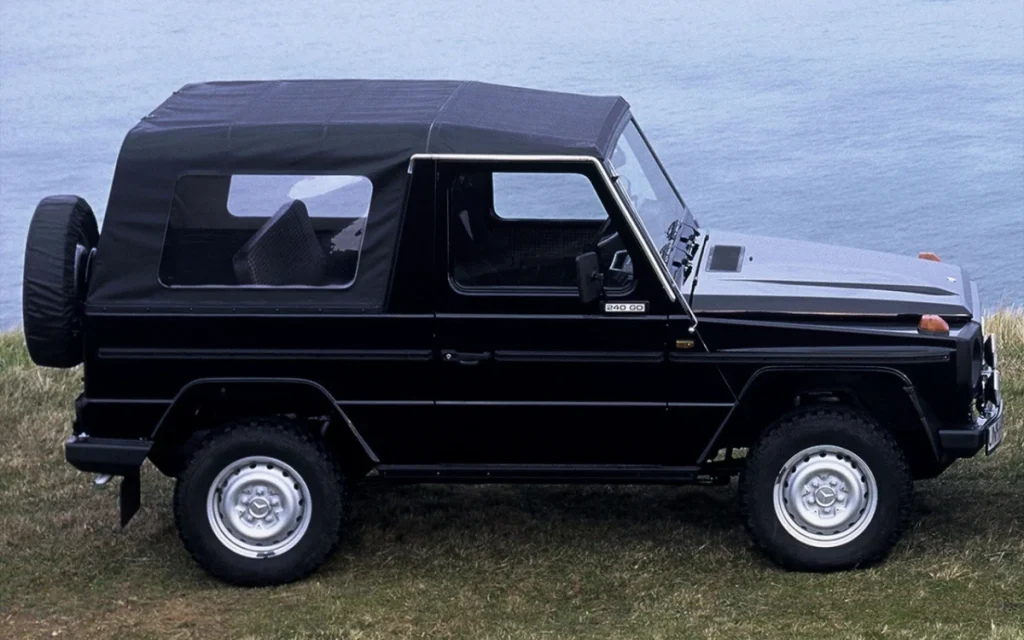
Автомашины хурдны хайрцагт байрлах G үсэг нь Герман хэлний “Gelände” буюу газар нутаг гэсэн утгатай бөгөөд хүнд даацын ачаа тээвэрлэх эсвэл өгсүүр замд гарахад шаардлагатай нэмэлт эргэлтийн моментийг бий болгодог нэн нам арааг илэрхийлдэг.
Энэхүү тэмдэглэгээ нь ихэвчлэн хуучны загварын автомашин, ачааны тэрэг болон тусгай зориулалтын бартаат замын тээврийн хэрэгсэлд, тухайлбал механик хурдны хайрцаг бүхий Mercedes G-Wagen загварт түгээмэл тохиолддог байв. Зарим тохиолдолд үүнийг “Granny Gear” эсвэл “Ground” гэж нэрлэх нь бий.
Ихэнх хүмүүсийн хувьд санаанд оромгүй жишээ бол 1986 оны Porsche 959 спорт загварын автомашин юм. Энэхүү хурдны хайрцагт G арааг нэмснээр тухайн автомашин дуу чимээний стандартыг хангаж, хөдөлгөөнд орохдоо илүү нам гүм ажиллах боломжтой болсон байна.
Орчин үеийн автомашины технологийн хөгжлийн явцад хурдны хайрцаг нь механик араанаас эхлээд автомат, CVT болон хос холбоост автомат систем рүү шилжин хувьссан. Өнөөгийн автомашинуудад G арааны шаардлага байхгүй болсон бөгөөд цахилгаан автомашинууд ихэвчлэн нэг шатлалт бууруулагч арааг ашиглаж байна.
Дэлгэрэнгүйг эх сурвалжаас харах
↓Эх сурвалжийг нээх ↓
People have been left stunned after they’ve found out what the ‘G’ on a car’s stick shift actually means.
Typically, we would expect to find the gear numbers, neutral, and reverse on a stick shift. The idea of anything else appearing on those shifters seems impossible.
However, there will be some people who remember a time when the letter G actually appeared on these gear shifters.
It sounds like a strange thing to have, but when you realize why it is there, it begins to make a lot of sense.
What does the G on a stick shift shifter mean?
The G gear, as you probably expect, is more often found on older cars, trucks, or specialized off-road vehicles.
One vehicle that you could find it on is an older model of the Mercedes G-Wagen SUV, as these have manual transmissions.
The car being German should also give you a clue.
The G is German forGelände(terrain).
It is often referred to as ‘Ground’ or ‘Granny Gear’, neither of which sounds as cool as Gelände.
What the Geländegear does is select an ultra-low gear for the car you are in.
This provides maximum torque, which is what you want if you are carrying a heavy load or starting on a hill.
What other cars have a G gear?
Incredibly, there was a car that had a G gear that you wouldn’t expect.
This is the 1986 Porsche 959, arguably one of the best sports cars ever produced.
The Porsche 959 had the G gear to allow the car to meet noise regulations and start quietly.
It meant that the neighbors around you would not be disturbed by the sports car as it set off.
As the gear also increased torque, the sports car could easily pull away in the G gear.
Now, though, cars simply do not need the G gear.
Transmission timeline
1894: French inventors Emile Levassor and Louis Rene Panhard develop the first manual sliding-gear mechanism
1904: The Sturtevant brothers create an early automatic gearbox using centrifugal weights to shift gears
1908: The Ford Model T debuts with a pedal-operated planetary gear setup, making driving highly accessible
1928: Cadillac introduces synchromesh technology, eliminating the need for drivers to double-clutch
1939: General Motors launches the Hydra-Matic, the world’s first mass-produced fully automatic system
1950s: Fluid-coupling torque converters become standard across the industry for smoother shifting
1980s: Continuously Variable (CVT) designs reach mass production, offering infinite ratios instead of fixed gears
2003: Volkswagen introduces the mass-market dual-clutch gearbox (DSG) for rapid, seamless shifting
2010s-Present: Electric vehicles surge in popularity, largely relying on simple single-speed reduction gears


