Эрдэмтэд далайн гүний хуванцар хог хаягдал дээр эрэг орчмын төрөл зүйлүүд суурьшин, үржиж байгааг илрүүлжээ.
Судлаачид 2018 оны 11 дүгээр сараас 2019 оны 1 дүгээр сарын хооронд Номхон далайн зүүн хэсгээс цуглуулсан 105 ширхэг хөвөгч хуванцар эд зүйлийг шинжилж, зургаан төрлийн хүрээний 46 зүйл сээр нуруугүй амьтдыг илрүүлжээ. Эдгээр амьтдын 80 орчим хувь нь далайн эрэг орчимд амьдардаг төрөл зүйлүүд байсан нь судлаачдын анхаарлыг татсан байна. Nature Ecology & Evolution сэтгүүлд 2023 оны 4 дүгээр сард нийтлэгдсэн уг судалгаагаар хуванцар хог хаягдал нь далайн гүнд амьтад удаан хугацаагаар тэсвэрлэх боломжгүй гэх таамаглалыг үгүйсгэж байна.
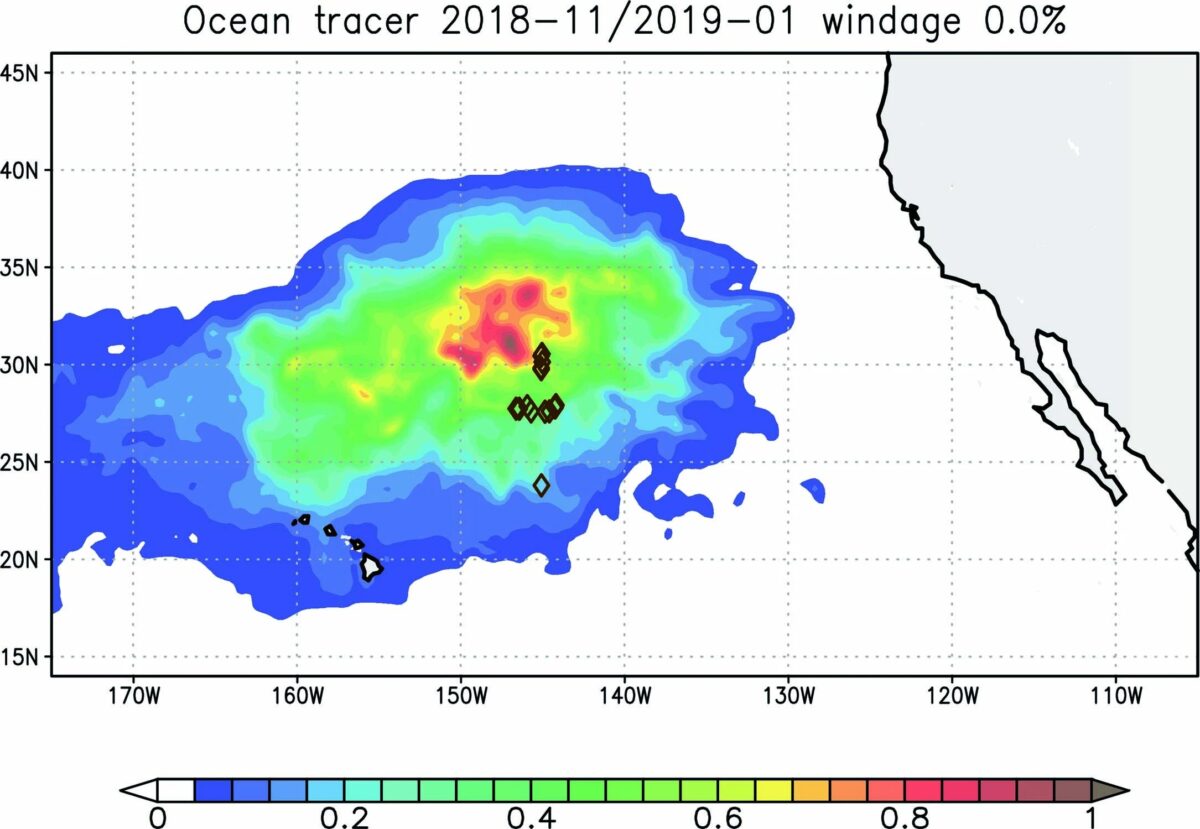
Далайн эргэлтийн системийн улмаас хуванцар хаягдал нэг цэгт хуримтлагдаж, олон жилийн турш гадаргуу дээр хөвөх боломжтой болдог. Байгалийн гаралтай хөвөгч биетүүдээс ялгаатай нь хуванцар нь удаан эдэлгээтэй тул далайн эрэг орчмын амьтад хол зайд нүүдэллэх, улмаар тэндээ суурьшин амьдрах “олон улсын тээвэрлэгч” болж хувирчээ. Судалгааны явцад олон тооны хавч хэлбэртэн болон далайн цэцэг амьтдын үр төл, өндөг тээсэн бодгалиуд илэрсэн нь эдгээр амьтан нээлттэй далайд үржих чадвартайг харуулж байна.
Энэхүү үзэгдэл нь 2011 онд Японд болсон цунамийн дараа далайн эрэг орчмын олон зуун зүйл амьтан Хойд Америк болон Хавайн арлуудад хуванцар хог хаягдлаар дамжин хүрсэн үйл явдалтай ижил төстэй шинж чанартай юм. Гэсэн хэдий ч судалгаанд оролцсон эрдэмтэд эдгээр хуванцар эд зүйлс нь байгалийн экосистем биш, харин эрэг орчмын болон далайн гүний амьтдын холимог нэгдэл буюу “неопелагик” бүлгэмдэл үүсгэж буйг тэмдэглэжээ. Одоогоор The Ocean Cleanup байгууллага далайн хог хаягдлыг цэвэрлэх ажлыг үргэлжлүүлж байгаа бөгөөд хүний үйл ажиллагаанаас үүдэлтэй энэхүү бохирдол нь тэнгисийн амьтдын хувьд хүсээгүй ч тогтвортой амьдрах орчин болж байна.
Дэлгэрэнгүйг эх сурвалжаас харах
↓Эх сурвалжийг нээх ↓
Thousands of kilometres from the nearest continental coastline, discarded plastic is carrying an unexpected community of passengers. Sea anemones, crustaceans, hydroids and other organisms normally associated with coastal waters are surviving on debris inside the Great Pacific Garbage Patch. Some are reproducing there.
Scientists examined 105 pieces of floating plastic collected from the eastern North Pacific between November 2018 and January 2019 and identified 46 invertebrate taxa from six phyla. Coastal organisms accounted for 37 of those taxa, roughly 80% of the diversity recorded. The other nine were pelagic taxa adapted to life offshore. The findings were published in Nature Ecology & Evolution in April 2023.
Almost every object had become a habitat. Invertebrate biofouling covered 98% of the debris, pelagic species appeared on 94.3%, and coastal species were present on 70.5% of the plastic items. Two-thirds of the debris carried members of both communities.
The plastic remains pollution, but the samples show that some of it is also functioning as durable habitat in a part of the ocean where coastal animals were once thought unlikely to persist for long.
Plastic Becomes a Raft That Can Last for Years
The North Pacific Subtropical Gyre is a vast circulating current system where floating debris can become concentrated instead of quickly escaping. The Great Pacific Garbage Patch lies within that system, spread across an enormous area rather than forming the solid island of trash sometimes imagined.
For the animals, the important feature is not simply that plastic floats. It can stay afloat for years.
Natural rafts such as vegetation can decay, become waterlogged, sink or be eaten. Plastic buoys, floats, bottles, nets and other manufactured objects can remain at the surface much longer. The study describes floating plastics as “optimal rafts for long-distance and long-term dispersal.”
That gives floating plastic debris time to accumulate life. Objects collected during the 2018 and 2019 sampling included bottles, buckets, crates, fishing nets, rope and other fragments. Many showed advanced degradation, indicating they had already spent years at sea.
Rope carried the greatest total richness, with 24 taxa recorded across the samples. Fishing nets had the highest average richness of coastal taxa, at 4.8 per item. Across all debris types, coastal taxa made up between half and three-quarters of the total invertebrate diversity.
These were not always isolated animals stranded on passing debris. On many objects, researchers found organisms at several stages of life.
New Generations Are Appearing Far From Shore
Evidence of marine species reproduction appeared among both coastal and pelagic animals.
Several coastal crustaceans, including amphipods and an isopod, included brooding or egg-carrying females. Coastal hydroids carried reproductive structures. Sea anemones and crustaceans appeared in multiple size classes on the same pieces of plastic, including extremely small individuals consistent with recent reproduction.
Some amphipods measured less than 0.5 millimetres. At least three sea-anemone taxa included new recruits smaller than 2 millimetres. Combined with the reproductive females, those size patterns led the researchers to conclude that coastal species can “survive and reproduce in the open ocean.”

That goes beyond temporary transport. Some coastal animals appear capable of maintaining populations while their plastic raft continues circulating at sea rather than simply surviving until they return to shore.
Researchers call this mixture of offshore and coastal organisms a neopelagic community, associated with persistent floating material in the open ocean. Coastal and pelagic taxa shared the same debris on 66.7% of the sampled objects. Only 3.8% carried coastal organisms without any pelagic taxa.
Coastal species were more diverse than pelagic taxa in every phylum recorded. Their species-accumulation curve had not levelled off by the end of the sampling, indicating that the 37 identified coastal taxa did not capture all of the diversity present.
The 2011 Japan Tsunami Offered an Earlier Clue
Evidence that coastal organisms could survive exceptionally long ocean journeys had appeared years before the garbage-patch samples were collected.
The 2011 Tōhoku earthquake and tsunami swept millions of objects into the North Pacific in March 2011. Beginning the following year, debris carrying living Japanese species began reaching North America and the Hawaiian Islands.
Research cited in the Nature paper documented 381 living Japanese coastal species arriving in North America and Hawaii between 2012 and 2017, primarily on plastic debris. Some had survived in the open Pacific Ocean for at least six years.
![The Great Pacific Garbage Patch is the largest of the five plastic accumulation zones in the world’s... [+] oceans.](https://imageio.forbes.com/blogs-images/scottsnowden/files/2019/05/GPGP2.jpg?format=jpg&width=1440)
Years later, the garbage-patch samples carried many of the same kinds of organisms. Coastal taxa found in the eastern gyre showed 70.3% similarity to those previously recorded on Japanese tsunami debris. Nearly all of the taxa identified in the later samples were of Northwest Pacific origin, including species found along the Japanese coast.
The communities were not identical. Molluscs, for example, were far less diverse on the gyre debris than among the tsunami-debris arrivals. Bryozoans and cnidarians were among the most diverse groups found in the garbage-patch samples.
The pattern shows how long-distance ocean rafting can unfold: plastic can leave a coast carrying local organisms, remain afloat for years and enter circulation systems where some of those organisms continue living alongside species already adapted to the open sea.
A Cleanup Target Now Contains Living Communities
The findings put ocean plastic pollution and marine ecology in the same place. The debris remains the target of large-scale removal efforts even as scientists document organisms living and reproducing on it.
The Ocean Cleanup describes the Great Pacific Garbage Patch as an accumulation zone containing more than 100 million kilograms of floating plastic. The organization is developing systems to remove legacy pollution from ocean garbage patches while intercepting plastic in rivers and waterways before it reaches the sea.
The debris has not become a natural ecosystem. But the samples show that durable human-made material is creating floating surfaces where coastal and pelagic organisms can meet, grow and, in some cases, produce another generation.
Enjoyed this article? Subscribe to our free newsletter for engaging stories, exclusive content, and the latest news.


