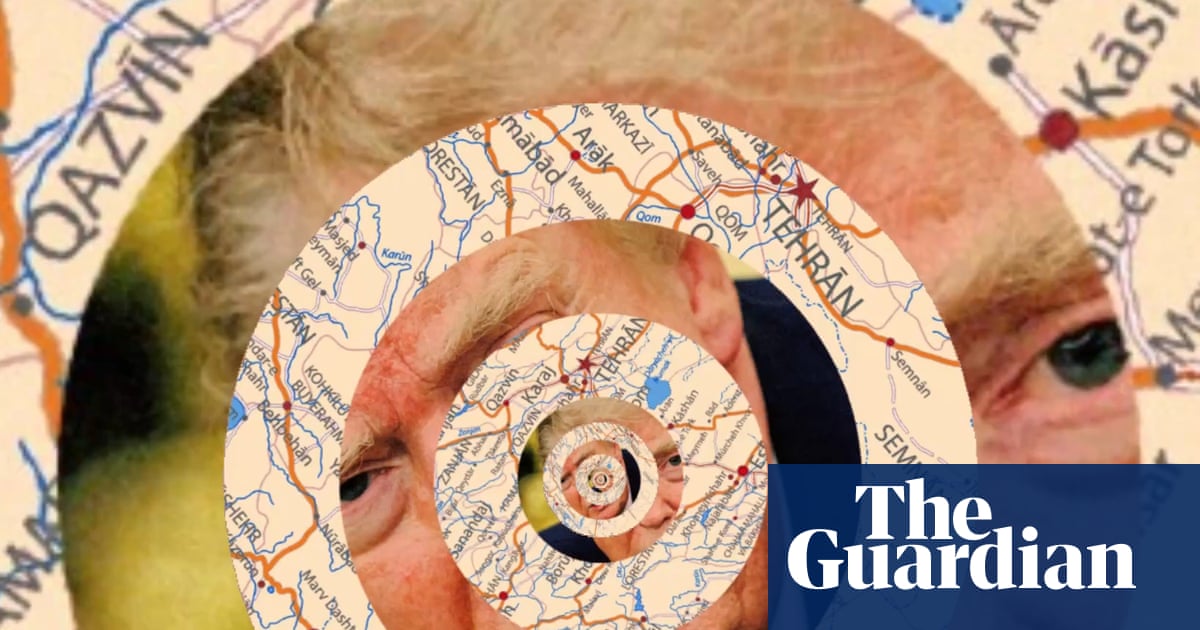
Ираны эсрэг эхлүүлсэн цэргийн ажиллагаа удааширч, эдийн засгийн хүндрэл үүсгэсэн нь АНУ-ын ерөнхийлөгчийн сонгуулийн өмнөх нөхцөл байдлыг улам хүндрүүлж байна.
АНУ-ын ерөнхийлөгч Дональд Трамп Израйлтай хамтран Иран улсын эсрэг эхлүүлсэн цэргийн ажиллагаа зургадугаар сард байгуулсан гал зогсоох хэлэлцээр нуран унаснаар мухардалд ороод байна. Үүний улмаас дэлхийн газрын тосны нийлүүлэлтийн тавны нэгийг дамжуулдаг Хормузын хоолойг Иран улс хяналтдаа авсан нь АНУ-д инфляци өсөж, амьжиргааны өртөг нэмэгдэхэд хүргэлээ. Олон нийтийн санал асуулгаар сонгогчдын дийлэнх нь Трампыг албан тушаалдаа эргэн ирснээс хойш амьдралын түвшин дордсон гэж үзэж байгаа нь 1980 оны ерөнхийлөгчийн сонгуулийн үеийн Ираны барьцааны хямралыг санагдуулах болжээ.
Шинжээчдийн үзэж байгаагаар Ираны удирдагчид Трампын нэр хүндийг унагах зорилгоор цэргийн ажиллагааг сунжруулах стратегийг баримталж байна. Иран улс өөрийн Үндэсний аюулгүй байдлын дээд зөвлөлийн нарийн бичгийн даргаар Мохсен Резаеиг томилж, цэргийн болон тагнуулын салбарын удирдлагад өөрчлөлт оруулсан нь байр сууриа чангатгаж буйг илтгэж байна. Хэрэв гал зогсоох хэлэлцээрийг бүрэн хэрэгжүүлэхгүй бол Персийн булан болон АНУ-ын цэргийн баазууд руу хийх халдлагыг өргөжүүлнэ гэдгээ Ираны тал анхааруулжээ.
АНУ-ын эрх баригчид газрын тосны стратегийн нөөцөөсөө нийлүүлж, зах зээлийг тогтворжуулахыг оролдож байгаа ч түлшний үнэ өссөөр байна. Трамп Ираны эсрэг эдийн засгийн хориг арга хэмжээг чангатгахаар сүрдүүлж байгаа боловч бодит байдал дээр нөхцөл байдлыг өөрт ашигтайгаар эргүүлэх сонголт хомс хэвээр байна. Арваннэгдүгээр сард болох дунд хугацааны сонгуулийн өмнө АНУ-ын улс төрийн нөхцөл байдал улам ээдрээтэй болох төлөвтэй байгааг шинжээчид онцолж байна.
Дэлгэрэнгүйг эх сурвалжаас харах
↓Эх сурвалжийг нээх ↓
In the aftermath of his devastating election defeat, the US president remained haunted by regrets over Iran.
Months before Jimmy Carter lost the 1980 presidential election to Ronald Reagan, eight US servicemen died in a botched high-risk rescue mission that failed to secure the freedom of dozens of US hostages seized in Tehran.
As he addressed students and academics, keen for reflections on his single-term presidency, one of the students asked Carter: what do you most regret?
“Not sending more helicopters for the the hostage rescue,” he immediately replied, according to Larry Sabato, director of the Center for Politics at the University of Virginia, who hosted the former president. “It was very much on his mind,” said Sabato.
Carter’s fate nearly half a century ago may also be on the mind of Donald Trump as he prepares to embark upon a midterm election campaign over the coming months, while embroiled in a military struggle with Tehran. The Iranian regime is proving equally intractable to that faced by his Democratic predecessor.
Trump’s efforts to finish the war he started along with Israel almost six months ago, on 28 February, have foundered after a ceasefire agreement signed in June collapsed – leaving Iran in control of the strait of Hormuz, a waterway that was the conduit for one-fifth of the world’s oil supplies before the conflict.
The Iranian stranglehold has pushed up oil prices, stoked inflation and raised living costs in the US, all as Trump’s Republican party already faced an uphill struggle to retain control of US Congress in November’s midterm elections.
With public support for the war running low, polls show a majority of American voters believe they are worse off since Trump returned to office in January 2025. That indicator alone has echoes of Reagan’s famous question to voters during his 1980 presidential debate with Carter: “Are you better off than you were four years ago?”
‘Trump can’t change course’
While the circumstances are different, Trump’s troubles have a broader resemblance to Carter’s dilemma, which began when revolutionaries stormed the US embassy in November 1979 and held 52 diplomats and military personnel hostage.
That was compounded after a daring rescue attempt the following April had to be aborted when three out of eight helicopters deployed on the mission developed mechanical faults. One of the remaining craft collided with a transport plane, killing eight US servicemen and intensifying the ignominy.
Later efforts to negotiate the hostages’ release before the presidential election failed, most notably on the weekend before polling day, when a putative deal collapsed, making Carter’s electoral defeat almost certain.
They were eventually released after 444 days in captivity, minutes after Reagan was sworn into office on 20 January 1981.
The historic parallels are imprecise, but sufficient to be perceived by both Trump and Iran’s current leaders, analysts say.
“Carter couldn’t change course, and maybe that’s what’s most applicable, because Trump can’t change course either,” said Sabato. “Carter was stuck because, after the failed rescue, the hostages were dispersed throughout Iran and there was no way to recover them.
“Trump is stuck because he never had a good rationale [for the war]. He just wanted another victory. All they had to say to Trump to get him to go in was ‘Mr President, this is just going to be another Venezuela, and then we can go in and do Cuba.’”
With a 60-day ceasefire since June’s memorandum of understanding (MOU) signed in June lapsing this week without any formal resolution, Trump now faces entering an election campaign on the back of an unpopular war that he appears to be losing.
Payback time?
So far, Trump has responded with a mixture of half-hearted persuasion, denial and threatening bluster.
Appearing at the Nassau county police academy in Garden City, New York, on 14 August, he downplayed the war’s impact on fuel prices as necessary to prevent “an evil country” obtaining a nuclear weapon. “Remember that, when you have to pay a little bit more, you’re at $4, it’s OK,” he said.
In an interview with Fox News, he then threatened to “bomb the shit out of” Oman if it “gets in the way” of efforts to end the conflict with Iran. In a futile gesture that drew Iranian mockery, he also declared the strait of Hormuz a “new US territory” on social media.
And in recent days, the president has threatened to unleash “Economic Warfare and Isolation on an unprecedented scale” against Iran – omitting details of what precisely this might mean, but vaguely warning countries that provide “any type of lifeline” to Tehran that they, too, will suffer.
The fluctuations seem to betray frustration over a paucity of viable options – a predicament that analysts expect Iran’s leaders to exploit by seeking to deepen Trump’s unpopularity as the midterms approach.
“They are determined to make him pay the consequences of starting this war at the midterm elections,” said Vali Nasr, an Iran expert and international relations professor at Johns Hopkins University.
The approach involves depriving Trump of the option of putting the war on the back burner, or simply declaring victory.
“The whole point Iran is making is that ‘We’re not going to let him decide the sort of ebb and flow of this war,’” said Nasr. “Their position is ‘We have a vote here, and we’re not just going to make it convenient for him’ …
“They have intimated that they are giving him four weeks to go back to the MOU and fully implement it, otherwise they are going to escalate. That means a broader scale of attacks on Gulf targets, more attacks on US bases and US military assets. It’s exactly the opposite of this going low-key, and off the front pages of newspapers.”
The more aggressive Iranian stance has been signaled by a recent shake-up in the regime’s leadership that has included the promotion of Mohsen Rezaei, a former commander-in-chief of the Islamic Revolutionary Guard Corps (IRGC) for most of the 1980-88 war with Iraq, as secretary of the powerful supreme national security council.
The reshuffle also includes the appointment of Hossein Taeb, a hardline cleric and former intelligence chief, as head of the Basij, a volunteer militia, with a brief to turn it into a neighborhood surveillance unit that will root out domestic opposition and perceived Israeli penetration of Iranian society.
‘Really not in a hurry’
“It’s fair to say that the Iranians have decided that they are going to make life more miserable for Trump in a variety of ways,” said Mehrzad Boroujerdi, a political scientist and vice-provost at Missouri Science and Technology University. “They are certainly going to do whatever they can to hurt him in the midterms.
“Every US public opinion poll I have seen makes a direct correlation with the Iran war and that’s in the minds of the White House in terms of what to do, and the reason we are seeing this switch from Trump threatening military action to basically resigning himself to this idea of the economy being the achilles heel of the Iranian regime, and trying to pressure them to come to the negotiating table.
“But they are really not in a hurry. They do not see the economic condition as that dire for them.”
What may become increasingly dire in the run-up to the midterms is the outlook for the US and global economy, according to Alan Eyre, a former state department Iran specialist, who argued that a race between “two ticking economic clocks” would favor Iran.
“It’s going to get ugly as we head into the midterms,” he said. “We have buffered it to an extent by releasing oil from the strategic petroleum reserve, jawboning the market, and by the Chinese decreasing oil imports, but the resiliency of the system is decreasing significantly and an inflation spike is on the way.”
The driver of a coming economic crunch, argued Eyre, is the rising price of diesel, central to the modern economy because it is the essential fuel in supply chains. “Diesel price is currently $5.44 a gallon. A week ago, $5.30 a gallon. A month ago, $5.06 a gallon. A year ago, $3.70 a gallon,” he said.
Facing an array of bad options, Trump’s only recourse is to choose the least worse – which may also be tantamount to admitting defeat.
“The least bad option is trying to reopen the strait of Hormuz as quickly as possible, as much as possible, under Iranian control, because they are not going to give up control of the strait in the short to mid-term,” said Eyre, who was the state department’s first Farsi-speaking spokesperson under the Obama administration at a time when it was trying to forge stronger ties with Iranian communities across the world.
But Iran is not proffering Trump an olive branch in his hour of need.
‘An electoral wood chipper’?
Even reopening the strait is unlikely to trigger an immediate economic revival as maritime insurance companies take time to assess whether the waterway is safe for ships to use again.
Trump may be oblivious to the electoral fate of members of his own party in US Congress, whom he has treated with scant regard. “He sees his brand as separate and better than the Republican brand,” said Eyre. “And the fact that the Republican party might be walking into an electoral wood chipper in November doesn’t really seem to be motivating him.”
Trump, indeed, may already be preparing for life under a Democratic-controlled Congress. This month he announced the appointment of Will Scharf, a rightwing lawyer, as the new White House legal counsel, with the apparent brief of fighting off an anticipated wave of Democratic demands for subpoenas, documents and congressional investigations.
The president, who publicly refused to accept his defeat to Joe Biden in the 2020 presidential election, has also been laying the groundwork to challenge the integrity of November’s poll results, too.
Engineering a electoral drubbing for Trump remains a prize worth pursuing for Iran’s leaders. Such an outcome would set the stage for congressional Democrats to ramp up scrutiny of US conduct in the war.
The outcome of the elections, now less than three months away, “could make the last two years of Trump’s presidency much more difficult for him, and make him much less effective”, said Nasr, of John Hopkins University. “It’s not just the midterms. The day after the elections, all focus will shift to 2028.
“If Trump doesn’t have a way to finish this war, or it becomes nastier with a greater impact on the global economy, then it will begin to become an issue for the presidential election.”
Even that might pale in comparison with the visceral satisfaction a now ageing revolutionary leadership generation would take in delivering a coup de grace reminiscent of that dealt to Carter 46 years ago.
“Why wouldn’t they do the same thing?” asked Sabato, who recalled how Carter reacted with grim resignation when he learned that the last chance of an 11th-hour pre-election deal to free the hostages had collapsed. “They remember the history, and they won then.
“They want to win again against a foe that I’m sure they despise much more than Jimmy Carter. For them, this guy is worse in every way that a human being can be worse.”


