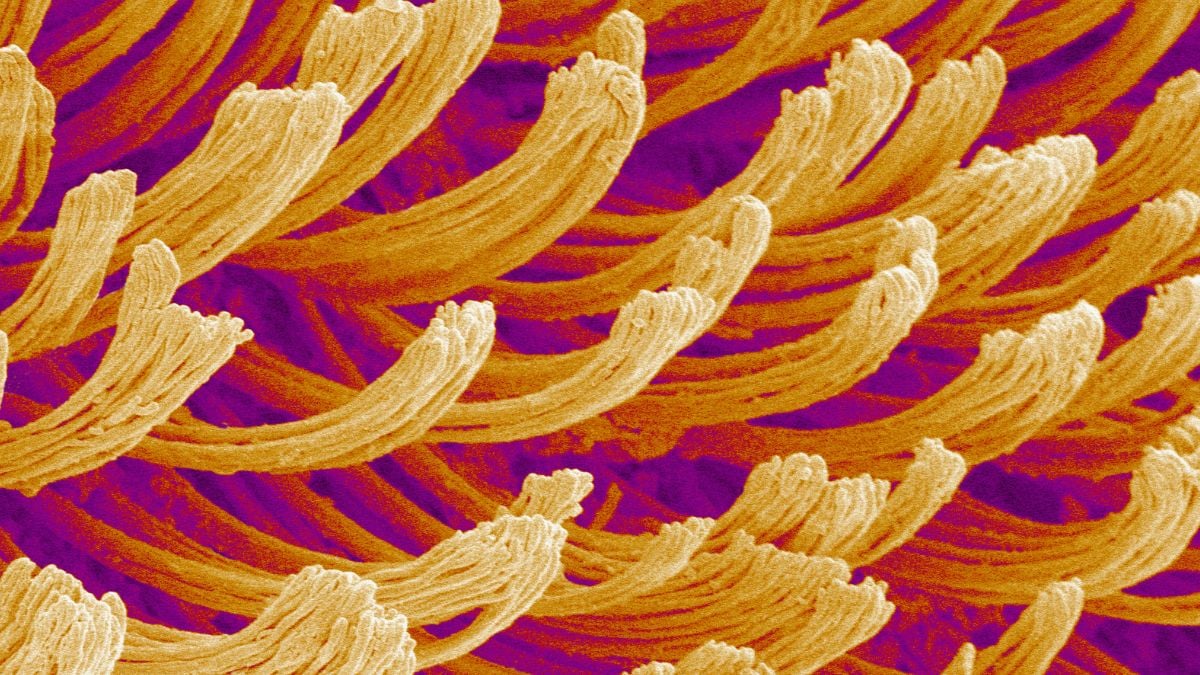
Эрдэмтэд сканнердах электрон микроскопын тусламжтайгаар гекко гүрвэлийн хөлний бүтцийг нарийвчлан судалж, тэдний гадаргуу дээр хэрхэн бат бөх тогтдог нууцыг тайлбарлажээ.
Гекко гүрвэлийн хөлний ул нь энгийн нүдээр харахад үсэрхэг мэт харагддаг ч микроскопоор харвал “сета” (setae) хэмээх олон мянган нарийн ширхэгүүдээс бүрддэг. Эдгээр ширхэг бүр нь “спатула” (spatulae) хэмээх илүү жижиг салаануудад хуваагддаг байна. Энэхүү бүтэц нь ямар нэгэн наалдамхай бодис, сорох хүч эсвэл дэгээ ашиглахгүйгээр гадаргуу дээр тогтох боломжийг олгодог.
Гекко гүрвэлүүд “Ван дер Ваальсийн хүч” буюу молекул хоорондын сул таталцлын хүчийг ашиглан хана, тааз зэрэг гадаргуу дээр хөдөлдөг. Судлаачдын тооцоолсноор, гекко гүрвэлийн хөлний бүх сета нэгэн зэрэг үйлчилбэл онолын хувьд 133 килограмм жинг даах чадалтай ажээ.
Тэд хөдөлгөөнийхөө явцад хөлөө тодорхой өнцгөөр эргүүлэн өргөх замаар гадаргуутай харьцах талбайг багасгаж, барьцаа тэр дор нь сулладаг. Энэхүү байгалийн өвөрмөц механизмыг судлах нь инженерүүдэд орчин үеийн нийлэг наалдамхай материал бүтээхэд чухал ач холбогдолтой юм. Судалгаанд ашигласан дүрслэлийг сканнердах электрон микроскопоор авсан бөгөөд бүтцийн ялгааг тодруулахын тулд өнгө нэмж боловсруулсан байна.
Дэлгэрэнгүйг эх сурвалжаас харах
↓Эх сурвалжийг нээх ↓
Happy Monday! To test your eyes and your science knowledge this week, we’ve got a fresh round of Microscope Mystery.
This week’s mystery looks like a forest seen from above – dense, branching, and packed in so tight there’s barely a gap between one stalk and the next.
There will be spoilers below, you have been warned!
As a visual break, here’s some 800-year-old child drawings.
Narrow it down…
Some ideas to narrow down what the image could be of:
a. Fibers from a carpet
b. The underside of a gecko’s foot
c. Bristles on a toothbrush
d. A cluster of moss
We’ll show you the image one more time and will reveal the answer below.
Okay ready?
You sure?
Alright… here we go.
The answer
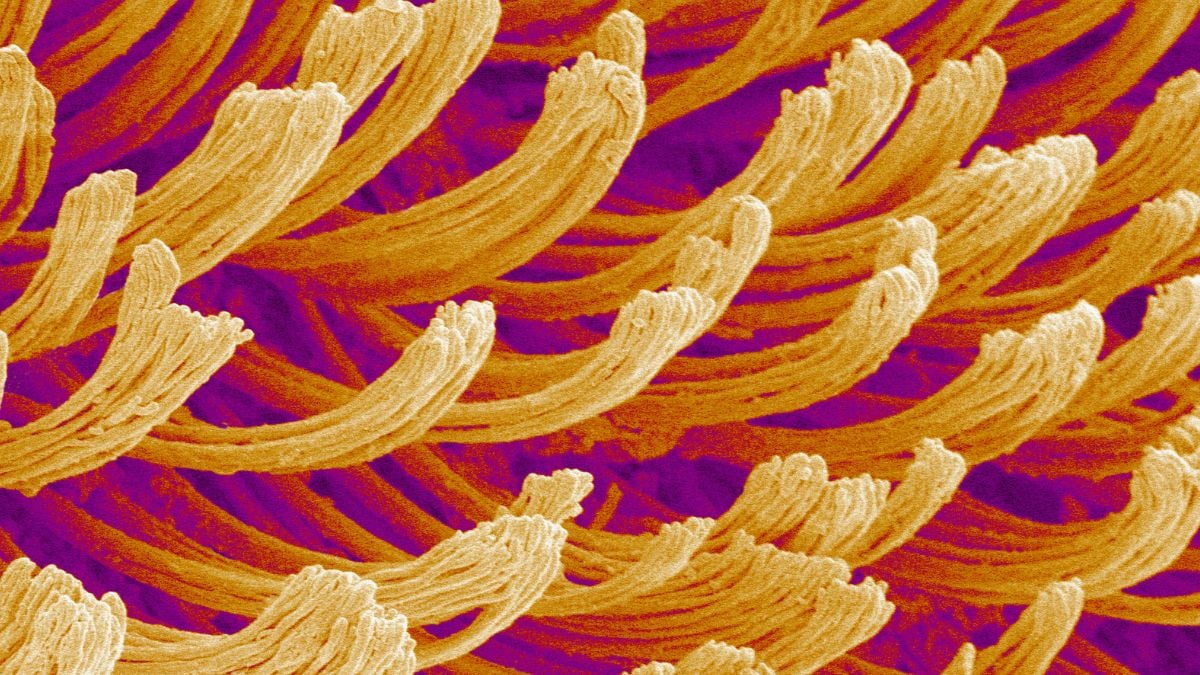
The answer is B: the underside of a gecko’s foot.
Those aren’t hairs in the usual sense – they’re setae, and a single gecko toe can carry hundreds of thousands of them, each one splitting at the tip into hundreds of even finer branches called spatulae.
Contrary to popular belief, none of this is sticky. Geckos don’t climb with glue, suction, or hooks. Each spatula gets close enough to a surface that weak intermolecular attractions called van der Waals forces kick in – the same forces that let two very flat, very clean surfaces cling together with nothing between them at all. Multiply that tiny force by hundreds of thousands of contact points and it adds up fast.
How fast? Researchers have calculated that if every seta on a gecko’s feet engaged at once, the animal could theoretically support around 133 kilograms (293 pounds) – many times its own body weight, and far more than it ever actually uses when scaling a wall or sprinting across a ceiling.
Even crazier than that sticking power? A gecko needs to unstick just as fast, mid-stride. It manages this by peeling its toes upward at a precise angle, which sharply reduces the contact area and releases the grip almost instantly – something engineers have spent years trying to replicate in synthetic adhesives.
None of this color is real, by the way. Images like this are captured with a scanning electron microscope, which fires a beam of electrons at the sample instead of light, producing a level of detail no optical microscope could manage. The color is added afterward, mostly to help distinguish one structure from another.


