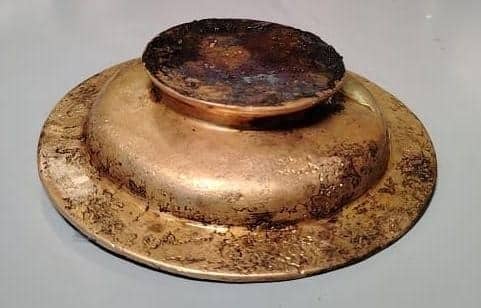
Эртний Каинуа хотын нутаг дэвсгэрээс олдсон энэхүү худаг нь шашны зан үйл болон хүний шарил агуулсан онцгой олдвор болж байна.
Италийн Болонья хотын ойролцоох эртний Этрускийн Каинуа хотын тууриас археологичид 2500 жилийн настай, шашны зориулалттай худаг илрүүлжээ. МЭӨ V зууны үед хамаарах уг худаг нь эмэгтэйчүүд, гэрлэлт, төрөлтийн бурхан Уни-д зориулсан сүмийн ойролцоо байрладаг. Уг байгууламж нь ус цуглуулахаас гадна шашны зан үйл үйлдэхэд ашиглагддаг байсныг Болоньягийн их сургуулийн археологич Элизабетта Гови тэргүүтэй судлаачид тогтоожээ.
Маш бага хүчилтөрөгчтэй, усан доорх орчинд хадгалагдсаны ачаар хүрэл эдлэлүүд анхны өнгөө бараг алдаагүй сайн хадгалагдан үлдсэн байна. Малтлагаар эмэгтэй хүн эсвэл бурхан дүрсэлсэн хоёр ширхэг хугархай хүрэл баримал болон өмнө нь олдож байгаагүй ховор төрлийн хүрэл таваг илрүүлжээ. Эрдэмтдийн таамаглаж буйгаар, эдгээр баримлыг сүмд өргөл болгон өргөдөг байсан бөгөөд зан үйлийн хүрээнд зориудаар эвдэлсэн байх магадлалтай юм.
Худгийн ёроолоос олдсон эрэгтэй, эмэгтэй хоёр хүний шарил нь уг байгууламжийг хаах зан үйлтэй холбоотой байж болзошгүй гэж судлаачид үзэж байна. Урьдчилсан дүгнэлтээр тэдгээр хүмүүс нь хүний золиос биш гэж үзэж байгаа бөгөөд тэдний хэн болох, нас барсан шалтгааныг тодруулахаар есдүгээр сараас эхлэн ДНХ-ийн шинжилгээ болон нүүрстөрөгчийн он цаг тогтоох судалгааг эхлүүлэхээр төлөвлөжээ.
Дэлгэрэнгүйг эх сурвалжаас харах
↓Эх сурвалжийг нээх ↓
A team of archaeologists near Bologna, Italy, has unearthed a 2,500-year-old ritual well containing bronze statuettes, a rare bronze plate, and two human skeletons. The discovery, made at the ancient Etruscan city of Kainua, sheds new light on a female-centered religious cult tied to the goddess Uni. Researchers believe the well was ceremonially opened with offerings and later “closed” with human burials.
The find sits on the outskirts of modern-day Bologna, where the Etruscans founded the town of Kainua in the early fifth century B.C. The well was located close to a sanctuary dedicated to Uni, the mother-goddess associated with women, marriage, birth, and growth, a deity later absorbed into Roman religion as Juno. According to Live Science, the site’s importance stems not just from its age, but from how clearly its contents fit within what is already known about this particular Etruscan cult.
What makes the discovery especially notable is preservation. Because the well remained underwater in a low-oxygen environment for millennia, the bronze objects retained much of their original shine, a rarity for metal artifacts of this age.
A Ceremony Fit for a Goddess
At the bottom of the well, excavators found two fragmented bronze statuettes depicting women or girls in finely decorated dress, likely representing either high-status individuals or divine figures. Elisabetta Govi, the University of Bologna archaeologist who led the dig, told Live Science that similar statuettes have been found before at Etruscan sites tied to the water cult, but never inside a well itself.
Young women are thought to have left such figures at Uni’s sanctuary as offerings, and the statuettes recovered here appear to have been deliberately broken, a detail consistent with ritual practice.
Alongside the statuettes, the team recovered a bronze plate that Govi described as the first of its kind ever found. Its shape mirrors common Etruscan ceramic designs, yet no other example has turned up in bronze, according to Govi. Combined, the objects date the well to the late sixth or early fifth century B.C.
Ancient Bronze Reveals the Power of Water

For the Etruscans, bronze was not just costly, it carried deep symbolic weight. Govi explained that the process of producing bronze from copper and tin was considered regenerative and “alive,” a concept closely linked to notions of birth and, by extension, to Uni’s domain over fertility and growth. That symbolism, paired with the well’s location beside the goddess’s sanctuary, points to a site used for more than simple water collection.
The Etruscans maintained a broader cult around water, and the construction of wells was typically accompanied by its own rituals. But this well’s proximity to a sacred precinct suggests it held a more public or ceremonial role. Govi said that:
“That is, it had a special function, not just for the collection of water, but evidently for the collection of water in relation to ceremonies, rites, to religious life that took place nearby in the sanctuary of the goddess Uni.”
Human Remains Reveal a Story Still Untold

Perhaps the most striking element of the discovery is the presence of two skeletons, one male and one female, found within the well itself. Researchers suspect that while the bronze statuettes and plate marked an opening ritual, the human burials may correspond to the well’s ritual closing.
Also, preliminary findings indicate the individuals were not victims of human sacrifice, according to Govi. Their identities, causes of death, and connection to the site remain unclear for now. A dedicated study, including DNA analysis and carbon-14 dating, is set to begin in September, which researchers hope will clarify who these two people were and help refine the well’s chronological history.
Enjoyed this article? Subscribe to our free newsletter for engaging stories, exclusive content, and the latest news.


