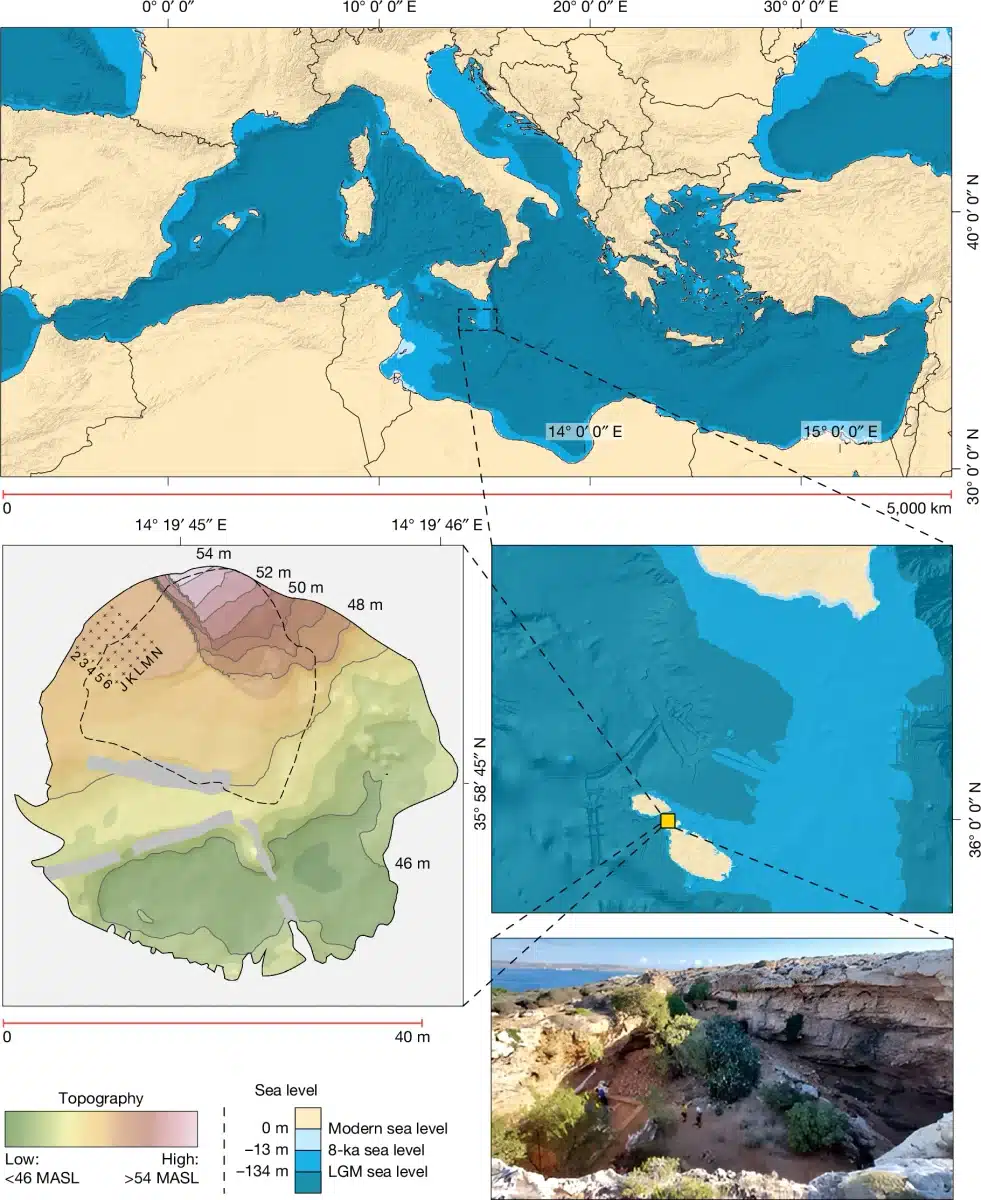
Мальта арал дээр хийсэн малтлагаар газар тариалан эрхлэгчид ирэхээс 1000 жилийн өмнө хүмүүс амьдарч байсныг илрүүлсэн нь бүс нутгийн түүхэн цаг хугацааны талаарх ойлголтыг өөрчлөв.
Элеанор Сэрри тэргүүтэй судлаачдын баг Мальта арлын хойд хэсэгт орших Латния хэмээх газраас 8500 жилийн тэртээх хүний үйл ажиллагааны ул мөрийг илрүүлжээ. 2021-2023 онд хийсэн малтлагаар чулуун зэвсэг, галын голомтын үлдэгдэл, амьтан болон зэрлэг ургамлын үлдэгдэл олдсон нь тус арал дээр анчин-түүвэрлэгчид амьдарч байсныг баталж байна. Эдгээр олдворыг нүүрстөрөгчийн он цаг тогтоох аргаар шинжилж, тус арал дээрх хөдөө аж ахуйн анхны суурингууд үүсэхээс өмнөх үед хамаарч байгааг тогтоожээ.
Мальта болон Сицилийн хооронд хуурай газрын гүүр байгаагүй тул эртний хүмүүс 85-аас 100 км орчим урттай тэнгисийн замыг туулан ирсэн байх магадлалтай. Энэ нь тухайн үеийн хүмүүс тэнгисийн аялал хийх өндөр түвшний навигацийн чадвартай байсныг илтгэж байна. Олдворуудын дунд загас, нялцгай биет болон далайн хөхтөн амьтдын үлдэгдэл байсан нь тэд хоол хүнснийхээ тодорхой хэсгийг далайгаас гаргаж авдаг байсныг харуулдаг.
Судлаачдын баг тус арал дээрх нөөц баялаг нь хүн амын тогтвортой өсөлтийг хангах хэмжээнд хүрэлцээгүй байсан гэж үзэж байна. Тиймээс тус арал дээр удаан хугацаагаар оршин суухын тулд Сициль зэрэг том арлуудтай тогтмол холбоотой байх, харилцан солилцоо хийх шаардлагатай байсан бололтой. Энэхүү нээлт нь Газар дундын тэнгисийн төв хэсэг нь тусгаарлагдмал бүсүүд бус, харин эртний хүмүүсийн харилцаа холбооны коридор байсныг баталж байна.
Дэлгэрэнгүйг эх сурвалжаас харах
↓Эх сурвалжийг нээх ↓
The original prehistory narrative of the Mediterranean region portrayed two groups of people; those who hunted and gathered wild foods and those who cultivated their own crops on a variety of small islands. The archaeological record at malta disrupted this timeline.
For instance, the evidence indicated that Hunter-gatherers lived in the area approximately 8,500 years ago. Approximately 1,000 years prior to the establishment of the first agricultural settlements on the island.
Evidence from a 2025 Nature study contradicted the notion that hunters/gatherers cannot travel to and live on small, remote Mediterranean islands. Traveling to malta was impressive. Surviving there for extended periods of time was much more difficult to understand.
An Island Beyond Hunters/Gatherers’ Reach?
Eleanor Scerri’s team discovered new evidence for the previously unrecorded Mesolithic occupation at Latnija (a site in northern malta) which made the revisions possible. Initially, scerri reported, “we did not think it was possible” based upon the reconstructed results from stone tools, hearth ashes, animal remains and wild plants. However, excavations conducted from 2021-2023 eventually exposed a deep layer of human presence on the site extending back to approximately 8,500 years ago, when the first agriculturalists arrived in the Maltese islands.
Malta was separated from Sicily by 85 km at its closest point and because both were surrounded by water, there was no land bridge for the Hunter-gatherers to walk onto and be stranded by rising sea levels. Currents, wind direction, navigation conditions etc. Would likely make even a direct journey between Sicily and malta approximately 100 km.
Experimental voyages using a replica dugout canoe indicate a rate of approximately 4 km/hour. This means that during the summer months a trip could take all of your daylight hours and multiple hours of nighttime. Thus, it is clearly not a casual voyage.

However, crossing the waters separating malta from Sicily was just the initial obstacle that faced these Hunter-gatherers. Once on the island, scerri’s team determined several independent methods to verify that the occupation truly pre-dated malta’s agricultural period. These included radiocarbon dating utilizing accelerator mass spectrometry of charcoal as well as constructing a chronology of the layers at the site.
In addition, the layers contained limestone tools, fire pits/ashes and terrestrial animals remains in conjunction with fish, shellfish and marine mammals. The latter are important as they demonstrate that people were obtaining some portion of their nutrition from marine sources rather than relying entirely on terrestrial-based food resources provided by the island itself.
In the Nature article, scerri et al., referred to the journeys as “the longest Hunter-gatherer sea voyages in the history of the Mediterranean.” Additionally, it appears that the occupation continued for almost 1 millennium. Therefore, Arrival at malta was only one component of the puzzle.

Another key factor for Hunter-gatherers occupying a small semi-arid island like malta was population sustainability. Even if a group finds sufficient caloric intake, they will still experience demographic failure if they remain too small and geographically isolated.
Based upon modeling of the island’s sustainable resource base relative to the minimum population size required for successful long-term sustainability on malta, scerri’s team concluded that malta could support only a limited number of individuals over many hundreds of years. Successful long-term sustainability required connection to larger populations on other islands such as Sicily.
Sustainability Requires a Life-Line to Larger Populations
This changed understanding of seafaring. If seafaring was necessary to sustain life on malta, it does not seem to be merely an occasional adventure taken by a few bold wanderers. Rather, repeated crossing may have been an essential element of sustaining life on malta – facilitating exchange between populations on malta and on larger islands and maintaining genetic diversity among populations for thousands of years.
The implications extend further than one small island. It now seems that Hunter-gatherers in the central Mediterranean had developed sufficient navigational capabilities to undertake lengthy ocean voyages long before Neolithic farmers began establishing themselves on malta. Evidence presented in Science suggests that organized maritime activity occurred significantly farther back in time than researchers anticipated.

Why they crossed the seas remains an enigma for archaeologists. While we can identify hearths, food remains and tools, we can never know what discussions took place between people deciding to sail off into the horizon or what social bonds tied them together after they returned across the water.
The central Mediterranean is beginning to resemble a corridor connecting various locations and not merely a series of separate destinations from past times.
Enjoyed this article? Subscribe to our free newsletter for engaging stories, exclusive content, and the latest news.


Мальта арал дээр археологичид эртний хүмүүсийн ул мөрийг илрүүлсэн нь түүхэн ойлголтыг өөрчилж байна шүү. Та энэ аялал жуулчлал, эрдэм шинжилгээний нээлтүүдийн талаар юу мэдэхийг хүсэж байна вэ? Эрэгтэй, эмэгтэй хүн амьдарч байсан гэх энэ олдворууд ямар гайхалтай байгаам?