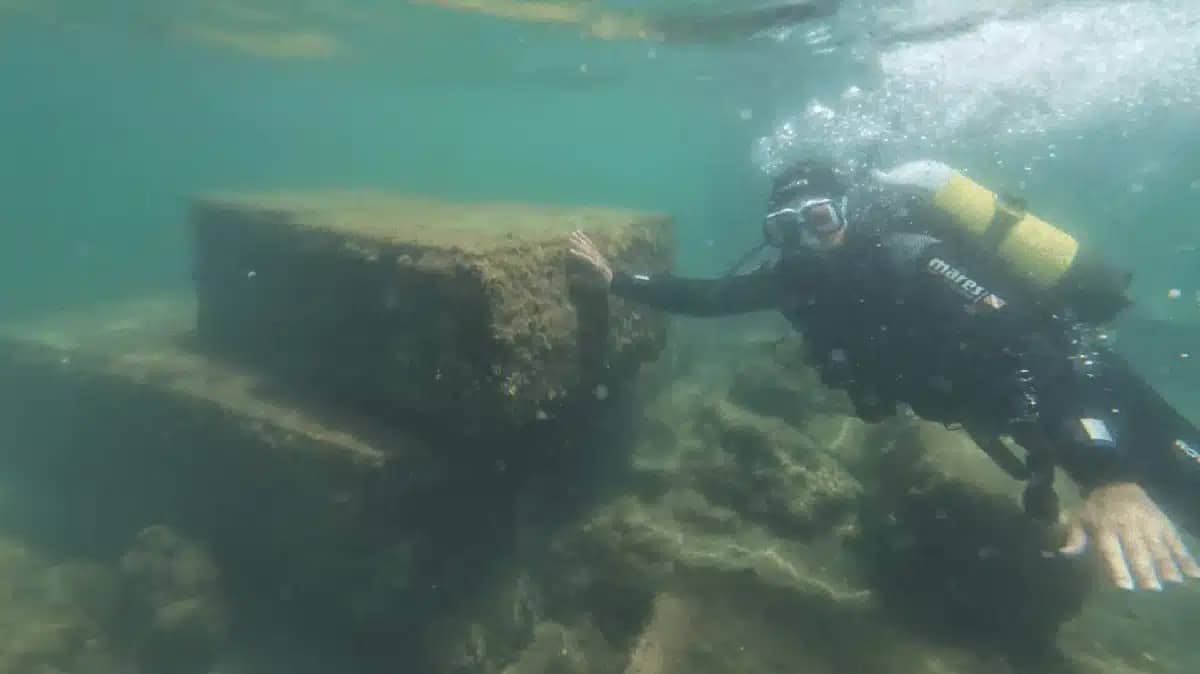
Италийн Поццуоли хотын ойролцоох усан дор хадгалагдан үлдсэн эртний Путеоли хотын бүтцийг археологчид орчин үеийн технологи ашиглан нарийвчлан судалж эхэлжээ.
Ромын эзэнт гүрний худалдааны гол төвүүдийн нэг байсан Путеоли хот нь газар хөдлөлтийн улмаас үүсдэг “брадисейсм” хэмээх галт уулын үйл ажиллагааны улмаас олон зууны турш аажмаар живж, өдгөө далайн түвшнээс 3-5 метрийн гүнд оршдог. Италийн Далайн археологи ба усан доорх байгууламжийн хүрээлэнгийн эрдэмтэн Микеле Стефанилийн удирдсан тус судалгааны баг 2021-2027 он хүртэл үргэлжлэх төслийн хүрээнд уг хотын үлдэгдлийг зурагжуулж байна. Судлаачид алсын удирдлагатай тээврийн хэрэгсэл (ROV), фотограмметр, 3D загварчлал болон газарзүйн мэдээллийн систем (GIS) ашиглан эртний боомтын бүтцийг сэргээн босгож байгаа юм.
Маш сайн хадгалагдан үлдсэн хотын хэсгүүдийн дунд гантиг чулуу боловсруулах цех, эртний модон эдлэл бүхий хана, мөн Набатейн хаант улсын гадна олдсон цорын ганц гэж үздэг Набатейн сүм зэрэг ховор олдворууд илрээд байна. Түүнчлэн эрдэмтэд 2-р зууны үеийн Ромын бетон зуурмагаар хамгаалагдсан агуулахын байгууламжуудыг судалж байгаа бөгөөд энэ нь Ромын эзэнт гүрний үеийн үр тарианы нөөцлөлтийн зохион байгуулалтыг нарийвчлан ойлгох онцгой боломжийг олгож байна.
Эртний Ромын санхүүгийн гэр бүл болох Сулпичийн лавтай шахмал бичээсүүдэд дурдсан баримтуудтай уг олдворуудыг харьцуулан судлах нь тухайн үеийн эдийн засаг, худалдааны сүлжээний үйл ажиллагааг тодруулахад чухал ач холбогдолтой юм. Хэдийгээр далайн усны түвшин болон газар доорх хөдөлгөөн нь эртний өвийг сүйтгэж байгаа ч усан доорх байгууламжууд нь Ромын эзэнт гүрний Газар дундын тэнгисийг холбосон худалдааны өргөн хүрээг харуулсан үнэ цэнтэй мэдээллийг хадгалсаар байна.
Дэлгэрэнгүйг эх сурвалжаас харах
↓Эх сурвалжийг нээх ↓
A forgotten Roman city is slowly emerging from the waters of the Bay of Naples, revealing the remains of Puteoli, one of the most important trading ports of the Roman Empire. Archaeologists are exploring submerged warehouses, workshops and harbour structures that have been preserved underwater for almost 2,000 years.
Just three to five metres below the surface near today’s Pozzuoli, the remains of the ancient port are offering a rare look at the daily activity of a city that once connected Rome with the wider Mediterranean world.
The reason so much of Puteoli disappeared beneath the waves is linked to bradyseism, a volcanic phenomenon in the Campi Flegrei area that slowly changes the level of the ground. Over centuries, the coastline sank and almost two kilometres of the ancient harbour district ended up underwater.
Exploring A Roman Harbour Frozen Beneath The Waves
A major archaeological project running from 2021 to 2027 is now mapping the submerged remains of Puteoli. The research is led by underwater archaeologist Dr. Michele Stefanile from the Italian Institute for Maritime Archaeology and Underwater Structures.
According to Ancient Rome Live, the team is combining remotely operated vehicles (ROVs), photogrammetry, 3D modelling and GIS mapping to rebuild a picture of the ancient harbour. The underwater surveys have already revealed impressive details. During dives lasting almost an hour, Ancient Rome Live director Darius Arya and Dr Stefanile explored areas including a marble-cutting workshop and walls that still contain original wooden parts.
These findings reveal the scale of the port’s former activity. Beyond the trading vessels and cargo traffic lay an intricate system of warehouses, workshops, and functional spaces that sustained the economic life of Imperial Rome.
A Sunken Nabataean Temple Revealed
One of the most surprising discoveries from the project is the return of the submerged Temple of the Nabataeans. Archaeologists believe it is the only known Nabataean temple found outside the ancient Nabataean Kingdom.
The temple was originally identified during research in the 1980s, but the lack of funding stopped further investigation. Nearly 20 years of searching later, Stefanile’s team located it again during the first survey campaign in 2021.

As explained by the source material, the city’s structure was found in remarkable condition, protected by layers of Roman concrete dating from the 2nd century AD. Those layers were added after Emperor Trajan annexed the Nabataean Kingdom.
The Underwater Port That Fed An Empire
Researchers are also studying the underwater granaries of the vicus Annianus, where Egyptian grain was kept before making its way to Rome’s markets and people. The city’s site matches information found in ancient records, including the wax tablets of the Sulpicii, a Puteolan banking family.
Their documents mention loans connected to grain storage at the location. As explained by the Dr Stefanile, the survival of wooden structures and internal fittings could reveal how Roman granaries were organised. “
This may be the only site in the world where we can observe the internal organisation of a Roman granary in such detail,” he said.

For Darius Arya, this city has never received the attention it deserves. He described it as “the port city of Rome and the empire” before Portus was created at Ostia, adding that:
“The tragedy is that so much of it has been lost to the sea, claimed gradually by bradyseism – the slow volcanic ground movement that has been swallowing the Bay of Pozzuoli’s coastline for centuries.”
With its preserved harbour buildings, industrial areas and forgotten monuments, the submerged city is showing a different side of ancient Rome: a place built around trade, movement and connections across the Mediterranean.
Enjoyed this article? Subscribe to our free newsletter for engaging stories, exclusive content, and the latest news.


Эртний Ромын боомт хотыг усан дороос судалж байгааг харахад сонирхолтой байна. Технологийн тусламжтайгаар олдворуудыг дахин сэргээж байгаагаас гадна, энэ нь өргөн худалдааны сүлжээний талаар бидэнд шинэ мэдээлэл өгч болох юм шиг. Таны бодлоор, ийм судалгаа археологид ямар нөлөөтэй болох вэ?