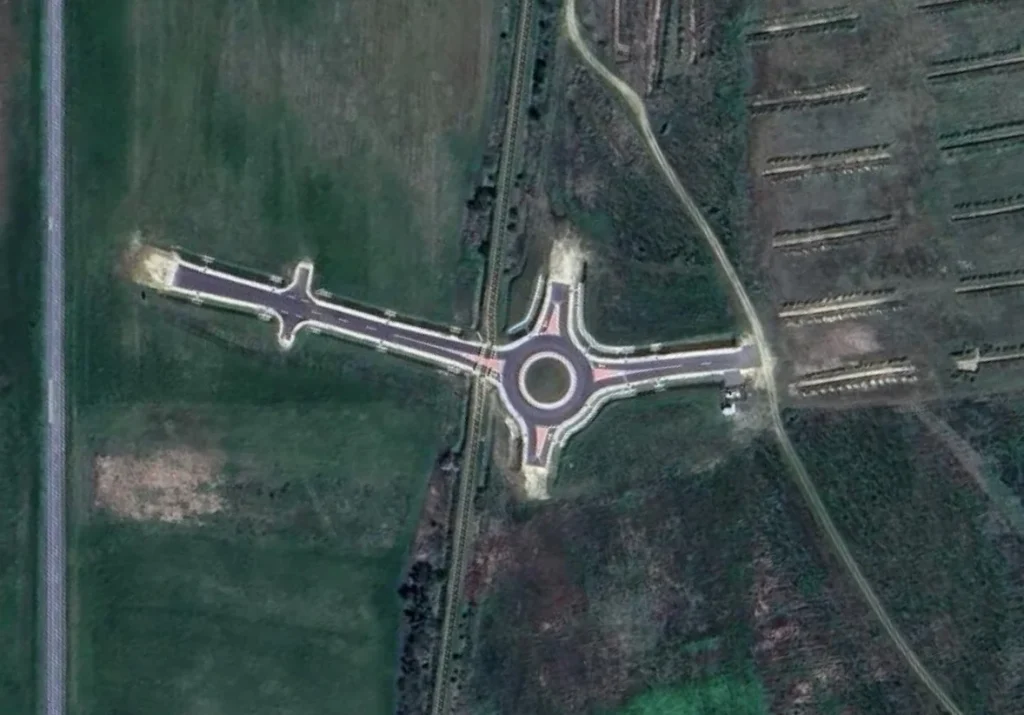
Европын Холбооны санхүүжилтээр баригдсан энэхүү дэд бүтцийн байгууламж нь төлөвлөж байсан логистикийн төв ашиглалтад ороогүйн улмаас ямар ч чиглэлд холбогдоогүй мухар зам болон хувирчээ.
Европын замын хөдөлгөөний зохион байгуулалтад тойрог зам өргөн тархсан байдаг бол АНУ-д энэ нь харьцангуй ховор үзэгдэл юм. Европ тивд 150,000-200,000 орчим тойрог зам байдаг бол АНУ-д 10,000 гаруй л байдаг нь замын хөдөлгөөний соёл болон дэд бүтцийн төлөвлөлтийн ялгааг харуулдаг.
Унгар улсад байрлах 46.8782496° N, 16.8773647° E солбицол дээрх энэхүү тойрог замыг анх ачаа тээврийн логистикийн төвд үйлчлэх зорилгоор 1.5 сая ам.долларын төсвөөр барьжээ. Гэвч тус тойрог замын холбох ёстой байсан чингэлэг тээврийн терминал огт баригдаагүй тул уг бүтээн байгуулалт нь өнөөдөр ямар ч хөдөлгөөнгүй, дөрвөн талдаа мухардаж дуусдаг байна.
Шинжээчдийн үзэж буйгаар, улс төрийн хүрээнийхэн томоохон хурдны зам эсвэл эмнэлэг гэх мэт нарийн төвөгтэй төслүүдээс илүүтэйгээр, санхүүжилтийг хяналт багатайгаар зарцуулах боломжтой “бага төвөгтэй” дэд бүтцийн төслүүдийг сонгох нь элбэг байдаг аж. Энэхүү тойрог зам нь бодит хэрэгцээ шаардлагаасаа илүүтэйгээр төсвийн хөрөнгийг зарцуулах хялбар арга хэрэгсэл болсны нэг жишээ гэж CNN мэдээлсэн байна.
Дэлгэрэнгүйг эх сурвалжаас харах
↓Эх сурвалжийг нээх ↓
There’s a totally random and very expensiveroundaboutin the middle of nowhere in Hungary.
It doesn’t go anywhere, and it doesn’t come from anywhre.
All four sides of it are dead ends.
And the reason why is there is not exactly noble.
Why Europe is obsessed with roundabouts
The notion of a roundabout is so foreignin the US that there isn’t even a US-specific word.
When it comes to traffic, there are three things that stand out when you’re from Europe and drive in the US for the first time.
One, the roads are bigger; two, you can generally turn right on red; three, there are no roundabouts.
I was recently in the US and the whole time I was there I saw one – just one – roundabout.
That’s one in 10 days. In Europe, you’d see 10 in one hour.
Yep, Europe is absolutely obsessed with them.
There are around 150,000-200,000 in Europe, andonly 10,000+ in the US.
In theory, they are supposed to make traffic flow more smoothly.
In practice, that’s not always why they’re built.
And it also explains this absurd roundabout in Hungary.
The uncomfortable truth behind this random roundabout
Both EU countries and EU candidates receive subsidies from the European Union.
And it’s not peanuts, it’s millions.
There’s an old saying: ‘Politicians are all the same, they promise to build a bridge where there’s no river.’
Or, in Europe’s case, they’ll build a roundabout where there’s no road.
The thing is, building them is a quick and easy way for politicians of all sorts to spend funds without too much scrutiny.
That’sbecause these are ‘low-complexity’ projectsthat are easy to approve and fund than major highways or hospitals.
It goes without saying that some pennies out of those dollars end up in someone’s pocket.
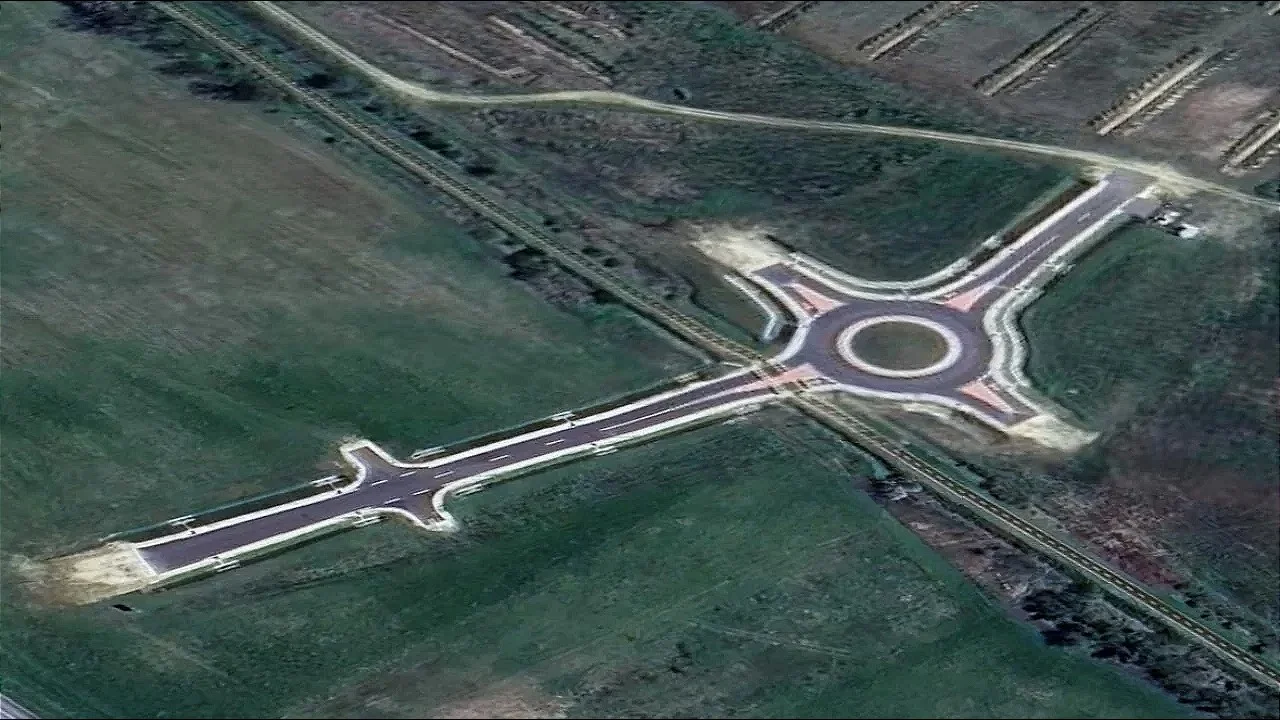
That’s why there are so many roundabouts that appear to be a bit useless.
CNN reports that this particular roundabout, costing $1.5 million, was meant to serve a logistics hub.
Unfortunately, the container terminal that it was meant to link was never actually built.
If you want to go check it out, head toGoogle Earthand search for these exact coordinates: 46.8782496° N, 16.8773647° E.

