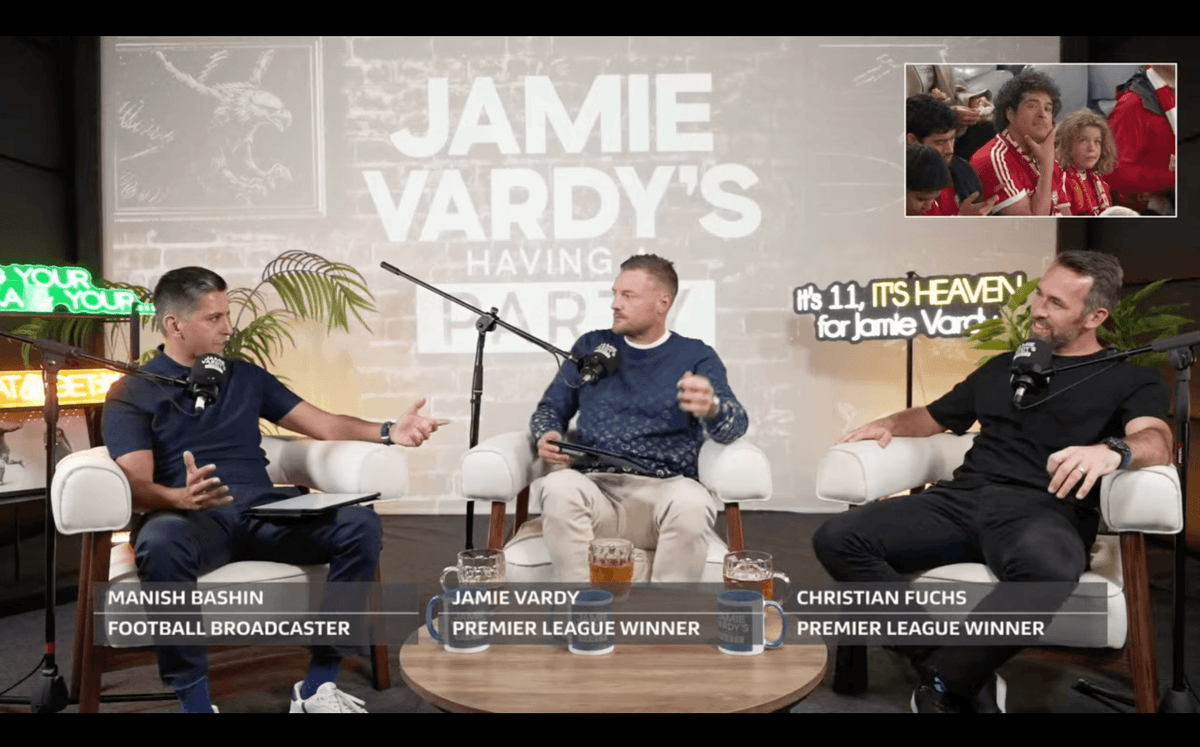
Бундеслигийн 2026-27 оны улирлын нээлт болох Бавари Мюнхен болон Штутгарт багуудын тоглолтыг сонгодог телевизийн дамжуулалт болон Жэми Вардигийн оролцоотой цахим контентоор зэрэгцүүлэн хүргэлээ.
Бавари Мюнхен болон Штутгарт багуудын хооронд болсон тоглолтын 21 дэх минутад Даёот Упамекано гоол оруулж тооны харьцааг нээсэн бол Штутгарт багийн тоглогч Жоша Вагноман 52 дахь минутад тэнцээний гоолыг оруулсан юм. BBC суваг тоглолтын үйл явцыг мэргэжлийн түвшинд тайлбарлан хүргэсэн бол Жэми Варди, Кристиан Фукс нарын хамтран хөтөлсөн YouTube цуврал нь тоглолтын явцыг хувийн яриа болон дурсамжтай хослуулан үзэгчдэд өөр өнцгөөс танилцууллаа.
Бундеслигийн зүгээс хөлбөмбөгийн үзэгчдийн хүсэл сонирхол улам бүр төрөлжиж байгааг харгалзан ийнхүү контент бүтээгчдийн оролцоотой дамжуулалтыг нэвтрүүлж байна. Жэми Вардигийн цуврал нь тоглолтын үеэр 941 хүртэлх зэрэгцээ үзэгчтэй байсан бол өнгөрсөн улиралд Марк Голдбрижийн дамжуулалтыг үзэгчдийн 54 хувийг 13-34 насныхан бүрдүүлж байжээ.
Тоглолтын үеэр Жэми Варди Италид өнгөрүүлсэн хүндхэн жилийнхээ тухай болон Харри Кэйн, Н’Голо Канте, Рияд Марез нартай хамт тоглож байсан үеийн дурсамжаа хуваалцсан юм. Харин Кристиан Фукс Герман дахь хөгжөөн дэмжигчдийн уур амьсгал болон дасгалжуулагчийн карьерийнхээ талаарх асуултуудад хариулт өглөө.
Тус дамжуулалтын үеэр үзэгчдийн зүгээс тоглолтын дүн шинжилгээнд илүү анхаарах хүсэлт ирсний дараа хоёр дахь хагасаас эхлэн хөлбөмбөгийн үйл явдалд илүү ач холбогдол өгч эхэлсэн байна. Энэхүү туршилт нь хөлбөмбөгийн тоглолтыг зөвхөн шууд дамжуулалтаар бус, илүү нээлттэй, харилцан ярианы хэлбэрээр хүлээн авах сонирхолтой үзэгчдэд чиглэжээ.
Дэлгэрэнгүйг эх сурвалжаас харах
↓Эх сурвалжийг нээх ↓
Jamie Vardy’s first Bundesliga watch-along offered something the BBC could not on Friday night: stories from Leicester City days, of Harry Kane before he was famous and a candid account of a difficult year in Italy.
Bayern Munich’s home game against Stuttgart opened the 2026-27 Bundesliga season and was the first of seven that will be shown live in the UK and Ireland over the campaign on Jamie Vardy’s Having A Party.
Vardy, the 39-year-old former Leicester and England striker, launched the YouTube and podcast series in June with Workerbee, part of Banijay Entertainment.
The same match was available free on the BBC, which streams every Friday-night Bundesliga game via iPlayer and its digital platforms.
The two broadcasts formed part of the German league’s wider attempt to reach different audiences after it had already experimented with creator-led coverage through Mark Goldbridge’s That’s Football, which streamed 20 matches last season without paying a rights fee and will show 15 more this year.
Banijay secured Vardy’s seven-game package, including additional digital and archive rights, and the approach is extending beyond Britain. Romario, the 60-year-old Brazilian World Cup winner, was also announced as a rights-holder on Friday, with his YouTube channel showing one game from every Bundesliga matchday in his homeland.
“Our approach is as diverse as our fans,” Peer Naubert, Bundesliga Media’s chief commercial officer, said when announcing the Vardy agreement. “Football audiences are changing, and there is no single way in which people want to experience the Bundesliga.” The league says 54 per cent of the live audience for Goldbridge’s streams last season were aged between 13 and 34.
Banijay says Having A Party has generated 18 million views across its wider digital output since June, but 429 people were watching shortly before kick-off last night, and the highest concurrent figure observed by The Athletic during the game was 941.
The BBC offered conventional commentary built around Bayern vs Stuttgart, while Vardy, a current free agent after one season with Cremonese in Italy’s Serie A following 13 years at Leicester, sat alongside Christian Fuchs, the 40-year-old Austrian who played with him at the English club and spent eight seasons in German football.
To Vardy’s right was Manish Bhasin, 50, the Leicester-born British TV presenter who has spent more than two decades in sports broadcasting, including presenting Football Focus and The Football League Show for the BBC. His role on Friday was to steer the two former players through a watch-along in which the conversation was never guaranteed to stay with the match being aired.
Bhasin began by addressing the question that had followed Vardy since returning from Italy earlier this summer.
“Hang on, can we just stop for a second, right?” he said. “All this time, we’re all waiting to see whether he’s going to sign for a new club at some point. And instead, he’s signed up to a league.”
Bayern striker Kane gave the stream its most obvious route into the German champions, but Vardy’s connection to the 33-year-old England captain goes much further than both having worn the Three Lions in international football.
Kane spent part of the 2012-13 season on loan from Tottenham Hotspur to Leicester, where the pair were team-mates for the then Championship club, before later playing alongside Vardy for their country, including at the 2016 European Championship and the World Cup two years later.
A question from a viewer took Vardy back to that Leicester dressing room, where he remembered Kane as quiet, somebody who trained and generally kept himself to himself, before recalling the surprise when the young striker stood up after one defeat and told considerably more experienced team-mates they needed to start winning matches if they wanted to reach the Premier League.
Both broadcasts gravitated towards players in the two teams likely to be familiar to a UK audience — Michael Olise joined Bayern from Crystal Palace, Jamal Musiala spent much of his childhood in Chelsea’s academy and Stuttgart forward Deniz Undav previously played for Brighton & Hove Albion — but neither laboured these English connections.
The YouTube production supplemented those recognisable names with team sheets, individual player numbers and live statistics in sidebars around the match feed, including a graphic dedicated to Olise. Viewers could also help decide where the in-studio conversation went.

Bhasin mixed his own questions with those arriving through YouTube and social media, including one asking Vardy which Bundesliga team he would support. Bayern were immediately ruled out. “I’m not a glory-hunter,” he said, choosing Borussia Dortmund because he preferred the side he expected to be chasing the reigning champions this season.
Fuchs brought the authority of somebody who had spent much of his career in the league they were watching.
The former Austria international played for Bochum, Mainz and Schalke before joining Leicester in 2015 and talked through the flags, flares and pyrotechnics that are part of the furniture at German grounds, using Newcastle United’s St James’ Park and Leeds United’s Elland Road as English reference points for the intensity of the noise.
“I think it’s hard to compare the German atmosphere with the English atmosphere,” he said. “I’m not saying it’s better. It’s just different, but more intense.”
The BBC had the same in-stadium pictures and sound as the Vardy broadcast but approached them differently. Its commentators talked through the football, crowd and statistics while remaining unseen, allowing the action at Munich’s Allianz Arena to dominate the broadcast. Fuchs, visible in the corner of the YouTube feed, could instead explain why what viewers were seeing and hearing felt different after those seasons playing in Germany.
The BBC’s advantage was clearest whenever Bayern began putting attacks together.
Its commentators followed the build-up to Dayot Upamecano’s 21st-minute opening goal, described the finish and continued analysing the move afterwards, while Vardy and Fuchs had barely discussed the attack as it developed before turning their attention to the replays once the ball was in Stuttgart’s net.
On YouTube, the conversation soon moved to N’Golo Kante and Riyad Mahrez, two names instantly familiar to Premier League viewers from Leicester’s stunning title-winning 2015-16 season, and whether Vardy and Fuchs had expected them to enjoy the careers they did. A later foul on Kane prompted Fuchs to discuss the physicality he encountered in Germany, while another Bayern chance produced little more than “What a ball”.
Bhasin was most valuable when that informality threatened to leave the match behind. With Vardy and Fuchs supplying the playing experience, the only career broadcaster in the room repeatedly returned to statistics and football questions, including turning one discussion about Musiala into a more detailed analysis of Bayern’s attacking play.
Vardy and Fuchs later revealed that comments had arrived at half-time asking them to focus more closely on the game, and there was noticeably more football analysis after the interval.
That request did not remove the diversions which had distinguished the stream from the BBC’s coverage.
Fuchs has moved into coaching since retiring as a player, and was Newport County manager in fourth-tier League Two last season. Another viewer asked whether he would consider returning to the EFL. He said he had enjoyed spending more time with his family but wanted to coach again. “The answer is yes,” he said. “And my first signing will be Jamie Vardy.”
Vardy’s own career produced the night’s most revealing exchange when he was asked about his season in Italy, which ended in relegation. He initially brushed off the question. “It was an experience,” he said. “I think that’s all I can say.”
He eventually opened up about how difficult life in Cremona, a town of around 70,000 people a short distance south of Milan, had been for his loved ones. “It was horrible to see the family struggle,” Vardy said. “As a dad, it was horrible.”

Jamie Vardy spoke about the challenges he faced living in Italy last season (Timothy Rogers/Getty Images)
Josha Vagnoman scored Stuttgart’s 52nd-minute equaliser while Vardy was talking, dragging the conversation back to events in Bavaria. On the BBC, the goal became the immediate focus. On YouTube, it interrupted one of the most personal conversations of the night.
The Vardy broadcast’s audience grew during the match, rising from 429 shortly before kick-off to 609 around the opening whistle and above 900 during the first half. It dipped to 634 around the interval before reaching the observed high of 941 in the second half.
Those numbers meant one Fuchs comment had unfortunate timing. While trying to remember the history behind a German footballing rivalry, the Austrian worried aloud about getting it wrong in front of the “millions of people watching us”. The counter showed 932.
By the closing stages, Bayern were turning what had been a competitive opening night into a comfortable victory and Bhasin was still providing much of the conventional match discussion. Vardy drank a beer with his guests and occasionally looked towards his iPad as the watch-along continued around him.
Why the new Bundesliga ball is controversial
Sebastian Stafford-Bloor
For anyone primarily interested in how Bayern were beating Stuttgart, the BBC’s coverage was comfortably easier to follow.
Its commentators tracked attacks as they developed, supplied context when it was needed and otherwise disappeared behind the football, while Vardy’s stream occasionally required Bhasin, or even the people watching, to pull two former players having a natter back towards the match. But that looseness was its appeal.
The BBC spent the night explaining Bayern-Stuttgart but Vardy’s watch-along was at its most interesting when the match gave the people watching along something else to talk about.

