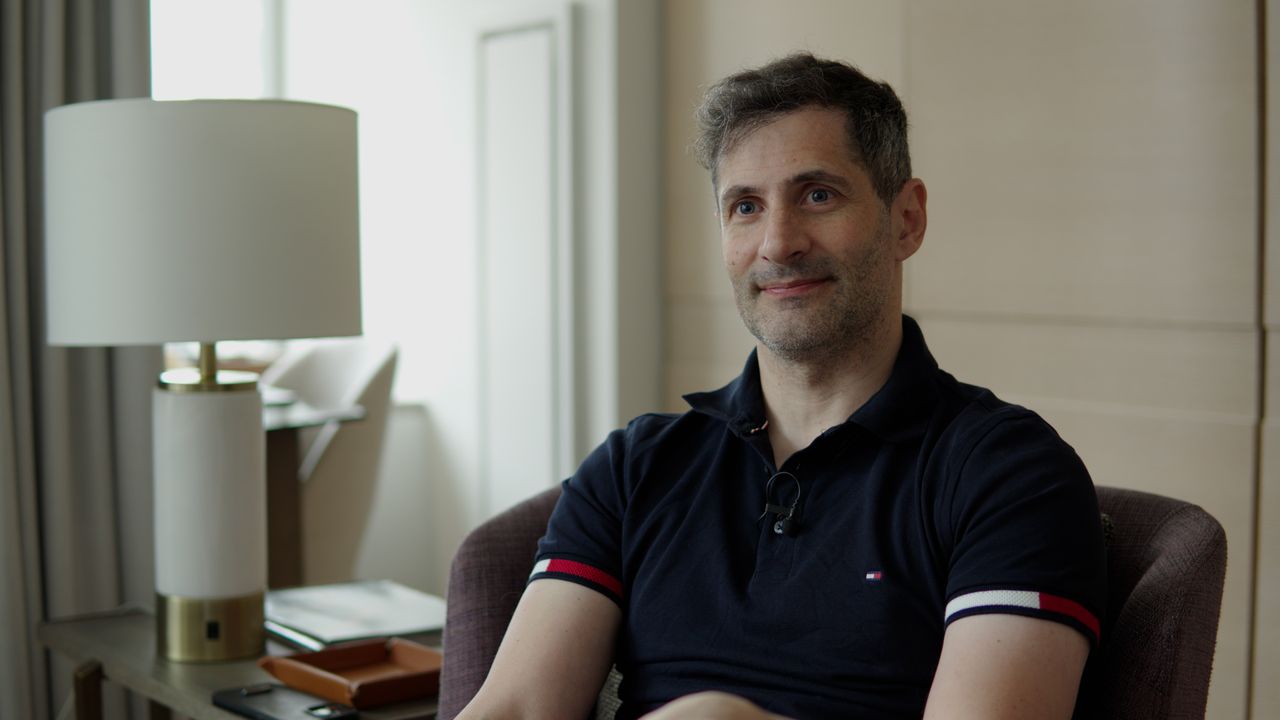
RocketWerkz студийн үүсгэн байгуулагч Дин Холл survival төрлийн тоглоомуудын төгсгөлийн шатны уйтгартай байдлыг арилгах шийдлийг олохыг хичээсээр байна.
DayZ тоглоомын модыг бүтээж, survival төрлийн тоглоомын чиг хандлагыг тодорхойлсон Дин Холл өөрийн бүтээлч замналынхаа туршид энэ төрлийн тоглоомуудад тулгардаг гол асуудлыг шийдэхээр 10 гаруй жил эрэл хайгуул хийж байна. Түүний үзэж буйгаар survival тоглоомууд ихэвчлэн тоглоомын явцын төгсгөлд уйтгартай болдог бөгөөд хөгжүүлэгчид үүнийг зөвхөн агуулгыг ихэсгэх замаар “хүчээр” шийдэх гэж оролддог байна. Холл энэхүү асуудлыг шийдэх төгс арга замыг ололгүйгээр нас барах вий хэмээн болгоомжилж буйгаа ч нуусангүй.
Түүний үүсгэн байгуулсан RocketWerkz студийн хувьд эхэн үедээ санхүүгийн хүндрэлтэй тулгарч байсан ч сүүлийн жилүүдэд Icarus тоглоомоороо амжилтад хүрч эхлээд байна. Icarus тоглоомын хувьд нээлт хийхдээ хүлээлтэд хүрээгүй ч тогтмол шинэчлэлт хийх стратеги болон DLC-ийн тусламжтайгаар үнэнч тоглогчдын баазыг бүрдүүлж, 2025 онд ашигтай ажиллаж эхэлжээ.
Дин Холл өөрийгөө үргэлж мод бүтээгч гэж тодорхойлдог бөгөөд Kitten Space Agency зэрэг үнэгүй төслүүд болон шинэ тоглоомын хөгжүүлэлтдээ энэхүү туршлагаа ашиглаж байна. Тэрээр survival тоглоомуудын асуудлыг шийдэхийн тулд Valheim зэрэг тоглоомуудад ашиглагддаг шиг бэлтгэл шаардсан даалгаврууд эсвэл тоглоомын явцыг өөрчлөх нэмэлт дарамт шахалтын механикуудыг судалж байгаа юм. Одоогоор түүний студи бүх орлогоо дараагийн томоохон төсөл болох DayZ болон ArmA-тай төстэй тоглоомыг хөгжүүлэхэд зориулж байна.
Дэлгэрэнгүйг эх сурвалжаас харах
↓Эх сурвалжийг нээх ↓
You might think making one of the most influential games of this century would be a source of unending happiness for its creator. But for Dean ‘Rocket’ Hall, founder of RocketWerkz, the relationship with his most famous creation isn’t that simple. “When DayZ happened, it was like dying,” says Hall of the mod which, alongside Minecraft, helped establish survival games as a cornerstone of the medium. “It ended my old life. My relationship with everyone who I knew up to that point changed completely.”
This isn’t to say Hall doesn’t recognise his good fortune: “It was obviously an amazing thing that happened to me,” he stresses. But there is a sense that, while Hall gained much from the creation of DayZ—fame, respect, and to a certain extent, fortune—something was lost too. “I loved making the mod, and I loved that feeling, and I’ve been chasing it ever since.”
Chasing the feeling of making DayZ has taken over a decade, sent Hall down numerous rabbit holes and even led his studio to the precipice of bankruptcy. After all that time, Hall still hasn’t found what he is looking for and admits he may never find it. Yet as he continues his search, RocketWerkz is beginning to find success on its own terms.
Hall of fame
What is it, exactly, that would rekindle the feeling of making DayZ for Hall? Specifically, he says he’s searching for a solution to a specific problem he sees in survival games. “You see it time [and] again. If you go see commentary on a survival game, people will say it gets boring, or the end game sucks,” he says. “And it’s such a hard problem, because what you do [to] solve it [is] brute force it with heaps of content.”
It’s not clear when exactly Hall identified this issue, but it was likely between RocketWerkz’s first and second released games. When the DayZ mod launched, Hall was working at Bohemia Interactive, the creators of ArmA 2 which served as the original basis for DayZ.
This wasn’t the first mod Hall had made for ArmA 2. Indeed, it was modding that landed Hall his job at Bohemia, after his co-op mod for ArmA 2 became the most popular mod on the defunct ArmA fansite Armaholic. Despite running a major video game developer, Hall still regularly makes mods today for games like RimWorld and Barotrauma.
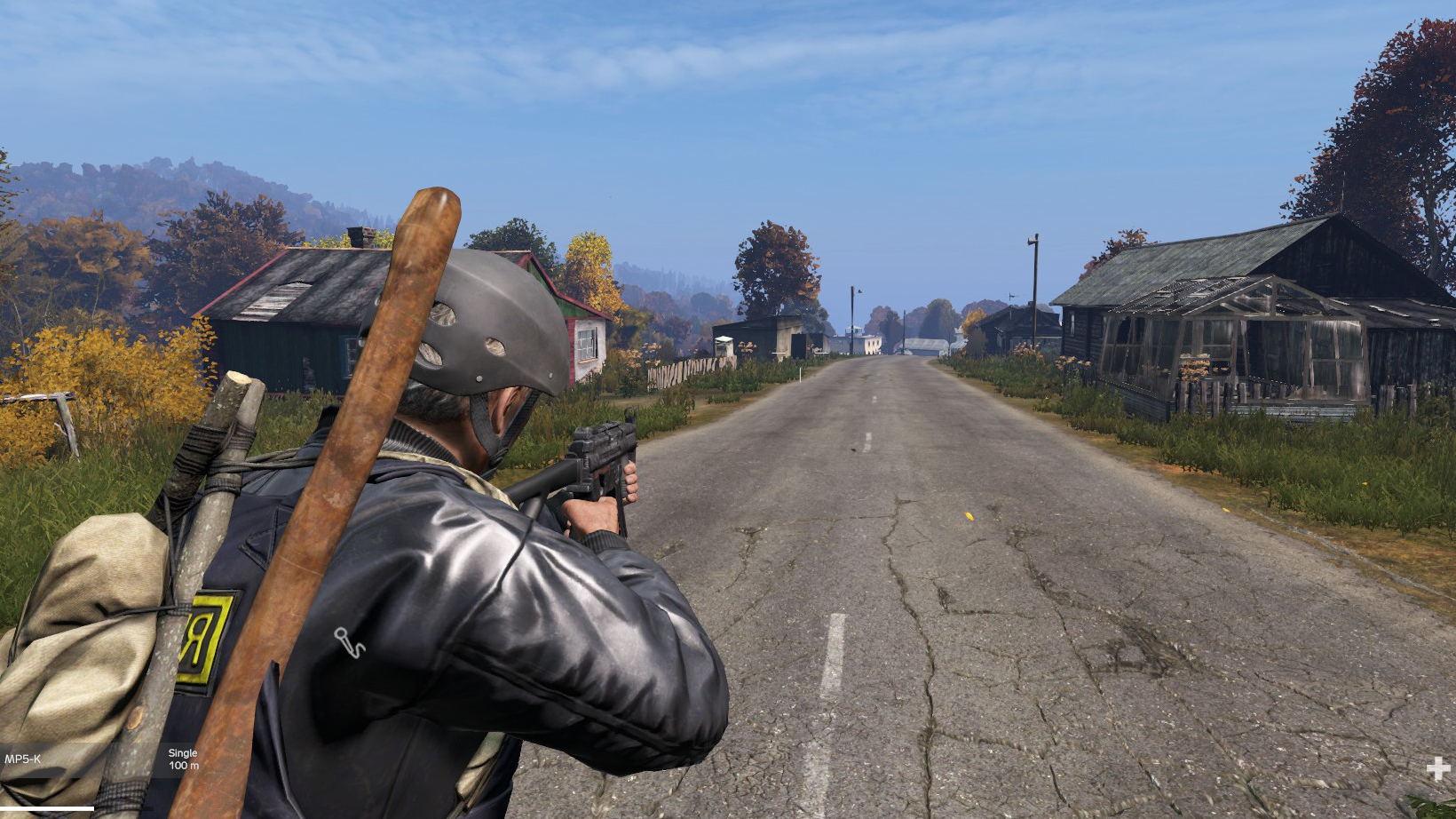
“People think I’m a game developer who came up from [being] a modder, and I would say I’m a modder who makes games during the day,” Hall explains. “I was born a modder and I will die a modder. And I think if there’s a lesson out there for any aspiring game devs, I think it’s mod games. You will learn even faster than making them.”
DayZ’s surging popularity led Bohemia Interactive to begin creating a commercial version of the mod. Hall initially led the project, but he left Bohemia in 2014, which is when he founded RocketWerkz and began work on a project called Ion.
Ion would later be cancelled, with RocketWerkz pivoting to Stationeers, a space-station construction and management game inspired by one of Hall’s favourite games, Space Station 13. Yet when it was released in 2017, Stationeers received mixed reviews, and has struggled commercially throughout its existence. “It’s built up about seven years of losses,” Hall says, though he adds that in 2025 it “actually probably broke even.”
Close to the sun
While well received by players, Stationeers struggled commercially and remains in Steam early access. Following Stationeers, RocketWerkz began developing Icarus, a free-to-play, online survival game with a run-based loop. Players would land on a planet, go through the basic survival loop while completing an objective, launch back into space, and begin another mission that would start the cycle again.
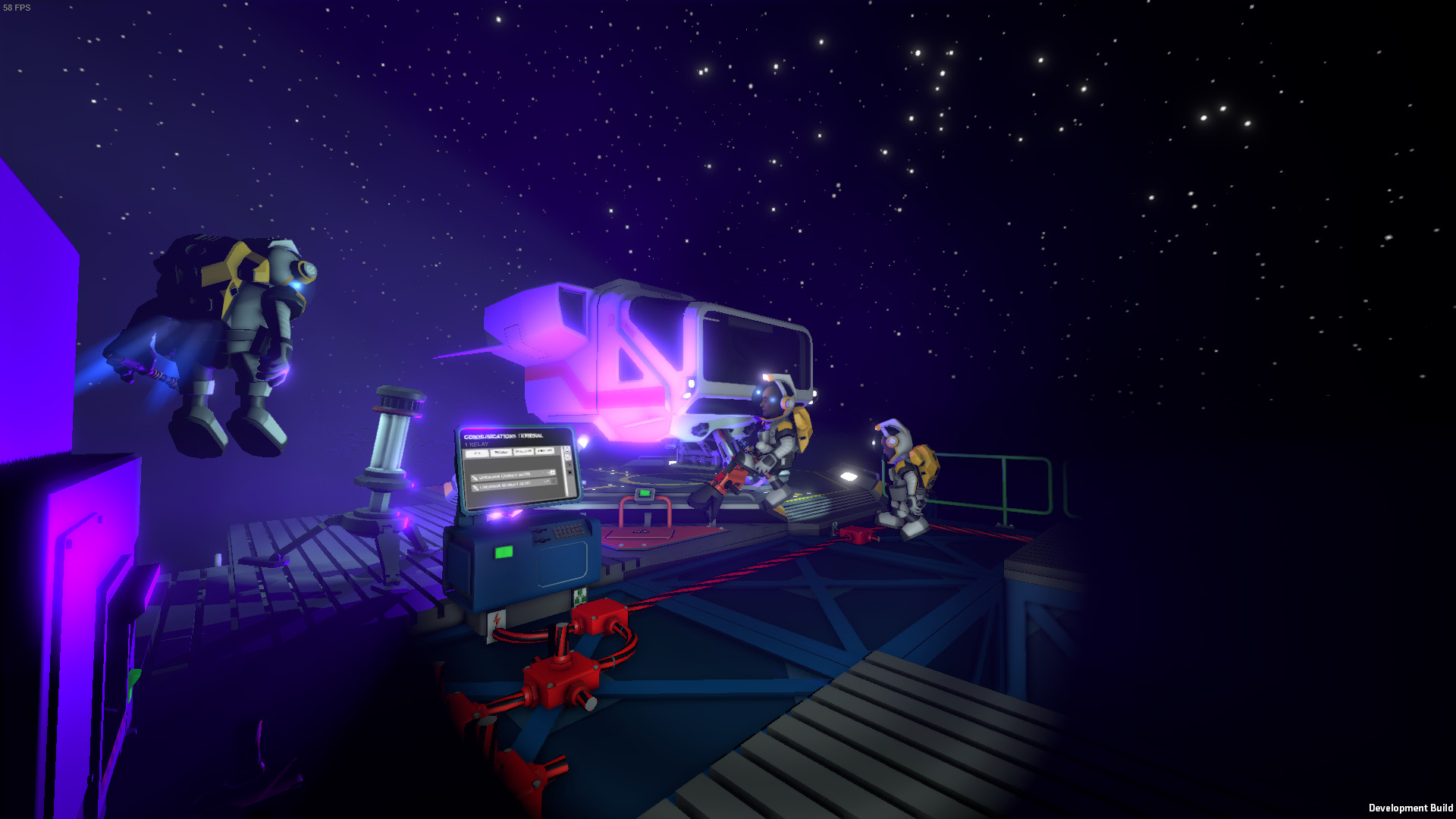
This was Hall’s attempt to solve that problem of survival games running out of road. But there were two problems. First, players didn’t like the loop, as they perceived it as losing progress. “It just didn’t work. People didn’t want it. It was hilarious, but that’s life.”
Second, on launch, Icarus was not the financial success that RocketWerkz needed it to be to survive. As such, RocketWerkz pivoted quickly, abandoning the free-to-play aspect and committing to a rigorous post-launch support scheme where it would release weekly updates like clockwork. “After the beta weekend, I levelled with the team. I was like ‘We do this or it’s over.’ We might even do all this work and still go bankrupt, ” he says. Hall is open about how gruelling a process this was. “The last couple of years, I’ve been enjoying it, but before that, I hated it, and we were looking at ruin, basically.”
Nonetheless, Icarus has slowly established a trusting audience, one which RocketWerkz could then sell larger, paid expansions to. “Icarus, at times, we can have a 50% attachment rate to DLC at purchase,” Hall explains. “I can tell you right now, the studio would be bankrupt if we didn’t do that strategy.”
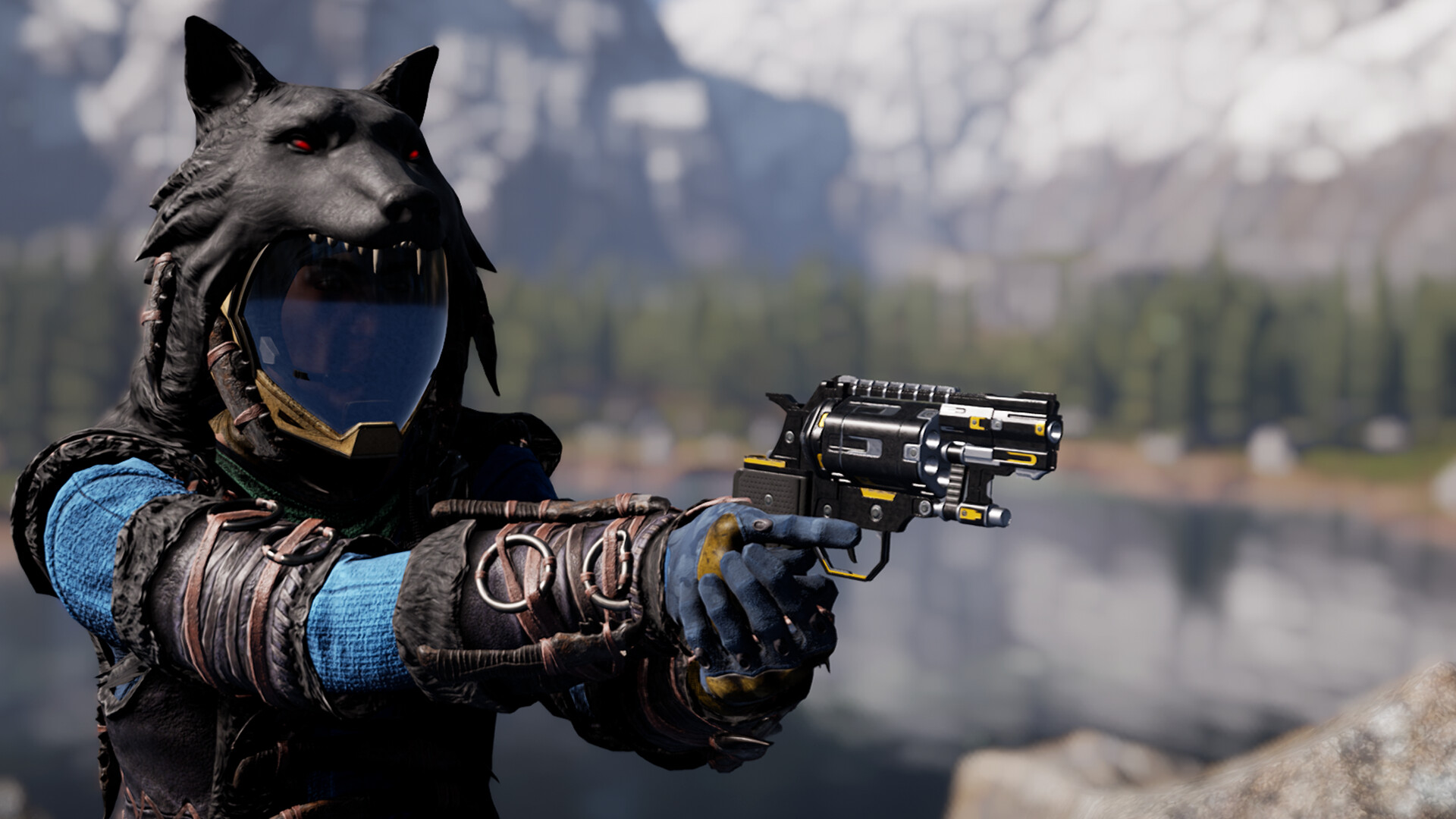
Yet even here, the margins can be slim. “People will go and say: ‘There’s too many DLC, this is crazy’. And I’ll post our financials. I’ll be like ‘Hey, a lot of our DLC, even on Icarus— which is really good—sometimes we’ll only make $100,000 from it. It might have cost us $120,000 to make. So we’re not printing money.”
Indeed, Hall says that it’s only in the last year that Icarus has really begun making money. “We’ve increased our revenue 80% in the last year,” he says. “Our dream for a long time has been to make more per day than we spend, because as a game developer, you need to build a big cash reserve, especially now because there’s no investment money out there.”
Rocket purr-kz
The experience of making Icarus has taught Hall a lot. He says he’s learned the value of community, how a relatively small audience can be more valuable than hundreds of thousands of players—provided the audience is dedicated enough. “My encouragement to devs is: focus on getting fans, not on selling product.”
He also believes a small audience can be just as emotionally gratifying as a large one. “I think seeing that 100 people love what you do is chemically the same as 100,000 at least,” Hall elaborates. “If you’re a musician [like] Freddie Mercury and you pack out the Wembley Stadium, seeing 100,000 people right there waving lighters is probably insane. But as a Game Dev, I don’t know whether there’s as big a difference. So if I can make a mod that 100 people love, that’s like crack cocaine to me.”
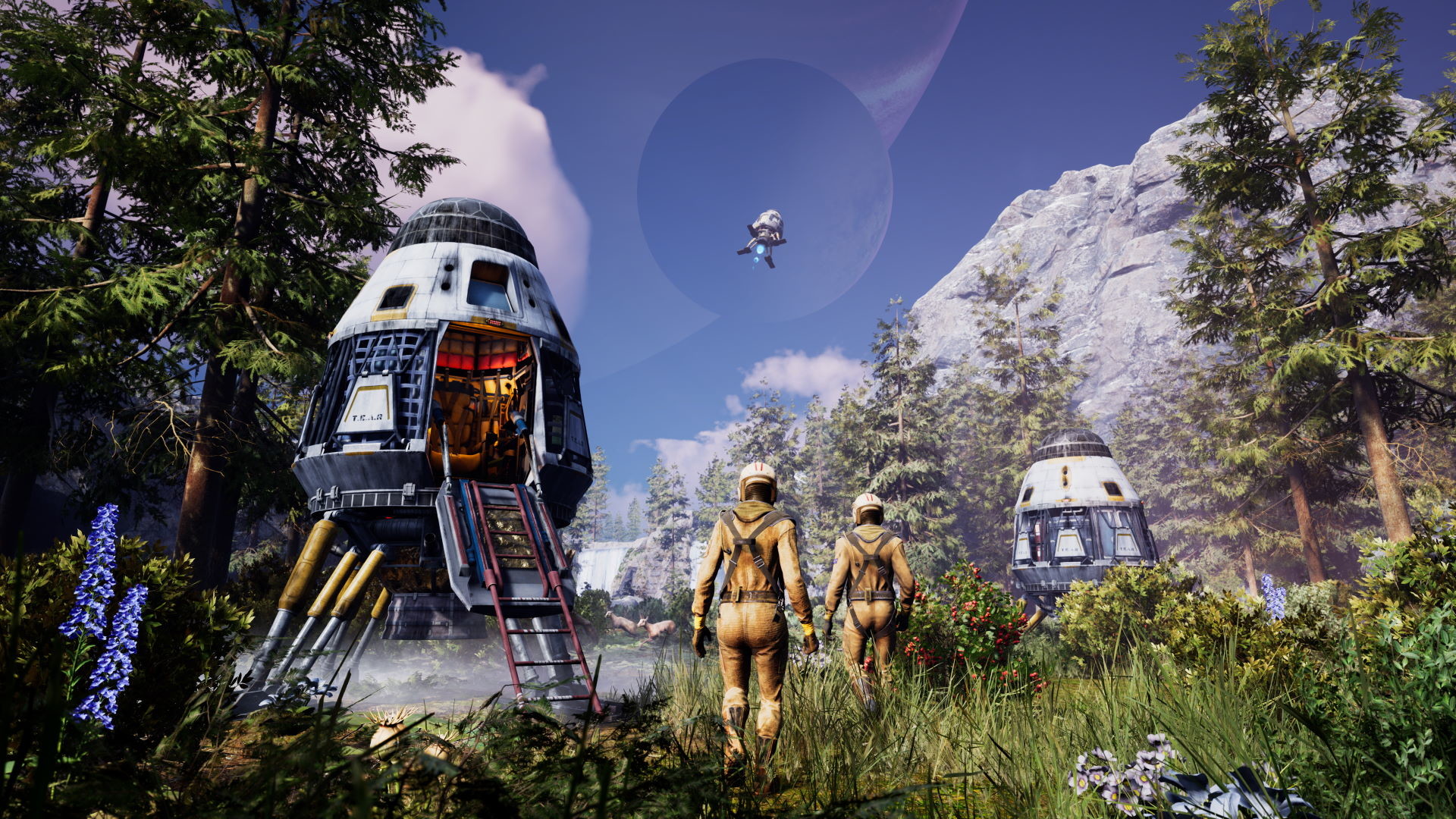
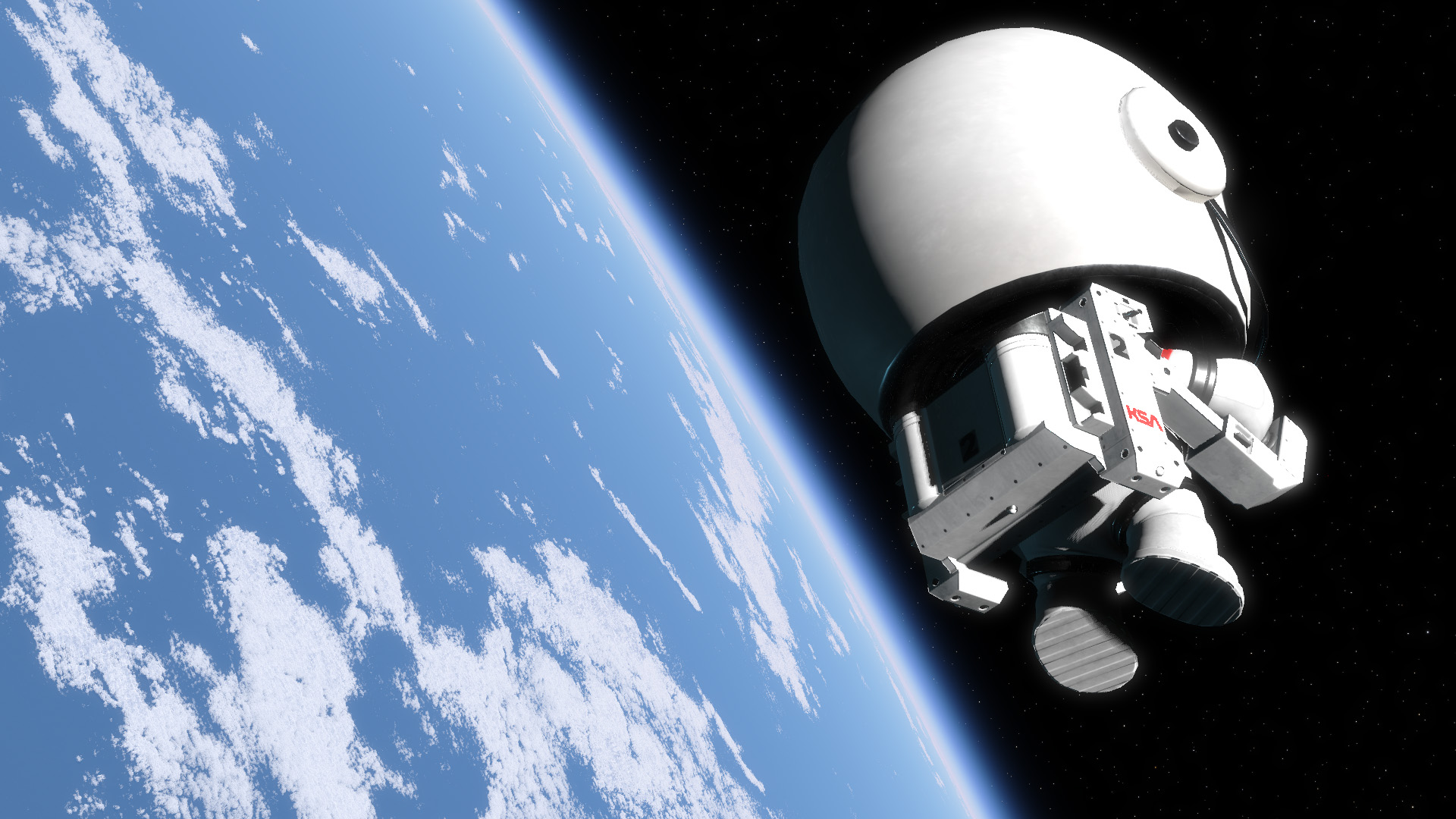
It was this line of thinking that informed RocketWerkz’ approach with Kitten Space Agency—the studio’s freely available spiritual successor to Kerbal Space Program, a game which Hall personally adores. “With Kitten Space Agency, the game is completely free. It’s funded entirely by contributions. So that really puts it in front of the gamer’s face,” he says. “If you want this game to exist, how much is it worth? Because it’s all on you.”
While letting players determine the value of a game has its own risks, Hall likes it as a funding model, saying it absolves him of the need to justify a price point, and allows him to focus on the creative aspect: “I think if I could, I would just do all my games for free, because it stops you having to be focused on dumb stuff, and allows you to focus on the good stuff, which is what you get to do for modding.”
Beyond survival
One thing Hall is still yet to learn, however, is how to solve his perceived problem with survival games. Icarus ended up using the exact brute-forcing solution he wanted to avoid. “Make no mistake, that’s all we ended up doing with Icarus. It’s such a crude, basic way to make your game, is just to solve it with content, I am really proud of what we’ve done with that. But it’s like banging a nail in with a rock.”
What is the solution, then? One idea Hall has identified is “to layer pressures in that hit you at different points.” He cites Valheim as an example. “It does it with these boss fights. And the fun part of the boss fights in Valheim is not the boss fights, it’s preparing for the boss fights.”
Another example Hall points to is EnviroMine, a mod for Minecraft that adds an insanity meter to the experience. “The more time you spent underground, you built up this insanity meter, and it was this weird extra pressure that I’d never considered, that just totally changed how you played the game,” Hall explains. “It was one of those mechanics that made me go ‘Oh, I wish I’d come up with that'”.
Both examples suggest that survival games need to aspire to a higher level of experience to become self-sustaining. But Hall doesn’t think either have landed on the perfect solution. In fact, he’s not sure if anyone ever will, and that includes himself. “I think I am going to die without having solved it,” he says.
But this won’t stop Hall from trying. Now that RocketWerkz is solvent, he’s putting every penny it earns into the pot for its next project—which he’s described as a DayZ/ArmA style game. “I’ve never made any money from RocketWerkz. All the money goes back in,” he says. “Our aim was to try to build money so we could make a big game, and that’s really hard.”

