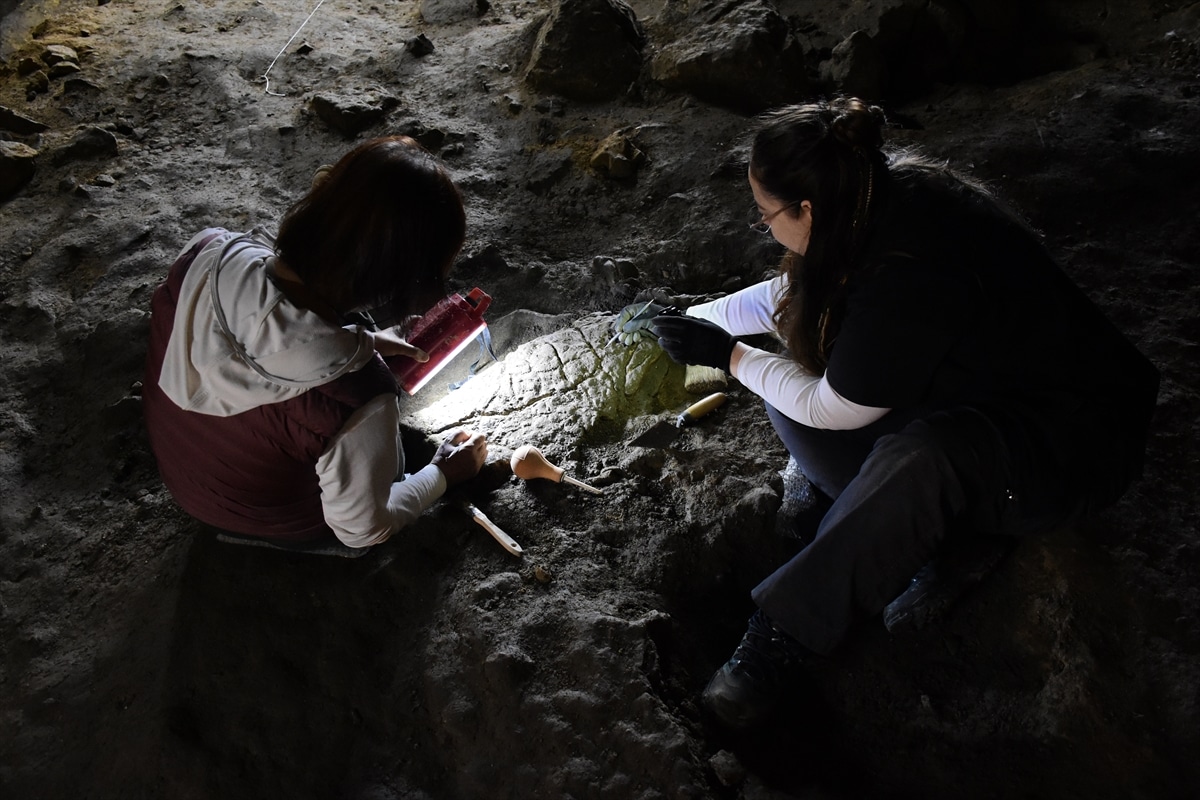
Археологичид Туркийн Гедиккаяа толгод дахь агуйгаас 14,500 жилийн тэртээх 25 ширхэг чулуун барималыг илрүүлсэн нь эртний зан үйлийн судалгаанд шинэ баримт болж байна.
Туркийн Гедиккаяа толгод дахь агуйн малтлагаар эртний хүмүүсийн зориудаар байрлуулсан байж болох 25 ширхэг яст мэлхийн хэлбэртэй чулуун баримал олдлоо. Нүүрстөрөгчийн он цаг тогтоох аргаар үзэхэд эдгээр олдворууд нь МЭӨ 14,500-аас МЭӨ 11,200 оны хооронд буюу Эпипалеолитын үед хамаарч байна. Шохойн чулуугаар сийлж, шавраар бүрж хийсэн эдгээр барималыг агуйн доторх муруй хэлбэртэй чулуун байгууламжийг тойруулан байрлуулсан нь сонирхол татаж буй юм.
Билечик Шейх Эдебали их сургуулийн профессор Дениз Сарыгийн тайлбарласнаар, эдгээр барималыг зүгээр нэг хаяагүй, харин тодорхой зохион байгуулалттайгаар газарт шигтгэн байрлуулсан нь энэ нь санаатайгаар үйлдсэн зан үйл байсныг гэрчилж байна. Судлаачид энэхүү үйл ажиллагааг өнөө үед Турк болон Балканы орнуудад хаврын баяраар хүсэл бичиж газарт булдаг уламжлалтай харьцуулан судалж байна.
Гедиккаяа толгодын хэлбэр нь яст мэлхийтэй төстэй байдаг нь тухайн үеийн хүмүүс уулыг шүтэх “уулын соёл”-ыг бий болгосон байж болзошгүй гэсэн таамаглалыг төрүүлж байна. Түүнчлэн яст мэлхий нь тус бүс нутгийн уламжлалд урт наслалт болон тэсвэр хатуужлыг бэлгэддэг. Гэсэн хэдий ч барималуудын ягштай зорилго болон байгалийн тогтоцтой холбоотой эсэх нь одоогоор тодорхойгүй бөгөөд судалгааны ажил үргэлжилж байна.
Дэлгэрэнгүйг эх сурвалжаас харах
↓Эх сурвалжийг нээх ↓
Deep inside a cave beneath Turkey’s Gedikkaya Hill, archaeologists have pulled 25 crudely carved stone turtles from the earth, arranged around a curved architectural feature that predates the pyramids by thousands of years. The figurines date back as far as 14,500 B.C.E. Their purpose remains unknown, though researchers have begun to piece together some compelling theories.
In a site that has puzzled and intrigued archaeologists for decades, this year’s find adds a new layer to the story. Gedikkaya Hill first drew attention in the 1960s. The cave itself, however, wasn’t identified until 2017. Excavations have continued there ever since, and the site has produced evidence that people returned to it across three distinct prehistoric periods: the Epipaleolithic, the Neolithic and the Chalcolithic.
What makes this year’s discovery notable is where and how they were placed. The figurines weren’t scattered randomly. They were found surrounding a curved stone structure, deliberately inserted into the ground.
A Ritual Older Than Recorded History
The 25 turtle figurines range in age from roughly 14,500 B.C.E. to 11,200 B.C.E., according to radiocarbon dating, placing them squarely within the Epipaleolithic Period. This span of more than three thousand years suggests that the practice behind these objects was not a single event, but something repeated across generations.
Carved from limestone and coated with clay, the figurines varied considerably in size, with the largest reaching nearly a foot in length and about eight inches wide. Deniz Sarı, an archaeology professor at Bilecik Şeyh Edebali University, described the craftsmanship as somewhat rough.
“The turtle figurines we found this year have taken the ritual context of the cave to a different level,” Sarı said, according to the Hürriyet Daily News.
Echoes of a Festival Still Celebrated Today
Rather than reaching for a purely speculative explanation, Sarı draws a line to a tradition still practiced today: Hıdırellez, a spring festival observed across Turkey and the Balkans in which people write their wishes on slips of paper and bury them.
“During Hıdırellez, people make offerings, write their wishes on pieces of paper and then bury them somewhere,” Sarı explained. “Here, too, there is an architectural arrangement forming circular rings. Around these, we found turtle figurines, mostly half-shaped or quickly fashioned from limestone, inserted into the ground.”

According to a report from Anadolu Agency, the fact that ancient people took the trouble to bury the figurines in the ground, rather than discarding them carelessly, points to a deliberate ritual practice.
A Hill Shaped Like a Turtle?
Before this discovery, archaeologists working deeper in the cave had already found two curved rows of stones encircling a large natural stalagmite, forming what appears to be a ritual pit. Earlier excavations also turned up animal remains and stone tools, including a raptor claw and fragments of tortoise shell.
That earlier tortoise find gives the new figurines added weight. Experts believe the ancient inhabitants of the site may have seen a resemblance between the shape of Gedikkaya Hill itself and a turtle, giving rise to what’s being described as a “mountain cult,” with the figurines standing in for the hill’s form.

Turtles have also long symbolized longevity and endurance across the region’s broader traditions. The exact link, whether to the landmark, to turtle symbolism generally, or to both, remains unresolved.
Enjoyed this article? Subscribe to our free newsletter for engaging stories, exclusive content, and the latest news.

