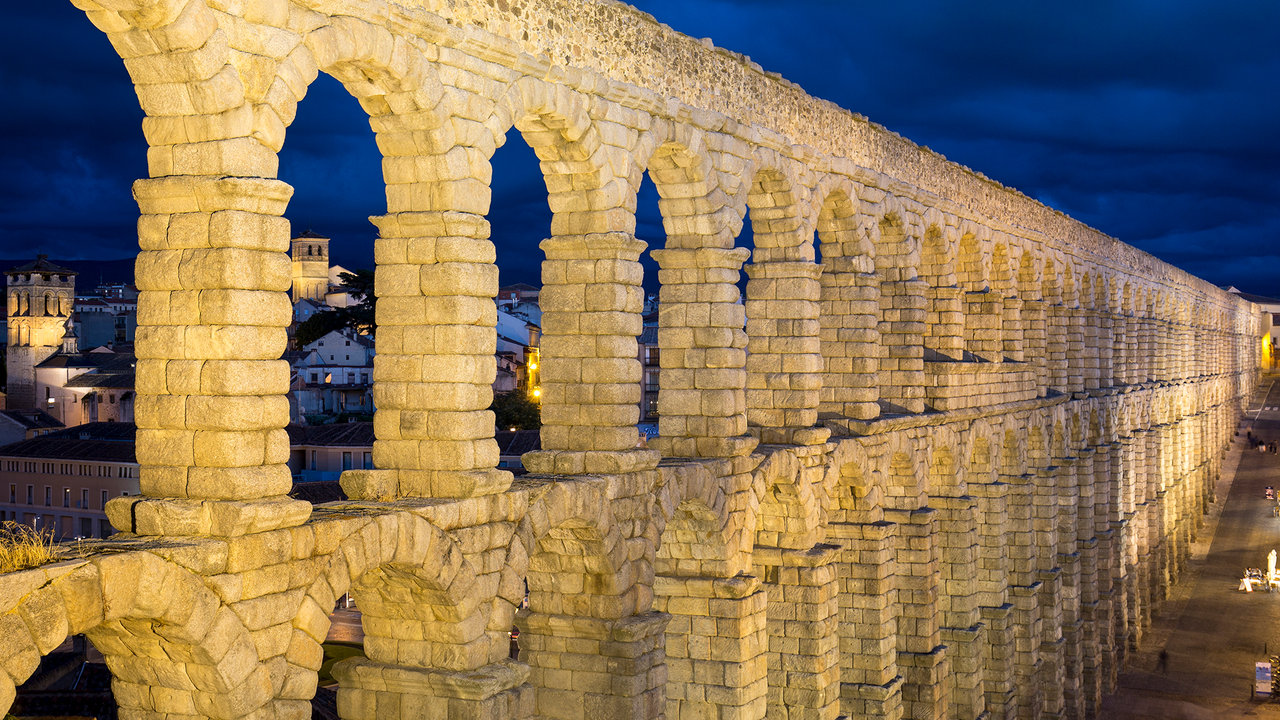
Эртний Ромын инженерүүд нарийн тооцоолол болон дэвшилтэт материалын тусламжтайгаар олон зууны турш тэсвэртэй байх ус дамжуулах байгууламжуудыг бүтээн байгуулжээ.
Ромын эзэнт гүрний ус дамжуулах хоолойнууд нь 400 километр хүртэлх урт замыг туулдаг байсан бөгөөд тэдгээрийн үлдэгдэл нь өнөөг хүртэл Ромын инженерийн гайхамшигт ур чадварыг илтгэсээр байна. Археологичдын судалгаагаар, эдгээр байгууламжийг барихдаа усны эх үүсвэрээс хот суурин хүртэлх бага зэргийн налууг маш нарийн тооцоолдог байжээ. Үүний тулд “либра” болон “диоптра” хэмээх хэмжилтийн багаж хэрэгслийг ашиглан газрын гадаргуугийн өндрийн зөрүүг тодорхойлдог байсан нь тогтоогджээ.
Тэдний ашиглаж байсан бетон нь шохой, ус болон галт уулын үнс буюу “поццолан”-ы нэгдэл байсан нь өнөөгийн бидний хэрэглэж буй бетоноос илүү бат бөх чанарыг олгосон байна. Инженерүүд ус дамжуулах хоолойг барихдаа геологийн тогтоц сайтай, газар хөдлөлт зэрэг байгалийн эрсдэл багатай бүсийг сонгохыг эрмэлздэг байв. Зарим тохиолдолд хотын ойролцоо усыг тунгаах сав ашиглан бохирдлыг цэвэрлэдэг байсан нь тэдний усны чанарт анхаарч байсныг харуулдаг.
Эдгээр байгууламжийн урт наслалтын нууц нь байнгын арчилгаанд оршиж байв. Судлаачдын тогтоосноор, ус дамжуулах хоолойд хуримтлагдсан шохойн давхаргыг ажилчид тогтмол хусч цэвэрлэх эсвэл шинээр шавардан засварладаг байжээ. Ромын эзэнт гүрэн мөхсөний дараа ч зарим байгууламж нь дундад зуун хүртэл ашиглагдаж ирсэн бөгөөд МЭӨ 19 онд баригдсан “Аква Вирго” хоолой өнөөдрийг хүртэл Ром хотыг усаар хангасаар байна.
Дэлгэрэнгүйг эх сурвалжаас харах
↓Эх сурвалжийг нээх ↓
The Romans are well known for their aqueducts, which brought water to their cities and settlements.
These aqueducts sometimes ran for very long distances. For instance, the aqueduct of Valens, which brought water to the city of Constantinople (modern-day Istanbul), was 250 miles (400 kilometers) long, according to a statement from Johannes Gutenberg University Mainz.
The aqueducts also lasted a long time; their remains are some of the most prominent Roman architectural finds visible today. All of this demonstrates the Romans’ engineering prowess. So how did the Romans build such large and long-lasting aqueducts?
Preparing the route
Sign up for our weekly Life’s Little Mysteries newsletter to get the latest mysteries before they appear online.
First, the Romans would select a source of water for the aqueduct, with springs being a popular choice. The aqueducts had to be designed so water would flow toward the city or settlement. The successful building of the aqueducts “was accomplished by an ever slight incline downwards from the spring to its end source,” such as Rome, Ann Olga Koloski-Ostrow, a classics professor and chair emerita at Brandeis University in Massachusetts, told Live Science in an email.
Roman surveyors had to design a route carefully. “To choose a route with the necessary gradient, Roman surveyors would have either used the libra or the dioptra,” Joseph Lewis, an archaeologist at the University of Cambridge, told Live Science in an email.
The dioptra was shaped like a disc with a sighting bar in the middle. It could be suspended from a stand, and the surveyor could look through the sighting bar at rods in the ground to help determine their elevations. “Surveyors would sight through the sighting bar toward surveying staves to measure differences to elevation,” Lewis said.
The exact design of the libra is unclear, but we know that it had a plumb bob that was suspended in the air and the surveyor could compare it to rods in the ground to help determine differences in ground height. “Surveyors would set the libra up along proposed routes for the aqueduct and look forward and backward against calibrated staves,” Lewis explained, noting that this allowed them to determine differences in ground height.
Building a long-lasting aqueduct
The Romans used a form of concrete that tended to last much longer than modern-day concrete. Roman concrete used pozzolan, an ashy substance, that was combined with lime and water to form a durable concrete that hardened when exposed to water.
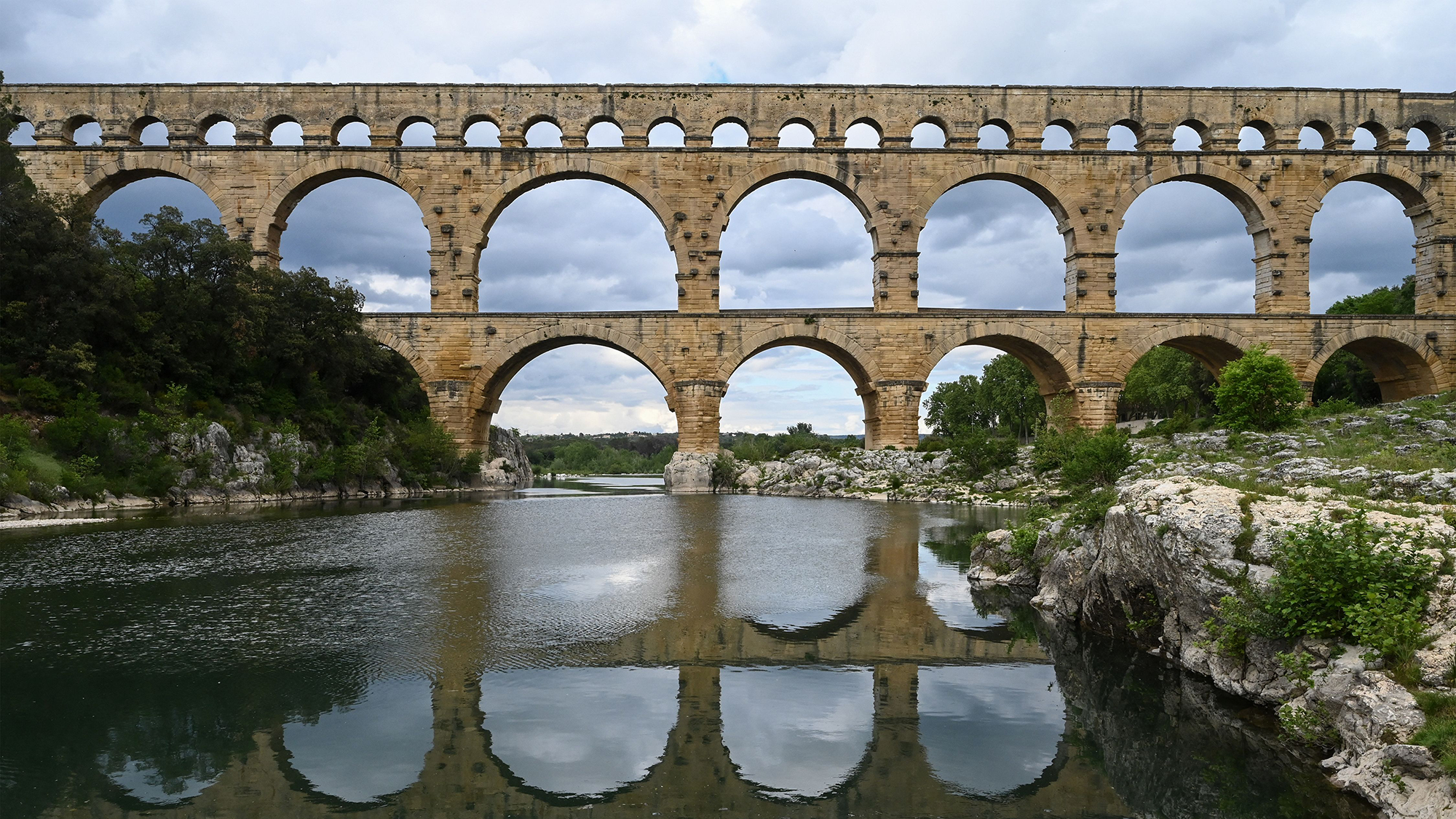
“Roman concrete certainly played an important role, especially in bridges, arcades, and other structural elements,” Giovanni De Feo, a professor of industrial engineering at the University of Salerno in Italy, said in an email.
But this wasn’t the only factor that allowed Roman aqueducts to last such a long time.
“I believe their remarkable preservation results from a combination of factors,” De Feo said. For example, the Romans were careful to select routes that followed stable geological formations.
Regular maintenance that, in many cases, continued into the Middle Ages also helped Roman aqueducts survive the test of time, De Feo noted. This means that they tried to avoid volcanoes and other landscapes that were unstable.
Aqueducts did not always run aboveground; sometimes, they had lengthy underground portions in areas where the landscapes made it difficult to place it aboveground. Some “aqueducts had hardly any stretches above ground outside the city, while others ran on arches for a considerable distance,” Gerda de Kleijn, a researcher at Radboud University in the Netherlands, wrote in her book “The Water Supply of Ancient Rome” (J.C. Gieben, 2001).
As the water neared the city, it would sometimes go into pools that helped remove dirt and other visible pollutants. “Water would pool into the basin, sediment would sink to the bottom, then the water would continue from there on its course to the distribution tank,” Harry Evans, a professor emeritus of classics at Fordham University, said in an email.
The number of workers required to build an aqueduct depended on its size and timeline for completion. The Hadrianic aqueduct at Athens, which runs for about 12.4 miles (20 km), could have been completed in 15 years by a team of around 500 workers, researchers estimated in a 2022 paper.
Maintaining the aqueduct
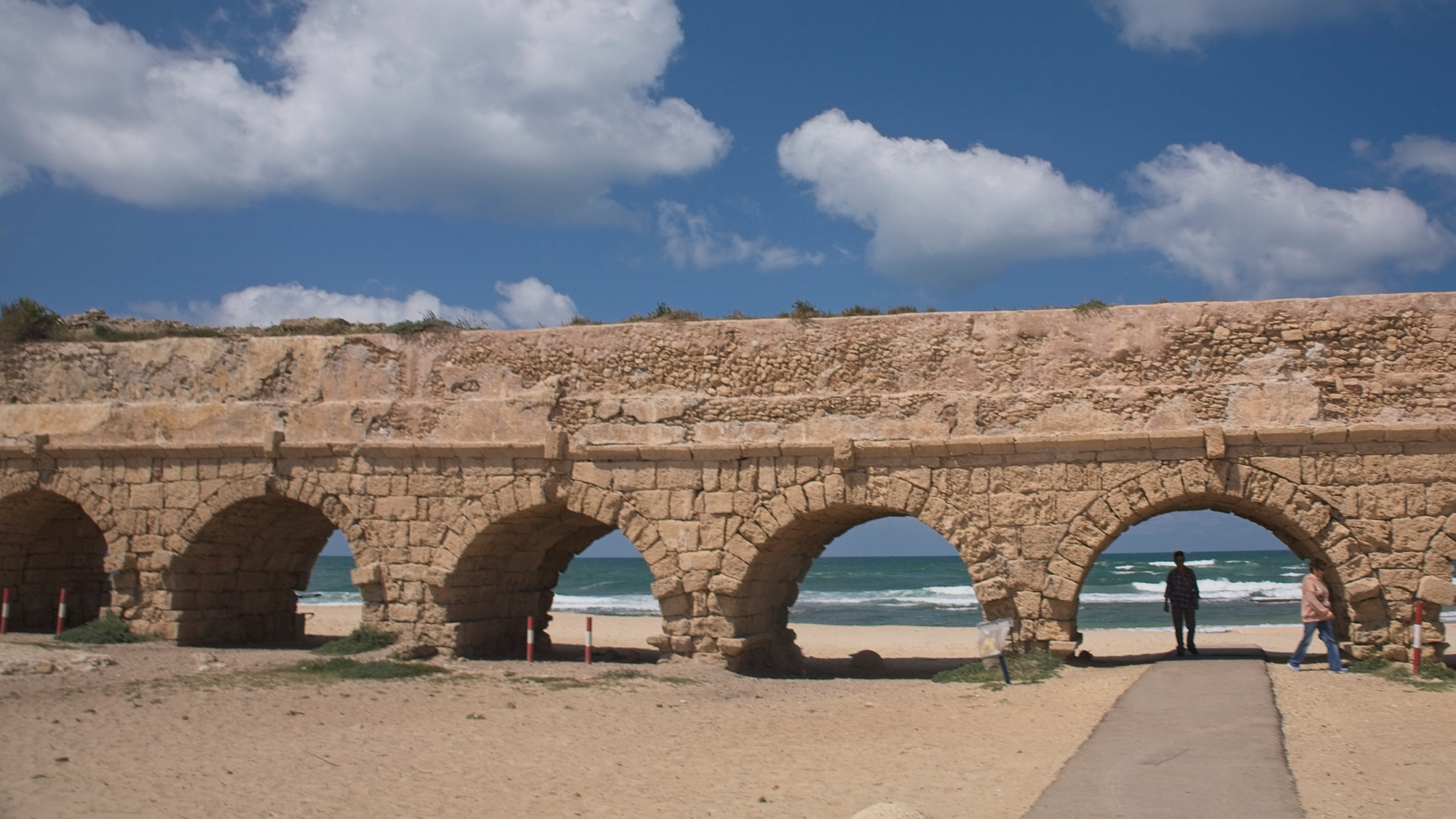
After an aqueduct was built, regular maintenance kept it in good shape. Cees Passchier, head of tectonophysics at Johannes Gutenberg University Mainz in Germany, has studied a Roman aqueduct at Divona in France. In a 2023 study, Passchier and colleagues found that carbonate would have built up on the aqueduct over time. Maintenance workers “partly scraped away” the carbonate before replastering the aqueduct, Passchier told Live Science in an email. At some other aqueducts, they wouldn’t bother scraping but would “simply plaster over the carbonate without ever cleaning anything,” he said.
A sizable number of workers would have been needed to keep aqueducts functional, but it varied based on the aqueduct’s size. For “a small place like Divona, a workforce of a dozen people would probably have been enough,” Passchier said. “We know that in Rome, there was a staff of a few hundred people to keep the aqueducts working.”
Even after the Roman Empire collapsed, many of its aqueducts survived, as some were used and maintained into the Middle Ages and even into modern times. One of the aqueducts, the Aqua Virgo, built in 19 B.C., is still bringing water to Rome today.
From Augustus to Nero, see how much you know about ancient Rome’s famous leaders with our Roman emperor quiz!


Ромчууд хэр урт, тэсвэртэй усны хоолойг бүтээсэн нь гайхалтай шүү. Тэд нарийн тооцоолол хийж, бат бөх бетон ашигласан нь тэдний инженерийн чадварыг илтгэж байна. Таны бодлоор тэд ямар нууцыг одоо ч хадгалсаар байна вэ?