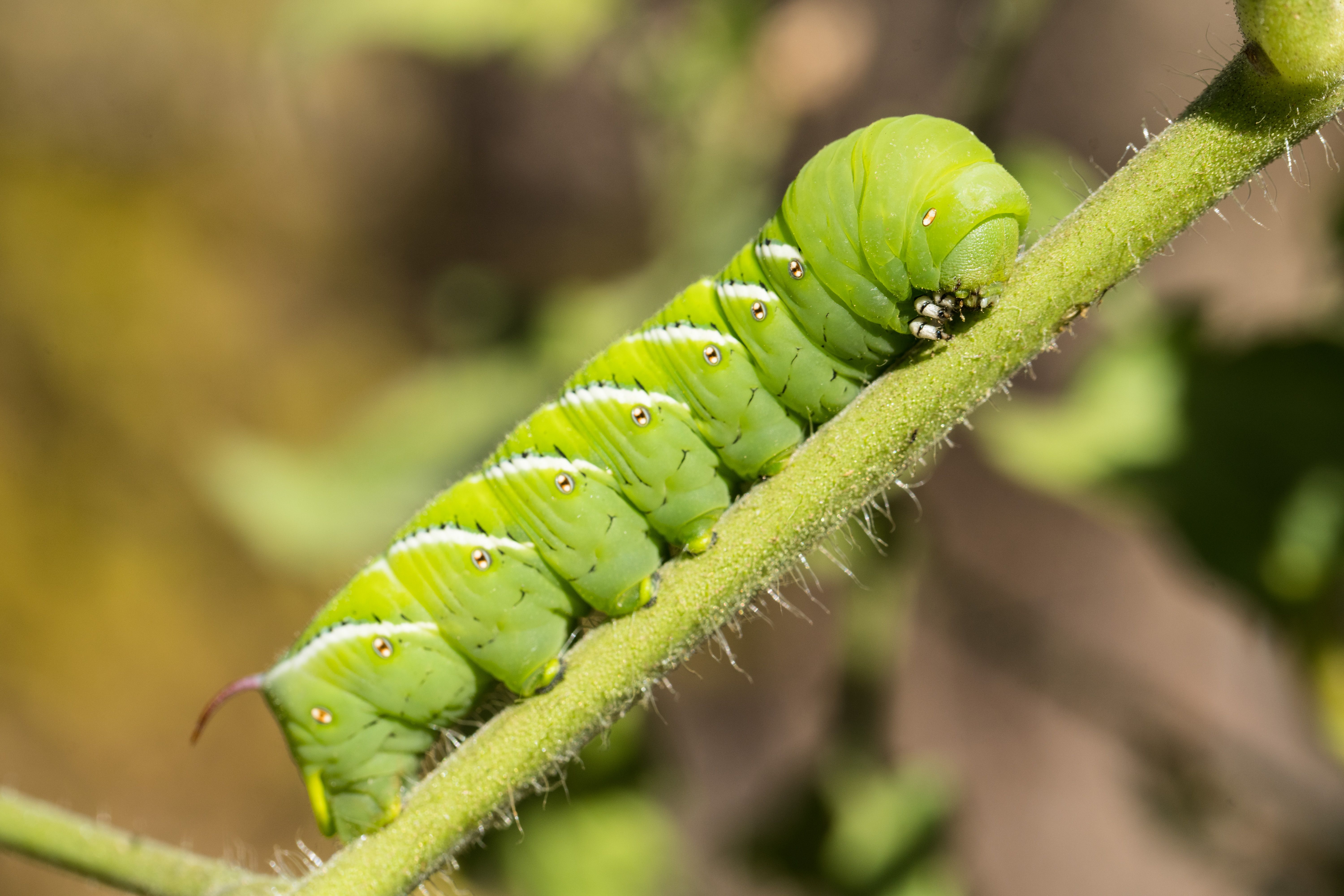
Биологичид болон инженерүүд тамхины хорхойн авгалдай чихгүй мөртлөө махчин амьтдыг хэрхэн мэдэрдэг нууцыг тайлахаар судалгаа хийлээ.
Судлаачид тамхины хорхойн авгалдайг гадны чимээ шуугианаас бүрэн тусгаарласан “анехоик” буюу цуурайгүй камерт байрлуулж, тэдний чичирхийлэл болон агаарын долгионд үзүүлэх хариу үйлдлийг бүтэн жилийн турш ажиглажээ. Хөдөлгөөн болон чичирхийллийг хэмжихийн тулд акселерометр төхөөрөмж ашигласан бөгөөд авгалдайнууд тодорхой хэмжээнээс бага чичирхийлэлд хариу үйлдэл үзүүлэхээ больж байгааг тогтоосон байна.
Туршилтын явцад авгалдайнууд агаарын дууны долгионд шууд чичирхийллийн үеийнхээс илүү мэдрэг хандаж байв. Энэхүү ажиглалт нь тэд бие дээрх маш жижиг, мэдрэмтгий үснүүдийнхээ тусламжтайгаар агаарын дууг сонсдог байж болзошгүй гэсэн таамаглалыг дэвшүүлэхэд хүргэжээ.
Уг судалгаа нь байгалийн нууцлаг механизмыг тайлахаас гадна микрофон болон дуу авиа мэдрэгч технологийг илүү хямд, үр ашигтайгаар зохион бүтээхэд хувь нэмэр оруулах боломжтой юм. Хэдийгээр эрдэмтэд авгалдайн сонсголын эрхтэн гэж үзэж болох бүтцийг хайсаар байгаа ч биологийн үйл явцыг бүрэн дүүрэн тайлбарлахад судалгаа үргэлжилсээр байна.
Дэлгэрэнгүйг эх сурвалжаас харах
↓Эх сурвалжийг нээх ↓
In a quiet summer garden, a caterpillar perches on a branch, munching serenely on leaves. A moment later it freezes. It senses danger—and just in time. From behind, a wasp approaches, sizing up its prey.
Tobacco hornworm caterpillars don’t look like they have ears, and yet they’re able to sense predators such as wasps. How does the caterpillar know a wasp is approaching?
Scientists do not fully understand how this caterpillar’s senses work, but we are part of a team of biologists and engineers who want to figure it out. Our ongoing research suggests that tobacco hornworms can hear using tiny, supersensitive hairs on their body.
Understanding the intricate biological mechanisms that allow this organism to perceive and interact with its environment would help solve a mystery of the natural world. It could also help scientists design new, cheaper microphone technology.
Because the hornworms’ hairs are so sensitive, we have to study them in complete silence. And where better to study hearing than in the complete silence of an anechoic chamber?
What Happens in the Anechoic Chamber
What happens outside the anechoic chamber stays outside the anechoic chamber, because it is meticulously built that way. Anechoic chambers are some of the quietest places in the world. They are engineered specifically to block the entry of any undesired sounds. Heavy-duty steel springs support the “floating” chamber and keep it from touching the ground. This detachment isolates the space from outside vibrations or noise.
In such a chamber, we studied the caterpillars’ responses to vibrations. Every day for a year, we set up a caterpillar on a platform and sent vibrations toward the platform at a variety of intensities.
To measure the movement and precise vibrations that traveled through the platform the caterpillar sat on, we used a device called an accelerometer. In response to vibrations, we sometimes saw the caterpillars jump; at other times they twitched or even shuddered from the sheer physical force.
Through our observations, we pinned down the specific threshold where the caterpillars stopped reacting to vibrations. Any vibration weaker than that magnitude, and the caterpillar wouldn’t visibly react at all.
After noticing this consistent pattern, we decided to test more caterpillars inside the anechoic chamber, but this time using airborne sound as the stimulus. The idea here was that if the caterpillars are more sensitive to sound than they are to vibrations, they are probably hearing airborne sounds independent of any vibrations.
Sound is broadly defined as a form of vibration or energy that becomes audible, meaning you can hear it with your ears. But here’s the catch: Sound also causes objects to vibrate. To make sure the caterpillar wasn’t just sensing the sound’s vibrations through the platform, we also used the accelerometer to measure the vibrations that the platform experienced from the sound. Our goal was to compare the platform vibrations produced in two distinct scenarios: when sound through the air was used as the stimulus versus when just direct vibrations were used as the stimulus.
We noticed that this time the caterpillars continued reacting to the sound even beneath their threshold of response to the direct vibrations. This finding suggested that they were hearing the airborne sounds.
Finding the Caterpillars’ “Ears”
So, where are their “ears?” Or rather, what are their “ears?”
There are two ways of hearing sound: from the sound waves’ pressure and from the velocity of the particles making up the sound waves.
For the longest time, scientists have associated hearing with tympanal organs. A tympanal organ in most mammals is a membrane that vibrates in response to pressure from sound waves. Its vibration moves the bone structures adjacent to it as well.


Тамхины хорхойн авгалдай чихгүй байтал хэрхэн орчноо мэдэрдэг бол? Түүнийг судалж байгаа нь үнэхээр сонирхолтой санагдаж байна, ялангуяа тэдний жижиг үснүүд хэрхэн сонсгол үүсгэдэг талаар ямар нээлт хийсэн бол? Энэ судалгаа байгаль дээрх амьтад ямар нэгэн нууцыг илчилж чадах уу?