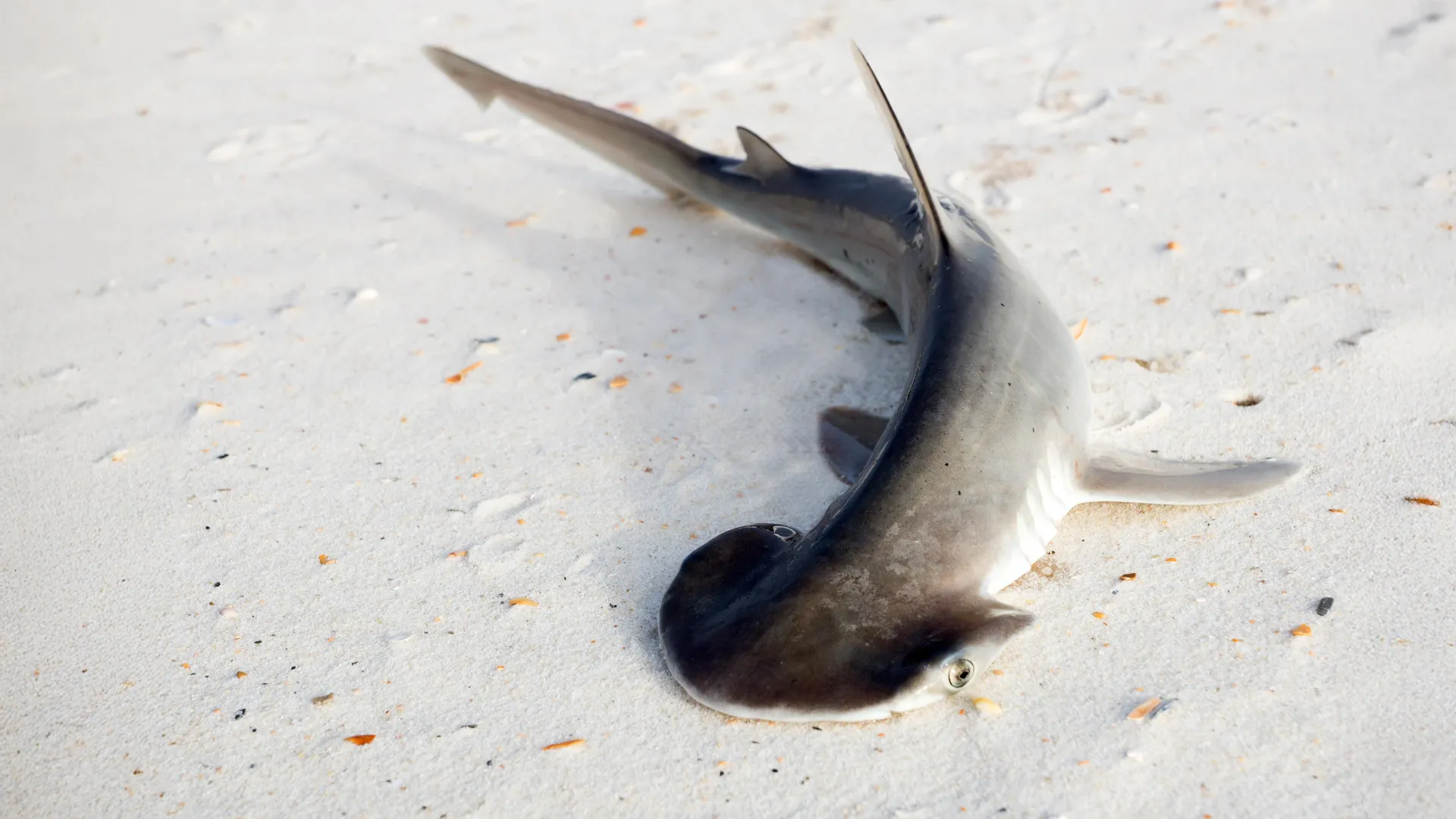
Флоридагийн их сургуулийн судлаачид боннетхэд акулын толгойн хэлбэр нас ахих тусам хэрхэн өөрчлөгддөгийг судалж, өмнөх таамаглалыг үгүйсгэсэн үр дүнд хүрчээ.
Маямигийн их сургуулийн Розенстилийн нэрэмжит Далай, агаар мандал, дэлхийн шинжлэх ухааны сургуулийн эрдэмтэд 2022 оны тавдугаар сараас 2023 оны тавдугаар сарын хооронд Флорида мужийн Бискейн болон Тампа булангаас нийт 144 боннетхэд акулыг барьж судалгаа хийжээ. Тэд акулуудын биеийн хэмжээг авч, толгойн хэлбэрийг нарийвчлан зурагжуулан, булчингийн эдэд нь нүүрстөрөгч болон азотын изотопын шинжилгээ хийсэн байна. Урьд өмнө нь эрэгчин акулууд бэлгийн бойжилтын насанд хүрэхдээ толгой нь илүү шовгор болдог гэж үздэг байсан бол шинэ судалгаагаар энэ нь батлагдсангүй.
Судалгааны багийн ахлагч Кэти Лиугийн тайлбарласнаар, залуу насны эр, эм акулууд хоёулаа шовгор толгойтой байдаг бөгөөд нас ахих тусам толгой нь илүү дугуй хэлбэртэй болдог байна. Энэхүү өөрчлөлт нь эмэгчин акулуудад илүү тод ажиглагддаг бөгөөд хоол тэжээлийн ялгаа нь энэхүү физиологийн өөрчлөлтөд нөлөөлдөг гэх нотолгоо олдсонгүй. Бискейн болон Тампа буланд амьдардаг акулууд өөр өөр экосистемд хооллодог болох нь тогтоогдсон ч, нэг буланд амьдарч буй эр, эм акулууд ижил төстэй хүнсний эх үүсвэрээр хооллодог байна.
Боннетхэд акулуудын толгойн хэлбэр яагаад ийнхүү ялгаатай байдаг нь одоогоор шинжлэх ухааны хувьд тайлагдаагүй хэвээр байна. Судлаачдын таамаглаж буйгаар, залуу акулуудын хувьд шовгор толгойн хэлбэр нь сэлэлтийн үр ашгийг дээшлүүлдэг байж болох ч, эмэгчин акулууд биеэр томрохын хэрээр энэ давуу тал нь ач холбогдлоо алддаг байж болзошгүй юм. Цаашид сэлэлтийн гүйцэтгэл болон үр хөврөлийн хөгжлийг судлах нь уг биологийн онцлогийн учир шалтгааныг тодруулахад тус дөхөм болно гэж эрдэмтэд үзэж байна.
Дэлгэрэнгүйг эх сурвалжаас харах
↓Эх сурвалжийг нээх ↓
A new study of bonnethead sharks (Sphyrna tiburo) in Florida is challenging a previous explanation for how males and females develop their distinctively different head shapes.
Researchers from the University of Miami Rosenstiel School of Marine, Atmospheric, and Earth Science and collaborating institutions found that the sharks’ shovel shaped heads become more rounded as both males and females grow older, with the change especially pronounced in females. Earlier research had suggested that males developed their more pointed snouts when they reached sexual maturity.
Tracking Bonnethead Head Shape
The research is the first detailed investigation of both head shape and diet in bonnethead sharks from Biscayne Bay. Scientists also included sharks from Tampa Bay to see whether the same developmental patterns appeared in populations living on opposite sides of Florida.
Bonnetheads are small relatives of hammerhead sharks and are the only shark species known to show clear sex based differences in head shape. Males usually have a more noticeable point along the front edge of the head, while females tend to have a smoother and more rounded outline. Scientists describe this type of physical difference between males and females as sexual dimorphism.
“Our findings show that the pointed head shape is not a feature that develops in males when they reach maturity,” said Kathy Liu, lead author of the study, which she conducted while earning her master’s degree at the Rosenstiel School. “Younger males and females both had more pointed heads, but the head became rounder as the sharks matured. That change was much greater in females.”
Diet Does Not Explain the Difference
The researchers also tested whether males and females might develop different head shapes because they eat different foods or forage in different ways. Their results showed that bonnetheads in Biscayne Bay and Tampa Bay occupied distinct food webs and experienced dietary changes as they grew. However, males and females living within the same bay depended on many of the same local food sources.
“Our findings provided no evidence that differences in diet or foraging were driving the development of the sharks’ sex-specific head shapes,” said Liu.
“This study helps narrow the drivers of a biological trait that has puzzled scientists,” said Catherine Macdonald, a co-author of the study and an associate professor in the Department of Environmental Science and Policy and the director of the Shark Research and Conservation Program at the Rosenstiel School. “By examining body shape and diet in the same animals, we were able to assess whether diet and morphological changes co-occur. Our results suggest there is another cause behind the differences in head shape between male and female bonnetheads.”
Measuring Sharks Across Florida
Between May 2022 and May 2023, the team sampled 105 bonnethead sharks in Biscayne Bay and another 39 in the Tampa Bay region. Scientists used research longlines to capture sharks in Biscayne Bay, while sharks in Tampa Bay were collected primarily with scientific gillnets.
Each shark was measured, and a small muscle sample was taken. Researchers then photographed both sides of the animal’s head against a specially designed grid board before quickly releasing the shark.
The team used ImageJ software to analyze the photographs and precisely compare the curvature of each shark’s head. This technique allowed researchers to collect detailed measurements while keeping handling time as short as possible.
Chemical Clues Reveal Different Food Webs
Scientists also analyzed muscle tissue from 137 sharks for carbon and nitrogen isotope signatures. These chemical markers can reveal where an animal has been feeding within a food web and provide a broader view of long-term diet than simply examining recently eaten prey.
The isotope signatures of sharks from Biscayne Bay showed little overlap with those from Tampa Bay. That suggests the two populations were feeding within ecosystems that had different environmental signatures.
The researchers cautioned that this does not necessarily mean the sharks were eating completely different prey species. The same or similar prey can carry different isotope signatures depending on the ecosystem where they live.
Why Do Bonnetheads Have Pointed Heads?
Scientists still do not know what advantage the bonnethead’s pointed head provides.
One possibility proposed by the researchers is that the shape could help younger and smaller sharks swim more efficiently. As females grow larger to support reproduction and gestation, that potential benefit may become less important.
Future research on swimming performance and embryonic development will be needed to test that possibility. Such work could also reveal when the differences between male and female head shapes first begin to appear.
Expanding the Research Beyond Florida
The researchers said the same photographic technique could be used to study bonnethead sharks in other parts of their range. Comparing populations from different regions could reveal additional variation in head shape and help scientists better understand how local populations differ.
Those comparisons could also have conservation value by helping researchers identify biological and ecological differences that may be important when developing region-specific management strategies.
By combining measurements of body shape with information about diet, scientists can test competing explanations for how unusual biological traits develop and evolve. Studying bonnetheads across a wider geographic range could also reveal population differences that might otherwise remain hidden.
The study titled: “A Head of the Curve: Bonnethead Shark (Sphyrna tiburo) Cephalofoil Morphology and Trophic Ecology,” was published in the journal Integrative Organismal Biology.
The authors are Kathy Liu; University of Miami Rosenstiel School and Field School, Jasmin Graham; Minorities in Shark Science, H Ro and S L Kim; University of California, Merced, T. R. Wiley and J.M. Gardiner; Havenworth Coastal Conservation, L.J. Baker; California State University, Monterey Bay, C. Macdonald; Rosenstiel School and Field School.
The research was supported by the Field School and the University of Miami Shark Research and Conservation Program. Tampa Bay fieldwork was supported by the Tampa Bay Environmental Restoration Fund and Disney Conservation Fund. Stable isotope analysis was supported by the University of California, Merced, and partial project support was provided by the Maxwell/Hanrahan Foundation.


Энэ шинэ судалгаа акулын толгойн хэлбэрийн өөрчлөлтийг ойлгоход шинэ хуудас нээж байна шүү дээ. Яг ямар шалтгаанаар толгой нь нас ахих тусам дугуйрч ирдэг бол? Энэ судалгаагаар эмэгчин акулууд илүү их өөрчлөлт үзүүлдэг тухай сонсоод их сонирхол татлаа. Энэ өөрчлөлт байгальд ямар давуу талтай байж болох гэж төсөөлж байна вэ?