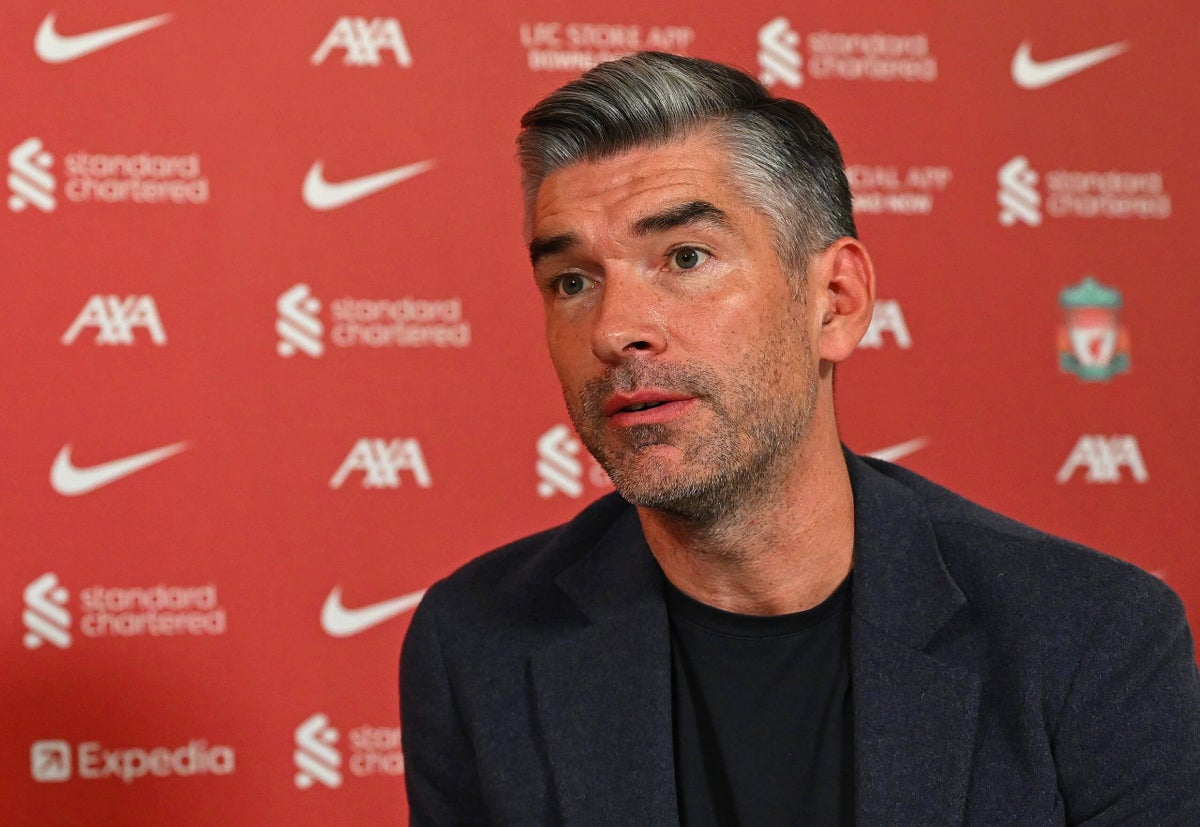
Спортын захирал Ричард Хьюз үүрэгт ажлаа хүлээлгэн өгснөөр Ливерпүүл шинэ сорилттой нүүр тулж байна.
Ричард Хьюз Ливерпүүлийн спортын захирлын албан тушаалаасаа чөлөөлөгдөх хүсэлтээ гаргаж, клубээс албан ёсоор явж байгаагаа зарлалаа. Түүний удирдлага дор тус клуб тоглогчдын бүрэлдэхүүнээ шинэчлэхэд 670 сая фунт стерлинг зарцуулсан ч багийн гүн болон бүтцийн асуудлууд шийдэгдээгүй хэвээр байна гэсэн шүүмжлэл дагуулж байна. Хьюз өнгөрсөн долоо хоногт Брэдли Барколаг багтаа нэгтгэсэн томоохон хэлцлийг эцэслэн хийсэн бөгөөд баг өнгөрсөн баасан гарагт Ипсвич-ийн талбайд зочлон тоглохдоо тун зохион байгуулалттай тоглолтыг үзүүлж, хожил байгуулсан билээ.
Ливерпүүлийн өнгөрсөн хугацааны дамжуулалтын стратегид Садио Манегийн жишээ томоохон сургамж болдог. Мане 2016 онд Лестер Сити-гийн эсрэг хийсэн анхны тоглолтдоо гоол оруулж, нийт 269 тоглолтод оролцон 120 гоол хийж, багийн түүхэн дэх домогт тоглогчдын нэг болсон юм. Түүнийг 30 настайд нь үдэж, оронд нь ирсэн Луис Диаз Порто-гоос ирж амжилттай тоглосон ч, одоогийн байдлаар Диаз Бавари Мюнхен-д өндөр амжилт үзүүлж байгаа нь Ливерпүүлийн шийдвэрийг эргэлзээтэй болгож байна.
2021 оноос хойш Ливерпүүл олон чухал тоглогчоо гэрээний хугацаа дууссаны улмаас үнэ төлбөргүй алдсан нь санхүүгийн болоод бүрэлдэхүүний хувьд хүндрэл учруулсан. 2019 оны Аваргуудын лигийн финалд оролцсон 14 тоглогчийн найм нь клубээс үнэгүй эсвэл маш бага үнээр явсан нь багийн удирдлагын бодлогод сөргөөр нөлөөлсөн гэж үздэг. Одоогийн байдлаар Арне Слот 2025 онд лигийн аварга цолыг хүртэхэд Алиссон, Виржил ван Дейк, Трент Александер-Арнолд, Мохамед Салах зэрэг 2018 оноос хамтдаа тоглосон тоглогчид гол үүргийг гүйцэтгэсэн хэвээр байна.
Дэлгэрэнгүйг эх сурвалжаас харах
↓Эх сурвалжийг нээх ↓
Ten years ago this week, Sadio Mane scored on his home debut for Liverpool in a 4-1 victory over the Premier League champions, Leicester City. It would be the second of 120 goals for a club where he won almost every major trophy across 269 appearances, leaving as a legend in a deal that almost earned Liverpool their money back.
Tied into his success, the figures around Mane should act as a case study for whoever replaces Richard Hughes as the master of Liverpool’s transfer strategy. Even allowing for inflation, good business is bringing in a 24-year-old for £30m before moving him on with a stack of medals, aged 30, for a sum that could have stretched as far as £35m.
The Senegalese ultimately did not return a profit because he struggled to settle in at Bayern Munich and moved on a year later to Al Nassr in Saudi Arabia, where he remains.
This has contributed towards a view that Liverpool could have kept Mane for a while longer. At Mane’s point of exit, his 23 goals during 2021-22 were his second-highest tally across six seasons. Yet he had spent a chunk of his final campaign at Liverpool positioned in the centre of Liverpool’s attack, rather than on the left where he had been so dynamic in earlier years.
Mane was key to Liverpool’s dominance under Jurgen Klopp (David Ramos/Getty Images)
The decision was partly taken because Roberto Firmino’s influence had started to wane. And in the meantime, Liverpool had already sourced Mane’s replacement. Like Mane, Luis Diaz, having joined from Porto, ended up in Munich as a Premier League winner, only on this occasion Liverpool turned over a handsome profit.
The sequence is difficult to achieve, but it is one Liverpool should also refer back to. Diaz’s departure currently looks like a bad decision because he has done so well at Bayern, while no one has taken the mantle from him at Anfield, with the team struggling since the summer of 2025 for many reasons.
It would be tempting to conclude that the trail tells you it is not necessarily about how much you buy for, or how much you can get out of a sale, but how suitable and, by extension, successful the next guy coming in proves to be. Yet the chances of that happening surely increase if the numbers stack up, broadening a club’s options.
Liverpool FC can confirm Richard Hughes has stepped down as sporting director.
Hughes departs with the best wishes of everyone at LFC having informed the club’s ownership of his desire to seek a fresh challenge.https://t.co/I8MG6lmsMN
— Liverpool FC (@LFC) September 5, 2026
Which brings us back to Hughes, who announced his departure from Liverpool earlier today. Rather than replace Diaz with Bradley Barcola, Hughes and then-head coach Arne Slot prioritised other areas of the team, believing Cody Gakpo would step forward. A determination to give Rio Ngumoha opportunities was also a consideration.
Hughes has since sanctioned a £670m spend on reshaping Liverpool, including a huge deal last week to finally bring Barcola to Anfield. There was a confidence-boosting performance and victory at Ipswich on Friday night where Liverpool looked as smooth and organised as they have been since winning the title in 2025.
Yet Hughes departs accused of leaving behind a team with holes and a squad that is not deep enough. Had he struck smarter deals after Liverpool became champions, maybe it would have been easier to address more of these subsequent issues.

Diaz has been a huge success at Bayern (Alexandra Beier/AFP via Getty Images)
Given that Fenway Sports Group has always operated in a real financial world, it is astonishing how many players have been allowed to leave Liverpool since 2021 at the end of their contracts. Eight of the 14 players who featured for Liverpool in their 2019 Champions League final victory over Tottenham Hotspur would leave on a free transfer or for next to nothing — if you include Trent Alexander-Arnold, whose market value was surely 10 times more than the nominal figure Real Madrid paid for him so that he could perform at the World Club Cup.
Somewhere along the line, and even before Hughes, the cold-eyed ruthlessness that had set Liverpool up to challenge was lost because, beyond Mane, Fabinho and Jordan Henderson, they have clawed back very little in terms of money out of heroes.
It is right that Hughes’ record invites serious questions because at the moment, overspending in 2025 means he leaves with a feeling that he has added to Liverpool’s problems rather than addressed them. Even by the end of his three seasons at the club, however, he was still dealing with the consequences of bad decisions by earlier employees, some of which are all too easily overlooked.
The huge acclaim Liverpool received for squad building under Klopp is a long time ago now. Across six windows between the summers of 2016 and 2018, Mane was brought in along with Joel Matip, Georginio Wijnaldum, Mohamed Salah, Andy Robertson, Virgil van Dijk, Fabinho and Alisson Becker. Only Naby Keita can be considered a misstep during a period where outgoings and Champions League performance, along with a commercial boom, helped balance everything out.
Liverpool did virtually nothing in 2019 but ended up winning the league for the first time in three decades a year later, so the significance of the end justified the mean. Yet since 2020, having churned through four sporting director-type figures, Liverpool’s record on transfers and player retention has been patchy at best. It says a lot that when Slot secured another title in 2025, the most influential players were Alisson, Van Dijk, Alexander-Arnold and Salah — and they started playing together as far back as 2018.
When transfer decisions are perhaps at six out of 10 for so long, eventually a squad will need major work over many successive windows, like it did from 2016 onwards under Klopp, who had to find the sort of short-term solutions to challenges facing Andoni Iraola on the team’s right side at the moment. On the day Mane ripped Leicester apart at Anfield, Klopp picked James Milner at left back and another midfielder Lucas Leiva alongside him in the centre of defence.

