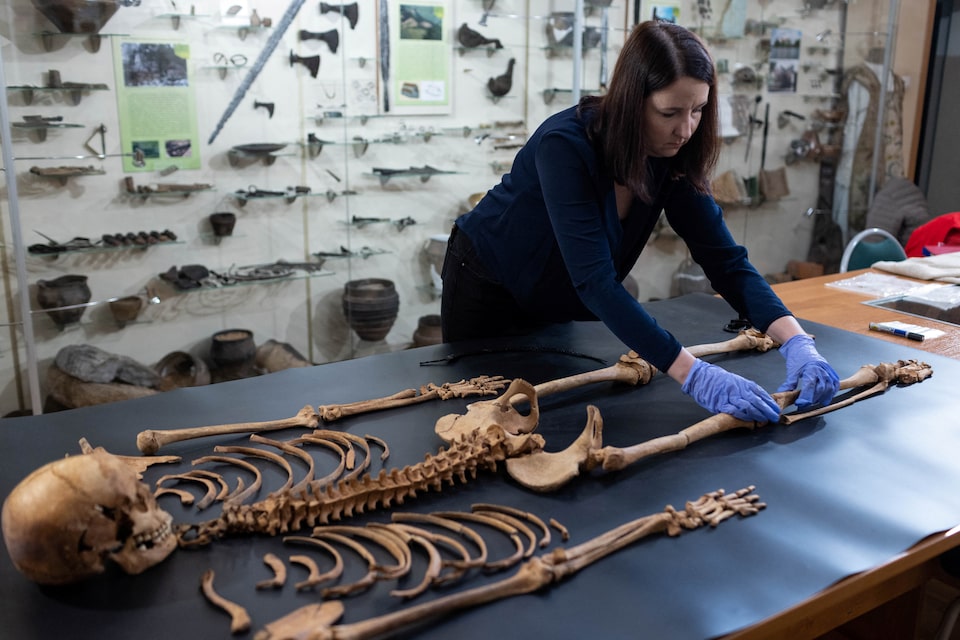
Шведийн шүүх эмнэлгийн зураач 400 жилийн тэртээх булшнаас олдсон эмэгтэйн гавлын ясанд тулгуурлан түүний төрхийг анх удаа дүрсэллээ.
Польшийн Пень тосгоны оршуулгын газраас 2022 онд олдсон 18-20 орчим насны эмэгтэйн шарилыг судлаачид “цус сорогчийн булш” хэмээн нэрлэж ирсэн. Түүний хүзүүн дээр хадуур тавьж, эрхий хуруунд нь гурвалжин хэлбэрийн цоож зүүсэн байсан нь тухайн үед нас барсан хүнийг амилж эргэн ирэхээс сэргийлэх зан үйл хийдэг байсныг илтгэж байна. Николаус Коперникийн их сургуулийн судлаачид 2005 оноос хойш уг оршуулгын газарт малтлага хийж байгаа бөгөөд олдсон шарилуудын гуравны нэг нь ийнхүү ер бусын байдлаар оршуулагдсан байжээ.
Шведийн археологич бөгөөд шүүх эмнэлгийн зураач Оскар Нильссон уг эмэгтэйн гавлын ясны 3D загварыг ашиглан түүний нүүрний төрхийг сэргээн бүтээв. Шинжилгээгээр тухайн эмэгтэй Скандинавын хойгоос гаралтай байж болзошгүй бөгөөд түүний яснаас хавдартай байсан шинж тэмдэг, мөн хүзүүний нугаламын анатомийн өөрчлөлт зэрэг эрүүл мэндийн асуудлууд илэрчээ. Эдгээр өвчин нь түүнийг амьд ахуйдаа толгой өвдөх, ухаан алдах зэрэг зовуурьтай байсныг гэрчлэх бөгөөд тухайн үеийн хүмүүс түүнийг өвчин эмгэгээс нь шалтгаалан аюултайд тооцож, ийнхүү өвөрмөц байдлаар оршуулсан байж магадгүй гэж судлаачид таамаглаж байна.
Булшнаас олдсон торгон малгай болон алтан утастай тууз зэрэг эд зүйлс нь тухайн эмэгтэйг чинээлэг, магадгүй язгууртан гаралтай гэр бүлийн хүн байсныг харуулж байна. Хэдийгээр шинжлэх ухааны шинжилгээгээр түүний нүүрний онцлогийг сэргээсэн ч нүд, үс, арьсны өнгө зэрэг нь тодорхойгүй хэвээр үлдсэн тул судлаач таамаглалд тулгуурлан бүтээжээ. Энэхүү судалгаа нь түүхийн тодорхой цаг үед амьдарч байсан хүмүүсийн итгэл үнэмшил болон нийгмийн харилцааг ойлгоход чухал ач холбогдолтой юм.
Дэлгэрэнгүйг эх сурвалжаас харах
↓Эх сурвалжийг нээх ↓
A sickle rested on the young woman’s neck. There were tied around her left large toe three pieces of wood nailed together to make a triangular padlock. These two items were discovered by archaeologists while excavating her grave in Pień, Poland in 2022. The site where she is buried is a mass, unmarked cemetery; however, Nicolaus Copernicus University has been researching it for approximately 17 years (since 2005).
When Zosia died, she was estimated to be about 18-20 years old. Media accounts referred to her final rest as a “grave of a vampire,” but Dariusz Poliński, who led the excavation team, used more cautious wording. He stated that he prefers to view these actions as methods which would protect the living from the dead, typically described as anti-vampirism rituals.
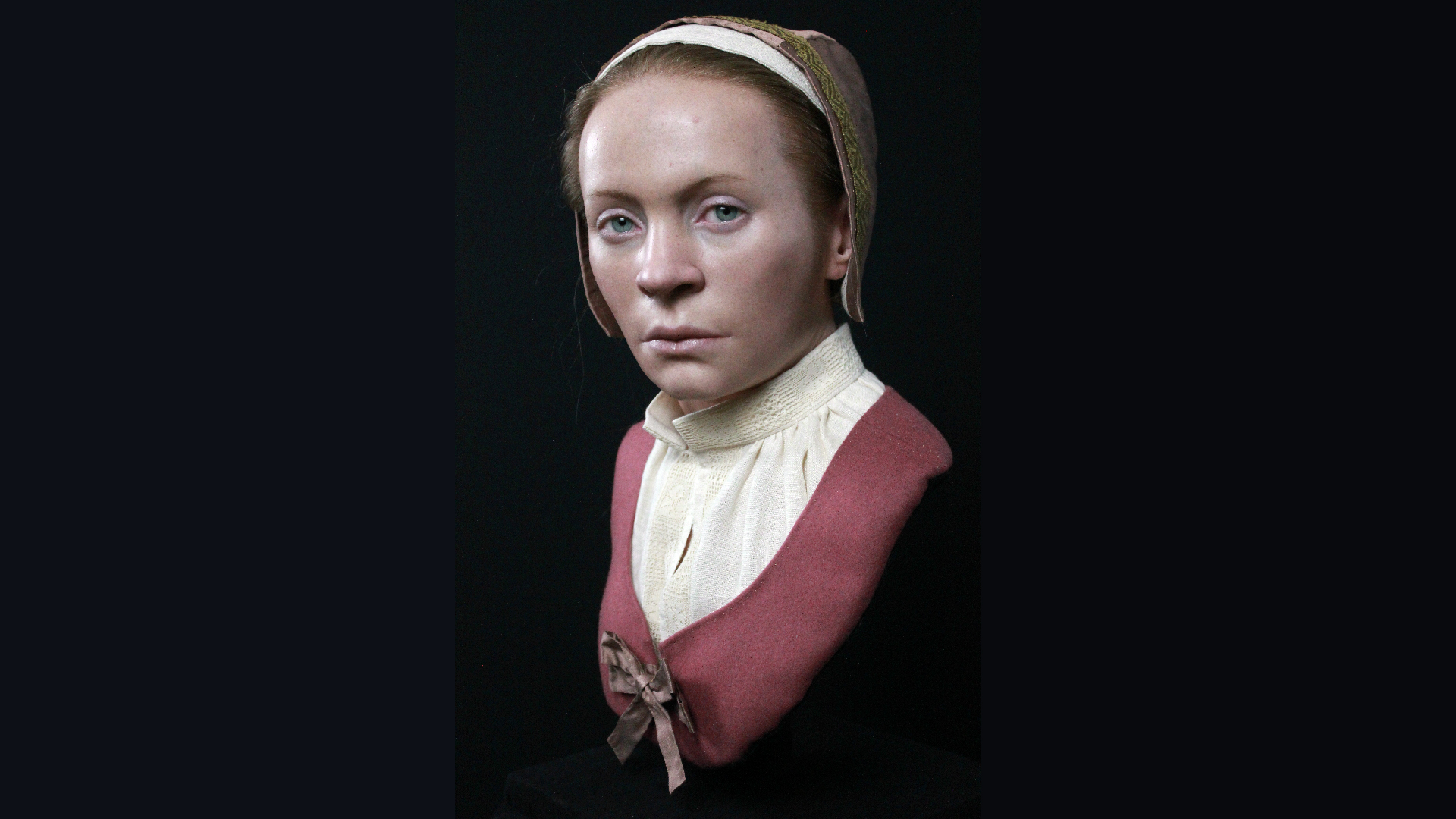
Approximately 400 years after her passing, Oscar Nilsson, a Swedish archaeologist and forensic artist, created a facial reconstruction of the woman based upon a copy of her skull, anatomical knowledge, and other information derived from her remains. This facial representation depicts the likeness of the young woman responsible for one of the largest number of media reports regarding a Polish burial site related to vampires.
According to Reuters, Nilsson explained the differences between her initial burial and his reconstruction. “As much as possible we’ve attempted to revive her.
Reconstructing a 17Th-Century Face
The facial reconstruction started with a 3D-printed copy of Zosia’s skull. Nilsson attached pins marking tissue thickness at different points, built facial muscles in clay, fitted the eyes and then added further layers representing tissue and skin. It is painstaking work. Nicolaus Copernicus University reported that the reconstruction process can take between 200 and 400 hours.
A skull does not reveal every feature with the same certainty. Nilsson singled out the ears and tip of the nose as particularly difficult to estimate, and he said pigmentation becomes highly speculative when DNA testing yields no usable information about eye, hair and skin color.
In Zosia’s case, DNA analysis did not determine those colors. According to reporting by Live Science, the analysis pointed toward ancestry from southern Scandinavia, possibly Sweden, while isotope analysis of her remains pointed in the same direction. Nilsson ultimately portrayed her with pale skin, dark blond hair and blue eyes. Skeletal analysis put her height at about 5 feet 4 inches, or 162 centimeters.
Her bones carried other clues.
Evidence in her sternum indicated a painful but nonlethal cancer. Her neck vertebrae showed Kimmerle’s anomaly, an anatomical variation that can be associated with severe headaches and sudden fainting, while Harris lines were also found in her shin bones. Some research links those lines with childhood malnutrition or physiological stress, although that interpretation is disputed.
Poliński suggested that a physical impairment or mental disorder may have contributed to Zosia being mistreated by people around her. Nilsson likewise connected her health conditions with the unusual treatment of her body after death.
What people in Pień actually knew about her health is another matter. The surviving evidence does not establish it, or exactly why she received those burial measures.
Her Grave Also Contained Signs of Wealth
The objects buried with Zosia did not point only toward exclusion. Archaeologists found fragments of a silk bonnet and the remains of a gold brocade ribbon.
Nilsson told Live Science that the costly textile suggested she belonged to a wealthy family, possibly one connected with the nobility. Textile specialist Maria Cybulska dated the ribbon style to the 17th century, and her work at Lodz University of Technology includes the analysis and reconstruction of historic and archaeological textiles.
For the finished reconstruction, Anna Silwerulv, a research assistant at Stockholm’s Vasa Museum, designed and tailored clothing intended to reflect Zosia’s apparent high social status.
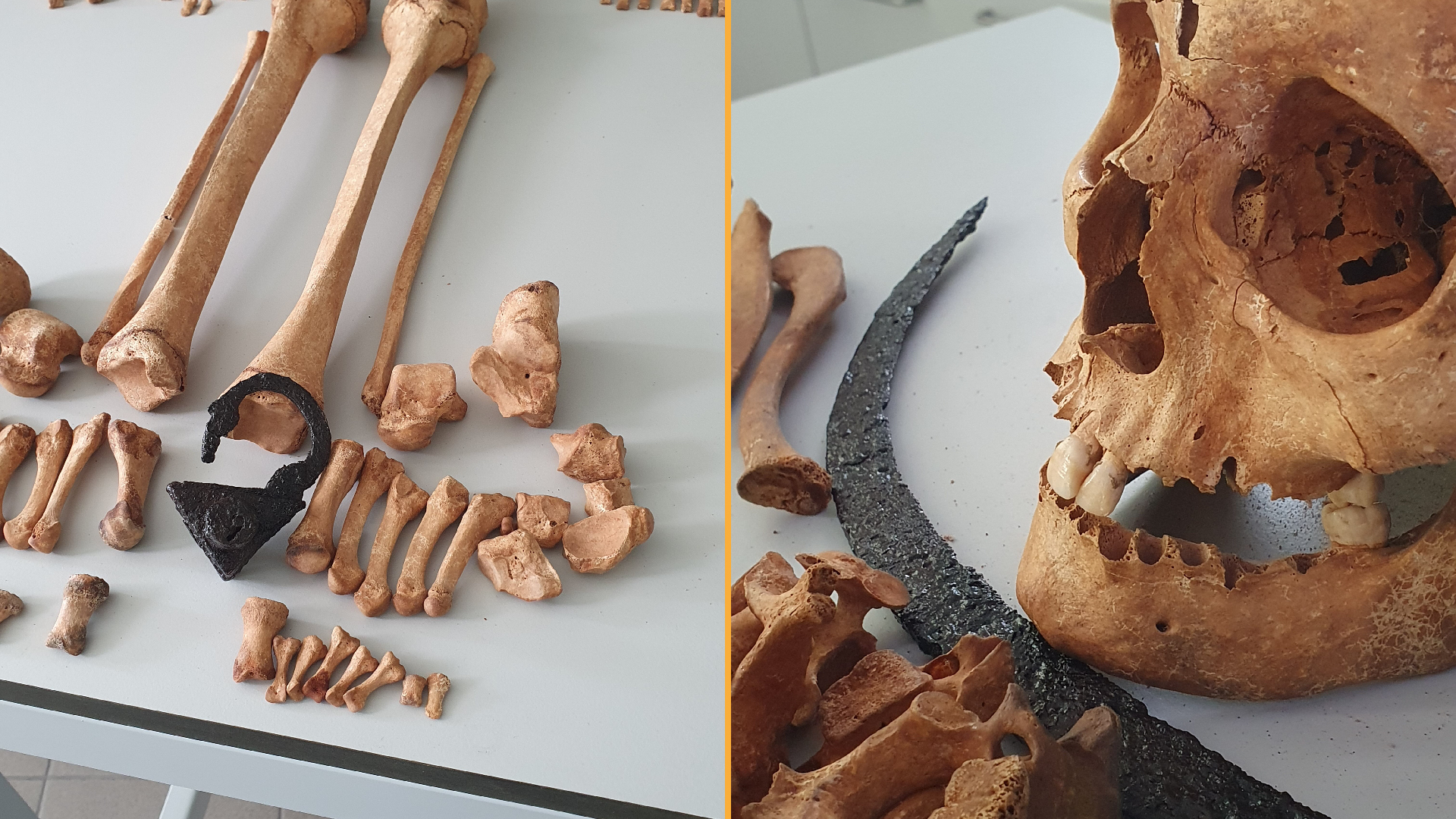
Zosia was hardly the cemetery’s only unusual burial. Roughly one-third of about 100 burials at the site were described as “deviant,” an archaeological term for people buried differently from prevailing practices, and stones and padlocks found in graves at Pień have been interpreted as measures intended to prevent the dead from rising.
Her own grave held another strange trace.
Green discoloration on her palate suggested that a piece of copper may once have been placed in her mouth. The sickle rested across her neck. The padlock encircled her toe.
Speaking to Live Science about the woman behind the 17th-century vampire grave, Nilsson said she “needed medical help” but was instead treated as “something dangerous and vicious.”
For the finished reconstruction, he made one final choice that the bones could not dictate: Zosia is shown looking back over her shoulder.
Enjoyed this article? Subscribe to our free newsletter for engaging stories, exclusive content, and the latest news.

