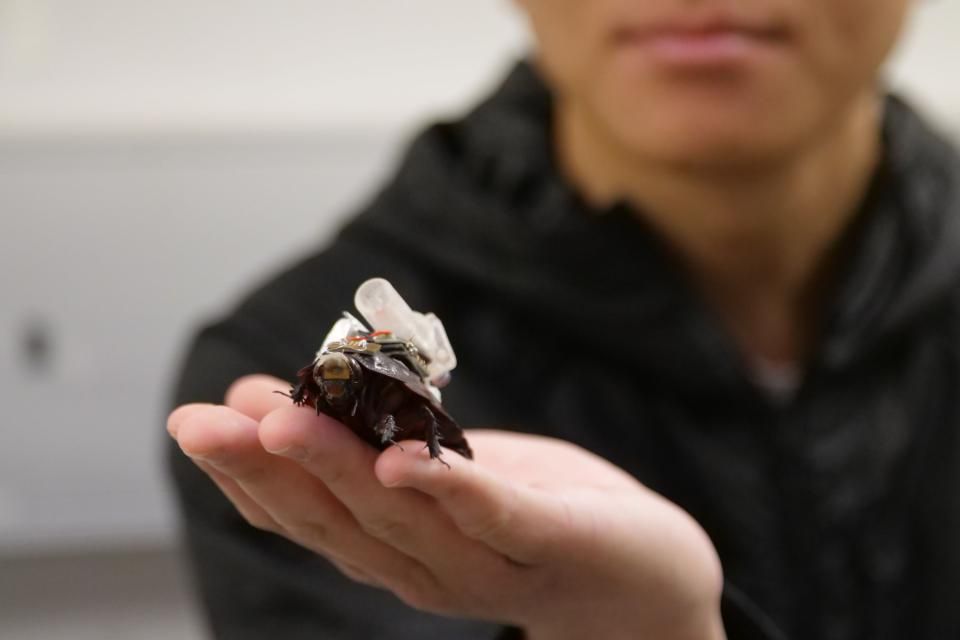
Эрдэмтэд жоомыг алсаас удирдан эм тариа хүргэх болон эрэн хайх ажиллагаанд ашиглах туршилтыг амжилттай гүйцэтгэлээ.
Квинслэндийн их сургуулийн судлаачид киборг жоом ашиглан тодорхой цэгт эм тариа хүргэх туршилтыг явууллаа. Уг төхөөрөмж нь нимбэгийн хүчил болон хүнсний содыг хольж, химийн урвалын үр дүнд үүссэн нүүрстөрөгчийн давхар ислийн хийгээр тариурын поршенийг шахах зарчмаар ажилладаг байна.
Туршилтын явцад судлаачид жоомыг алсаас удирдаж, гурван цэгийг дамжуулан бай руу тариа хийлгэжээ. Үр дүнд нь 150 миллиметрийн зайнаас хийсэн тарилгын амжилт 95 хувьтай байсан бол, гараанаас барианд хүртэлх бүх даалгаврыг бүрэн гүйцэтгэсэн амжилт 72 хувьтай гарсан байна. Мөн нэг жоом камераар байг илрүүлж, нөгөө нь тарилга хийх байдлаар хамтран ажиллах боломжтойг харуулжээ.
Судлаачид өмнө нь босоо гадаргуугаар авирах чадвартай киборг цохыг хөгжүүлж байсан ч, том биетэй жоом нь эмнэлгийн тусгай хэрэгсэл тээвэрлэхэд илүү тохиромжтой гэж үзэж байна. Гэсэн хэдий ч энэхүү туршилт нь гамшгийн бүс дэх нуранги, тэгш бус гадаргуу зэрэг бодит нөхцөл байдлыг бүрэн дуурайж чадаагүй юм.
Төслийн багийн ахлагч Во Доан ирэх таваас арван жилийн дотор киборг шавжийн аврах багийг бодит гамшгийн бүсэд ашиглах боломжтой болно гэж найдаж байна. Тэрээр нэг роботод бүх үүргийг даатгахын оронд шавж бүрийн төрөлхийн онцлогт тохирсон үүрэг даалгавар өгөх нь илүү үр дүнтэй болохыг онцоллоо.
Дэлгэрэнгүйг эх сурвалжаас харах
↓Эх сурвалжийг нээх ↓
The injection mechanism is a small device that deploys a syringe using a spring system. That triggers a process that breaks the seal between a chamber containing citric acid and another containing baking soda. The resulting chemical reaction—basically the same one you might’ve done as a kid to make a volcano with baking soda and vinegar—creates enough carbon dioxide to push the plunger on the syringe and administer medication.
Photograph: The University of Queensland
For the study, the research team remotely controlled a cockroach to travel from its starting point through three checkpoints and administer an injection to a simulated target.
The results showed that the success rate for injections made at close range—within 150 millimeters of the target—topped out at approximately 95 percent. The success rate for the entire sequence of tasks—from departure to completion of the injection—was 72 percent.
The researchers also successfully demonstrated teamwork, where one cockroach uses a camera to locate a simulated target while another serves as the injector.
Although the research team has previously developed cyborg beetles capable of climbing vertical walls, they note that larger cockroaches are better-suited for carrying specialized rescue and medical equipment.
While the results of the new research are promising, the experiment didn’t replicate the complex environmental conditions found at actual disaster sites, such as debris, uneven terrain, and shifting landscapes.
Vo Doan expressed hope that, if resources can be secured to speed up research and field testing, a rescue team of cyborg insects could be deployed at actual disaster sites within five to 10 years.
“Rather than building one robot to do everything, we can harness the natural strengths of different insects and equip them for different missions,” Vo-Doan says.
This story was originally published in WIRED Japan and has been translated from Japanese.

