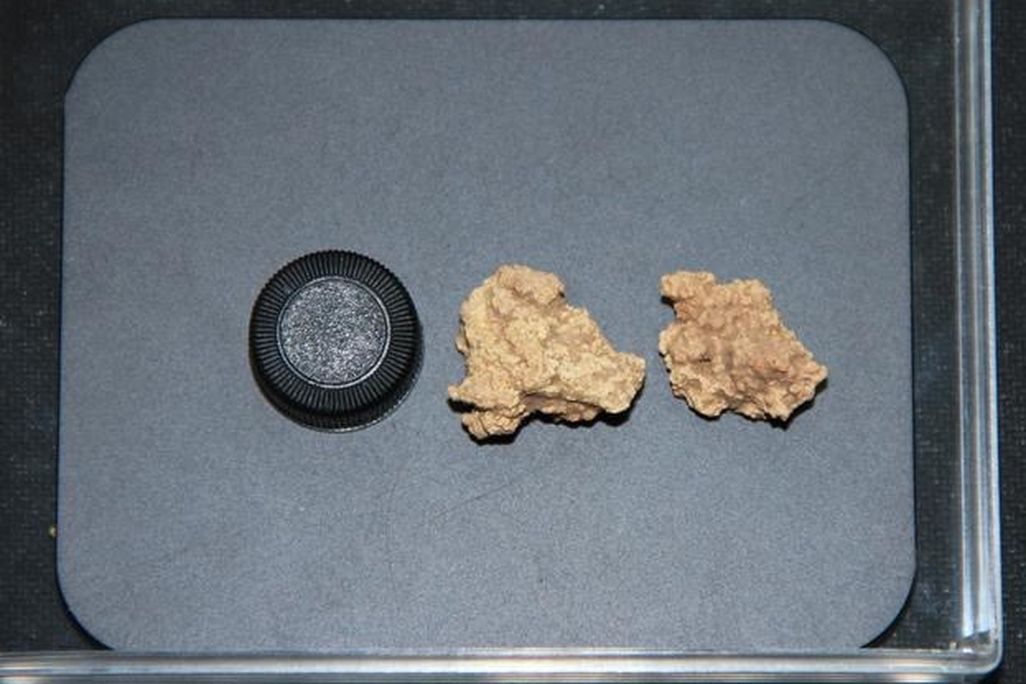
Генетикийн шинжилгээгээр Хятадын Таримын хотгороос олдсон эртний мумигийн толгой, хүзүүнд наалдсан цагаан бодис нь кефирийн бяслаг болохыг баталсан байна.
2003 онд Хятадын баруун хойд хэсэгт орших Сяохэ оршуулгын газраас малтлага хийх үеэр эртний мумигийн биеэс үл мэдэгдэх цагаан өнгийн бодис олджээ. Хятадын Шинжлэх ухааны академийн палеогенетикч Фү Чаомэй болон түүний баг орчин үеийн генетикийн дэвшилтэт технологийн тусламжтайгаар тус бодисоос митохондрийн ДНХ-г гарган авч, үүнийг хүрэл зэвсгийн үед хамаарах, үнээ эсвэл ямааны сүүгээр исгэн бэлтгэсэн кефирийн бяслаг болохыг тогтоосон байна. Судалгааны үр дүн Cell сэтгүүлд нийтлэгдсэн бөгөөд энэхүү олдвор нь эртний хүмүүсийн хооллолт, амьдралын хэв маягийг судлахад чухал ач холбогдолтой юм.
Шинжилгээгээр бяслагны дотор Lactobacillus kefiranofaciens болон Pichia kudriavzevii зэрэг бактери, мөөгөнцрийн төрөл зүйлүүд хадгалагдан үлдсэн нь тогтоогджээ. Эдгээр бичил биетэн нь сүүг исгэхэд чухал үүрэгтэй кефирийн үрнүүдийн бүрэлдэхүүн хэсэг юм. Сяохэгийн бяслагны ДНХ-ийн бүтэц нь Төвдийн бүлгийн бактеритай илүү ойр холбоотой байгаа нь тухайн үед исгэсэн сүүн бүтээгдэхүүн үйлдвэрлэх соёл Евразийн нүүдэлчин иргэдийн дунд өргөн тархсан байсныг илтгэж байна.
Эртний бактерийн генетик материал нь хүн төрөлхтөн болон пробиотик бактерийн хоорондын харилцан үйлчлэл 3600 жилийн туршид хэрхэн өөрчлөгдсөнийг харуулах боломжийг олгожээ. Судлаачдын тэмдэглэснээр, эртний бактериуд нь орчин үеийн омгуудтай харьцуулахад хүний гэдэсний дархлааны хариу урвалыг өдөөх магадлал өндөртэй байсан нь биологийн хувьсал явагдсаныг гэрчилж байна. Энэхүү олдвор нь бичгийн соёл үүсэхээс өмнөх эртний хүмүүсийн нүүдэл, хүнсний уламжлал, соёл хоорондын харилцааг судлах шинэ баримт болж байна.
Дэлгэрэнгүйг эх сурвалжаас харах
↓Эх сурвалжийг нээх ↓
Beginning in 2003, researchers excavating at the Xiaohe Cemetery in northwest China found unusual evidence on some exceptionally well-preserved mummies.
The mummies were buried in the dry Tarim Basin region over approximately 3,000-3,600 years ago. One had a peculiar white material smeared onto her head and neck. Researchers suspected at the time that the white material could be a fermented dairy product; however, it could not be identified as such.
It has been over twenty years since this discovery. Advances in genetics now enable scientists to obtain DNA from the white dust on the mummy and show that it represents the oldest known cheese in the world.
According to research recently published in the scientific journal Cell, the ancient crumbs represent kefir cheese. Food products with organic components hardly make it past a few thousand years intact due to complete degradation; therefore, finding preserved curds provides an extremely unique insight into early human diets.
“Studying the ancient cheese in extreme detail will give us a clearer picture of how our ancestors ate and lived,” paleogeneticist Qiaomei Fu, of the Chinese Academy of Sciences, stated in reference to his recent findings.
Identifying the exact type of dairy required advanced sequencing. Dr. Fu’s research team obtained mitochondrial DNA sequences for samples collected from three separate tombs at the excavation site. All of the sequences indicated that during the Bronze Age, members of each of these groups produced cheese exclusively using cow or goat milk.
Unlike ancient Greek and Middle Eastern cheesemakers, however, the Xiaohe people did not mix milk from different animals together. Instead, the evidence indicates that cow and goat milk were kept separate and used in different batches.
Tracing a Microbial Family Tree
The most revealing evidence came from the microorganisms that remained preserved inside the ancient dairy.
Researchers identified several fungal and bacterial species in the samples, including Lactobacillus kefiranofaciens and Pichia kudriavzevii. Both are important components of kefir grains, the communities of bacteria and yeast that cause milk to ferment.
In practice, kefir grains function somewhat like a sourdough starter. They contain a collection of microorganisms that can be transferred from one batch to another, allowing the fermentation process to continue over time.
The survival of their genetic material gave researchers an opportunity to examine how probiotic bacteria have changed during approximately 3,600 years of interaction with humans.
Modern Lactobacillus bacteria associated with kefir generally fall into two principal genetic groups. One is linked to the North Caucasus region of modern-day Russia, while the second is associated with Tibet.
/https://tf-cmsv2-smithsonianmag-media.s3.amazonaws.com/filer_public/4f/00/4f009475-a474-4a70-9349-a33927e150e8/gr1_lrg.jpeg)
Today, the Russian branch is far more common in commercial production. It is widely used in the United States, Japan, and Europe for products such as yogurt and cheese, a pattern that contributed to the longstanding belief that kefir originated exclusively in the mountains of the North Caucasus.
The Xiaohe samples complicate that picture.
DNA recovered from the ancient cheese was closely related to the Tibetan group, suggesting that kefir-producing cultures had already been maintained in the Xinjiang region of China thousands of years ago. Rather than pointing toward a single origin, the genetic evidence suggests that fermenting microbes likely moved between populations as nomadic communities traveled throughout Eurasia.
Those movements may have contributed to early cross-regional exchanges long before written historical records existed. The microbes could have traveled with dairy foods themselves or within the containers that people repeatedly used to store and transport fermented products.
Thousands of Years of Adaptation
The microorganisms did not remain genetically unchanged as humans continued to use them.
Genetic analysis, consistent with evidence of historical biological exchanges discussed through sources such as ScienceDirect, showed that the ancient bacteria exchanged genetic material with related strains over long periods of time. These exchanges gradually affected characteristics associated with bacterial stability and the fermentation of milk.
Researchers also found differences between the ancient organisms and their modern descendants.
/https://tf-cmsv2-smithsonianmag-media.s3.amazonaws.com/filer_public/c1/6e/c16e4375-b79e-4c80-9efc-280d50377d32/low-res_3_the_m29_dairy_sample.jpeg)
Modern forms of these bacteria are less likely to provoke an immune response in the human intestine than the strains found in the Xiaohe cheese. The difference suggests that prolonged interaction among humans, fermented foods, and their microorganisms was accompanied by biological adaptation over thousands of years.
Co-author Yichen Liu noted that early populations continued propagating these fermentative microbes generation after generation despite having no knowledge that the microorganisms themselves existed.
The ancient cheese therefore provides researchers with more than evidence about what Bronze Age communities ate. Its microbial DNA offers another way to follow human movement, food traditions, and interactions among populations from periods for which written evidence does not exist.
Paul Kindstedt, a cheese historian and food scientist at the University of Vermont, told the New York Times in an interview covered by Smithsonian Magazine that microbial DNA could help researchers trace what human cultures were doing long before written accounts or language provided a record.
For genetic researchers, that makes the Xiaohe cheese remarkably valuable. As food, however, little of its original character remains.
Enjoyed this article? Subscribe to our free newsletter for engaging stories, exclusive content, and the latest news.

